
Ecobricks made from bottles, non-recyclable plastics element of eco-awareness partnership
The entrance to Kampung Baru Sungai Makau in Hulu Langat, Selangor, is sporting a new look to welcome visitors.
The “I Love Kg Baru Sg Makau” sign on a divider along the main road of Jalan Sungai Tekali, in front of the community hall-cum-indoor badminton court, is made largely from large mineral water bottles filled with discarded plastic.
Called ecobricks, these upcycled bottles were also used to create heart-shaped planter boxes around the sign.
Kampung Baru Kenangan Batu 18 village chief Chong Chun Taur, who attended the launch of the landmark, said the previous signboard announcing the location of the village had been covered by creepers.
“With this new colourful sign, the area looks much better now,” she said.
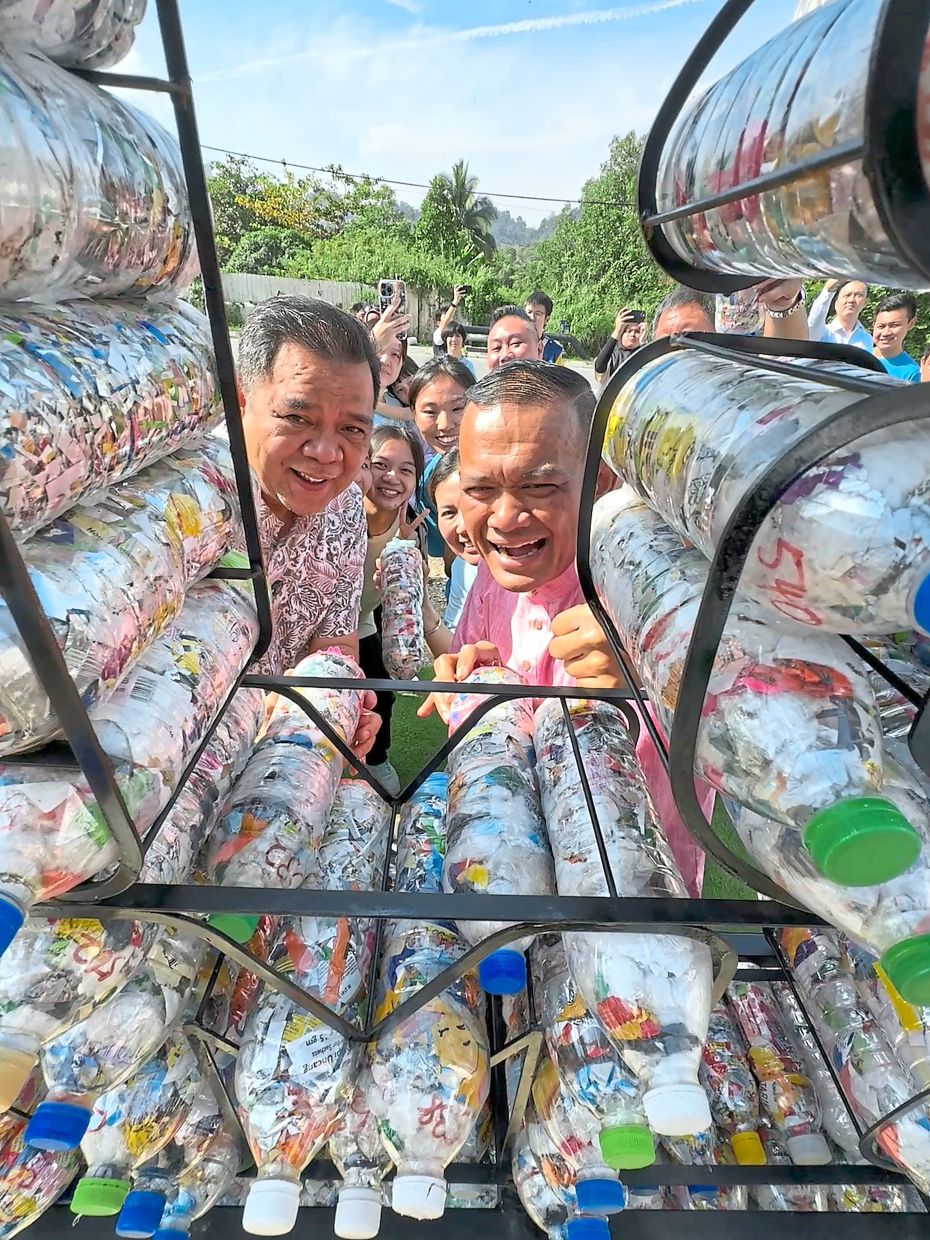
Chun Taur expressed hope that the ecobrick project, which is based on the reduce, reuse and recycle concept, could be emulated elsewhere.
“More than just decorative, the project aims to raise awareness of environmental preservation,” she said.
The project was a collaboration between Rotary Club; Impactlution, an environmental, social and governance (ESG) consulting firm; Noble Gateway, an eco farm and wellness retreat; and the Universiti Malaya (UM) branch of Association Internationale des Étudiants en Sciences Économiques et Commerciales (Aiesec).
Rotary Club of Hulu Langat Eco (RCHLE) president Veron Wong said the sign cost around RM10,000, and was sponsored by several Rotary clubs and companies.
The sign’s metal frame was made by Kelvin Hong, an RCHLE member and owner of a printing and signage company.
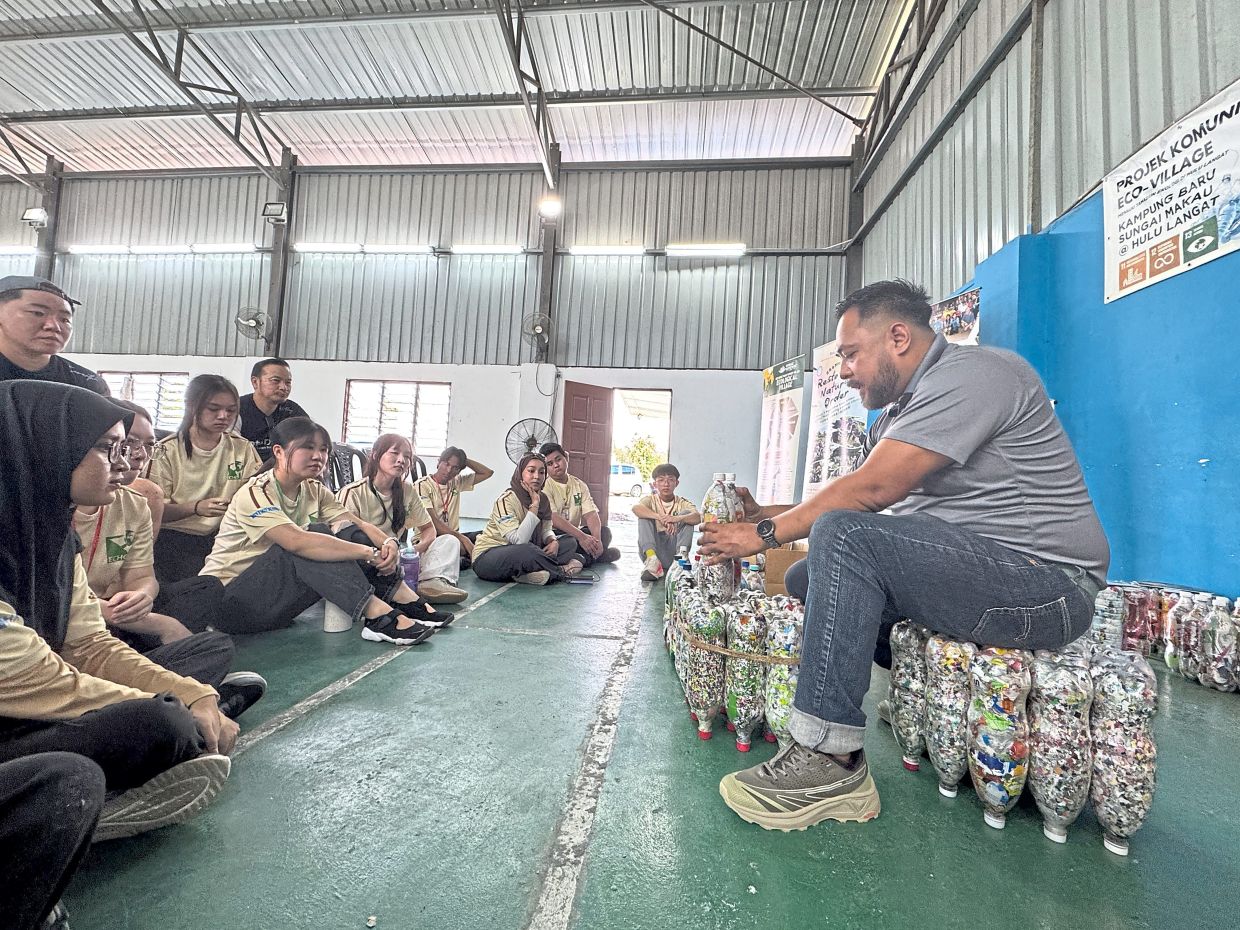
Impactlution founder Mohd Faisal Abdur Rani, who taught the volunteers how to make the ecobricks, said the Kampung Baru Sungai Makau project was the second of its kind in Hulu Langat.
The first had been created for Sungai Lui but it washed away during floods in 2018 and 2019.
A total of 1,000 ecobricks were used for the Kampung Baru Sungai Makau sign.
Mohd Faisal said each ecobrick had to weigh between 400g and 700g to ensure sturdiness.
Fabrics cannot be used as it has a tendency to degrade inside containers.
UM undergraduate Shoo Pei Ting, one of 14 student volunteers involved with the project, said: “Inside each ecobrick, there are thousands of pieces of plastic that cannot be recycled.
Shoo, who is also project director for a plastic waste crisis and climate change awareness drive by the university’s Aiesec branch, said the student volunteers filled a total of 60 ecobricks.
“We also refilled another 200 bottles that came from other villagers but did not meet the weight requirement.”
She said a villager, Oon Len Eng, contributed 25 ecobricks, while the others were provided by Impactlution and involved collections from around the Klang Valley.
“This project took around four months to complete.
“Volunteers had to insert the bottles into the wire frame of the signage and glue the ecobricks together with silicone,” said Shoo.
Dr Chong Ho Jing, who spoke on behalf of the eco farm, said this was the first time they had hosted university students.
The eco farm was founded in 2019 by Johnny Liew, who is also chartered president of RCHLE, and his wife Joanne Chew.
Also present at the launch were Hulu Langat MP Mohd Sany Hamzan, Dusun Tua assemblyman Datuk Johan Abd Aziz and Kampung Baru Sungai Makau village chief Wong Keng Loon.