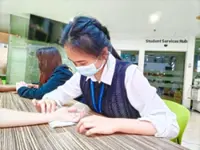
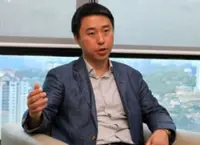
IN many ways Sng Kim Sia, lecturer at IMU University in Kuala Lumpur, represents the high-water mark of the Traditional Chinese Medicine (TCM) education trajectory.
He has a bachelor’s degree in Chinese Medicine from IMU and Masters from Shanghai University of TCM specialising in traumatology and osteopathology (TCM orthopaedics).
Sng is now pursuing a PhD in Chinese Internal Medicine from Heilongjiang University of Chinese Medicine in Harbin, China.
ALSO READ: Forging a new direction for TCM
For many, studying TCM in China remains a benchmark.
While traditional TCM philosophy suggests a practitioner should be a generalist, Sng’s specialty in orthopaedics mirrors Western medical structures.
“Not many people know that TCM has sub-branches,” said Sng.
“While we try to follow Western specialties, older TCM says you should not specialise in only one thing.
“For my PhD, I am looking at internal diseases, whether gastric issues or coughs, but through the five elements of TCM: water, fire, wood, metal and earth. Each corresponds to specific organs in the body.”
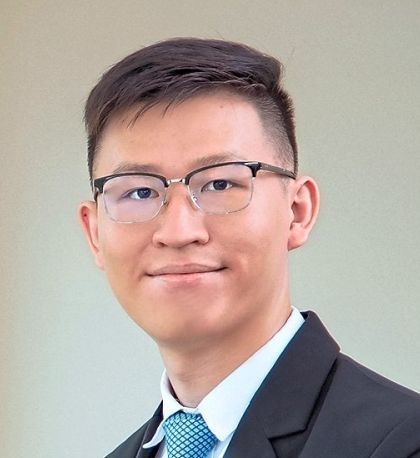
Sng’s lectures often centre on safety and standardisation.
While he acknowledged the life skills of self-taught sensei, he stressed the necessity of the Health Ministry’s straight-line approach to qualifications.
“The senseis who are self-taught with no qualifications will find it hard to hold onto their jobs.
“They might have the skills, but they might not be aware of the limitations, where a patient should be referred to Western medicine.”
Originally a science stream student with an interest in math, Sng entered TCM at his father’s encouragement.
Today, he sees his role as vital to the industry’s survival.
“I could have opened a shop or worked for someone once I got my bachelor’s degree.
“I decided to go into academia because I wanted choices, and I have no regrets.”
Personal experience often fuels the choice to enter academia.
Chong Chee Yin was motivated to study TCM at IMU after seeing her family endure the costs of chronic heart disease.
Currently pursuing a Masters in Pharmacology in Taiwan, she represents the industry’s shift toward clinical validation.
“I will probably pursue research and development in TCM pharmacology.
“We need to understand the efficacy of natural herbs through a different perspective.”
Her goal is to return to Malaysia to help professionalise the pharmacological side of the trade.
The professionalisation of TCM is also diversifying the practitioner pool.
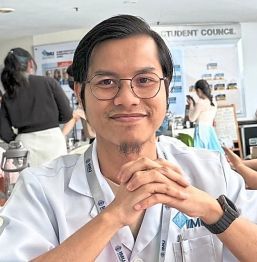
Ahmad Mujahid Mazlan, one of the few non-Chinese students in his cohort, graduated from IMU last year.
“It was doable as 90% was in English, and I could memorise formulas in Pinyin,” Ahmad said.
For him, TCM is not about culture, but clinical utility.
“I see that TCM can address many issues Western medicine cannot, especially in treating chronic diseases naturally. I’m interested in dietetics.”
Ahmad plans to offer house-call consultations and open an acupuncture therapy centre, proving that as TCM becomes more regulated, it is evolving into a pillar of Malaysian healthcare. — By AIDA AHMAD