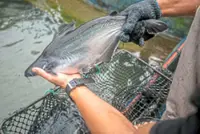
PATIN fish, scientifically known as Pangasianodon hypophthalmus, is no stranger to Malaysian waters.
Along the stretch of Sungai Perak, this freshwater species takes on a character of its own.
A whiskered catfish from the Pangasiidae family, patin is prized not only for the thrill it gives to fishermen hunting it, but also for the rich flavours it brings to the dining table.
Patin tempoyak is a prized dish made from the fish and fermented durian.
The abundant and relatively clean waters of Sungai Perak, the second longest river in the peninsula, serves as a natural “cage” for patin farming.
From these waters come patin that are widely regarded as firm, sweet and free from the muddy aftertaste often associated with river fish.
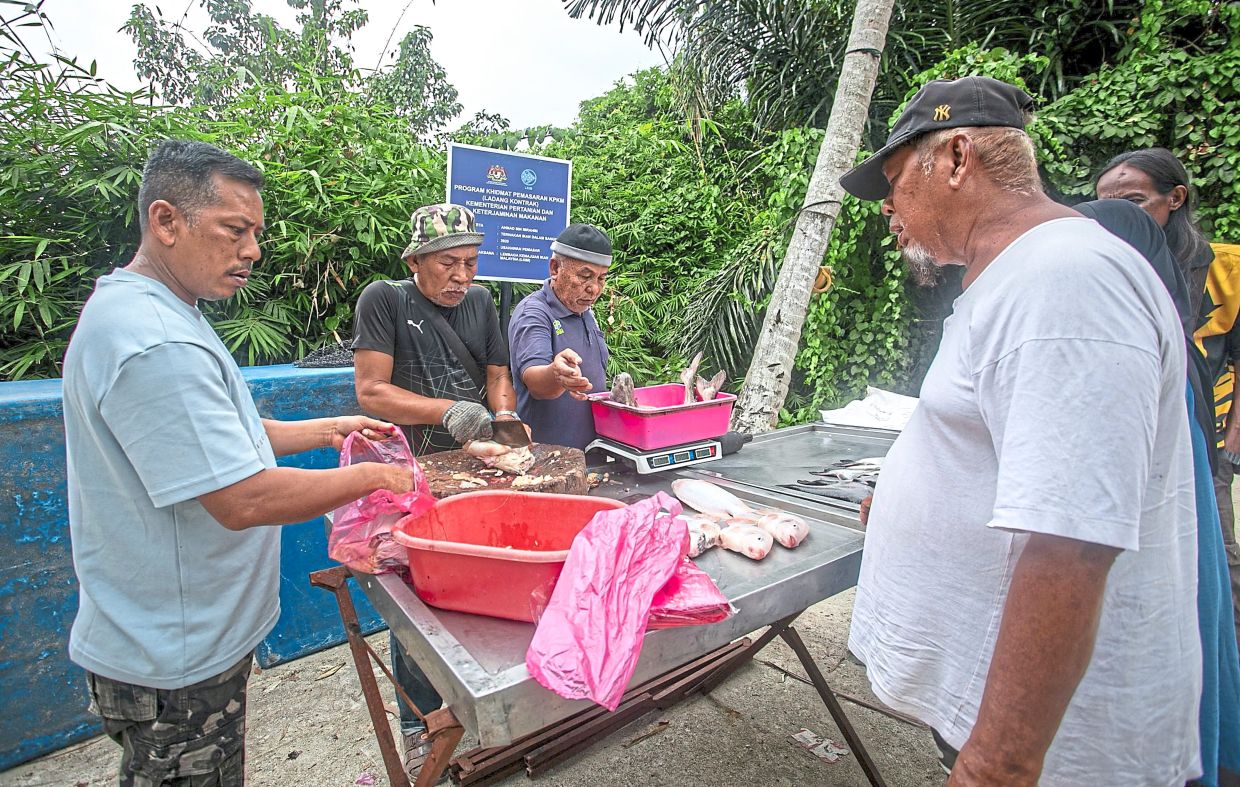
According to Perak Malaysian Fisheries Development Authority (LKIM) director Ahmad Zulkifli Ismail, the quality of patin from the river stands out for several reasons.
Its flesh is less fishy and noticeably firmer compared with patin farmed in other parts of the country.
“These are influenced by the river’s water quality, feeding practices and even weather conditions
“Because the water is unpolluted, the fish does not develop a muddy smell. That makes a big difference in taste,” he told Bernama when met at the LKIM Perak State Contract Farming Project in Kampung Mandah of Manong, Kuala Kangsar.
Ahmad Zulkifli said these factors worked together to ensure consistent production of high-quality fish.
“When you eat it, you can taste the sweetness. It’s a different kind of sweetness compared with patin from other areas.”
Currently, seven patin cage farmers are involved in the LKIM Perak State Contract Farming Project across Kuala Kangsar and Parit.
In Kampung Mandah alone, four participants received nearly RM60,000 in funding last year.
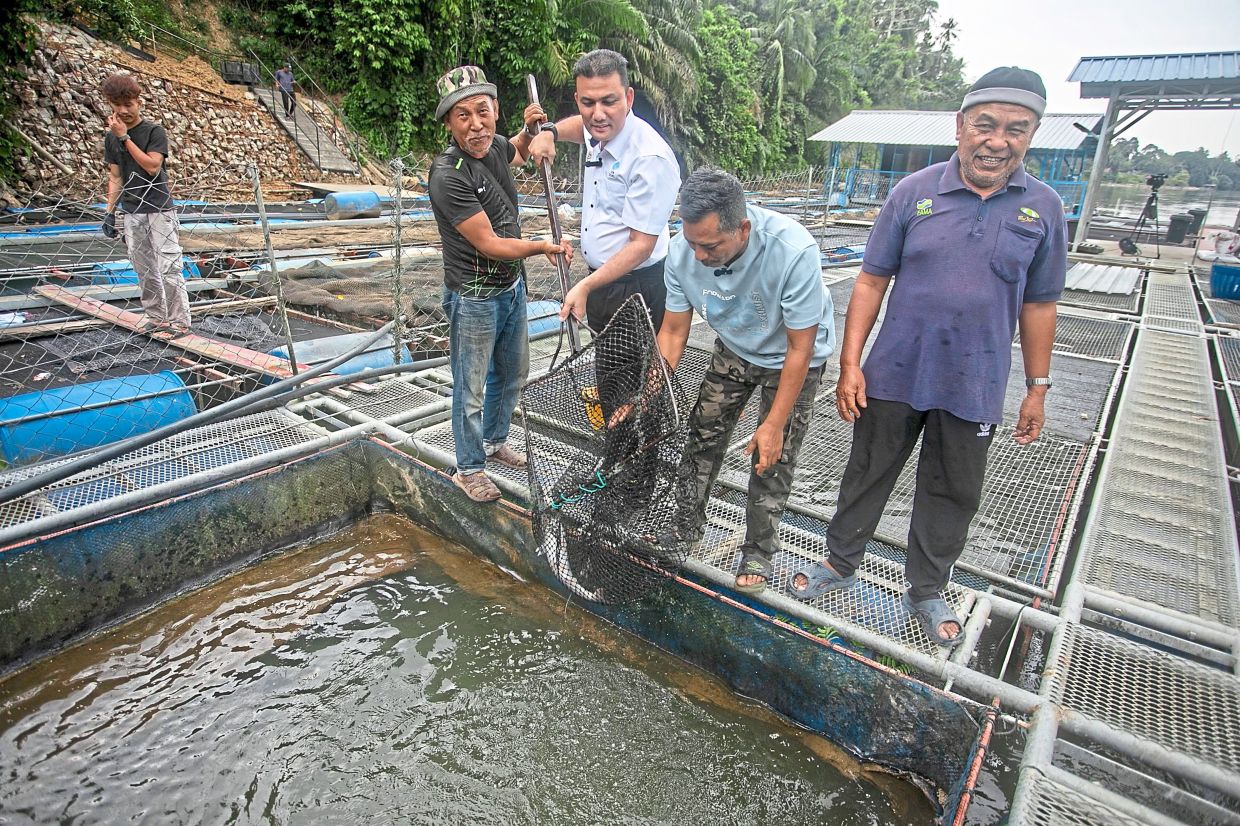
Their efforts yielded 31.21 metric tonnes of patin, with a total value of RM149,400.
Ahmad Zulkifli said production recorded an increase of between 30% and 40% from 2024 to 2025, equivalent to an additional 15 to 17 metric tonnes, depending on the operator.
In monetary terms, this translated into an increase of between RM40,000 and RM50,000.
“With the farmers’ dedication and the guidance provided by agencies, the growth has been encouraging,” he said, while urging more entrepreneurs and farmers to participate in the programme.
“The market for Sungai Perak patin is not limited to Perak or the Klang Valley.
“Demand comes from across the country; at the moment, it far exceeds supply,” he said.
Some producers, he added, have even managed to export small quantities of patin to Singapore, demonstrating that the fish has potential beyond domestic markets.
The project, Ahmad Zulkifli explained, was designed not only to boost local patin production but also guarantee market access and provide farmers with a structured, lower-risk contract farming model that helped to raise income levels.
Patin farmed in the river comes in four varieties – patin buah, biasa, emas and lawang – all of which are marketed nationwide.
Patin buah commands the highest retail price at RM40 per kg, while patin emas and patin lawang are sold at RM25 per kg.
Common patin, meanwhile, remains the most affordable at RM16 per kg.
Wholesale prices follow a similar pattern, with patin buah priced at RM38 per kg, common patin at RM12 per kg, and patin emas and patin lawang at RM20 per kg.
According to Ahmad Zulkifli, the higher price of patin buah reflects the longer farming period required.
The fish takes nearly two years before it is ready for the market, compared with about a year for common patin, resulting in higher maintenance costs.
For farmer Zun Kurnain Sahudin, who has been involved in fish farming for about a decade, patin buah is both the most prized and the most demanding.
“It is very sensitive. If it is disturbed, it eats less.
“Even people walking across the cages and causing them to shake can cause stress to the fish.
“When that happens, it refuses to eat, grows more slowly and takes longer before it can be sold.”
He said demand for common patin remains consistently high, to the point where supply struggles to keep up.
Kampung Mandah farmers find monthly demand reaches about six metric tonnes.
Patin buah, however, sees seasonal demand, particularly during Chinese New Year.
During this period, buyers tend to prioritise quality over price.
“Every year, we rear patin buah specifically for Chinese New Year.
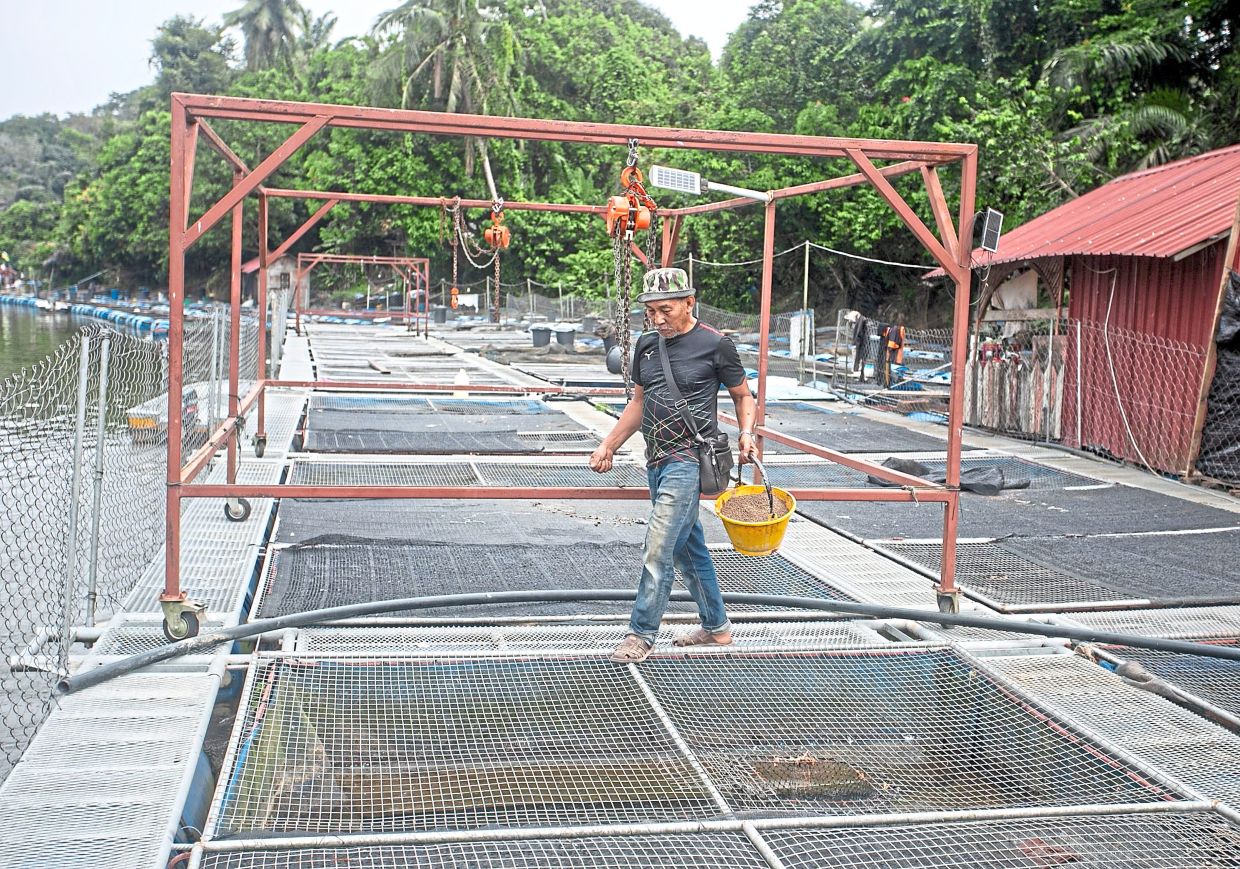
“Customers don’t necessarily want very large fish, but bigger is generally better,” said Zun Kurnain, who operates 15 patin cages, each capable of holding around 2,000 fish.
He believes stronger promotion of the fish can help reflect its true value, as prices in the state remain lower compared with other regions.
“Our retail price is RM16 per kg, while in other states it can reach RM22.
“Wholesale price here is RM12. With feed costs rising, better promotion could help justify a slight increase,” he said.
Zun Kurnain claimed that research has shown fish from Manong and Kampung Mandah, whether cage-farmed or free-swimming, rank among the best in terms of taste.
Located along the middle stretch of the river, Kampung Mandah benefits from clean water free from upstream and downstream wastes, giving it ideal conditions for fish farming.
Since joining the project, Zun Kurnain’s production has risen from 3.5 metric tonnes valued at RM35,000 to 16.65 metric tonnes worth RM146,195.
Today, patin accounts for about 70% of his income.