
Surrounding area needs better maintenance to prevent incidents which have been recurring since 2015, says concessionaire
A STRETCH of the New Pantai Expressway (NPE) has experienced 17 flood incidents since 2015, with disruptions worsening in recent years.
New Pantai Expressway Sdn Bhd general manager Ong See Chang said flooding at KM18.9 near Jalan Sri Manja, Petaling Jaya, was caused by long-standing upstream drainage limitations and maintenance issues.
ALSO READ: MBPJ taking action to reduce flooding on expressway
The problem involves drains under the jurisdiction of Petaling Jaya City Council (MBPJ), which are unable to cope with the volume of runoff, as well as a nearby retention pond located on private land that also lacks sufficient capacity.
“These incidents are the result of years of upstream drainage capacity constraints and maintenance shortcomings, with heavy rain merely exposing infrastructure that is struggling to cope with increasing development in the surrounding area,” said Ong.
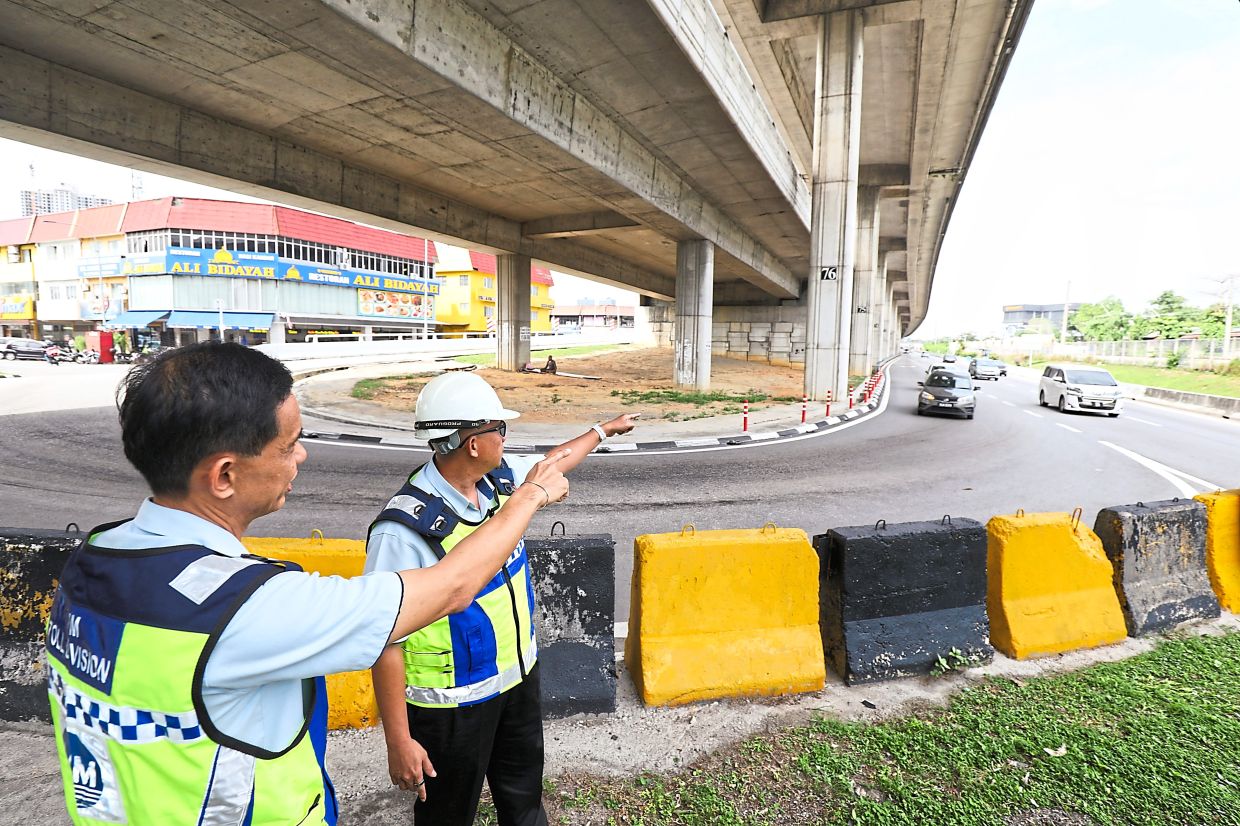
He said assessments by the concessionaire’s engineers identified the main cause as capacity limitations in a drainage sump system.
The drainage system includes a triple-cell culvert measuring about 0.6m in diameter, which is no longer sufficient to handle the increased volume of stormwater, slowing upstream flow and leading to overflow during heavy rain.
He said rainfall data from the Drainage and Irrigation Department showed that 76mm of rain was recorded at the Taman Sri Manja station last Dec 30, an intensity classified as “very heavy”.
StarMetro had reported that heavy rain in several parts of Selangor on Dec 30 triggered flash flooding along the NPE.
In a post on the X platform, Malaysian Highway Authority (LLM) said a flash flood on the NPE (E10) at KM18.9 on the eastbound stretch near the Taman Maju Jaya U-turn, caused the left and centre lanes to be blocked.
Jalan Sri Manja stretch, especially at the Taman Buana Perdana/Jalan PJS 3/25 junction and the NPE Exit 1005, near Taman Dato’ Harun, have frequently been identified as flash flood hotspots. Another hotspot is near the U-turn leading towards Jalan Kelang Lama.

“While rainfall exceeded the normal drainage capacity in the Dec 30 incident, it was not the sole cause but a factor that exposed existing weaknesses in the system,” Ong said.
The highway concessionaire’s report also highlighted poor maintenance in the adjacent land, including earth drains that were not regularly desilted, resulting in backflow and stagnant water, according to Ong.
“We have spent more than RM100,000 carrying out regular maintenance and improvement works along the highway and surrounding areas since 2016.
“These include routine drain cleaning, upgrading earth and monsoon drains, clearing culverts near a private development boundary and deepening roadside drains to improve flow capacity.”
Ong added that the highway concessionaire had also sent multiple letters to MBPJ requesting joint inspections and follow- up action.
He said the company had also identified cases where internal drains within a development in the surrounding area were not properly connected to the main drainage system.
He said the data showed that while flooding had long been an issue, the frequency and severity of disruptions had worsened in recent years.
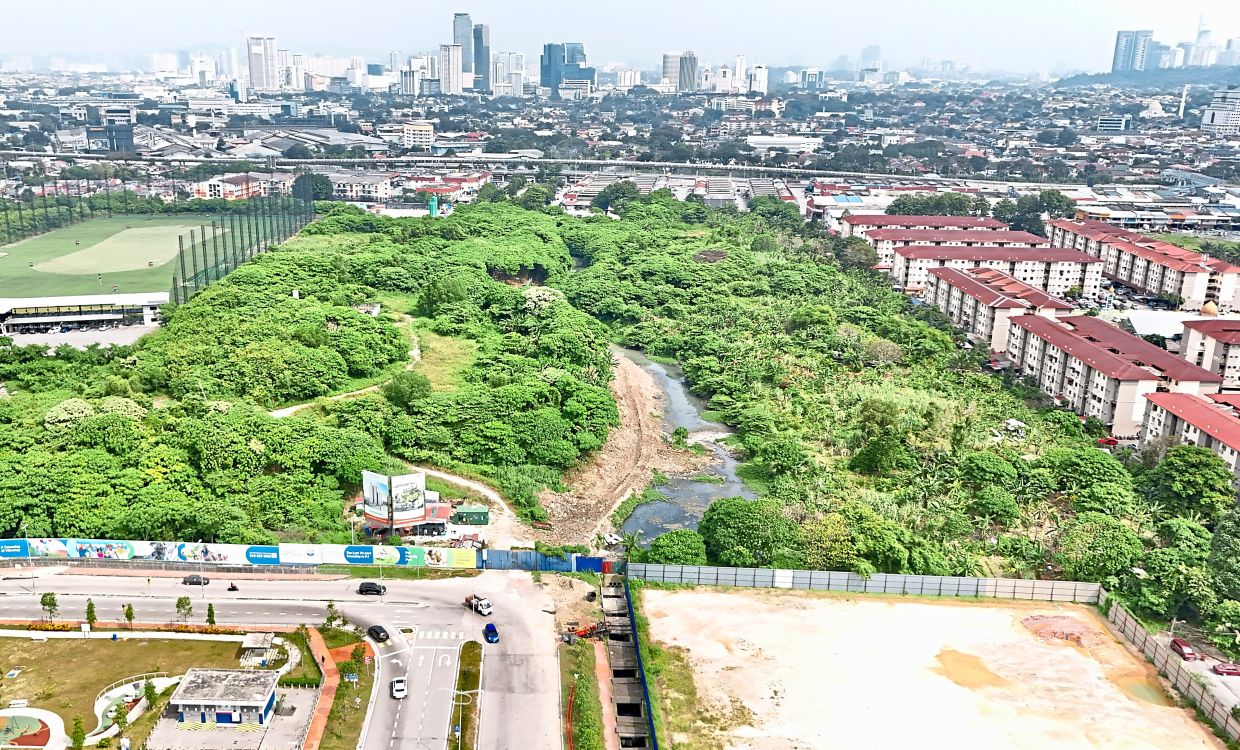
“It reflects the growing pressure from surrounding development, limited drainage capacity and maintenance shortcomings, with heavy rain merely triggering a system that is already under strain,” he said.
“Last year alone, the affected stretch had to be fully closed twice, with three two-lane closures and another three single-lane closures.
“We have urged MBPJ to strengthen the overall drainage system, including improvements to the main river and existing drains, and to increase capacity to cope with current developments,” said Ong.
He said regular scheduled maintenance was needed, along with the construction of permanent drains in flood-prone areas.
“Development control must also be tightened, with developers required to build detention ponds to hold stormwater before it is discharged.”
He added that his engineers had also identified a flood retention pond within private land that was found to be shallow and clogged with silt and rubbish, impeding water flow.
“We are uncertain who currently owns the pond – the state or a private party – but the land owner should be responsible for its maintenance.”
StarMetro spoke to residents living in the area who said flash floods had been part of life for as long as they could remember.
“Whenever there is a downpour, floodwaters enter my home near Jalan PJS 3/40,” said long-time resident Malar Muniandy.
Another resident, K. Saraswathy, said flooding had occurred several times since she moved into the neighbourhood in 2016.
In a StarMetro report dated Aug 5, 2016, MBPJ had acknowledged that flooding was a long-standing issue and said it had instructed a developer in the area to repair roads and upgrade the drainage system in line with the council’s Building By-Laws.
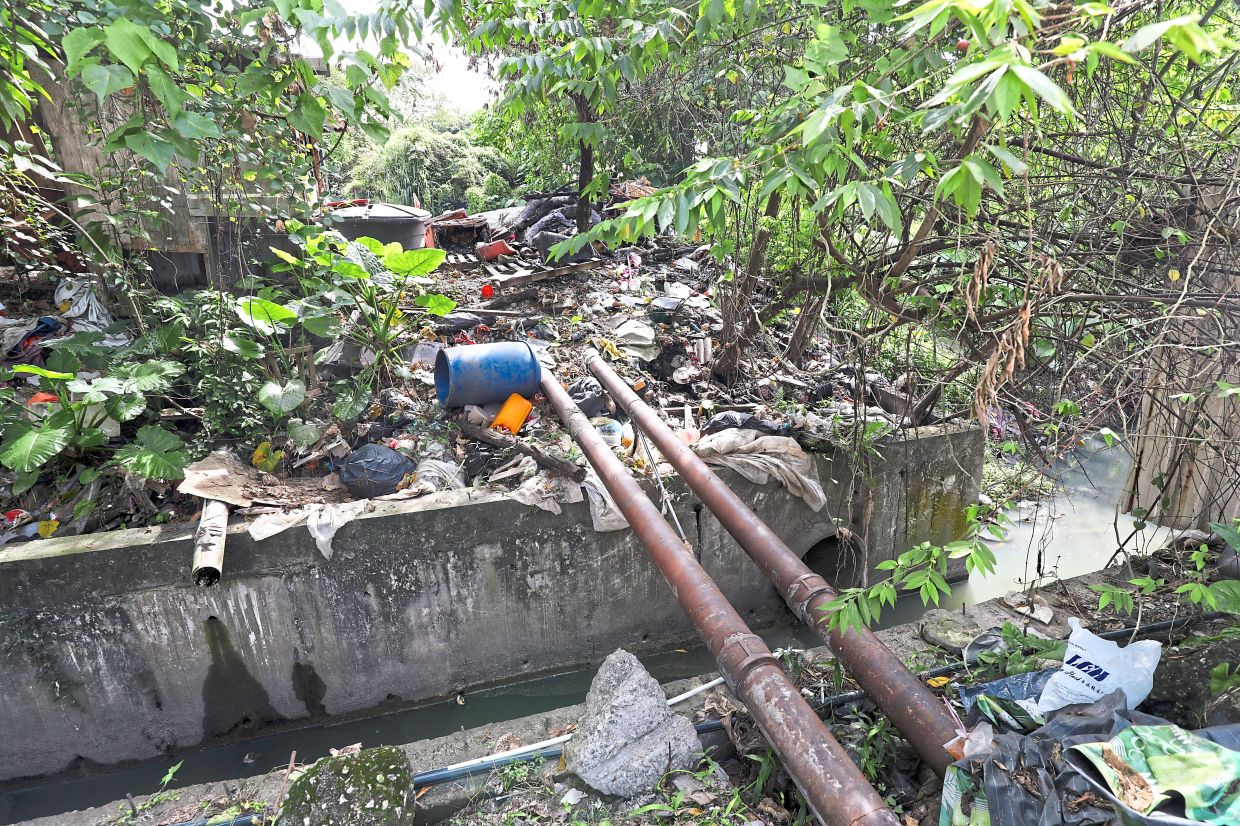
When StarMetro visited the area, an earth drain was choked with rubbish, and the area appeared to be used as a dumping ground.
Nearby, the Sri Manja retention pond appeared shallow and poorly maintained, with dark, stagnant water covered in patches of floating silt and debris.
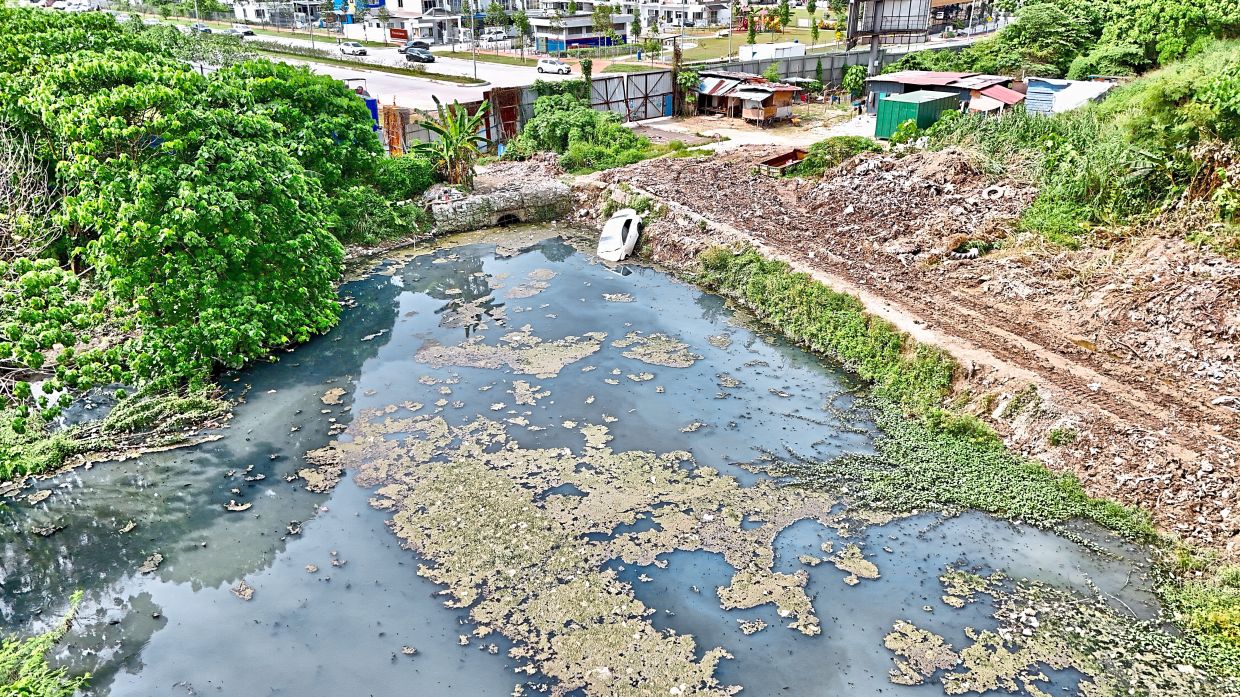
A car was also seen partially inside the basin, raising concerns about the management and control of the site.
According to Ong, the vehicle has been there for several months.
The pond resembled a neglected catchment area where runoff, sediment and waste had accumulated over time.
Its water was murky and still, with little visible movement, suggesting poor circulation or blockages downstream.
Vegetation had begun to encroach along the edges, while exposed earth and nearby construction activity indicated ongoing erosion that could be feeding more sediment into the pond.