
MORE than two centuries of history from one of Penang’s oldest clan associations is now documented in a book published by Penang Institute and Seh Tek Tong Cheah Kongsi.
Before there were banks, welfare departments or formal courts in colonial Penang, clan houses served as the backbone of Chinese immigrants on the island.
They provided shelter for newcomers, funds in times of hardship, settled disputes, arranged funerals and enforced discipline within their communities.
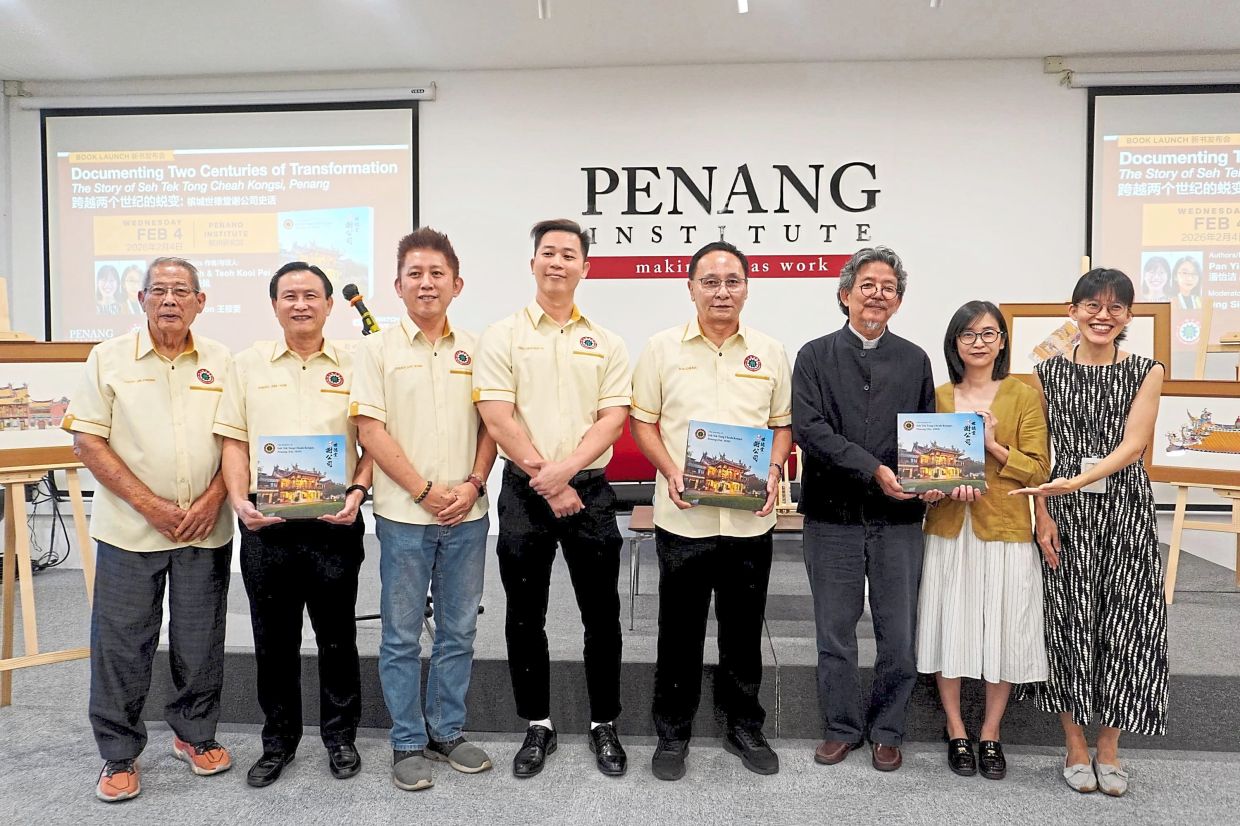
In the 1800s, the survival of Chinese immigrants depended on belonging to a kongsi that functioned well.
The book, Documenting Two Centuries of Transformation: The Story of Seh Tek Tong Cheah Kongsi, Penang, was launched on Feb 4 and traced the evolution of Cheah Kongsi from its establishment in 1810 to its present role as a community institution.
Published by Penang Institute, the book sought to uncover, document and preserve the historical development of Cheah Kongsi, founded by migrants from Sek Tong Seah in Fujian Province, China.
For more than two centuries, the kongsi functioned as a community-based institution supporting Cheah clan members across generations, while adapting to changing social, economic and historical contexts in Penang.
Speaking at the launch, Penang Institute executive director Dr Ooi Kee Beng said the project reflected the importance of telling local histories through local sources.
“Too much of our history was told from the outside. We needed our own stories told based on our own resources,” he said.
The launch included a panel discussion featuring the book’s authors – Pan Yi-Chieh, a senior analyst of history and regional studies at Penang Institute, and Teoh Kooi Pei, a PhD graduate in architectural history from Tongji University.
The session was conducted in both English and Mandarin and drew members of the public, researchers and representatives of the Cheah clan.
According to Penang Institute, the publication served as a formal historical record for Cheah clan descendants while contributing to a broader understanding of Penang’s long tradition of clan associations, civil society organisations and non-profit institutions.
The book is intended for both English and Chinese-language readers and formed part of ongoing efforts to document the histories of community-based organisations in Penang.
For details or to get a copy of the book, email enquiry@penanginstitute.org