STEP into 57, Jalan Macalister, and you will find more than just a building; you will find a time machine.
From the elegant, horse-drawn carriages of the Penang Turf Club to the quirky penny farthing bicycles of the 19th century, Penang’s rich history of motion has finally found a permanent home.
The newly unveiled Penang Museum Automotive Gallery is a RM7mil tribute to the wheels that built the state.
The gallery is being hailed by the state government as a strategic investment in heritage and a bridge between Penang’s storied past and its high-tech future.
“The transport and mobility sector has played a crucial role in shaping Penang’s development,” Chief Minister Chow Kon Yeow said during the opening.
“This gallery presents a significant narrative that records the evolution of transportation which has long connected people, ideas, trade, and culture.”
As Penang embarks on its transformation with the Mutiara Line LRT and green electric vehicles, Chow said the gallery serves as a guide for future planning.
“It invites us to reflect on how history can guide more sustainable, inclusive and resilient mobility systems,” he said.
Beyond preserving the past, Chow said the gallery was set to become a major pillar of Penang’s “knowledge-based” tourism.
He emphasised that the space would act as a socio-economic catalyst, breathing fresh life into the business ecosystem of the George Town Unesco World Heritage Site.
State tourism and creative economy committee chairman Wong Hon Wai echoed this vision, describing the 1,907sq metre facility as a world-class institution.
Developed in collaboration with the State Museum Board, the gallery was designed to meet rigorous International Council of Museums (Icom) standards, ensuring that every artefact is protected by state-of-the-art security and climate control.
“This is not merely an exhibition space,” said Wong.
“It is an educational and research institution that serves society by interpreting both the tangible and intangible heritage of our people.
“I am confident the gallery will complement the existing museum network and become a new cultural tourism attraction in line with the Penang2030 vision.”
The heart of the gallery lies in its remarkable collection.
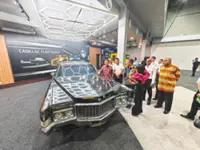
Visitors can stand inches away from the official vehicles of Penang’s first governor, the late Raja Tun Uda Al-Haj Raja Muhammad – symbols of governance and an era of past elegance.
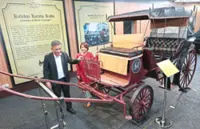
Nearby, six majestic horse-drawn carriages from the Penang Turf Club stand as preserved relics of the state’s early high-society lifestyle.
The current display featuring 23 significant exhibits is not only historically significant but also reflects symbols of governance, social status and changing lifestyles of the era, Wong said.
He said the collection would rotate periodically to ensure there would always be something new for returning visitors to discover.
Entrance to the gallery is free.
For fans of two-wheeled history, the gallery offers a rare treat: a fleet of 11 vintage bicycles, including the iconic 1870s penny farthing.
These pieces are on loan from the Malaya Bicycle Museum in Jalan Gurdwara, the largest of its kind in South-East Asia.
Owner Datuk Alex Goy, who attended the opening, has committed to rotating 20 different bicycles through the gallery to keep the narrative of cycling history fresh and engaging for the public.
Also present at the gallery opening were Komtar assemblyman Teh Lai Heng, Air Itam assemblyman Joseph Ng, Penang Island City Council (MBPP) mayor Datuk A. Rajendran, deputy state secretary (Development) Mohamed Abdul Rahman, state Museum Board director Haryany Mohamad and PTC president Datuk Ong Eng Khuan.