
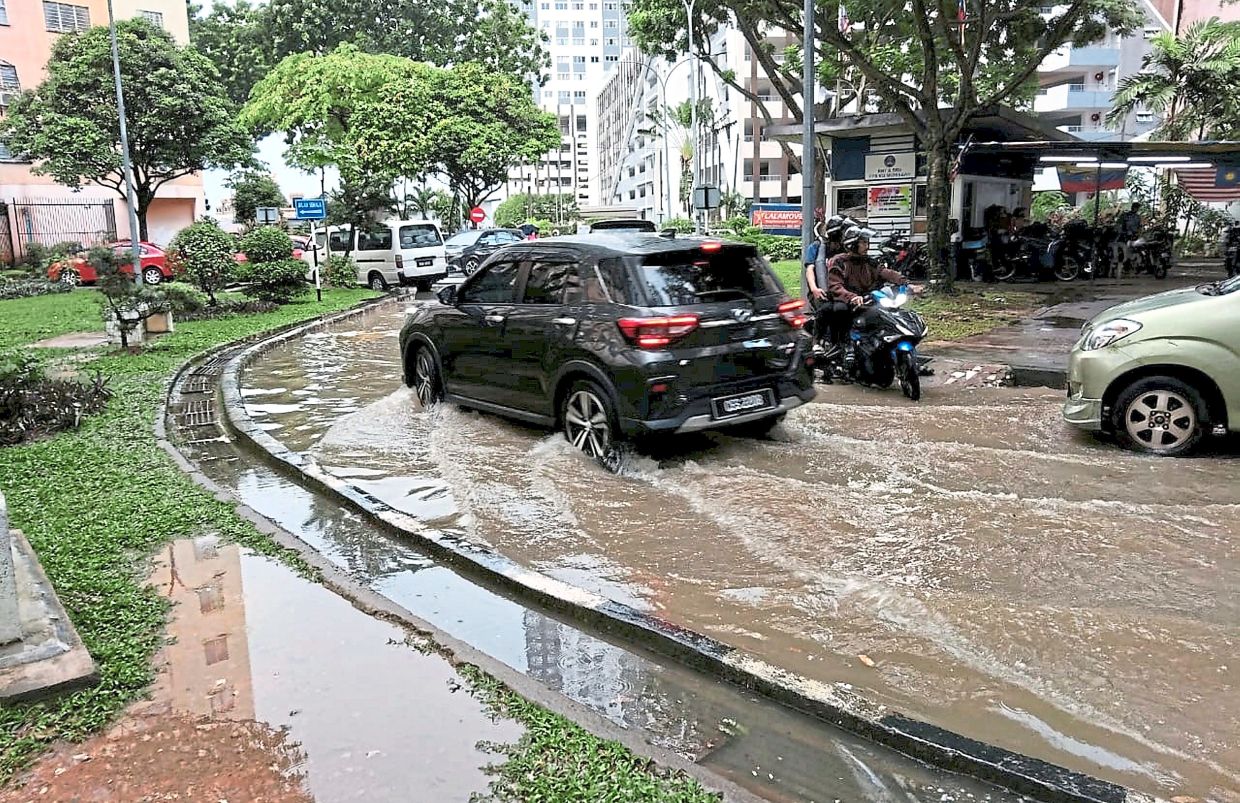
RESIDENTS of PPR Kampung Muhibbah in Bukit OUG, Kuala Lumpur, say floods in their housing area have worsened over the past few months.
They believe this is due to the ongoing upgrade of Kampung Bohol flood retention pond nearby, which has been delayed.

Residents believe stormwater, which once flowed naturally towards the retention pond, no longer has a clear outlet.
“We have been experiencing flash floods in the past two months.
“Water rose to about 0.5m, submerging cars and motorcycles, and took a long time to recede,” Atar said, adding that such flooding had never happened before.
“Kampung Bohol flood retention pond had always contained excess rainwater, but now it no longer does.
“Since it was alienated, the size of the pond has reduced and Sungai Kuyoh (which overflows into Bohol pond) looks much narrower.”
On May 8, 2023, StarMetro reported that land surrounding Kampung Bohol flood retention pond was being alienated to a private developer.
The report stated that alienating land surrounding flood retention ponds for development could be a major factor leading to floods.
It also said the government had plans to straighten part of Sungai Kuyoh as part of flood mitigation measures.
The Kampung Bohol flood retention pond is located next to Sungai Kuyoh and surrounded by several areas including Kampung Muhibbah in Kuala Lumpur, Taman Kinrara in Selangor as well as high-rises along the Shah Alam Expressway (Kesas).
The Federal Territories Department (formerly Federal Territories Ministry) is custodian for the pond.
The report highlighted concerns that the pond’s capacity would be jeopardised if the land surrounding it was developed.
Pond size looks smaller
Resident Chin Chong Men said before work began at Bohol pond, rainwater flowed out smoothly.
The former mining area used to channel excess stormwater into Sungai Kuyoh, with overflow going into Bohol pond.
“However, in the past few months, heavy rainfall has caused water to spill into surrounding areas,” he said.
“Earthworks have raised levels and changed flow paths.
“The natural drainage route towards the pond has been disrupted.”
Chin also drew attention to two large monsoon drains at the pond’s entrance that are now clogged with rubbish, causing water to stagnate.
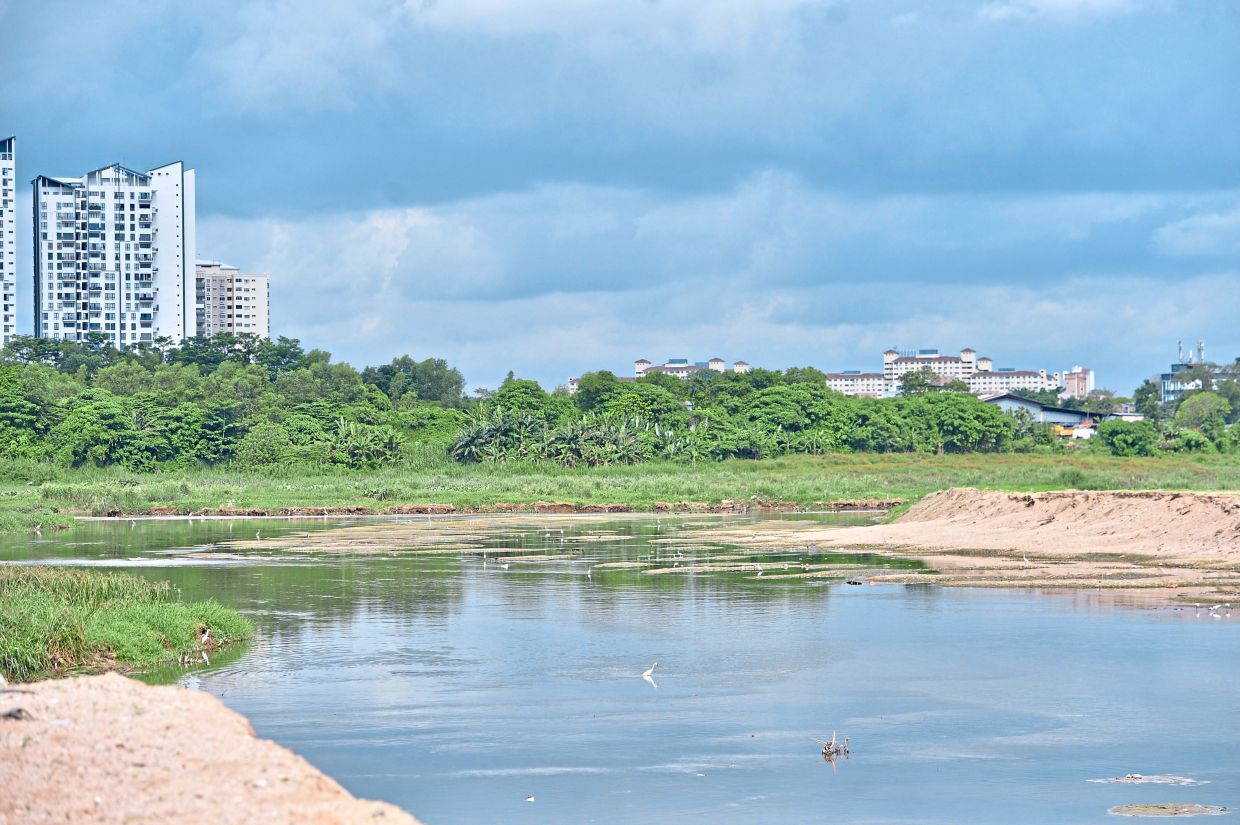
He said this had contributed to water overflowing onto the main roads near PPR Kampung Muhibbah and the surrounding area.
Kampung Bohol flood retention pond and its surrounding land is one of the biggest in the country.
Despite objections, the government proceeded with plans to sell the land to a developer for a housing project, with the developer required to first upgrade the pond.
Chin said the residents’ flooding fears had now materialised.
He also noted that Bohol pond was once a thriving wetland, home to otter families and a rich variety of wetland flora, while its reed beds and shallow waters supported waterhens, egrets, herons and other bird species that depended on healthy freshwater ecosystems.
Now the area has been stripped of its greenery.
Seputeh People’s Represen-tative Council (MPPWP) Zone 6 chairman Alvin T. Ariaratnam, whose area includes Kampung Muhibbah and Bohol pond, said he had received calls from residents about the flooding.
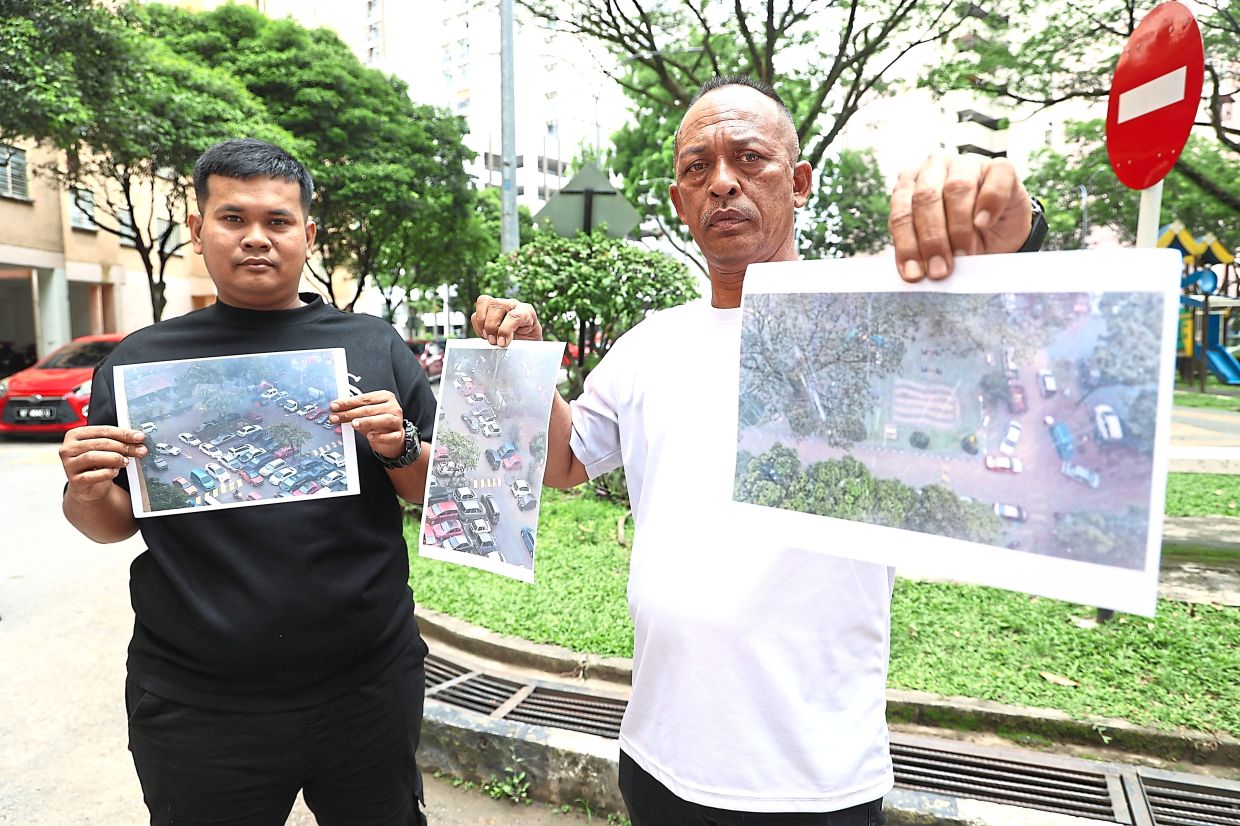
“They showed me photos and videos of the floods and overflowing drains.”
Alvin said he visited the site recently and was shocked to see how much smaller the pond looked.
“What was once a large water body is now just a muddy pool,” he said.
“I remember reading news reports last year in May that the developer was finalising the pond upgrade details, and it would take five months to complete.
“It has been 18 months, and the flash floods are getting more frequent and worse,” Alvin said, adding that he would raise the matter with the Seputeh MP and Kuala Lumpur mayor.
Long-delayed project
On May 16, 2024, StarMetro reported that a developer had been awarded the tender to upgrade Bohol pond.
The developer had also received approval to build up the area adjacent to land reserved for the pond.
Federal Territories Land and Mines Office (land registration sector) deputy director Mohd Firdaus Ibaruslan was quoted as saying that aside from spending RM40mil to upgrade the pond, the developer still needed to pay RM41.7mil as premium for six adjacent plots, covering 10.84ha.
Mohd Firdaus said the current pond site was hilly and unsuitable to be made into a retention pond.
The pond’s current capacity of 150,000 cubic metres would be upgraded to 1.13 million cu m, increasing the average recurrrence interval (ARI – the long-term average time between events of a specific magnitude like heavy rainfall or floods) to 200 from the current 100.
The site would function as a retention pond as well as a recreation area for the surrounding development.
He said engaging a developer would speed up the upgrade, as the pond was part of a 40km flood management plan from Serdang to Puchong led by the Drainage and Irrigation Department (DID).
When contacted, a Kuala Lumpur DID source stressed that flood mitigation areas played a critical long-term role in protecting surrounding communities and should be preserved with future climate conditions in mind.
The source said such facilities were designed as buffers for extreme rainfall events and should not be assessed in isolation or based only on present-day conditions.
“Flood mitigation infrastructure must be safeguarded for future generations.
“As rainfall patterns become more intense and unpredictable, these areas will only become more critical.
“Reducing or altering the function of flood retention systems risks undermining their ability to cope with high-volume stormwater during extreme weather.
“This is why flood mitigation cannot be viewed in a piecemeal manner.
“It must be planned as part of a wider, interconnected system that prioritises long-term resilience, not short-term considerations,” the source emphasised.