IN THE early years before our nation’s independence, one man changed the lives of thousands by giving away large tracts of land for schools, temples, mosques and burial grounds.
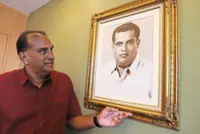
Tycoon Vallal Rengasamy Pillay is remembered not only for his towering stature but also for the way he shared his wealth.
“My father always said, ‘when we come into this world, we bring nothing; when we leave, we take nothing’,” recalled his son Datuk Rethinam Pillay.
“To him, wealth was never meant to be kept. It was to help others, to support education, to build temples and to provide land so families could have a future of their own.”
In the 1950s, Rengasamy and his brother, philanthropist NTS Arumugam Pillai, were multi-millionaires.
They bought and sold estates and held thousands of hectares of plantation and development land from the north down to Johor.
With each purchase of the over 70 British-owned plantations, land was set aside for temples, schools or burial grounds to be handed over to the public.
Rengasamy’s first estate in Teluk Intan, Perak, was the 809ha Teluk Anson Rubber Estate.
It has a Hindu temple and a burial ground, both of which Rengasamy handed over to the community.
Later, when the district officer asked for 0.4ha for a Muslim burial ground, he gave 2.8ha.
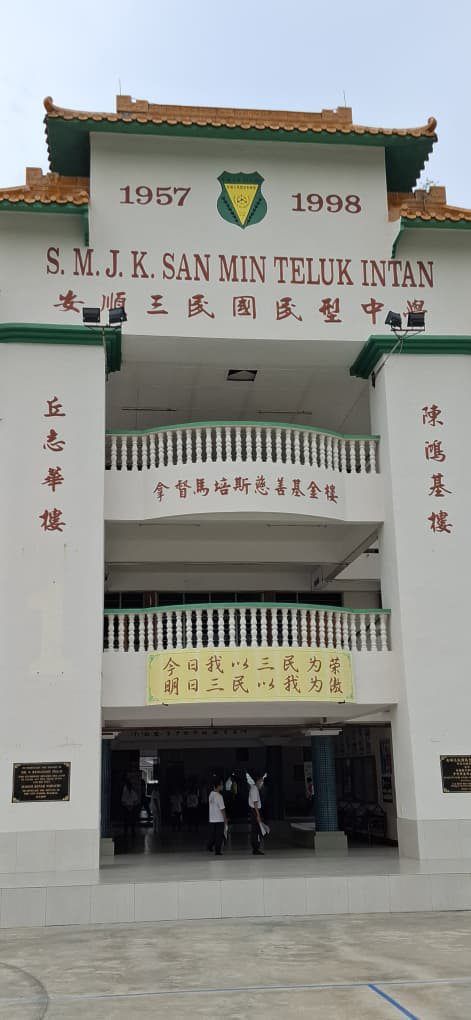
He also donated 2ha to SMJK San Min in Teluk Intan, which needed higher ground to escape flooding. Today, that school has over 2,000 students.
In Teluk Intan, families who once worked as labourers became landowners thanks to the brothers’ generosity.
“Many of those families are millionaires today,” said Rethinam, adding that it was a form of land reform – returning what was once under colonial control to locals.
Rethinam, who is now involved in property development, said Tamil schools were another focus of their philanthropy. He said starting in 1956, his father secured land for these institutions.
Another example of his philanthropy is Weng Lee Estate in Permatang Tinggi, Penang.
Around National Day in 1957, Rengasamy gave 30 families 12ha of land and another 2ha for a Catholic church.
The giving was not limited to Malaya. In Rengasamy’s hometown of Tiruppattur, India, his family funded schools, including the Arumugam Pillai College in the early 1960s.
Rethinam said his father even built a theatre in the town so that women did not have to travel to Karaikodi for entertainment.
“Both in Malaya and India, my father treated his estate workers fairly, paying proper wages and ensuring they had enough to live on.
“When food was served during festivals, the same variety was given to workers as to guests, even when ministers or foreign dignitaries were present,” said Rethinam when met at his office in George Town, Penang.
Some wondered if the donations were made under government pressure but Rethinam said that was not the case.
“Nobody forced them. My father and uncle were blessed and believed it was their duty to give back.
“In every temple that was handed over, every school site secured, every burial ground set aside, the work of a man who believed wealth must serve humanity can still be traced.
“A search at the National Archives of Singapore shows a government press statement dated June 12, 1957, quoting acting chief minister Abdul Hamid Jumat of Singapore who praised Rengasamy’s philanthropy in giving land and 120,000 dollars that year to educational institutions.
“What my father gave was a legacy for generations,” said Rethinam, who continues to support schools and orphanages.
“My brothers and I carry on this legacy because my father’s gifts were more than charity. They were investments in people, in dignity, in community.
“Today, across Malaysia, schools stand, temples grow, churches remain and families prosper.
“That’s because one man believed that when you have everything, the only thing worth keeping is what you give away.”