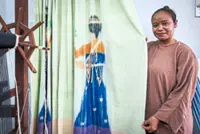
LOOKING at the intricate fabric she created, Noor Seshida Hamid never imagined she would one day master the art of the Royal Pahang Weave (Tenun Pahang Diraja).
The 29-year-old Orang Asli from the Semai ethnic group initially had no interest in learning the craft and almost gave up, finding the process too complicated.
However, thanks to her determination and support from her family and instructors, she has become one of the weavers representing the Orang Asli community in Lipis, Pahang.
They are now working to preserve and elevate the state’s weaving heritage.
“I didn’t know anything about weaving. But when my mother told me to learn, I just followed,” she told Bernama.
“When I saw the intricacy and beauty of the woven fabric, I started to open my heart to learning and appreciating it.”
Noor Seshida specialises in making kain samping (a cloth worn over baju melayu trousers) and can complete two pieces a month, depending on the pattern’s complexity and number of orders.
She said the main challenge was when threads broke or if she made a mistake, requiring her to undo her work and fix it.
She hopes to deepen her knowledge of the craft, if given the opportunity.
Fellow villager Naera Bah Du, 31, also showed great commitment despite considering quitting during her training.
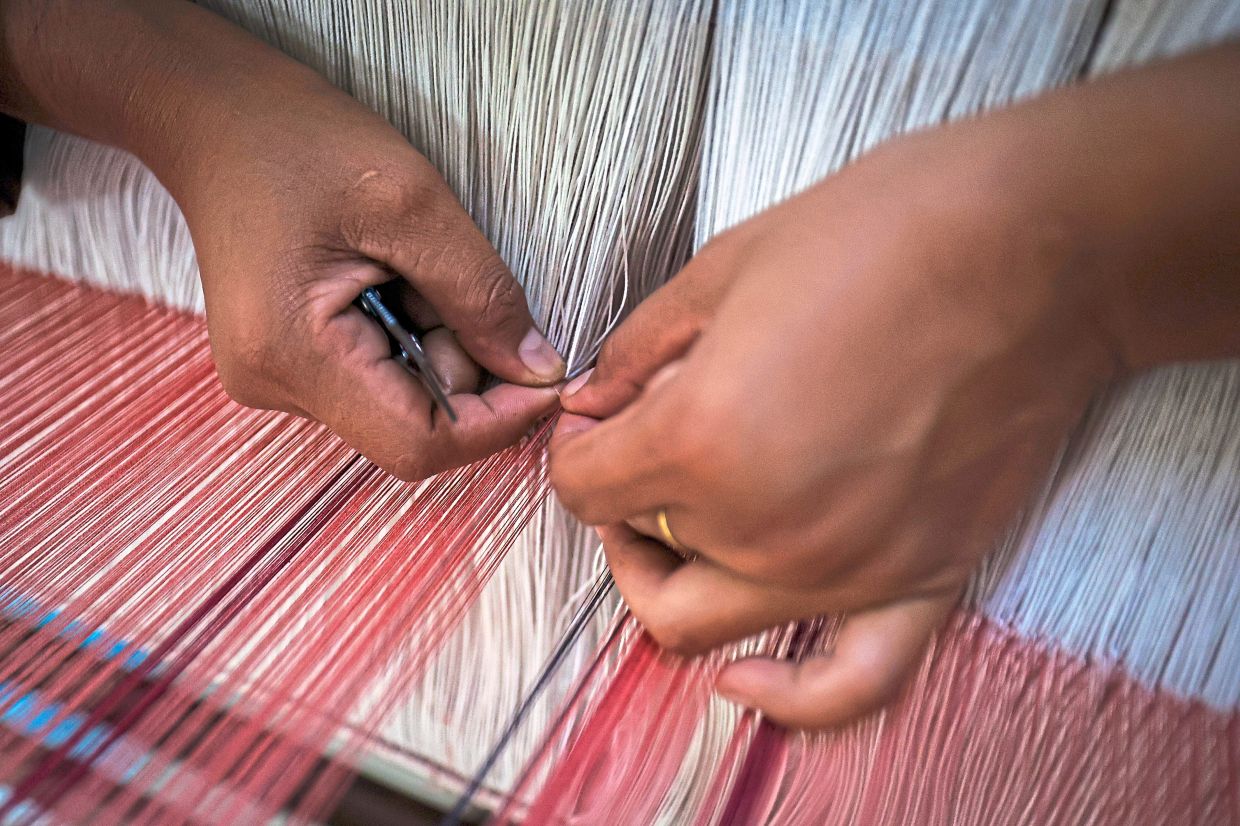
“I reminded myself that we were the first group of Orang Asli from our village to learn this art of weaving.
“I wanted to prove that our community could do it too.”
Naera said one of the most challenging steps was connecting the threads, a process that required high levels of precision and patience.
Today, both women work full-time at Tenun Pahang Diraja Centre in Pos Betau, Lipis.
The centre was founded by Tengku Ampuan of Pahang, Tunku Azizah Aminah Maimunah Iskandariah in 2023 to empower the weaving craft and improve the livelihoods of rural communities, especially the Orang Asli.
According to centre supervisor Nurhasanah Norrahani, the facility also served as an educational hub for tourists and the public.
“Many people think our products are just sarong or ordinary handicraft.
“We demonstrate the entire weaving process at the centre, from thread to finished fabric, to show how complex it is,” she said.
“Visitors will then gain a better understanding and appreciation of this heritage,” Nurhasanah said, adding that the centre only produced fabrics, not ready-made garments.