THE East-West Highway (JRTB), a visionary project, initiated by Malaysia’s first prime minister Tunku Abdul Rahman Putra Al-Haj, has stood the test of time since its completion in 1982.
Spanning the rugged terrain between Gerik in Perak and Jeli in Kelantan, the highway was a landmark achievement for the Public Works Department (JKR), which overcame significant engineering challenges to build it in-house.
However, more than four decades on, the JRTB is facing urgent calls for upgrades and safety improvements following the tragic accident on June 6, which claimed the lives of 15 students returning to Universiti Pendidikan Sultan Idris (UPSI) in Tanjung Malim, Perak.
Outdated design
Originally designed in the 1960s and built throughout the 1970s, the JRTB was intended to accommodate the traffic volume and vehicles of that time.
Today, it faces the growing demands of modern traffic, presenting ongoing challenges for motorists with its sharp bends, narrow lanes, and steep gradients.
The annual reports of fatal accidents underscore the urgent need for intervention.
Assoc Prof Ng Choy Peng from Universiti Pertahanan Nasional Malaysia (UPNM) highlighted the outdated design of the highway, noting that it no longer met current road safety standards.
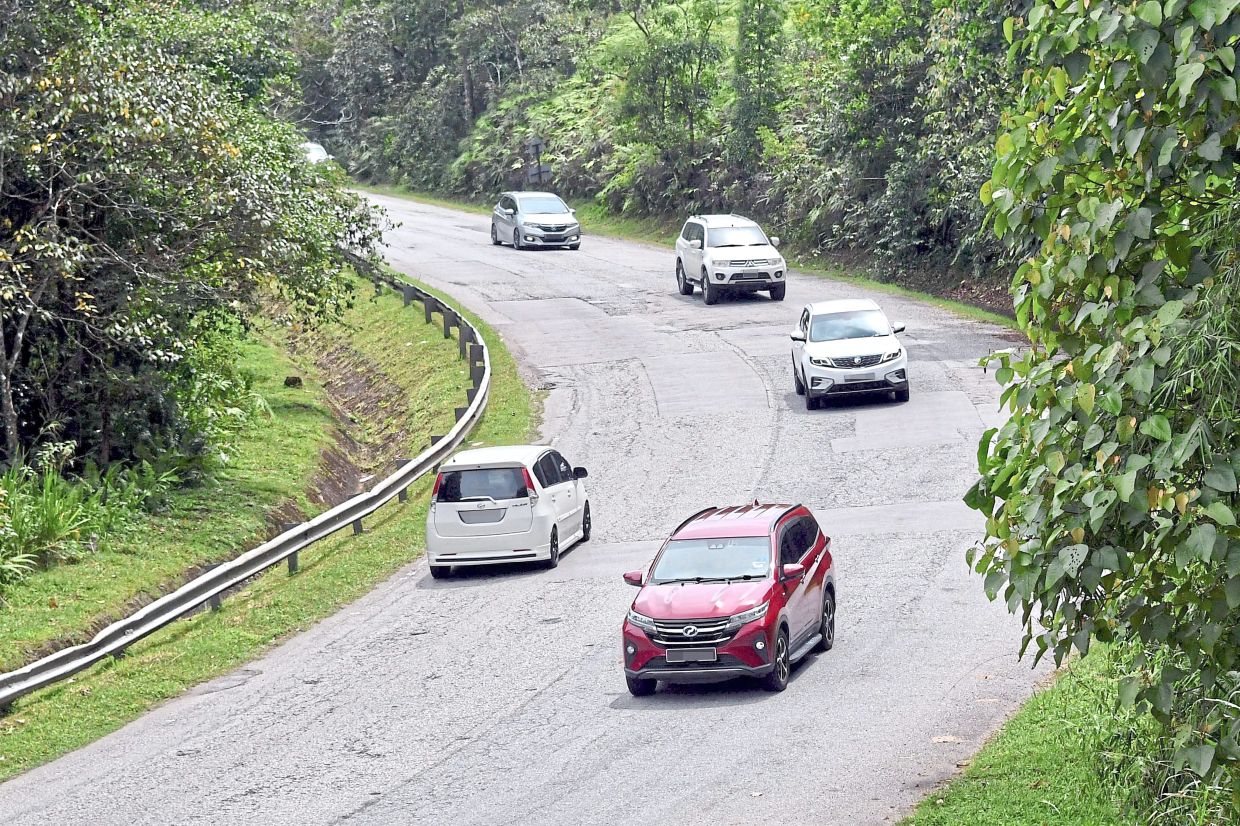
The civil engineering lecturer recommends a comprehensive review of the JRTB’s design – taking into account natural wear and tear, the rising number of heavy vehicles, and evolving user needs.
“Vehicle numbers and load capacities have increased significantly, and the original design – now over five decades old – can no longer meet current demands.
“Additionally, where appropriate, extra lanes should be built or existing ones widened to reduce stress on the original road structure,” he told Bernama.
He also recommended building additional rest and recreation (R&R) areas at strategic points, noting that only one exists currently along the route, which is R&R Titiwangsa.
Technological interventions
To address these challenges, experts recommend integrating modern technology and learning from international examples.
Assoc Prof Dr Nur Izzi Md Yusoff from Universiti Kebangsaan Malaysia advocates for the use of early weather warning systems and smart navigation technologies.
“Such systems can alert drivers to adverse conditions like heavy rain, dense fog, or landslides, enabling them to adjust their driving behaviour accordingly,” he explained.
He referenced successful implementations in New Zealand and the United States, where similar mountainous routes had benefitted from real-time alerts and enhanced safety features.
“Arthur’s Pass in New Zealand and the Blue Ridge Parkway in the US have significantly reduced accident rates through well-planned interventions,” Nur Izzi noted.
Similarly, Assoc Prof Dr Law Teik Hua from Universiti Putra Malaysia pointed to technologies used in Switzerland, Japan and Norway that Malaysia could adopt.
“A fog detection system, such as that in the Swiss Alps, can automatically detect fog, reducing accident rates by up to 30%,” he suggested.
He also proposed alternative tunnels for heavy vehicles, to ease congestion and improve safety on main roads.
Prioritising safety
In recognition of these needs, the Federal Government has allocated RM55mil this year for upgrading the JRTB.
Works Minister Datuk Seri Alexander Nanta Linggi announced plans for new streetlights, road markings, and repairs to severely damaged sections.
The ministry uses a database to prioritise repair works, employing the Pavement Condition Assessment (PCA) method to evaluate road conditions and identify areas needing immediate attention.
Commenting on these initiatives, Nur Izzi recommended additional engineering upgrades, such as improved drainage systems, enhanced guardrails, and better lighting in high-risk zones.
He stressed the importance of regular road safety audits to identify and mitigate potential hazards.