
SEVERAL villages in Kajang, Selangor, have taken waste management into their own hands by hiring private contractors to handle rubbish collection as a step towards improving their living conditions.
These communities, which do not receive waste management services from Kajang Municipal Council (MPKj) due to their exemption from assessment tax, are grappling with increasing waste disposal challenges.
While MPKj has placed communal rubbish bins near the villages for their use, the bins are often overflowing due to the high volume of waste dumped there by both the villagers and outsiders.
Rising waste output
Over the past decade, waste output in these villages has surged, particularly in those located near urban centres.
Sungai Ramal coordinating officer Mazwan Johar, from the Bangi assemblyman’s office, observed that many households in the municipality fall into the M40 income category.
“Village residents today are not necessarily poor,” said Mazwan.
“Many people choose to live in villages because they enjoy the environment and lifestyle.
“Economically, they are doing well, often living in large houses.
“They are both willing and able to pay for improved waste collection services,” he added.
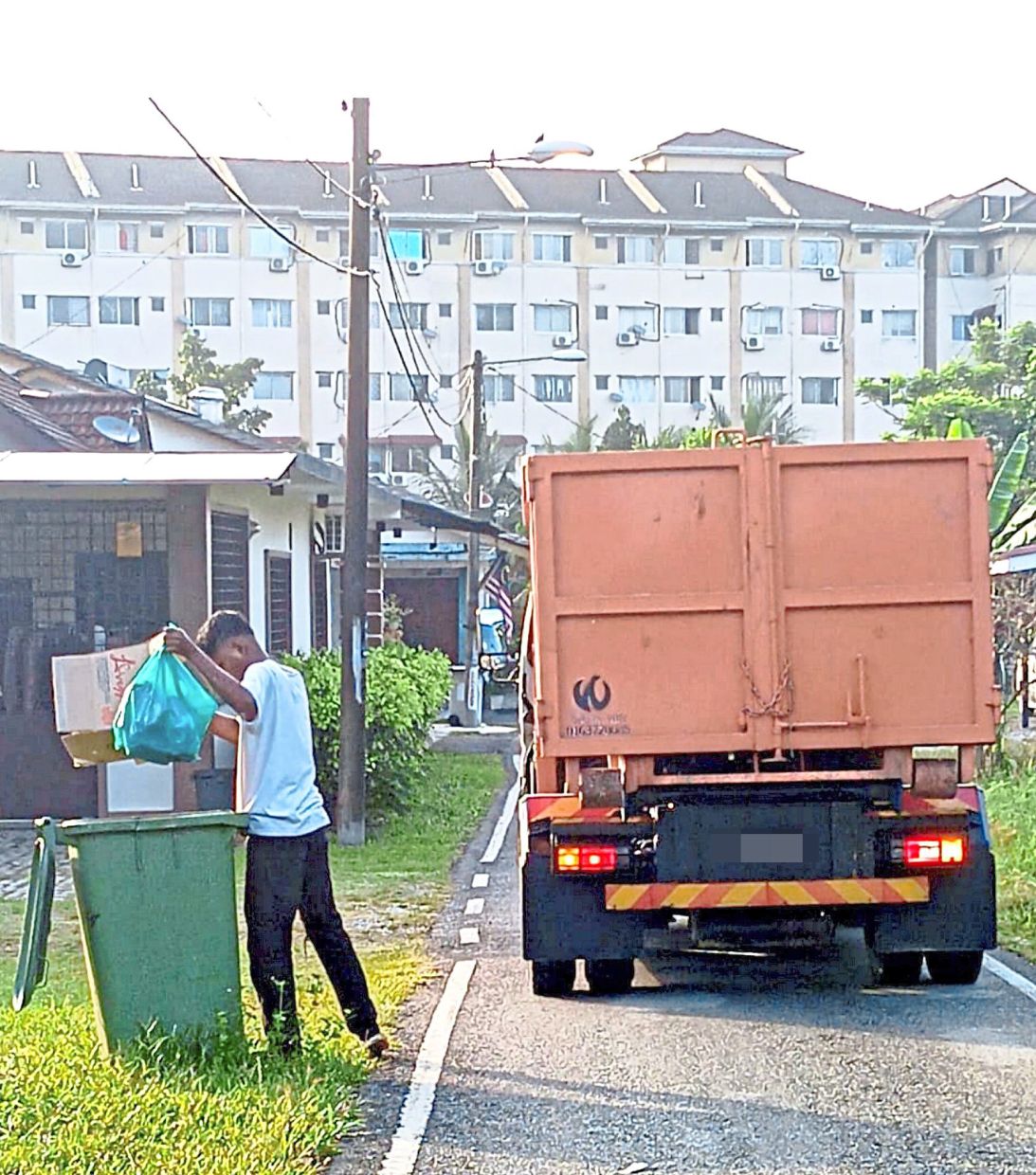
The communal rubbish bins provided by MPKj have proven inadequate.
These bins, strategically placed near the villages, are frequently overflowing.
This situation has led to a host of issues, including foul odours, unsightly surroundings, and discomfort for residents living near the disposal areas.
Community efforts
Recognising the problem, Mazwan and his office began discussions with six villages within his coordination area.
The response from the communities has been overwhelmingly positive.
“Residents have expressed a preference for rubbish collection services that mirror those offered by MPKj, specifically requesting collections three times a week.
“We initially proposed a twice-weekly collection,” Mazwan said, “but the majority of residents preferred thrice- weekly pickups and were willing to pay a higher fee for the service.”
In addition to more frequent collections, residents have called for the removal of communal bins altogether.
“Some residents living near these bins are unhappy with their placement which caused unpleasant sight and odour,” said Mazwan.
“There have even been incidents where individuals disposing of rubbish at these communal points were harassed by nearby residents,” he added.
Fairness and responsibility
MPKj president Nazli Mohd Taib emphasised the importance of everyone contributing to the waste collection services.
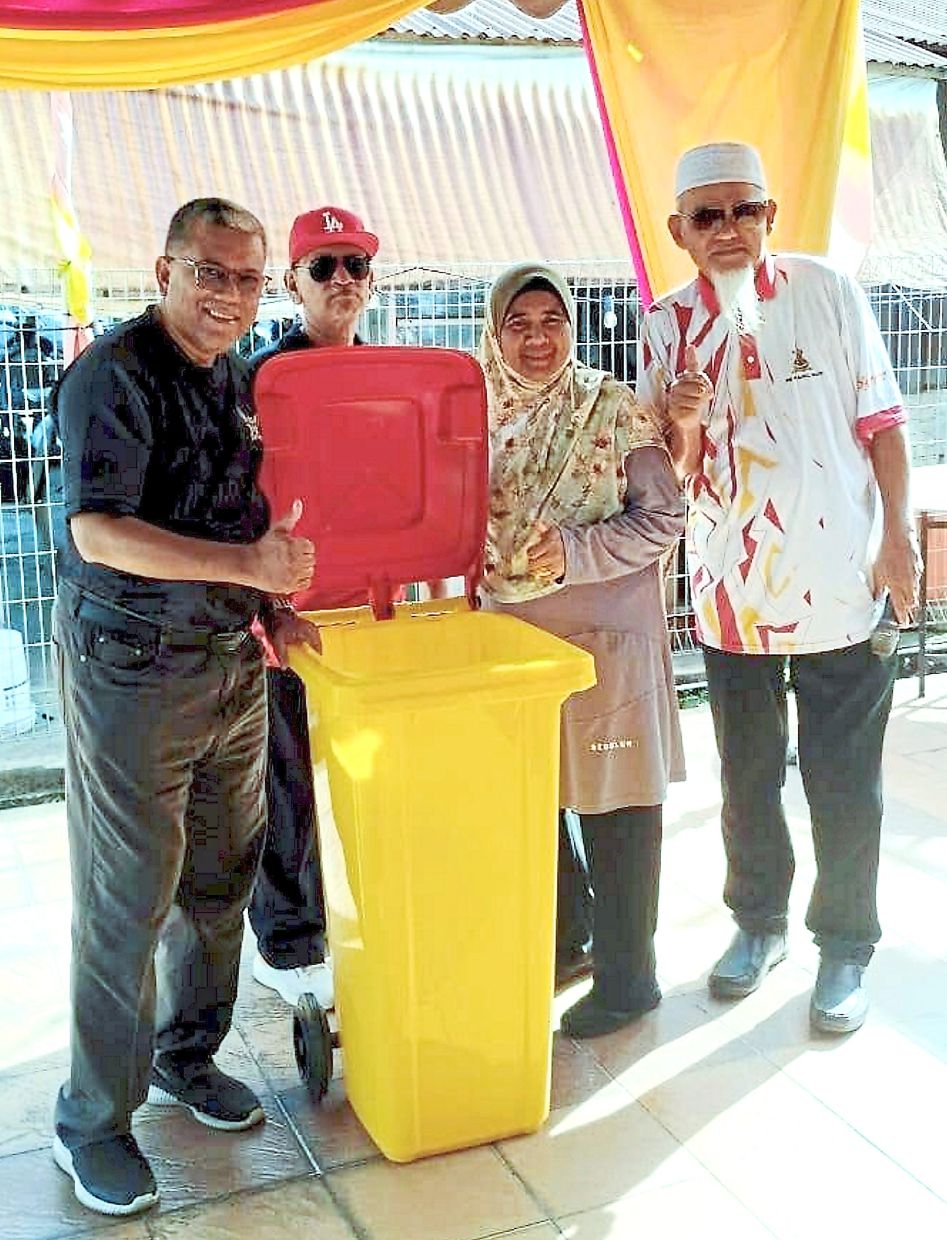
He pointed out that while communal bins were provided free of charge for the village residents, the cost was ultimately borne by other taxpayers, which he deemed unfair.
“The availability of the communal bins has also made it convenient for business operators or anyone without proper waste management systems to dispose of their rubbish there,” Nazli noted.
“This is particularly evident at communal bin sites in areas such as Sungai Ramal and Hulu Langat, where there is a high concentration of homestays and food outlets,” he added.
Nazli highlighted the challenges faced by contractors in clearing rubbish from bins intended solely for domestic waste.
“Contractors are having difficulty dealing with bins filled with all sorts of refuse, such as bulk waste and coconut husks,” he said during an interview at Menara MPKj.
He also expressed gratitude towards the Bangi assemblyman’s office for acting as a mediator between the villagers and the rubbish collection contractors.
“It will be difficult to impose a fair fee on village houses because there are many different sizes of built-up,” he highlighted.
Early results
Two villages, Kampung Sungai Ramal Dalam and Kampung Sungai Ramal Luar, have already agreed to the new paid waste collection system.
Kampung Sungai Ramal Dalam village chief Kamsari Nor reported that rubbish disposal at the communal bin had become unmanageable, and welcomed the initiative as a step forward.
The village, with approximately 2,000 houses, began doorstep waste collection on June 1.
More than half of the households agreed to pay RM35 per month for thrice-weekly collections.
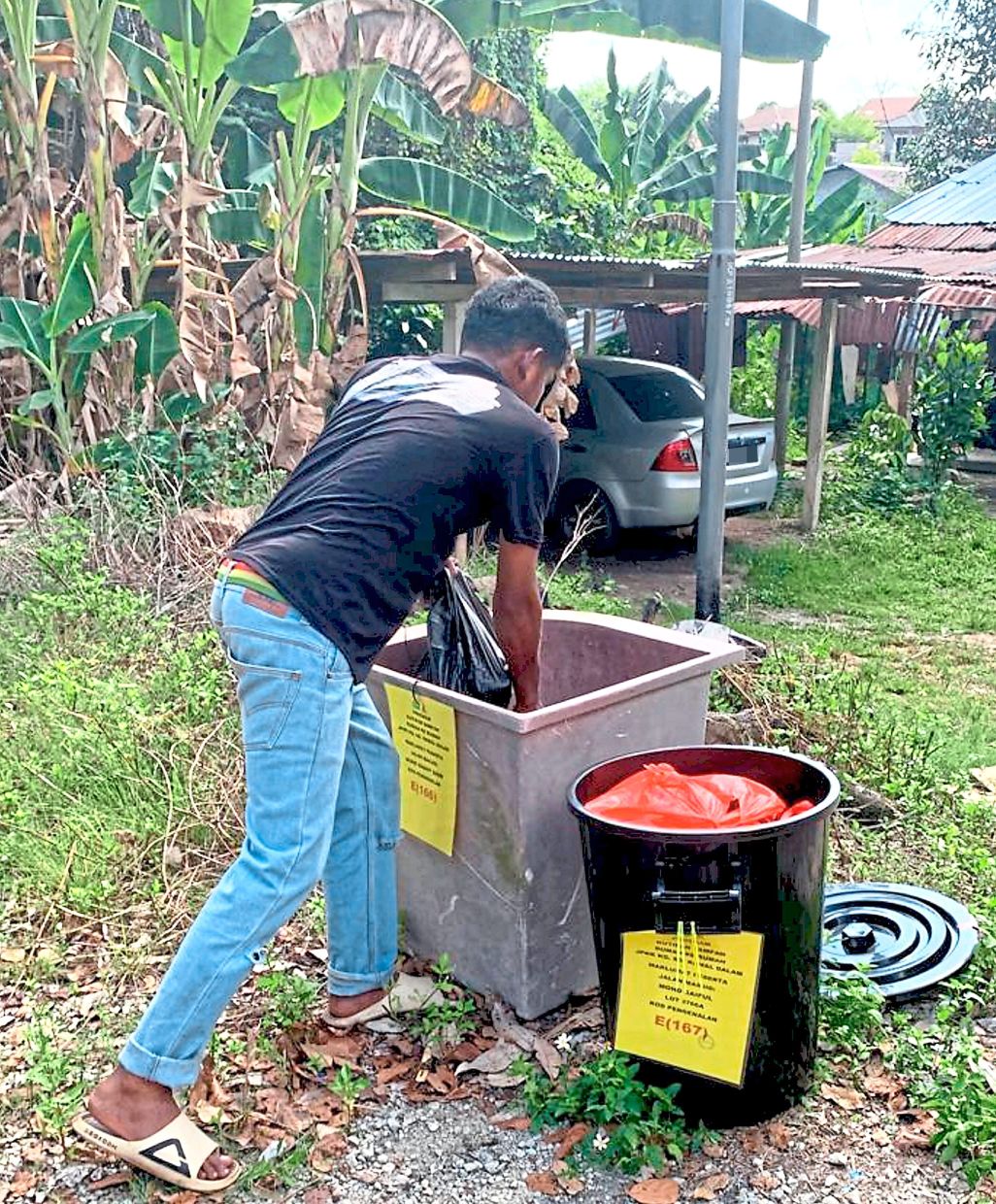
“Subscribers to the service are given tags to help the contractor identify them,” said Kamsari.
“Due to the narrow roads, the contractor uses a smaller lorry with a RoRo (roll-on roll-off) bin for collection.”
While he acknowledged that the service has been generally satisfactory, there have been occasional missed collections, which he said was likely due to the contractor still familiarising themselves with the complex routes.
He added that the communal bins were removed on June 1, resulting in a marked improvement in cleanliness.
Meanwhile, Kampung Sungai Ramal Luar village chief Taip Kairi explained that part of his village had already adopted a similar arrangement since 2023.
“There are about 600 houses here, and around 400 of them have formed a residents association and subscribed to waste collection services at RM40 per house per month,” he said.
“Rubbish is collected three times a week,” he added.
Services to the remaining 200 houses started on July 1, facilitated by a cooperative and a mosque.
“We have about 80% participation so far,” Taip revealed.
“Some residents who did not agree to the arrangement are from lower-income groups and may struggle to afford the fee.
“We are exploring ways to subsidise the cost through donors or sponsorships,” he said.
Kajang’s waste challenge
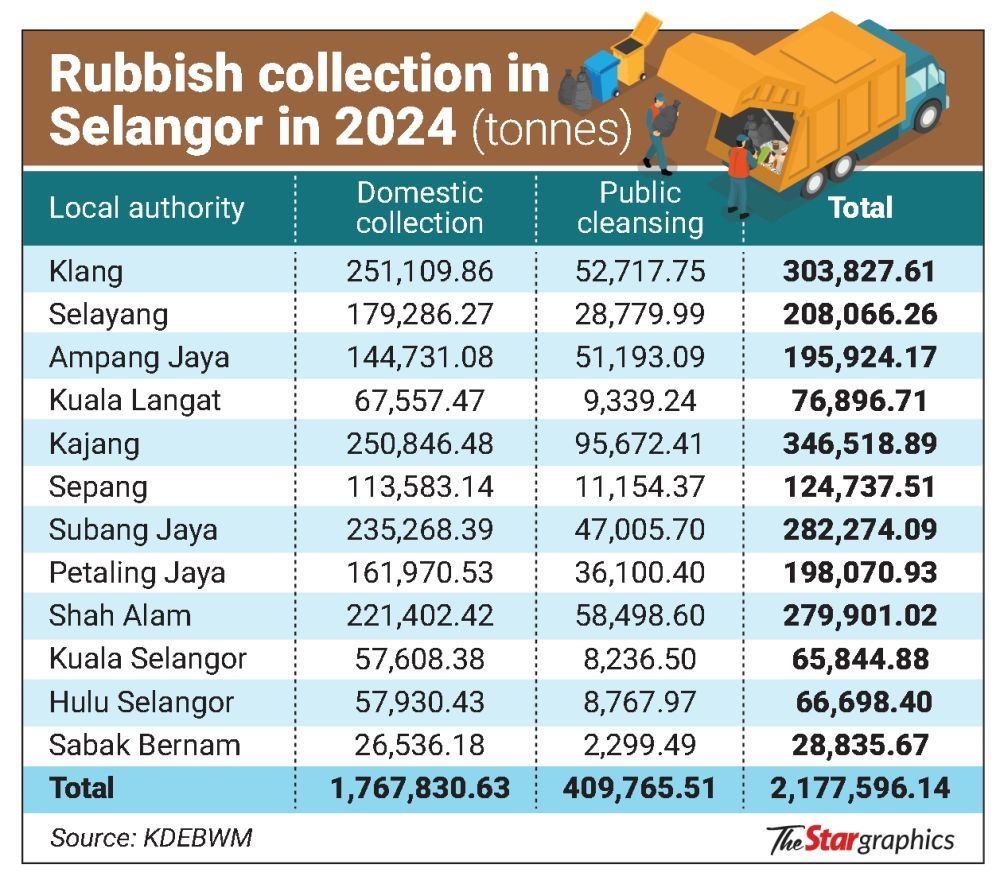
When contacted, KDEB Waste Management Sdn Bhd managing director Datuk Ramli Mohd Tahir said Kajang led in waste output compared to other cities, municipalities and districts in Selangor (see chart).
In the previous year, Kajang recorded 346,518.98 tonnes of waste output, with 250,846.48 tonnes from domestic waste and 95,672.41 tonnes from public cleansing.
“The 1.1 million residents of Kajang municipality each generates an estimated 1.1 kg of waste daily,” said Ramli.
“That is about 1,000 tonnes of waste generated per day.”
Apart from the population factor, the high number of commercial and industrial areas as well as factories in the municipality also contribute to the immense waste output.
Ramli said many people opted for the cheap and easy way of dumping rubbish indiscriminately, hoping that KDEBWM would clear it away.
“Such activity has to stop, and it will only stop for good with stricter enforcement,” he asserted.
“We also see a lot of rubbish from hawkers, restaurants, resorts and homestays being thrown into the communal bins intended for village residents.
“The night market vendors leave a lot of rubbish behind too,” he said.
Future plans
When contacted, Selangor local government and tourism committee chairman Datuk Ng Suee Lim highlighted the significant consequences faced by properties exempted from assessment tax, such as the lack of waste management services.
He pointed out that such properties are often on ancestral or agricultural land, not limited to Kajang but also prevalent in other areas of Selangor, including Rawang, Batang Kali, Jeram, Hulu Selangor, Kuala Selangor, Sepang and Sabak Bernam.
“We are exploring ways to ensure all buildings are registered with their respective local councils, for better management,” said Ng.
Efforts to formalise waste management systems in these villages are ongoing, with various stakeholders, including local governments, community leaders, and private contractors, working collaboratively to address the challenges.