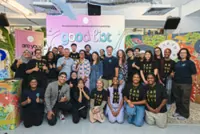
TEN additional Dapur Digital (cloud kitchens) have been officially set up in Kuala Lumpur.
Their number now stands at 15 as five were initially established at People’s Housing Projects in February last year.
Dapur Digital operates as a food preparation facility and economic hub, enabling micro-entrepreneurs to leverage technology to expand their market reach through digital platforms.
Under Budget 2025, the government announced the setting up of 30 cloud kitchens to help lower income groups.
Social enterprise Pepper Labs introduced the initiative jointly with the Prime Minister’s Department, Finance Ministry, Yayasan Hasanah under Khazanah Nasional Bhd and Kuala Lumpur City Hall (DBKL).
Pepper Labs managing director Thanaselan Rajendran said the 10 new cloud kitchens were part of Phase I of the expansion plan.
“All 15 kitchens have started functioning,” he said at a handover ceremony at Menara DBKL 1.
Thanaselan added that the five cloud kitchens established last year had successfully earned more than RM1.2mil in sales.
“This is the result of the firm collaboration between government agencies and entrepreneurs running the kitchens.
“We hope for more allocation to be given to this initiative in Budget 2026 to enable more kitchens to be set up.
“There are many PPRs in Kuala Lumpur and 15 kitchens are insufficient.”
At the event, Minister in the Prime Minister’s Department (Federal Territories) Datuk Seri Dr Zaliha Mustafa presented mock keys to the 10 new Dapur Digital participants.
In her speech, Dr Zaliha asked Pepper Labs to help cloud kitchen entrepreneurs obtain halal certification from Malaysia Islamic Development Department.
“The halal industry has a big potential, given that it is projected to contribute up to 8.1% of Malaysia’s gross domestic product this year,” she said.
The export revenue of halal products is also expected to reach RM56bil this year.
“On a global level, it is also projected that the halal industry would expand to RM22.34 trillion by 2030.
“Hence, obtaining halal certification can really help these entrepreneurs expand their business,” she said.