




Stagnant water in facility a public health risk, says resident
DESPITE multiple assurances over the years, the swimming pool at Bangsar Sports Complex remains closed, prompting renewed calls for action from Kuala Lumpur City Hall (DBKL) to reopen the facility for public use.
Once a weekend fixture for swimmers of all ages, the pool had been shut since the Covid-19 pandemic and had fallen into disrepair.
Built in 1998, the DBKL facility includes a 25m-long six-lane pool as well as a children’s pool.
The wider complex remains operational, featuring an artificial turf futsal court, tennis and badminton courts as well as a gymnasium.
Following a news report last December, Kuala Lumpur mayor Datuk Seri Maimunah Mohd Sharif, who began her tenure in August 2024, had said she was not aware of the pool’s condition but pledged to address the matter.
She also said DBKL officers would inspect the site and determine the next steps.
At the time, Lembah Pantai MP Datuk Fahmi Fadzil also urged DBKL to prioritise mosquito control and general maintenance at the site.
However, the pool in Jalan Terasek 3 is still closed when StarMetro visited over the weekend.
The main pool and children’s wading pool were partially filled with stagnant murky green water, with patches of algae coating the structure.
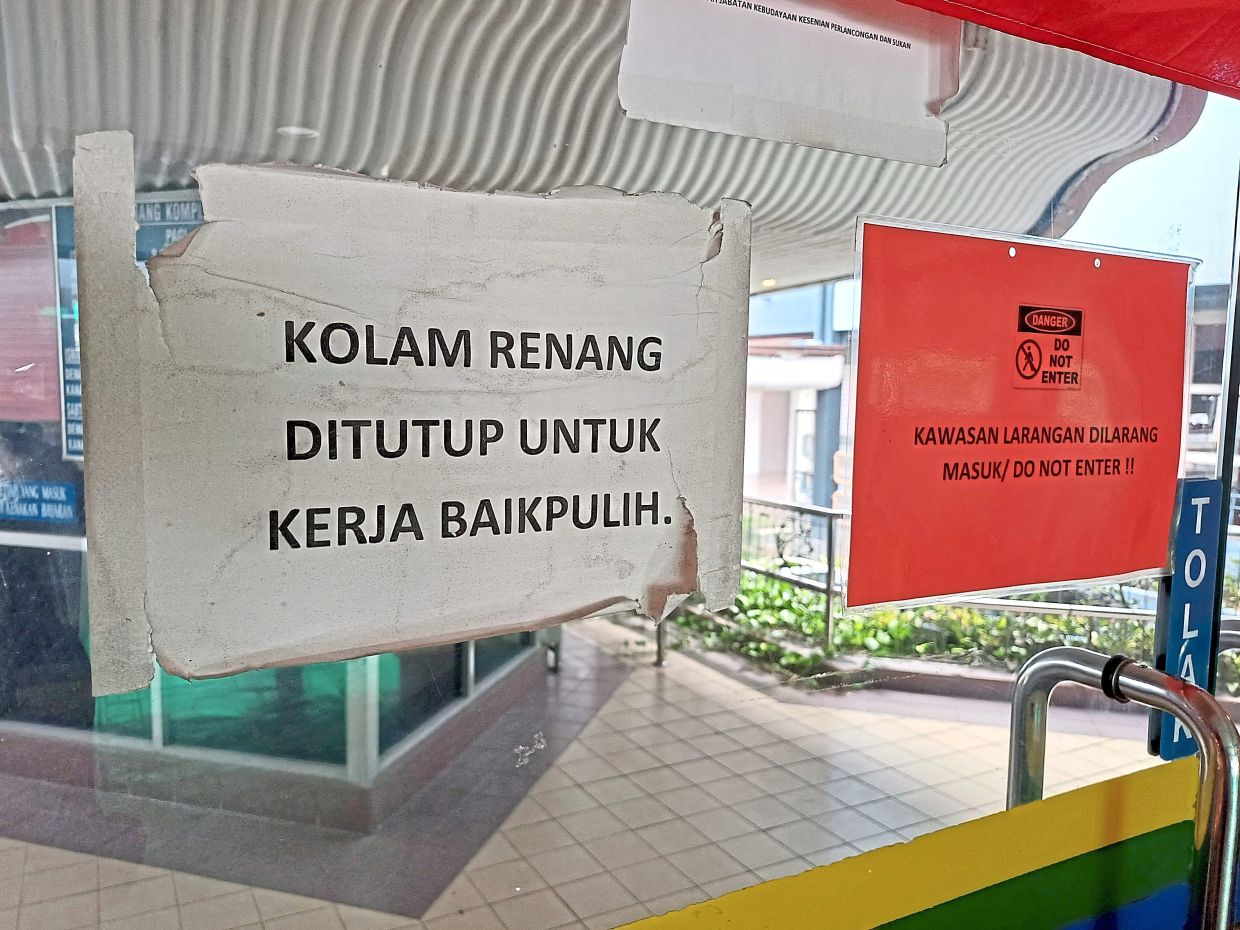
An undated notice on the complex’s board stated that the pool was shut until repair works were completed, but gave no timeline or details of planned improvements.
When contacted, Bangsar Baru Residents Association president Datuk George Joseph said residents had repeatedly brought up the issue with DBKL, but no progress had been made.
“This was brought up to multiple department directors.
“About three years ago, DBKL told us the pool had to be demolished and rebuilt due to leakage issues.
“They also said they were waiting for federal funds. But nothing has moved forward,” he said.
Joseph said the facility had served an important role in the community.
“Hundreds of children have learned to swim here.
“The pool was also used by senior citizens and children with special needs.”
He said the site’s current condition posed a public health risk.

“It is filled with stagnant water and algae, and is right next to a children’s playground,” he added.
Regular users of the complex have noticed the disrepair.
Muhamad Faris Yaakob, who uses the table-tennis facilities at the complex, said the prolonged closure was disheartening.
“I used to swim here during my university days.
“I would bring my children too if it was open,” he said, adding that its current situation was an embarrassment.
In a statement to StarMetro, Kuala Lumpur Aquatics (KLA) – formerly the Kuala Lumpur Amateur Swimming Association – said the long-term closure of public pools had negatively impacted grassroots swimming and community well-being.
“Neighbourhood pools provide a space for recreation, exercise and social interaction.
“Inclusive and accessible public pools are essential to nurture community interest in water sports and recreational activities.”
The association stressed that the shortage of public pools in Kuala Lumpur had affected the development of young swimmers.
“We have received a lot of feedback from parents and coaches.
“Over the past five years, we have seen a consistent decline in the number and quality of new swimmers aged 11 and under joining state or national competitions.
“This is the direct result of limited access to affordable, accessible public pools to run basic swimming and learn-to-swim programmes,” said KLA.
Although not directly involved with the Bangsar pool, the association said it had raised the broader issue of pool availability with DBKL, especially since its own training base in Bandar Tun Razak is also under refurbishment.
At press time, DBKL’s Culture, Arts, Tourism and Sports Department had not responded to queries on the status or timeline for restoring the pool.


