ILLEGAL banners placed on decorative arches at Brickfields’ Little India have turned the cultural landmarks into advertising spaces.
Local stakeholders are calling on Kuala Lumpur City Hall (DBKL) to act against the business owners comprising mostly eateries, citing a blatant disregard for public assets.
Dozens of bunting are hung across the arches marring the Pallava-inspired structures modelled after traditional South Indian temples.
Some banners were also tied to lamp posts designed in the style of the traditional Indian oil lamps.
Bukit Bintang Federal Territory Residents Representative Council (MPPWP) Sub-Zone 4 chairman Cynthia Hor said the unchecked visual clutter undermines Kuala Lumpur’s image as a world-class city.
“These public assets are not meant for private use,” she said.
Brickfields Rukun Tetangga deputy chairman Rajendran Periasamy said the decorative pillars should be off-limits to clutter, especially during Visit Malaysia 2026.
“These pillars should not be used to hang commercial banners,” he said.
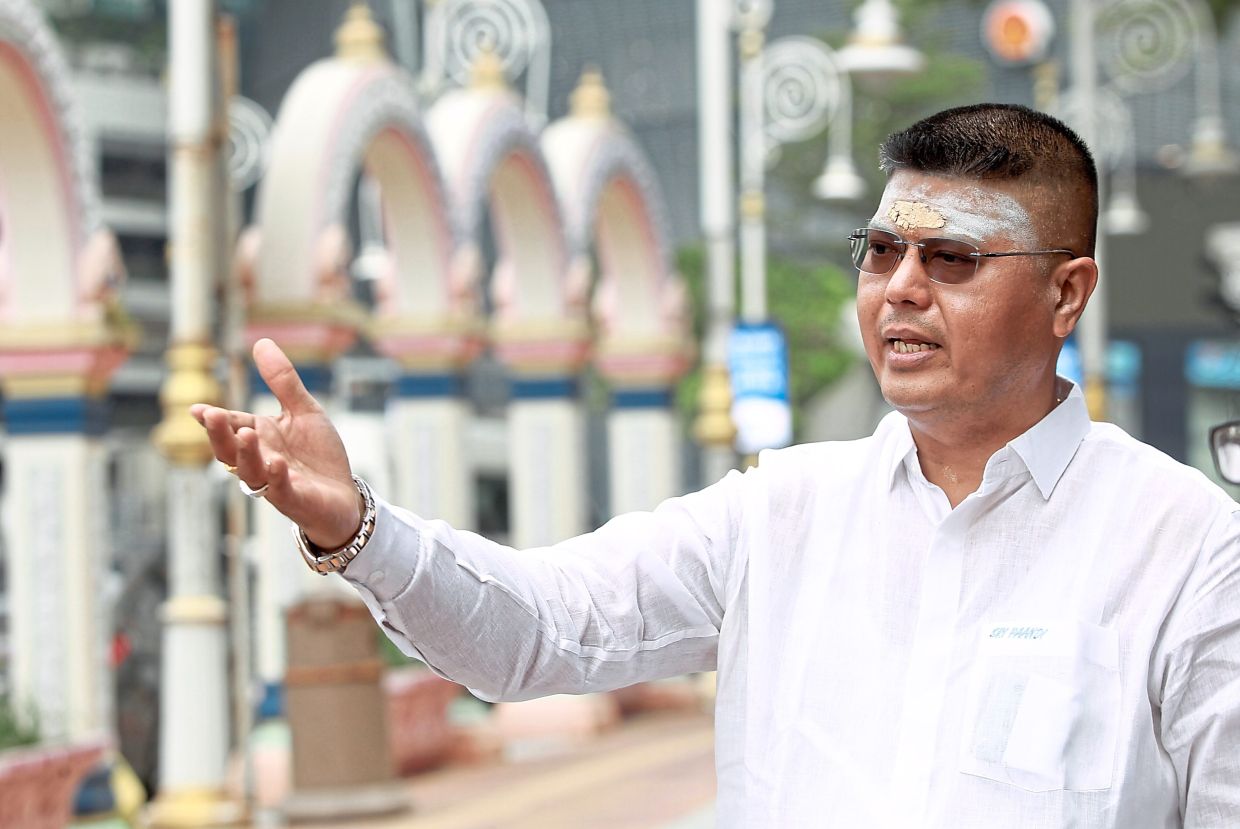
Brickfields Business Community Society secretary Datuk Alagarsamy Kumar noted that even the Torana Gate, which was a diplomatic gift from India, had been used to hang banners.
“These banners clearly show the business owners’ names and contact numbers. Why is there no enforcement?,” he asked.
“There appears to be little action from the DBKL Bukit Bintang branch office.
“This sends the message that such misuse is acceptable.
“Some of us feel like removing the banners ourselves, but we will leave it to the authorities,” he said.
Malaysian Indian Restaurant Owners Association (Primas) president Datuk J. Govindasamy @Suresh advised restaurant owners to shift to social media rather than defacing the neighbourhood.
“These structures were installed to enhance the surroundings, not to be used as advertising space,” he said.
Checks showed that some of the bunting were also promotions for events outside Kuala Lumpur, including Perak.
A DBKL enforcement officer from the Bukit Bintang branch said none of the banners have approval from the authority.
“Action will be taken. Even with permission, the decorative arches are not designated locations for such displays,” the officer said.
StarMetro has previously reported that DBKL carried out monthly enforcement operations, removing an average of 25,000 to 30,000 illegal banners and bunting.
Such advertisements fall under the Advertisement By-laws (Federal Territory) 1982 and the Vandalism By-laws (Federal Territory of Kuala Lumpur) 1991.
Kuala Lumpur mayor Datuk Seri Fadlun Mak Ujud had said the current maximum compound of RM2,000 may not be an effective deterrent, and that DBKL was considering to increase the penalty to RM50,000 to curb repeat offences.