DURING Ramadan, many Muslims usually minimise physical activity to conserve energy and prevent dehydration while fasting.

Among them is Mohd Azhari Md Salleh, 39, a fitness trainer and gym co-owner in Petaling Jaya, Selangor.
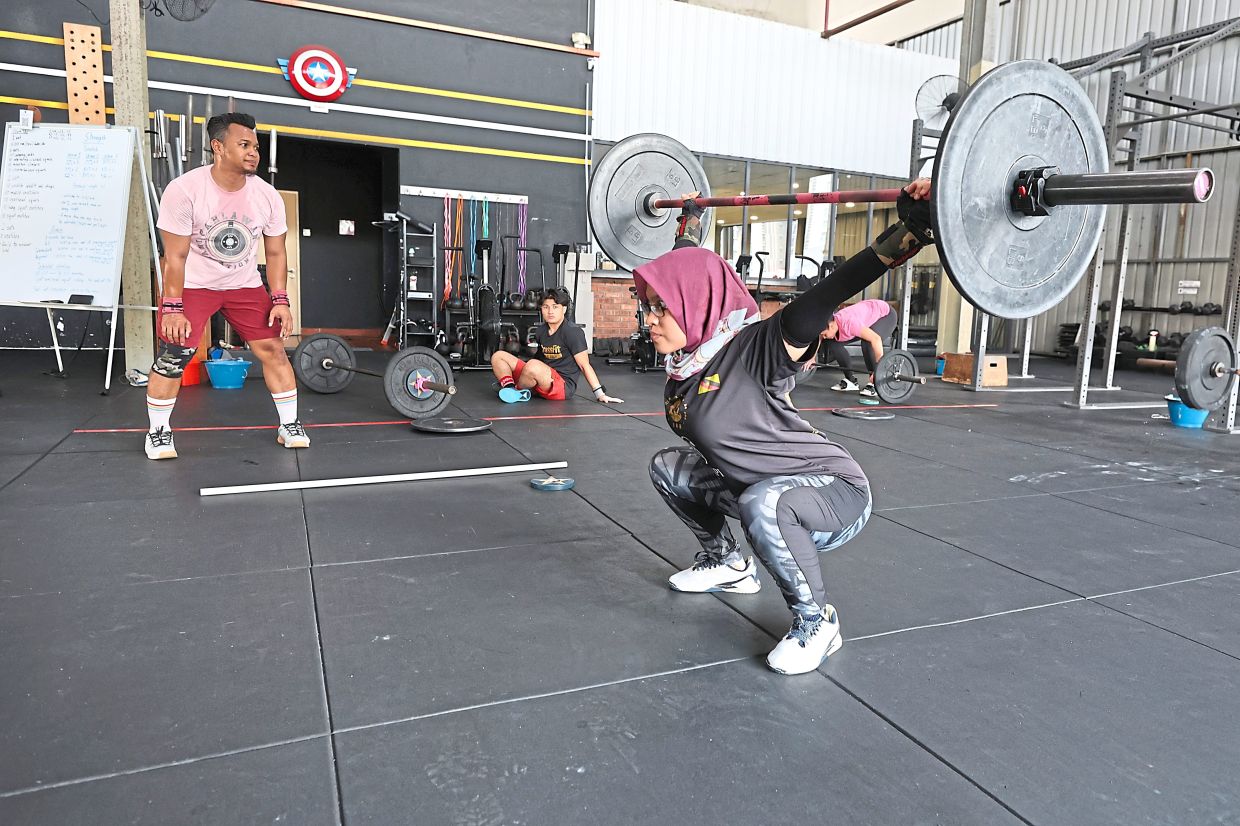
He maintains his routine during Ramadan by exercising six days a week, with each session lasting around 60 minutes.
“I focus on functional movements, which are a key component of the training programme, incorporating endurance and fitness training.
“Endurance may involve running, rowing and biking while fitness training can range from squats and push-ups to weight-lifting,” he said.
To keep himself hydrated during the day, he drinks three litres of water, spread out throughout the night.
“I consume a litre each when breaking fast, before going to sleep and during sahur (pre-dawn meals).
“I also cut down on carbohydrates, focusing instead on protein such as ayam golek, ayam tandoori or ayam percik for breaking of fast and sahur,” he added.
Pilates instructor Raihan Zafrul, 27, said those intending to exercise during Ramadan should know their body.
“Not everyone is the same as each person has his or her own preferred timing, so find what works for you,” she said, adding that she usually worked out twice or thrice a week, either in the morning or evening.
Raihan, who also teaches calisthenics in Damansara, Kuala Lumpur, suggested taking isotonic drinks and fibrous food during sahur to improve one’s hydration.
Adjusting goalposts
Some Muslims also make changes to their exercise schedule, apart from managing their expectations when it comes to muscle gain.

Fitness trainer Aidy Johan, 36, from Ampang, Selangor, said muscle gain, though not impossible, would be harder to achieve during this period.
“We consume less food, which means our body has less fuel to recover and that could slow down gains,” he explained.
Muscle gain occurs after recovery when damaged muscles are repaired through protein synthesis, stimulated by resistance training and adequate nutrition.
To maintain fitness while fasting, Aidy recommended that people spend between 30 and 60 minutes a day walking and jogging.
“Stick to low-intensity exercise in the evening and save the heavy lifting for after you break fast,” he added.
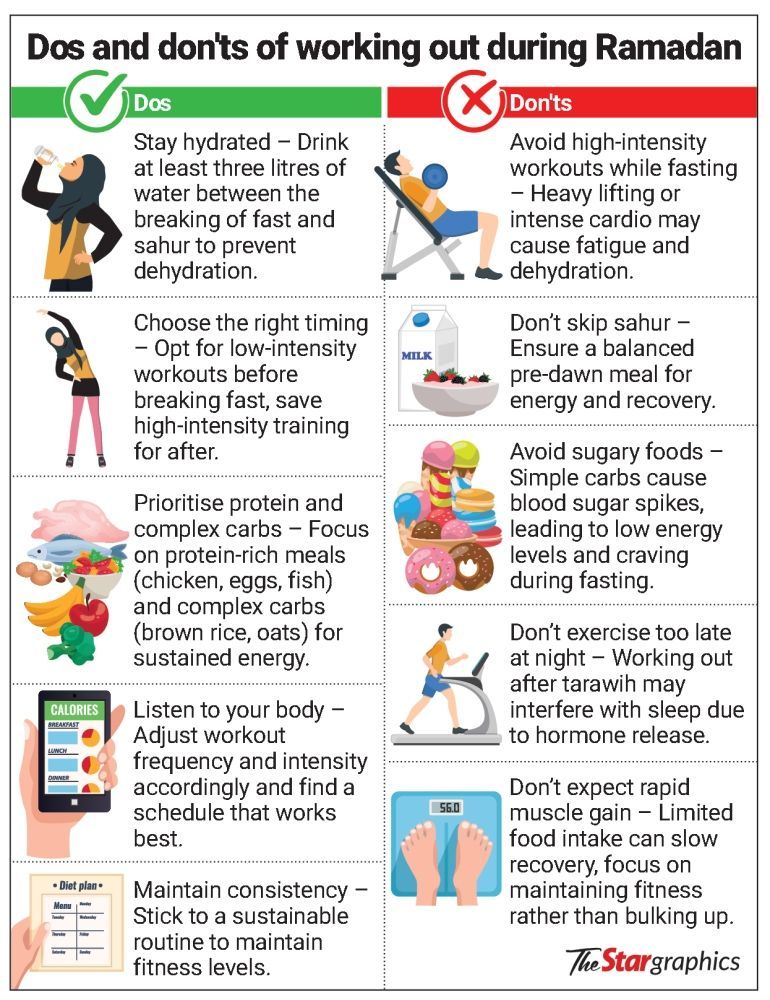
Despite the lack of eating and drinking during the day, Aidy stressed that Ramadan was an opportunity to boost one’s fitness level.
“We can focus and concentrate more while fasting,” he said, adding that consistency and momentum were key in achieving one’s fitness goals.
Mohamed Hairi Mohamed Hifni, 36, a canteen operator from Subang Bestari, Selangor, works out three to four days a week during the fasting month, compared to four or five days a week on regular days.
During Ramadan, he switched up his weightlifting routine, prioritising high repetition over high intensity.
“This is to minimise the risk of injury. Since the body has less fuel to work with, it would take longer to heal,” he said.
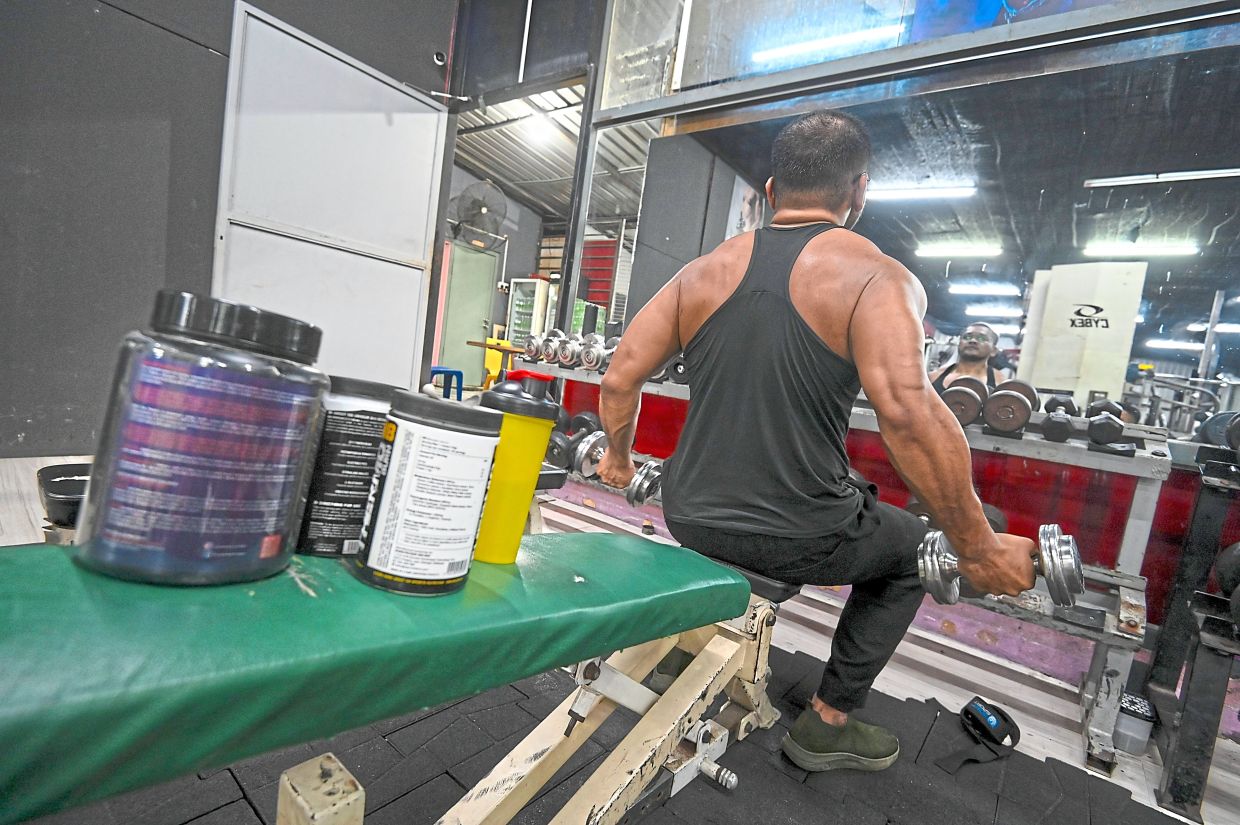
A father of two, Mohamed Hairi said he began working out during the movement restrictions imposed because of the Covid-19 pandemic in 2021.
“I used to weigh 112kg, but I am now 87kg,” he said, adding that his children motivated him to stay healthy.
To stay energised during Ramadan, Mohamed Hairi ensures that he consumes a lot of protein for sahur.
“I eat at least four eggs and I occasionally have them with chicken, sardine or other types of fish.
“I pair them with a small amount of rice but I avoid sugary food to stop getting cravings during the day,” he said.
Former personal trainer Syahriyal Lutfi Ahmadzon, 32, from Setiawangsa, Kuala Lumpur, cautioned people against working out too late in the evening.
“Many like to exercise after tarawih prayers, between 9.30pm and 11pm, but this may affect their quality of sleep.

“Physical activities tend to release certain hormones, which keep the body in a ‘heightened state’ and make it difficult to fall asleep,” he said.
To ensure speedy muscle recovery, Syahriyal Lutfi usually works out shortly before or after breaking fast.
“On average, I spend 30 minutes on strength training and 15 minutes on cardio exercise,” he said.
When it comes to nutrition, Syahriyal Lutfi prefers complex carbohydrates like brown rice and oats, over simple carbohydrates.
Unlike simple carbohydrates, such as white rice and bread which trigger blood sugar spikes, complex carbohydrates are digested slowly and can provide sustained energy.
For sahur, Syahriyal Lutfi said he regularly ate overnight oats, which sustained him throughout the day.
Factors to consider
Besides timing and nutrition, factors such as weather and health status are equally important when exercising during the fasting month.

“You can find out the amount of water you’ve lost by calculating the difference in your weight in the morning and evening.
“As a rule of thumb, 1kg is roughly equivalent to one litre of water.
“It is also encouraged to take food high in potassium and water, such as bananas and watermelons, to ensure proper electrolyte balance,” he said.
To avoid overexertion, Dr Ramlan recommended monitoring heart rate consistently.
Heart rate is the number of times the heart beats per minute, which indicates how hard the organ is working to pump blood throughout the body.
For most people, the maximum heart rate is typically calculated as 220 minus their age, noted Dr Ramlan.
“Aerobic exercises such as running, cycling, swimming or brisk walking, should be limited to within 70% to 80% of one’s heart rate.
“These are the figures generally used, but you should consult a dietitian for a more detailed assessment.”
Dr Ramlan also encouraged people to undergo regular medical check-ups to stay informed about their health.
“It is best to do so every year and senior citizens should get a check-up every six months to identify any underlying health issues,” he said.