Flamingos aren’t native to Aruba, but that doesn’t stop throngs of tourists from flocking to the island to pose with them every year.
The privately-owned Flamingo Beach there is artificially populated with the pink birds, and the only ways to get in are by staying at the Renaissance Wind Creek Resort or by picking up one of a couple dozen US$125 (RM494) day passes, which sell out almost as quickly as Bad Bunny concert tickets.
Travel blogger Shalyn Vukich went to Aruba in November 2020 specifically to get that iconic flamingo shot – she even packed an ocean-blue swimsuit to match the famously turquoise waters. Similarly, Connie Cardy, a marketing professional from Suffolk in Britain, packed matching pink outfits for her and her daughters ahead of their own influencer-inspired trip in October 2025.
“One flamingo jabbed me several times,” says Vukich. It felt “... like a zoo, or maybe even worse,” she adds. Cardy called it crowded and chaotic.
(A representative for the resort says that the atmosphere is kept safe and respectful for animals and humans alike, under the guidance of local veterinarians.)
Aruba is hardly the only place where tourists look for photo opportunities, turning the world’s grandest sites into social media backdrops. “You see it everywhere,” says Leigh Barnes, president for the Americas at Intrepid Travel. “People blitz through sites, tick the boxes and miss the real stories.”
Such behaviour is almost as old as tourism itself, argues Daniel Herszberg, a PhD candidate in socio-legal studies at the University of Oxford in England who focuses on tourism. From the earliest days of leisure travel in the 1800s, as the “grand tour” grew in popularity, cruise liner posters would advertise destinations alongside their famous monuments. That continued with early aviation advertisements in the 1950s: Go to London to see Big Ben, for instance, or to India to see the Taj Mahal.
“It’s how travel’s been sold for years,” Herszberg says. “Highlights only.”
The tendency is exacerbated not only by social media and travel industry offerings, but also by limited vacation time. Katy Rockett, the regional director for North America at tour company Explore Worldwide, says the travellers most likely to plan off checklists are Americans for whom paid days off are a scarce commodity. It makes sense, she says, that they try to pack in as much as possible.
Rockett sees itineraries built around quick photo opportunities growing in popularity, be they in Paris (France) or Bali (Indonesia), even as awareness for overcrowding and overtourism are on the rise.
“There’s nothing wrong with wanting the magical Eiffel Tower shot,” Herszberg says. However, when the entire focus of a trip becomes checking a spot off your list by taking one primed-for-social-media picture, the trip becomes “much less about the very things that draw many people to travel in the first place: curiosity and exploration”, he says.
Pain points
At a certain scale, this type of photo-seeking tourism can be harmful to destinations. There are throngs of hot-air ballooners in Turkiye’s Cappadocia region, who, unsatisfied with their sky-high shots, trespass through local farms and trample on sensitive volcanic rock to take landscape selfies from the so-called “lovers’ rock”. The heavy foot traffic is causing nearby monuments to crack and shift.
(Cappadocia’s regional tourism authority responded in August 2025 with stricter regulations for the site, including the restriction of ATV and horse tours in the area.)
Many small businesses on the Greek island of Santorini report being blocked off by lines of visitors waiting to get sunset pictures from a single, white-domed spot.
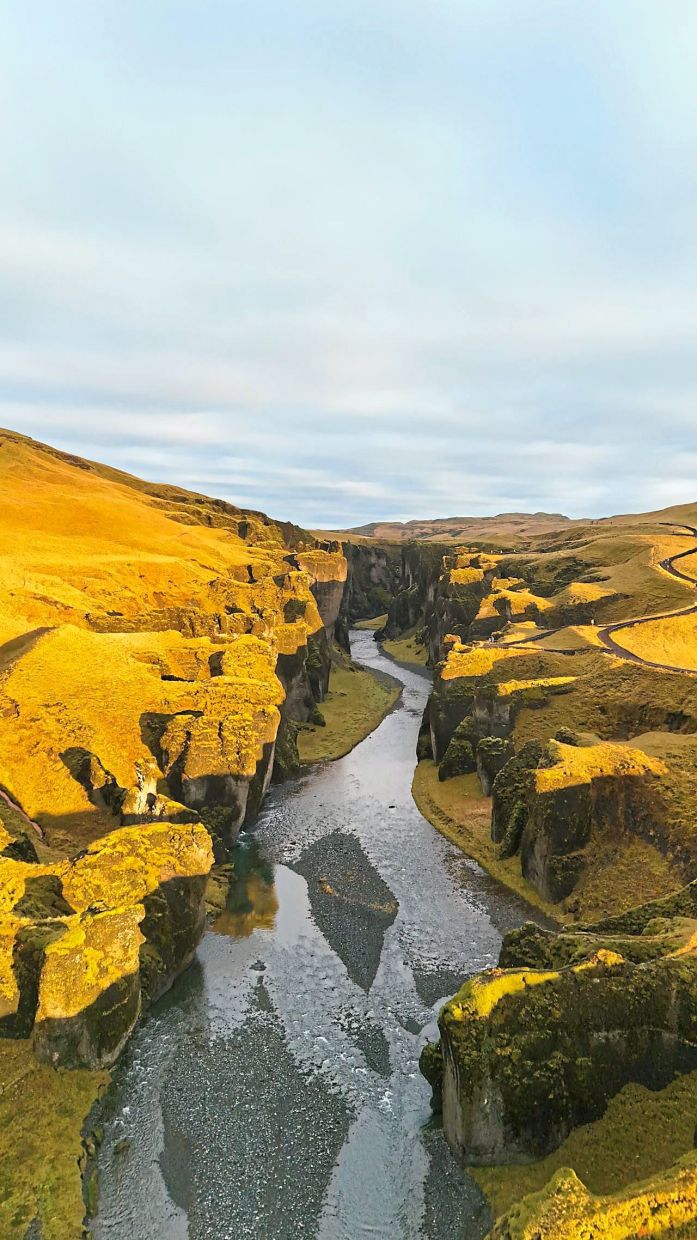
In Iceland, after Justin Bieber featured Fjaorargljufur Canyon in one of his music videos in 2015, tourism to that site increased approximately 80% in the following three years, and the ecosystem was so damaged by selfie-seekers that Iceland had to close the site in 2019 until it could build proper paths and viewing areas. It has since reopened.
“A high volume of people moving through a space quickly erodes landscapes and historical sites. Waste increases and pushes infrastructure beyond unsustainable limits,” says Lisa Chen, chief executive officer of ToursByLocals, a platform that vets and sells tours run by independent guides.
I’ve seen the difference between checklist tourism and a deeper experience. On a trip to Petra, Jordan in April 2025, my guide, Mohammad Ayasrah, told me that most of his guests can’t fathom leaving without a particular photo, taken from a point on the periphery that surveys the Treasury from some 300m above. Didn’t I want to do the same?
Considering the stunning pictures that flooded my social media feed – many featuring women in long flowing dresses perched on Bedouin carpets – I told Mohammad that I’d love a photo from the mountain’s edge, but without the costume change.
He offered a hack: Why not skip the two-hour hike and pay a Bedouin US$10 (RM39) to facilitate a shortcut?
“Some people only come here for the photos,” he said.
Tudor Morgan, an expedition leader with the adventure cruise line HX Expeditions, has witnessed this in the farthest reaches of Earth. “Some travellers view Antarctica as the ultimate box to tick,” he says.
In his experience, some travellers choose HX specifically because of the expedition line’s focus on education and science, while others are prone to skipping lectures from scientists, climatologists or wildlife specialists that are part of the cruise line’s standard offering. Instead, Morgan says, they prioritise the perfect selfie in front of an iceberg or penguin colony.
Finding solutions
Governments are also thinking about how to encourage travellers to be more respectful of their prized sites. In recent years they’ve tried to rein in checklist tourism everywhere from sacred Hawaiian beaches in the United States to Machu Picchu, in Peru.
Egypt’s tourism economy was at an all-time high in April 2025, when the government overhauled the visitor experience at the Great Pyramids of Giza. The environment at the pyramids had grown hectic, and to address concerns about sustainability and animal cruelty, it raised entry prices for international visitors by up to 50%, created a larger visitor centre, banned private vehicles and replaced them with electric buses, and prohibited most hawkers.
So too have museums. These institutions have been dealing with the double-edged sword of social media for years and so have become incubators for solutions. When Cecilie Hollberg took over as director of the Galleria dell’Accademia in Florence, Italy, in 2020, she wanted to deepen the way visitors engage with the most famous of artworks: Michelangelo’s David. (More than three million people now visit the museum annually, most of them looking for its famously chiselled nude; Hollberg has written about how shops hawking X-rated David souvenirs have overrun Florence’s historic centre to the great frustration of the city’s 366,000 inhabitants.)
To encourage more of these museum-goers to linger post-selfie, she extended visiting hours, limited tour groups, invited Florentines for free community events, and upgraded lighting systems to help illuminate smaller details in the sculpture. By the time attendance reached a record two million visitors in 2023, she says, the crowds actually felt lighter, and more people could be seen taking in the art properly.
For Bevin Savage Yamazaki, who works on culture and museum projects for the design firm Gensler, the Galleria’s changes felt palpable on her last family trip, in 2025. (Neither she nor Gensler worked on the Galleria’s tuneups.)
“The timed entry, clearer circulation paths and more intentional interpretation have created a noticeably calmer rhythm in the galleries,” Savage Yamazaki says.
“Instead of being swept along in a dense crowd, we were able to slow down together, to really take in the room, the light, the proportions, before arriving at the sculpture itself.”
The difference from previous visits was stark. “The emotional impact returns,” she says. “You feel less like you’re consuming an icon and more like you’re in conversation with a masterpiece.”
That same logic is why the Mona Lisa will get its own room at the Louvre by 2031. French president Emmanuel Macron said in January 2025 that the change would help manage increased attendance and address overcrowding, which is particularly felt in front of Da Vinci’s masterpiece. Visitors often report waiting hours to spend barely one minute admiring it, due to the jostling and density of the crowds.
The catch? When it opens, you’ll have to pay extra for the privilege of staring into Mona Lisa’s eyes and contemplating their mysteries. Or, as it may well be, for the privilege of a selfie with her. – JAMIE SMITH/Bloomberg