
Through fluffy horse ears, London unfolds – the red traffic light ahead marks the northern edge of Hyde Park and Kensington Gardens, while red double-decker buses and black cabs speed toward Oxford Circus and Buckingham Palace.
When the lights turn green, Boris – playfully named after Britain’s former prime minister Boris Johnson – shakes his blonde mane and trots off.
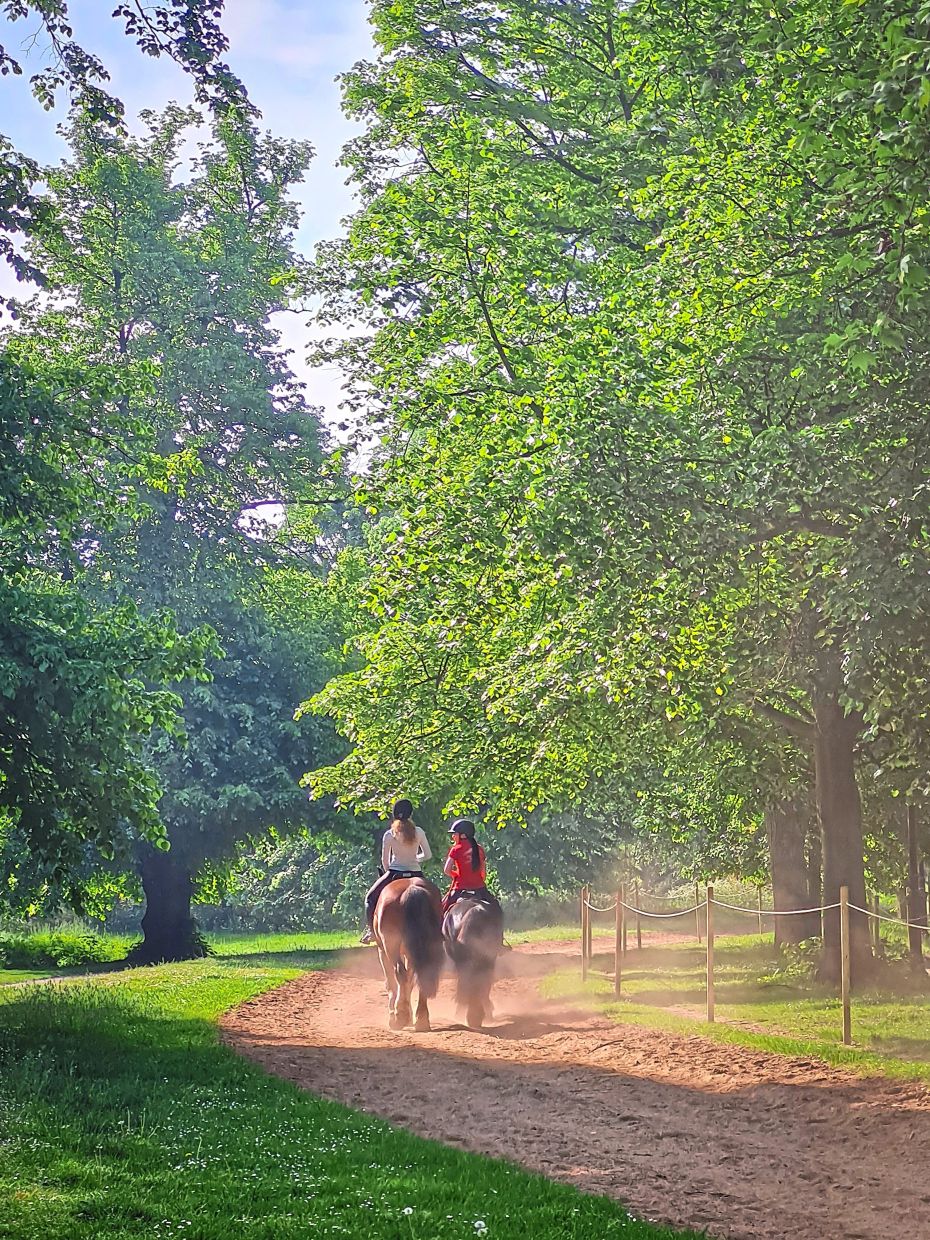
With him are his fellow horse Jack and his rider Sophie Gray, the long-standing stable manager at Hyde Park Stables. With a clatter of hooves, the geldings walk across the street and into London’s green lung: the 140ha Hyde Park.
“Put your calves down slightly, sit up straight,” the riding instructor corrects their posture as they walk along a bridle path. Suddenly, it becomes quieter.
Some things never change
Since King Charles I opened the private hunting grounds to the public in 1637, four centuries of London history have unfolded in the park.
From the birth of Speakers’ Corner to the 1851 World’s Fair to the triathlon competitions at the 2012 Olympic Games, it has seen plenty of action. While some are past glories, the presence of horses has remained.
On the “horse lane” reserved especially for horses, the hoofbeats echo across the Serpentine Bridge and over the lake of the same name.
Treetops and cafes frame the shore, pedal boats chug across the water – a truly sublime view from the saddle.
Boris doesn’t seem to be bothered in the slightest by the ringing of cyclists’ bells. “Each of our horses must first pass the London test,” says Sophie.
“We observe closely how the animals react to unexpected situations,” explains the 30-year-old, assuring us that “Boris is one of our best horses for novice riders.”
And indeed, the brown and white spotted Irish Cob exudes an equanimous calm.
“Some of our amateur riders take a ride through the park before work,” says the horse expert.
A popular galloping route is the legendary “Rotten Row”, which – according to popular belief – probably goes back to the original French name route de roi. In other words, the “King’s Road”, which was intended to connect Kensington Palace in the west with St James’s Palace.
After its completion in 1690, King William III had 300 oil lanterns installed to protect people from highwaymen, creating London’s first artificially-lit street.
It was a place to see and be seen: aristocrats, and later the middle classes, gathered here to watch elegant carriages, noble horsemen or, with a bit of luck, the king himself.
Modern London
Today, the straight riding avenue is lined with plane trees and chestnut trees. In the distance, two iconic London landmarks rise up: the Shard, London’s tallest building, and the London Eye Ferris wheel.
The countless hoof prints on Rotten Row are not only from recreational riders. Adjacent to the south of the park, the Hyde Park Barracks, a long two-storey building, houses up to 300 horses belonging to the royal Household Cavalry.
They are always trained in the park in the early hours of the morning, says Gray. The same applies to the carriage horses of the Royal Mews and those of the mounted police. The park’s 8km of bridle paths are likely to be very busy at rush hour.
Boris and Jack finally trot back to Hyde Park Stables – a few hundred metres through the streets of London. It’s a unique experience that few cities in the world can offer.
When we arrive at the stable in Bathurst Mews, it is teeming with ponies and horses. It’s a surreal, village-like atmosphere in the middle of a city of nine million people.
The next riders saddle up; a procession from the neighbouring Ross Nye Stables, which has since closed its doors in London, trots through the gate.
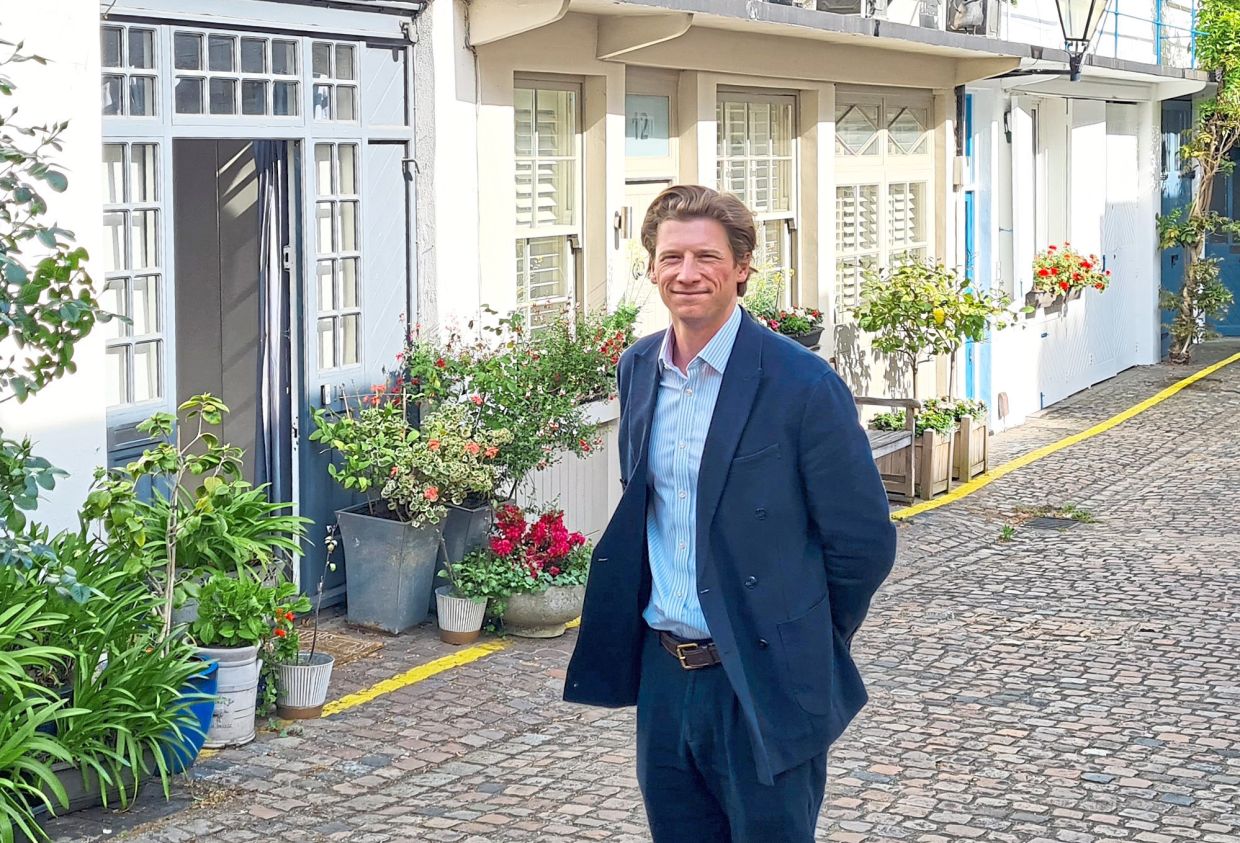
Employees feed and care for the animals – or shovel horse manure from the cobblestones of the charming alley, which is itself an eye-catcher with its cream-coloured low houses.
Servants’ quarters, star homes
Mike Lurot from the family business of the same name, Lurot Brand, knows London’s mews well. A third-generation estate agent, he has built his career around these tucked-away alleys, mostly clustered around Hyde Park.
They were built between the 17th and 19th centuries. “Behind the streets of the wealthy upper class were small streets with two-storey terraced houses,” says Lurot. “Horses and carriages were kept downstairs, while the servants lived upstairs.” Every mansion had a rear mews house.
With the rise of the automobile in the early 20th century, many fell into disrepair until their charm was rediscovered.
“My grandfather lived in Bathurst Mews for 35 years,” says Lurot. “He fell in love with the hidden, quiet cobbled backstreets and specialised in mews houses.”
Today, many of the houses have been expanded with roof terraces or basements and are among London’s most sought-after properties. Lurot’s clientele even includes celebrities – though he keeps their identities strictly confidential.
Mews have also become popular film locations – St Luke’s Mews in Notting Hill, for example, appeared in Love Actually.
But Bathurst Mews remains unique: it is the last place in London where horses still neigh in the stables below, while their owners live just upstairs, much as they did centuries ago. – DORTEN NOHRDEN/dpa