
Somewhere between the final putt and the first sip of a cold post-game beer, I found god again. Not in the heavens, but on a plastic tray in a little shop.
It was kuih talam – salty-sweet coconut cream on top, pandan-mung bean bliss below.
One bite, and suddenly I was reminded, again, why I believe this city, this chaotic, delicious, multicultural sprawl of concrete and kampung, is the best place on Earth.
This is Kuala Lumpur.
It’s the city of a thousand kuih, and we are spoilt for choice.
Ask any KL-ite what defines the city, and you’ll get a hundred answers: PETRONAS Twin Towers, traffic jams, nasi lemak, durian, the monorail, the mamak shops. But if you really want to understand KL, don’t look up at the skyline – look down.
Look at the tray of kuih passed around after a wedding, the banana leaf-wrapped bundle at a morning market, the glass display at a mall kiosk.
Look at the kuih, because kuih is everything KL is: Sweet, sticky, complicated, multicultural, messy, unforgettable.
It’s Malays, Chinese, Indian, Peranakan, Portuguese, Javanese and more. It’s steamed, grilled, fried, and fermented. It’s breakfast, dessert, prayer offering, and party platter.
And it lives on through generations of matriarchs and memory – unwritten recipes, passed hand to hand.
Kuih is not just food. It is the edible archive of this region’s past.
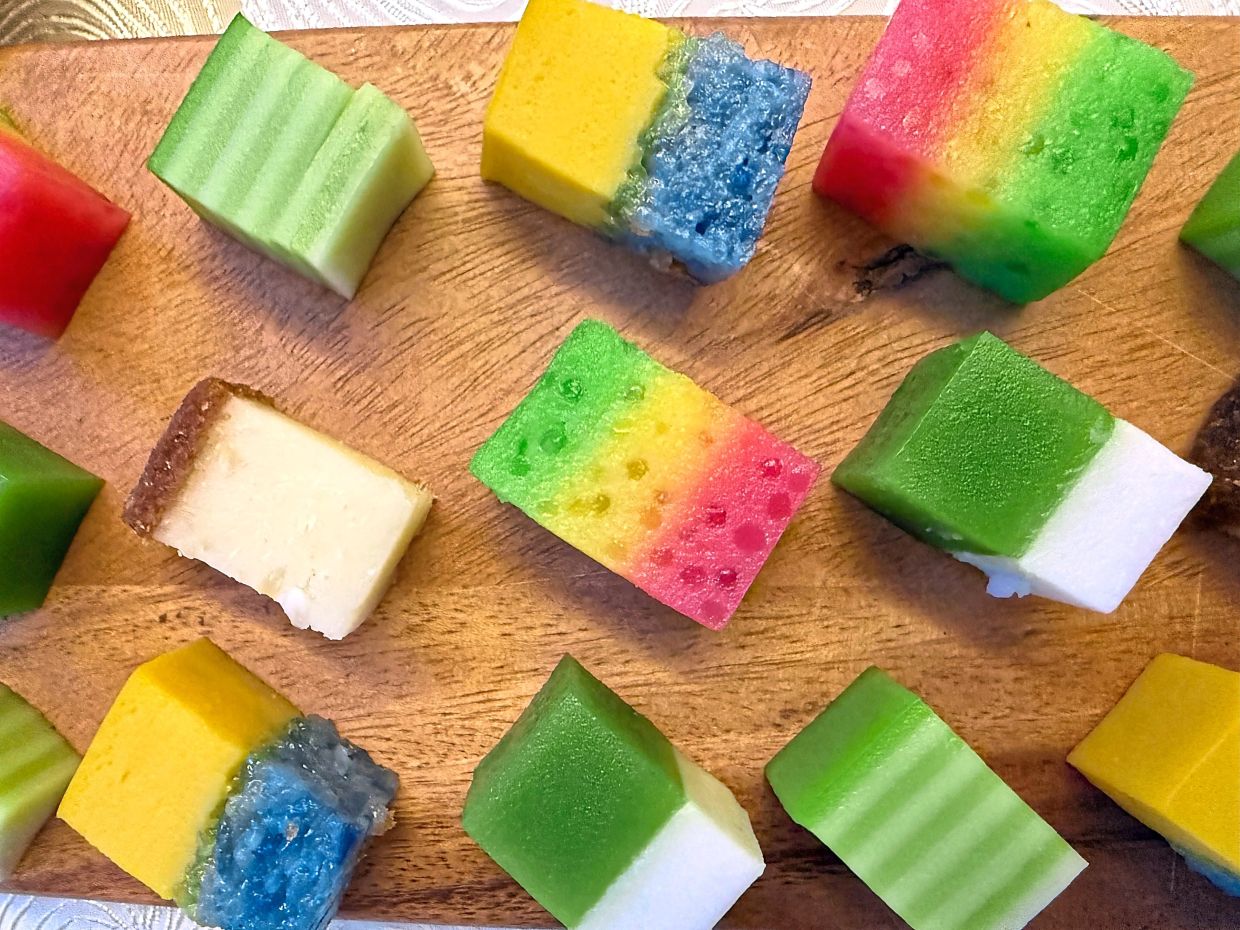
The earliest kuih likely emerged from Indigenous communities using rice, tubers, and coconut. Then came the traders: Indian spices, Chinese milling techniques, Arab sugars, Portuguese custards. And with each wave – whether through trade or conquest – new ingredients and ideas folded into the batter.
When the British arrived, they brought teatime. The colonial elite dined on crumpets and scones, but in the kitchens of their local staff, something else evolved. Teh tarik and kuih ketayap, kuih lapis served beside English sponge cake.
The British may have introduced the ritual of high tea, but it was local hands that made it interesting.
And while much of colonial cuisine was about adaptation – British dishes “Malaysianised” or vice versa – kuih remained defiantly itself. Unpolished. Unpretentious. Uncolonised.
You can wake up to roti canai in Brickfields, have Penang char kway teow for lunch in Bukit Bintang, have tom yum for dinner in Kepong, then end your day with kuih lapis and teh tarik in a back alley in Chow Kit.
You’ll hear Bahasa Malaysia, Cantonese, Tamil, Hokkien, Mandarin, Punjabi, and English all on the same street.
That’s the city we live in.
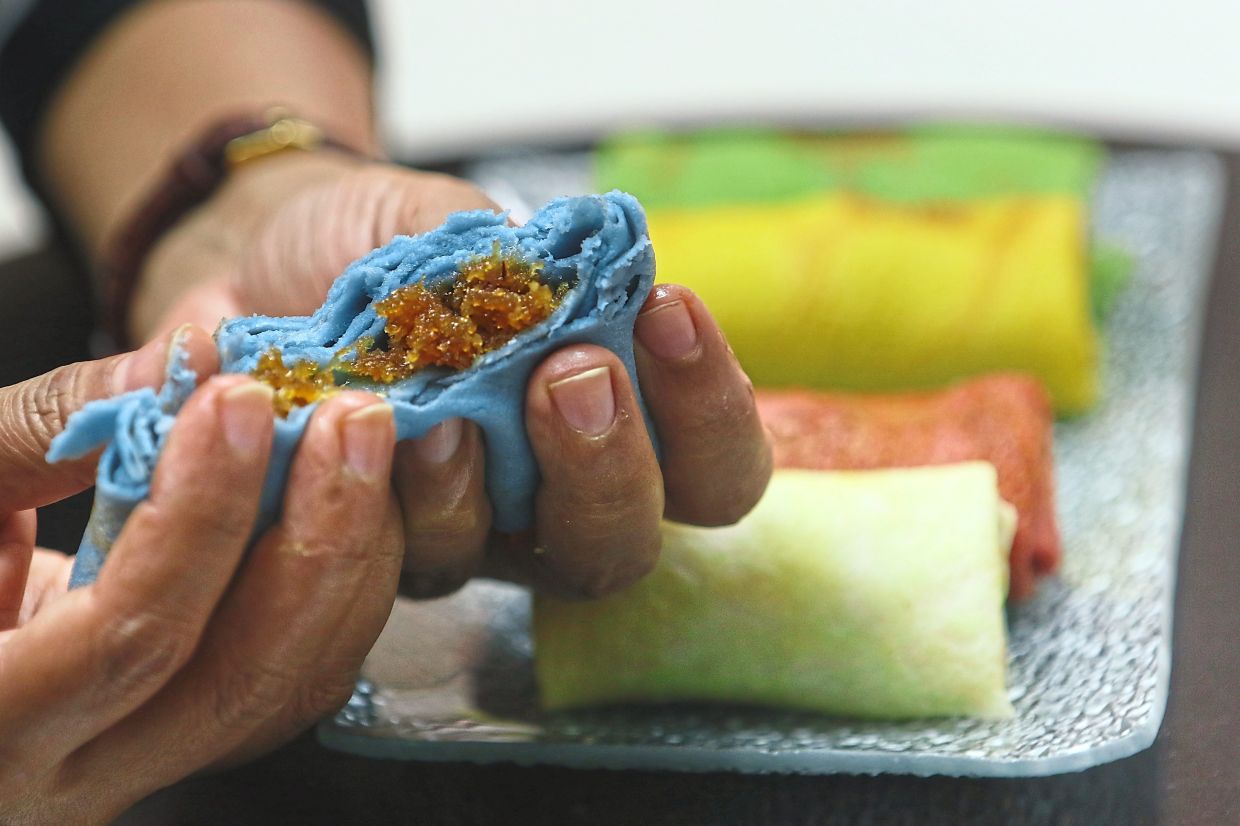
A place where people still hand over RM5 notes for kuih wrapped in brown paper. Where dessert still tells a story, and where history isn’t in a museum – it’s in your mouth, layered between pandan and coconut milk.
We’re not short on options here.
Let’s not forget that just outside of KL, in the neighbouring state of Selangor, you can find plenty of legendary kuih spots too.
One example is A’Han Nyonya Kuih in Petaling Jaya, where most of the items here sell out by lunchtime. The shop’s bingka ubi has a dark and caramelised top layer, and its pulut tai-tai is dyed the colour of dusk.
Also in PJ are Blue Dahlia and Baba Beng. The former has kuih koci that oozes toasted coconut when bitten and seri muka that tastes like a grandmother’s hug in pandan form, while the latter serves kaya thick enough to stand a spoon in, spread lovingly over the bluest pulut tekan you’ve ever seen.
Another PJ outlet is Madam Yong Delight, where you can order trays of kuih lapis, kuih bakar, and angku that have been made the same way since 1985.
Even malls get in on the act: Nyonya Colors has outlets across the Klang Valley, feeding suits and school kids alike with dependable kuih talam, onde-onde, and pulut inti.
Here’s the thing: Kuih doesn’t ask to be noticed. It doesn’t trend, it doesn’t scream for likes. It just waits – soft, silent, sticky – ready to be eaten by someone who understands that sweetness doesn’t always come loud.
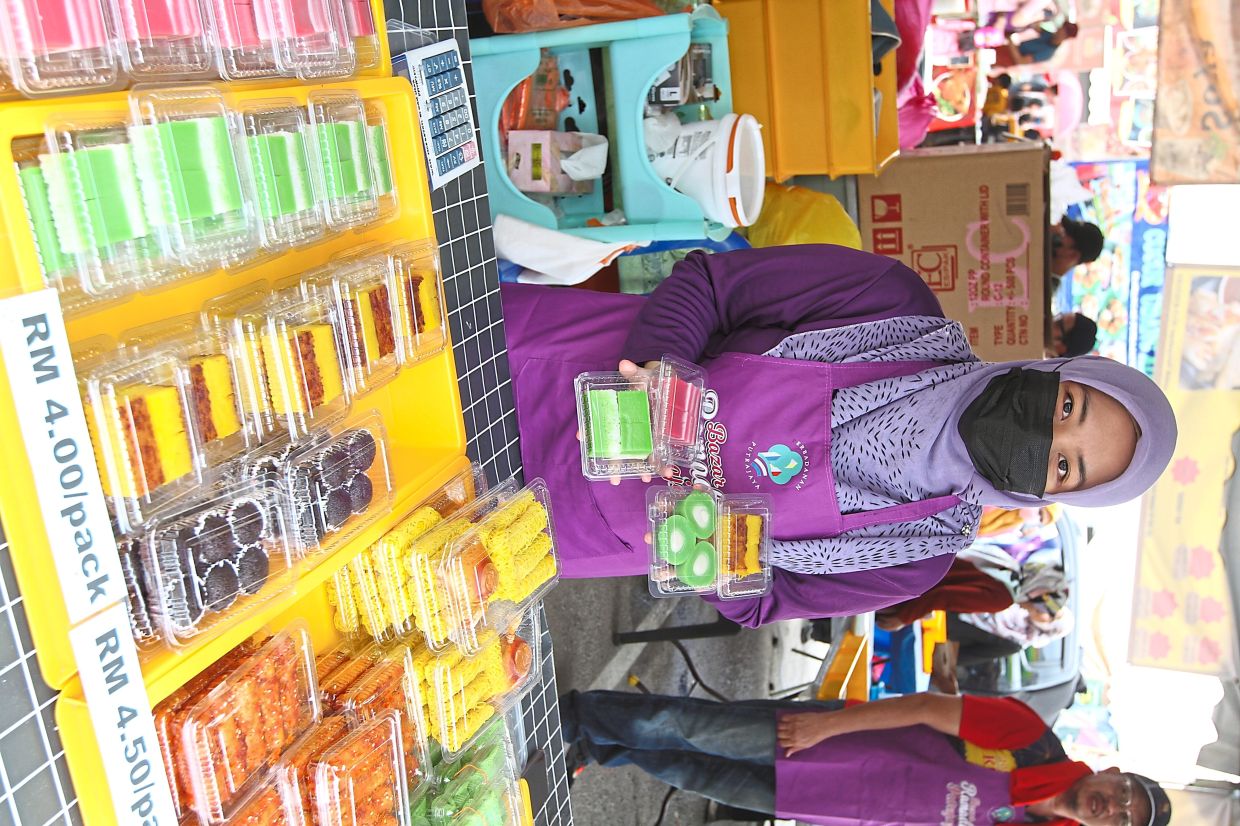
It survives through mothers and makciks, through pasar Ramadan and wedding feasts, through the quiet reverence of prayer altars and the noisy joy of tiffin carriers unpacked in office pantries.
It is not marketed. It is made – and that’s what makes it sacred.
So the next time you pass a kuih stall, don’t just walk by. Stop. Buy something.
In KL, you don’t need a fine dining reservation to taste something divine. You just need RM3 and an open heart. This is the city of a thousand kuih – and I wouldn’t live anywhere else.
The views expressed here are entirely the writer’s own.
Abbi Kanthasamy blends his expertise as an entrepreneur with his passion for photography and travel. For more of his work, visit www.abbiphotography.com.