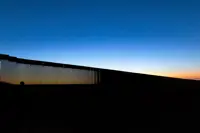
The road to Danum Valley in Lahad Datu, Sabah, is not so much a path as it is a surrender.
Hours of bumping through gravel and laterite, hemmed in by endless oil palm estates – and then, as if nature has drawn a boundary in ink, the plantations vanish.
Suddenly, you’re in another world.
Trees rise like ancient sentinels, dense and towering, vines dangling like old ropes in an abandoned castle.
This is no ordinary forest. Danum Valley is a 438 sq km Eden, untouched by loggers, unspoiled by mass tourism and protected by law.
To stay here is to temporarily abandon the modern world.
The field centre, nestled deep within the reserve, is a modest cluster of chalets, dorms and scientific outposts.

There’s almost no mobile reception, no television – and Wi-Fi, when it exists, feels like a smuggled luxury.
But the trade-off is more than worthwhile: the theatre of a living jungle and the rare chance to observe it as a quiet visitor, not an intruder.
Mornings begin in a hush.
The air is thick with mist; the forest still drowsy from the night.
A steaming cup of coffee in hand, your eyes rise to the canopy, where the first actors stir.
Rhinoceros hornbills glide between branches with prehistoric grace, their wings whooshing like leather fans.
In the distance, gibbon calls pierce the dawn – eerie, melancholic, unforgettable.
By mid-morning, the jungle pulses with life: bird calls, the hum of insects, the electric chitter of cicadas.
Here, the forest isn’t just seen – it’s studied.
Every tree is tagged, every trail numbered and every sound catalogued, though many remain mysteries.
Biologists, researchers and interns walk the same trails as guests, binoculars around necks, notebooks in hand.
At the edge of the Tembaling River, a visiting entomologist peers into a light trap aglow with moths the size of his palm.
Nearby, a child whispers, wide-eyed: “Is that real?”
Danum offers that same question, again and again – wonder, seasoned with disbelief.
Afternoons bring heat and stillness – but never emptiness.
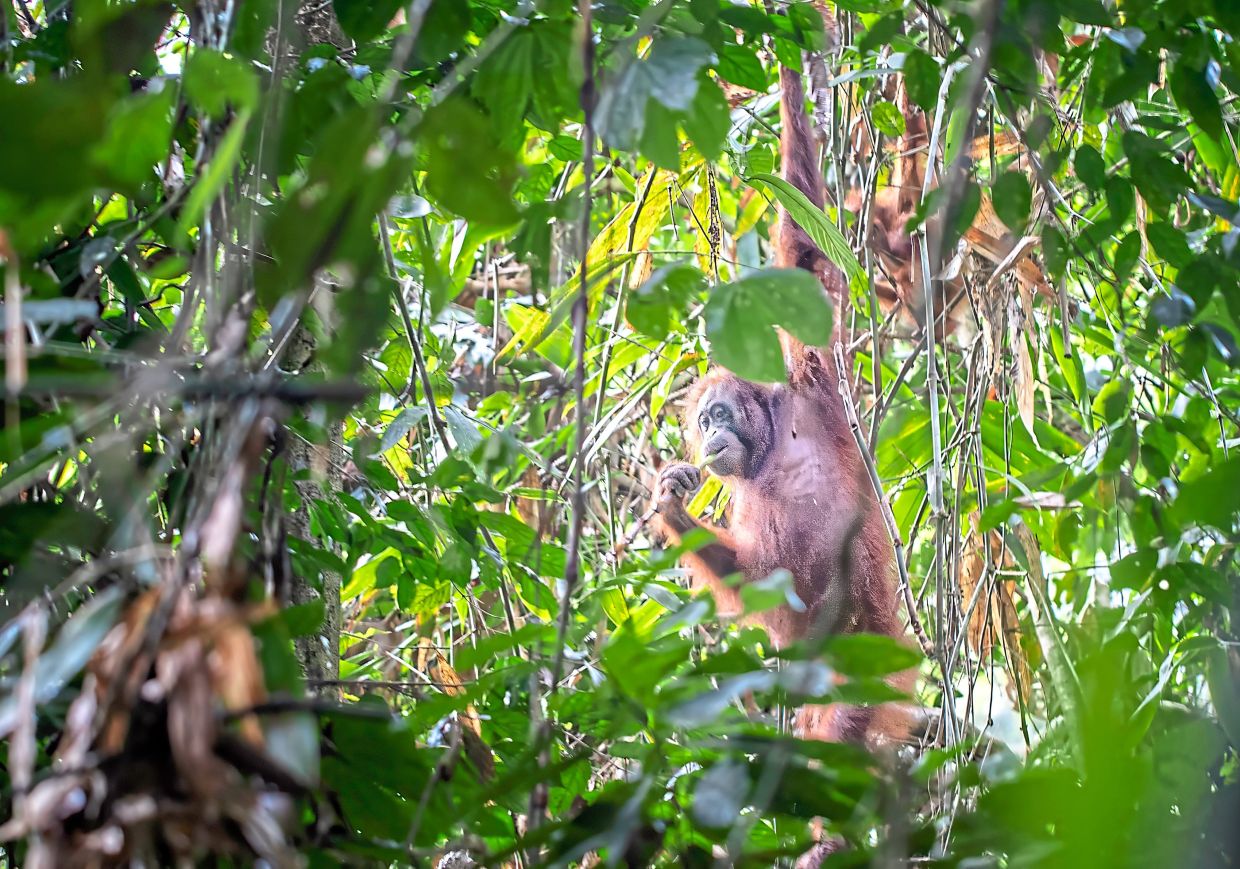
A rustle in the underbrush might reveal a mousedeer. A flash of orange, a maroon langur.
And sometimes, there is more – a sudden hush, the forest holding its breath, and then the appearance of something rare.
One morning, from a canopy platform, a sun bear ambles into view below, tearing into a decaying log with surprising delicacy.
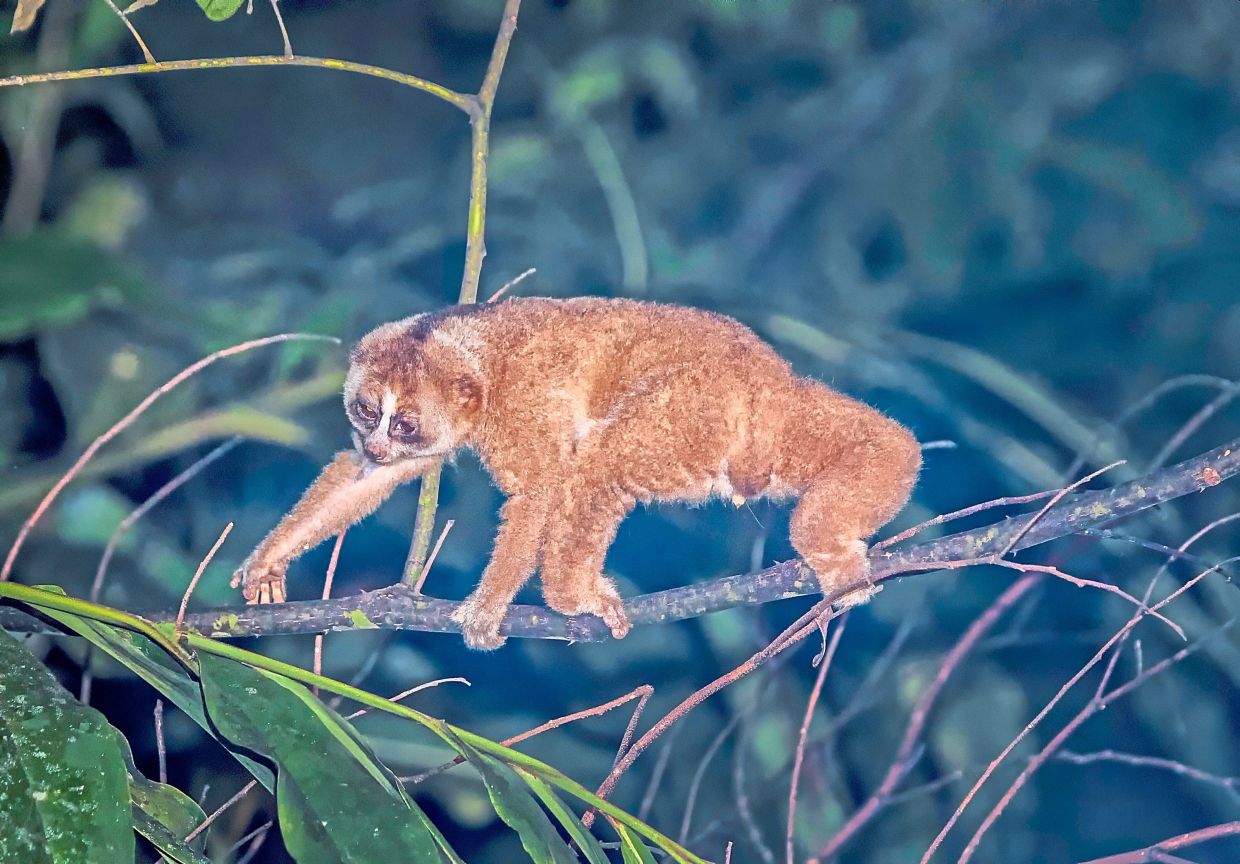
Another evening, a slow loris clings to a branch, its eyes glinting like twin coins in the torchlight.
Night walks are a rite of passage.
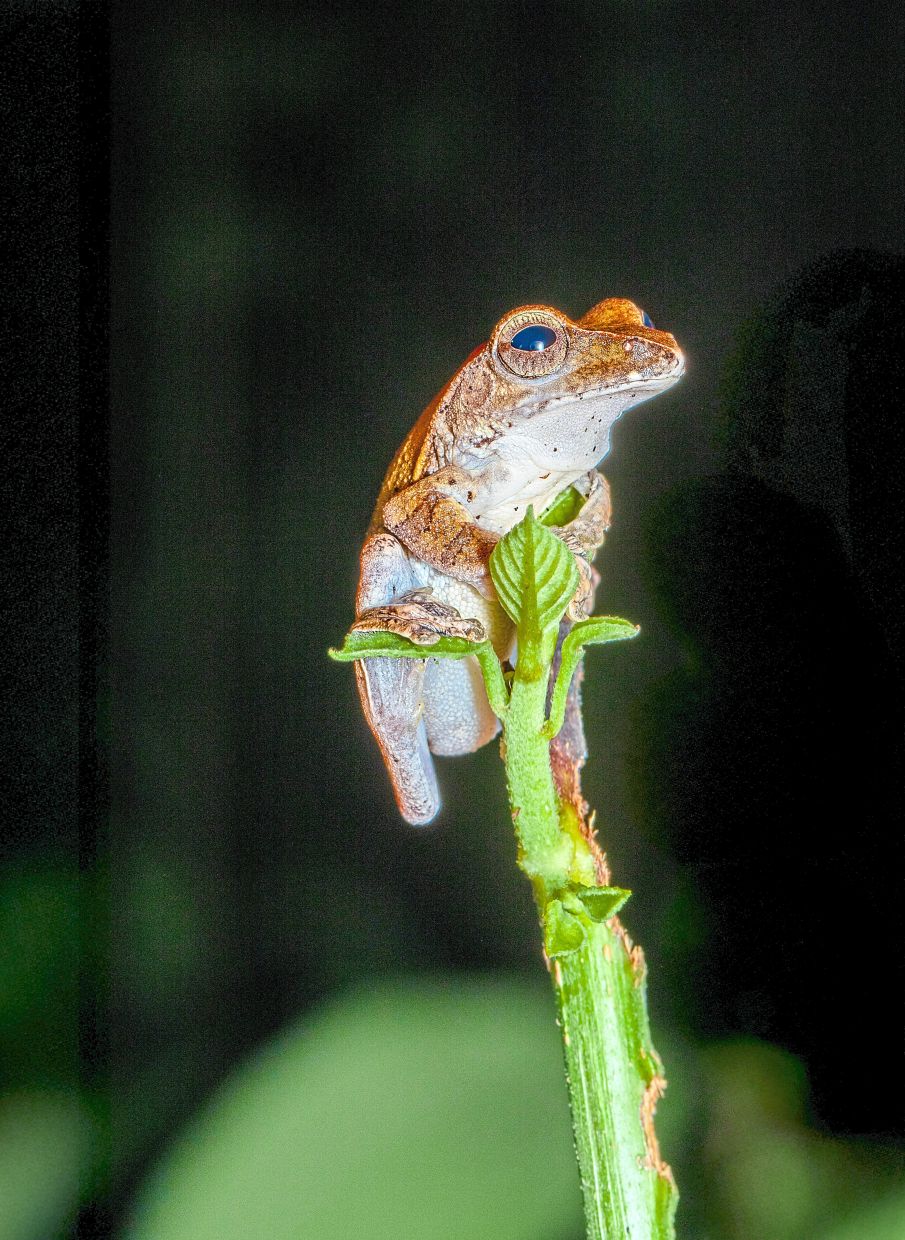
Boots caked in mud, torches in hand, visitors step into the dark, led by rangers tuned to the forest’s whispers.
A flick of light reveals a bird asleep on a twig, a tarantula blinking from its burrow.
Glow-in-the-dark fungi scatter the forest floor like stars buried in earth.
Insects rule the night – beetles armoured like tanks, stick insects longer than your hand and mantises poised like miniature monks.
But the real education here is not in the species you spot – it’s in how little you know.
Danum teaches humility.

No app can decode the thousand shades of green you’ll come across in a single hour.
No guidebook prepares you for the heartbreak of finding a fresh elephant print and knowing the animal is close – but invisible, like a ghost too sacred to show itself.
By the end of the week, something shifts. The jungle no longer feels foreign.
Its rhythm becomes familiar.
Boots are always damp, leech bites become badges of honour and once-alien bird calls settle into your brain like an old tune.
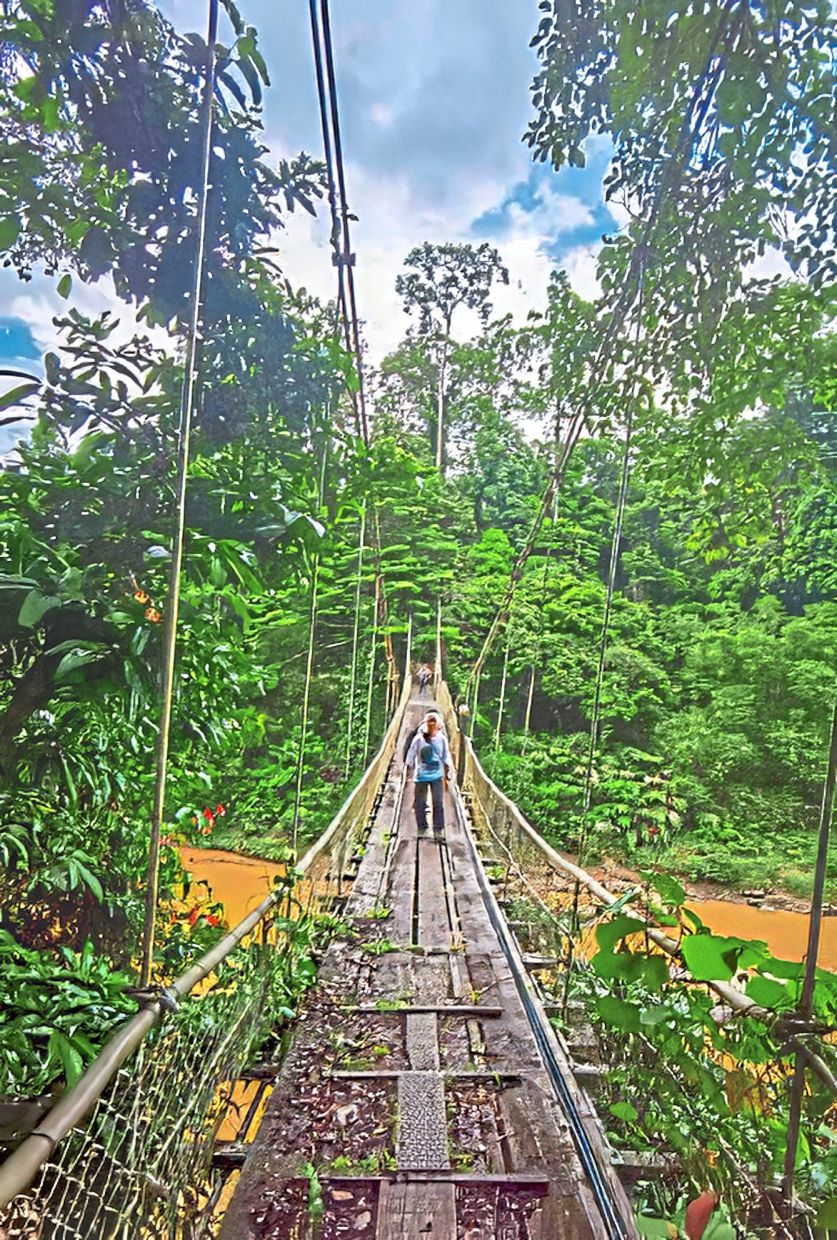
There’s a sense of being folded into something older, deeper. A kind of absorption.
Danum Valley offers more than a place to visit – it offers perspective.
A journey of discovery and understanding. A living classroom.
It’s a place where you slow down, think differently and live more simply.
Being in such a pristine jungle is a reminder: nature is sacred.

And we are lucky – very lucky – to witness it, even briefly.
When it’s time to leave, people are often speechless, not from boredom, but from having been changed.
True adventure doesn’t just excite. It humbles.