
I’m a big fan of geoparks. Even the very name suggests an entire area and array of incredible natural formations.
In particular, karst geoparks are known for their jagged sawtooth-like beauty, caves with bountiful slender stalactites and stalagmites, mysterious sinkholes, and soaring cliffs where wildlife roost.
Karst is a type of landscape created by the dissolution of bedrock. It also means that the rock that creates it has to be soluble, such as limestone, marble, and gypsum. The karst area forms when water falling on the surface enters the cracks between these rocks and interacts with the rock substance itself.
Malaysia proudly boasts plenty of karst regions, namely in Perak’s Kinta Valley, Langkawi in Kedah, Sarawak’s Gunung Mulu National Park, Batu Caves in Selangor, and in Perlis.
I recently visited the Kilim Geoforest Park in Langkawi, as well as a similar region further north – the Ao Phang Nga National Park in Thailand that is “drowned” in mangroves and karst land.
So how do these two karst geoparks compare?
Size comparison
Ao Phang Nga National Park is 400km², located near Phuket. You can take a taxi or some other ground transport from Phuket, cross the little Phang Nga peninsula and arrive at the geopark without leaving the bosom of the Andaman Sea.
You can charter a boat from one of the restaurants near the information counter of the park itself or any other eastern pier in Phang Nga. You cannot miss these piers. Signs loudly proclaiming “Boat Tour to James Bond Island!” are everywhere on the roads. Some of these piers even have props from the 1974 Roger Moore movie that was filmed there: The Man With The Golden Gun.
Ao Phang Nga is a sunken karst treasure of limestone islands and mangrove forests. You can hop from oddly-shaped island to oddly-shaped island if you charter a boat.
The whole boat tour of the park can take between two and four hours, depending on which activities you partake in.
Meanwhile, the Kilim Geoforest Park is smaller because it is an island park in contrast to being sunken off a mainland. It is about 100km², and forms part of the larger Langkawi Unesco Global Geopark.
It is also flanked by mangrove forests, and is the only place in Malaysia that has both mangroves and karsts. You will need about two to three hours on boat to tour the entire park, and it also depends on what you would like to do there.
The views
Both parks are scenic in their own way. Ao Phang Nga has more islands; Kilim has more karst hills and cliffs that are attached to the main island of Langkawi.
They both have strange limestone and huge rock formations that locals claim form animal shapes, such as turtles (in Kilim) and dogs (in Ao Phang Nga).
They both have limestone arches and tunnels that you can enter with a kayak and exit on the other side. Beware that you don’t drop your cellphone in the water when you take a selfie under those arches.
Ao Phang Nga in particular is famous for its distinctive needle-shaped limestone formations. One of its tiny islands is Khao Phing Kan, or sometimes known throughout tourist brochures as “James Bond Island”. The limestone needle has its own name, Ko Tapu.
Khao Phing Kan sits in a cove and is possibly the most popular spot in the whole geopark for pictures. This is where the boats will stop for you for about 30 minutes for you to buy souvenirs, have a snack, use the restroom, and jostle to take photographs of yourself and your companions from every angle possible.
Photo spot hogging time is commonplace, with tourists coming to blows as to who got to that space first.
Comparatively, I would say Ao Phang Nga is more scenic than Kilim on account that it is far larger. Needle-like formations half-buried in the sea are also more unusual.
Activity choices
Between the two, Kilim offers more activities.
In both national parks, you can hire kayaks and canoes. The kayaks in Kilim are allowed a larger range of kayaking area, whereas Ao Phang Nga limits you to only certain spots – probably because it is situated more on the open sea and therefore it is more dangerous to kayak out there.
When we were at Kilim, many people were kayaking left, right, centre, and in circles. In contrast, Ao Phang Nga had very few visitors in June. Maybe that is due to the monsoon season; it rained every day when we were there.
Kilim also offers eagle feeding sessions. If you have visions of yourself holding out a dead fish and an eagle swooping down to gently nip it from your hands, that is not going to happen.
Instead, the boatman will buy a bag of chicken skin, take you near the eagle cliffs, and throw the skin into the water. He may even rev up the motor on the boat to signal the eagles: “Hey, guys, come and get your fresh chicken right here!”
On cue, the eagles descend from the cliffs in a cacophony of wings and shrieking, competing to feast. Eagles have exceptionally good eyesight, up to eight times better than humans, so I suppose they would be able to spot a sliver of chicken skin inside the water from a hundred feet away.
(I’m in two minds about feeding any wildlife. The eagles need to hunt on their own and not be dependent on humans. At the same time, I get that the locals want to earn a living and provide a spectacle worth paying for. So you decide your own moral code on this practice.)
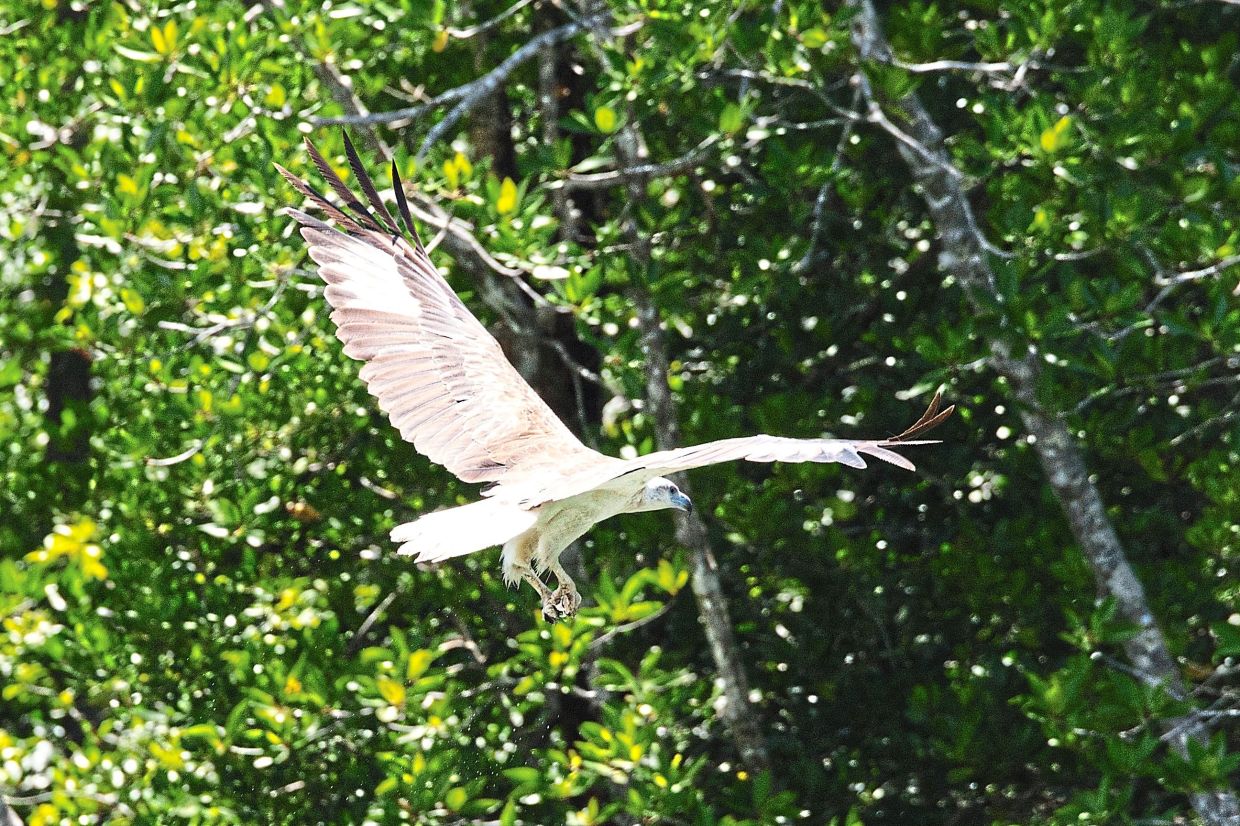
The eagles here are mostly Brahminy kites (the symbol of Langkawi that is also worked into its name – “lang” from helang) and white-bellied sea eagles.
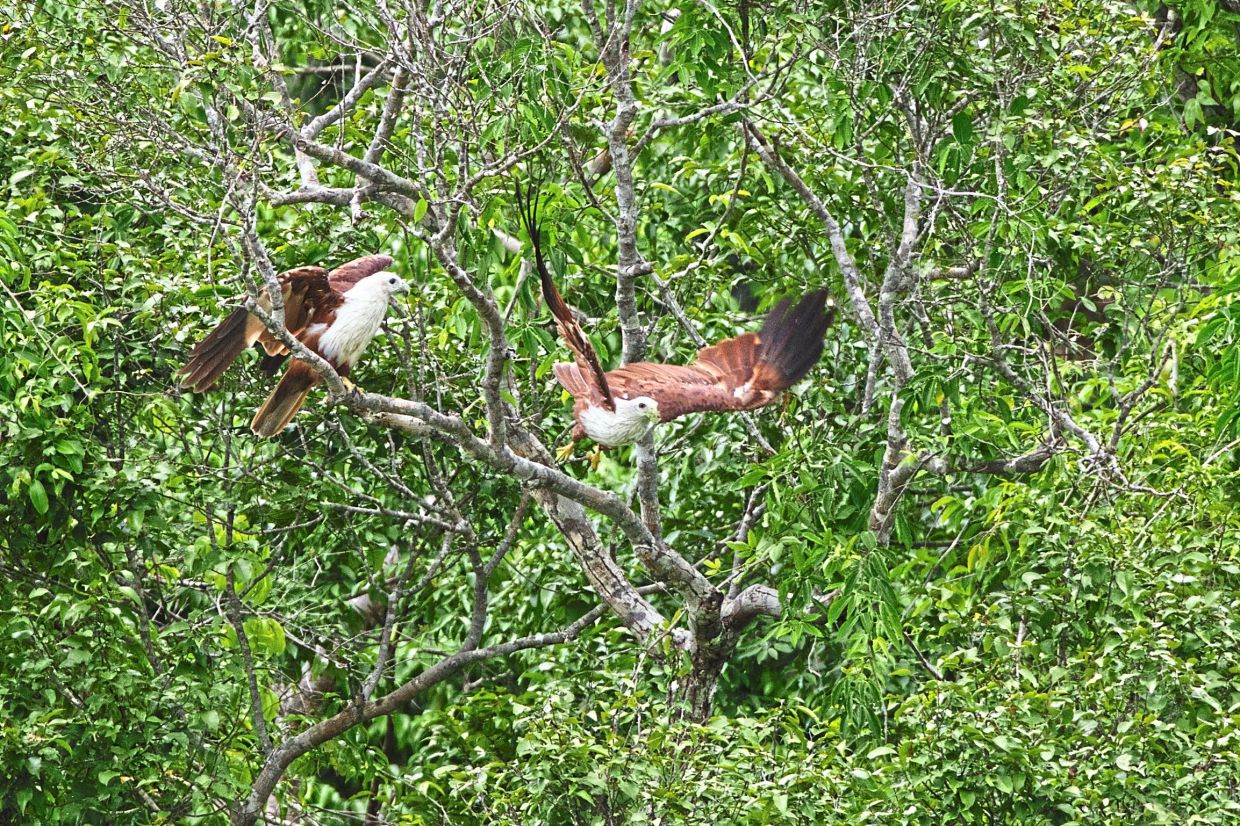
Ao Phang Nga does not offer eagle feeding. At least, it is not advertised anywhere. However, you can spot the same types of eagles on the limestone cliffs.
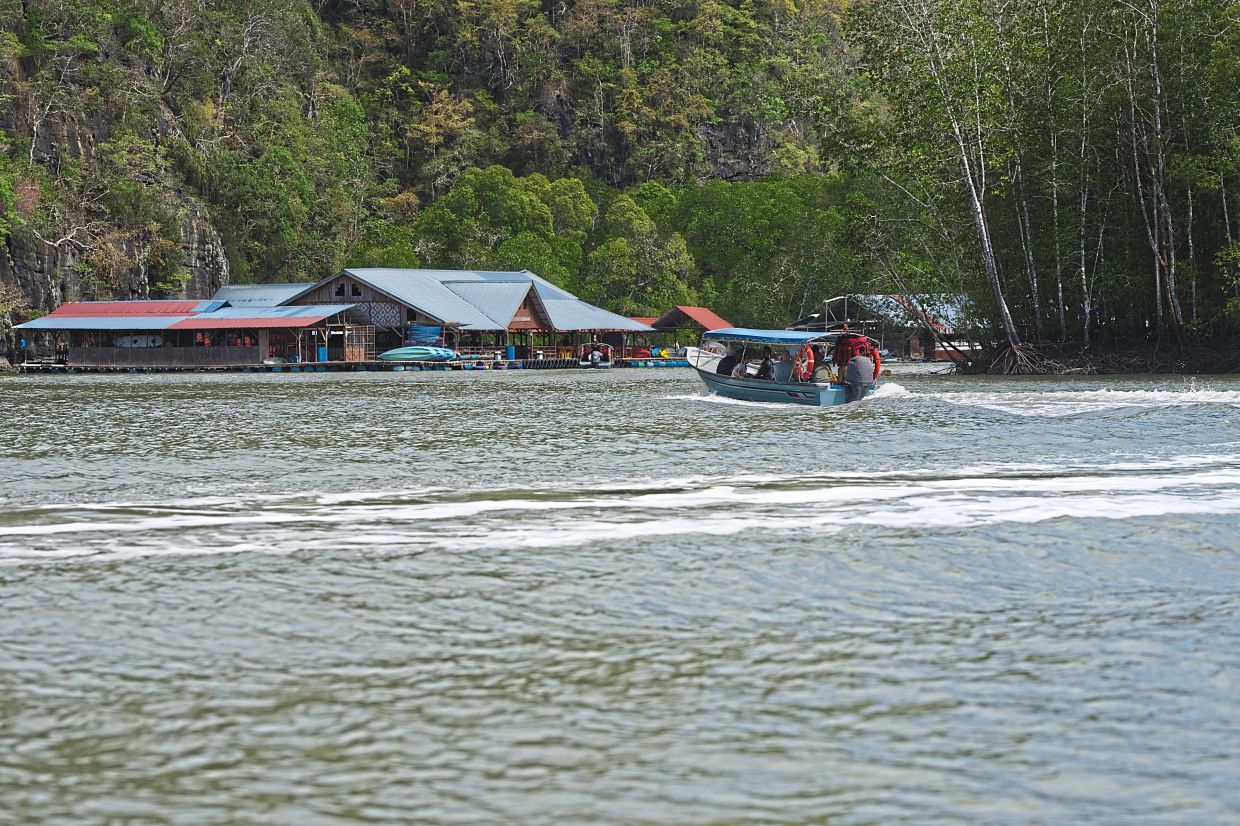
In Kilim, part of the boat tour takes you to a cluster of floating restaurants where you can view different types of fishes like garoupa, snapper, and seabass before you eat them. The restaurant workers even gives some of them names.
“This here is Siti,” one of them tells me, pointing to a giant garoupa, which looks exactly like the next garoupa called Ali, if you asked me. Luckily, both Siti and Ali are pets and not to be eaten.
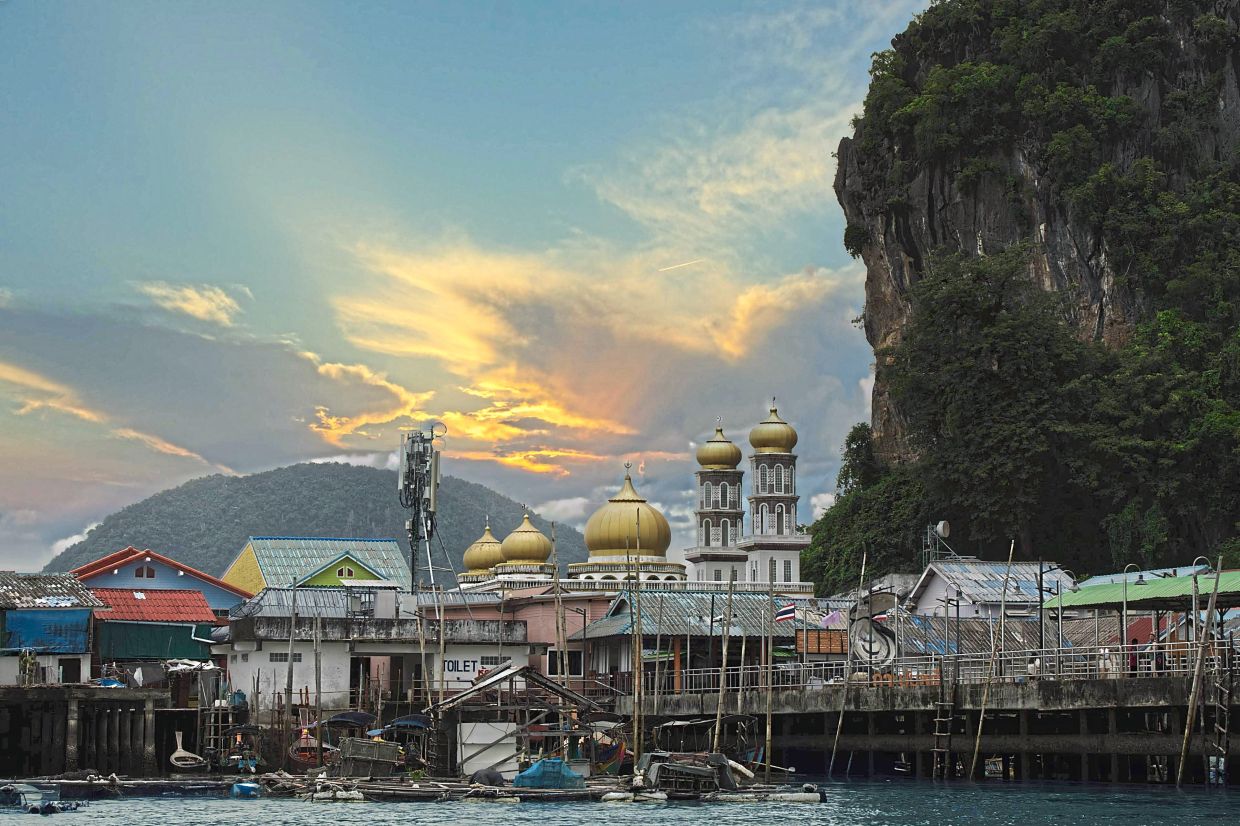
Ao Phang Nga also has floating restaurants amid an actual floating village. A functioning and very picturesque mosque sits in this floating village, nestled against one of the islands, as it is a predominantly Muslim community.
At both parks, we stop for delicious lunches.
Kilim also has a bat cave tour. When we stopped at the pier to the bat cave, a monkey decided to play a game of “If you deny me a banana, I’ll take your hat and you chase me for it” with a tourist.
Many shouts and squeals ensued as the monkey threw the hat into the water.
No bananas were hurt, just a lot of feelings.
Age and gazetting
Kilim’s formation dates back to around 490 to 370 million years ago. Ao Phang Nga’s mountain range is formed around 136 to 36 million years ago.
This would make Kilim far older.
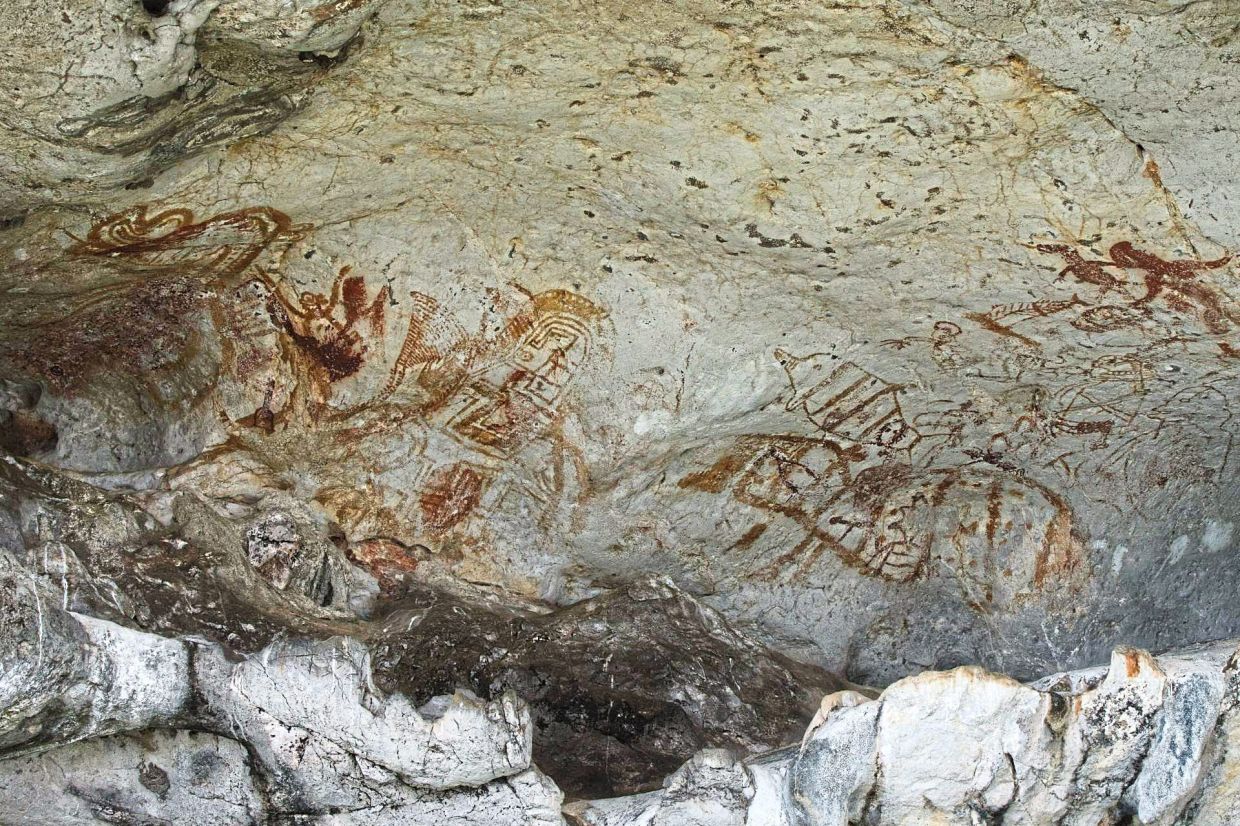
Archaeological evidence states that the Ao Phang Nga area was inhabited by prehistoric humans. Cave paintings were found, as well as burial sites.
No evidence of prehistoric life has been found in Kilim.
Not yet anyway.
The island of Langkawi was endorsed as a Unesco Global Geopark in 2007. It is the first geopark in South-East Asia to be endorsed as such by United Nations agency.
Meanwhile, Ao Phang Nga received its national park heritage from the Thai government in 1981.
Honestly, you really should visit both parks. They are both marvelous. They are both are scenic. They are both natural heritage sites whose beauty must be preserved forever.
Both are also reachable by air travel and have comparable boat tour and activity fees. Be prepared to pay around RM250 to RM450 per boat ride/tour. Of course, the more people there are on the boat, the cheaper each person pays.
Cave exploration
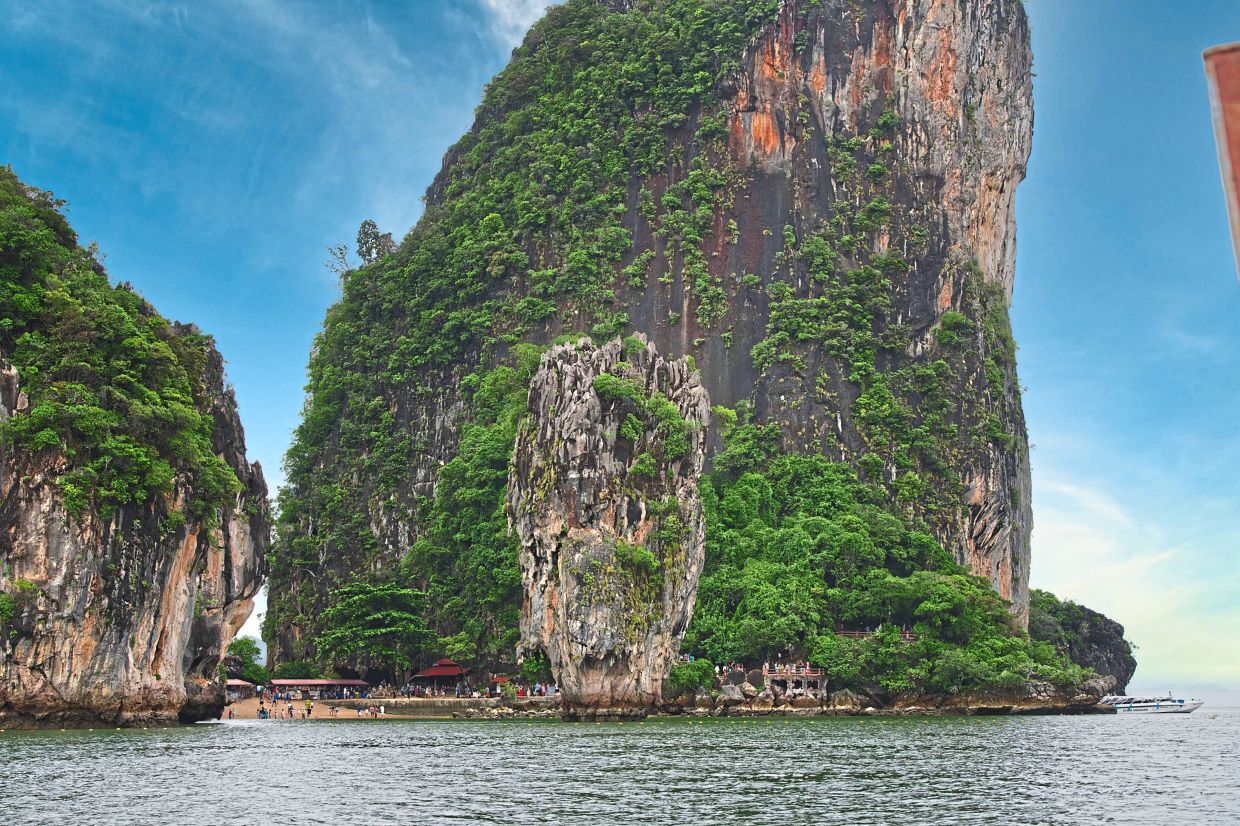
Ko Tapu is also known as the James Bond Island. — Photos: ERIC KWAN
— Photos: ERIC KWAN
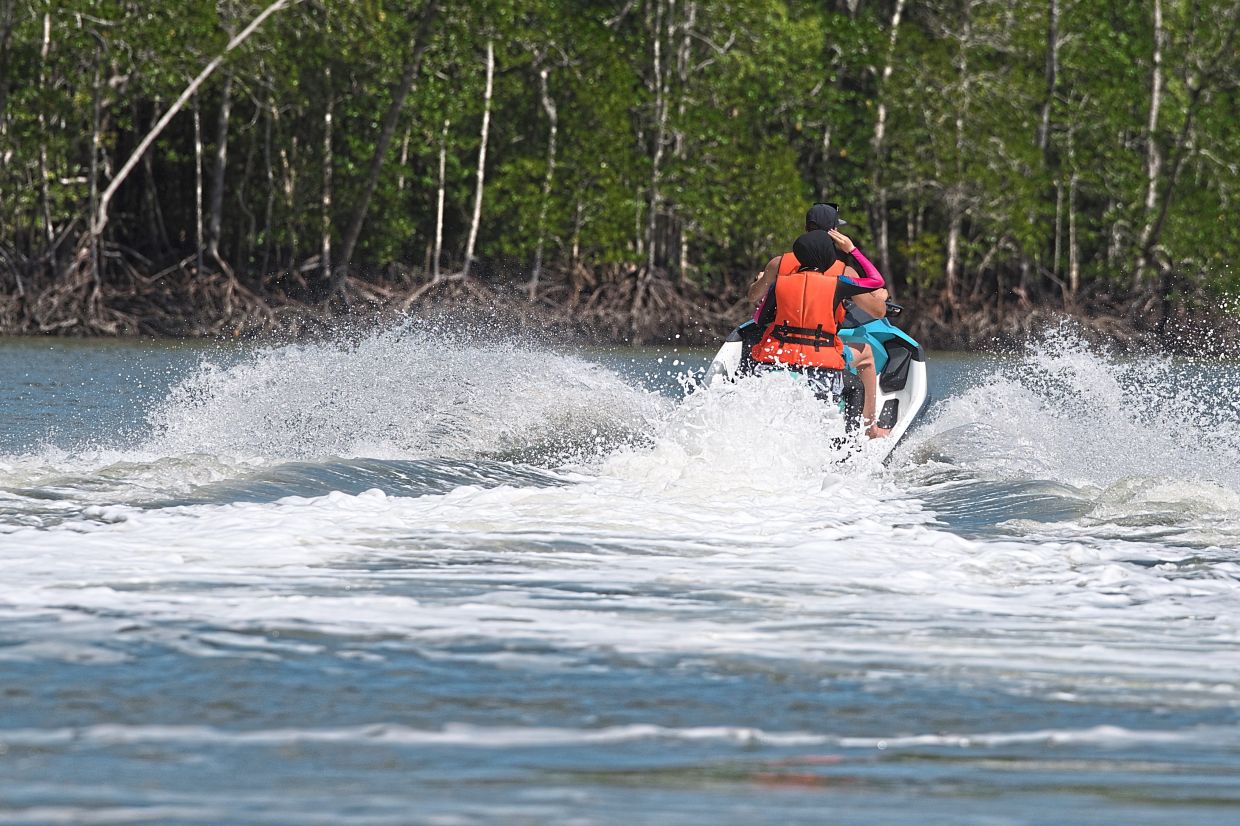
1 A white bellied sea eagle swooping in for the feed at the Kilim Geoforest Park. 2 The floating restaurant at Kilim is just a short boat ride from the main jetty. 3 Eagles at Ao Phang Nga are easy to spot. 4 Khao Phing Kan with Ko Tapu in front, also known as the James Bond Island. 5 Ancient cave paintings can be found at Ao Phang Nga. 6 There are restaurants and even a mosque on the Ao Phang Nga National Park. 7 Jetski tours in Kilim are quite popular with local tourists. — Photos: ERIC KWAN
The floating restaurant at Kilim is a short boat ride from the main jetty.
Jetski tours in Kilim are quite popular with local tourists.
Eagles at Ao Phang Nga are easy to spot.
There are restaurants and even a mosque on the Ao Phang Nga National Park.
Ancient cave paintings on limestone can be found at Ao Phang Nga.