A grotto at Pulau Songsong, accessible only by watercraft at low tide.
HAVING snorkelling gear with you while paddleboarding offers more than just a better view of the underwater world – it can also mean a good meal!
The sea, particularly along the Straits of Malacca, may not be crystal clear, but there are still spots where vast stretches of sandy seabed appear beneath the surface.
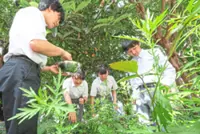
Pop on a pair of goggles and, with a bit of luck, you’ll be rewarded with a surprisingly pleasant day out.
Think of places like Langkawi or Pulau Songsong in Kedah, Pangkor in Perak, or even Pulau Besar in Melaka. For even better visibility, head over to islands in the South China Sea.
A paddleboard grants you hassle-free mobility.
As you cruise over the shallows, you might spot coral formations just a metre or two beneath the surface.
Slip on your goggles and snorkel, strap on your fins and slide off the board for a closer look.
Don’t forget to wear a paddleboard leash so the board stays with you as you swim.
Most paddleboarders prefer strapping the leash to an arm rather than a leg to avoid tangles.
Also, be sure to secure your paddle to the board – either with another leash or by fastening it under bungee cords looped through the deck’s D-rings or eyelets.
If you’re in a protected marine park, be sure to check the rules.
But in unprotected waters – and if you happen to love seafood – keep your eyes peeled for tasty morsels like sea snails and urchins.
These creatures don’t bury themselves in the sand and are surprisingly easy to spot once you know what to look for.
“Trochus shells are large, and although often covered in black, moss-like growth, their wide cone shape is unmistakable,” says paddleboarder Soo How Nyiau, a regular visitor to Pulau Songsong.
Think of an upside-down, black spinning top (gasing, in Malay).
It’s not hard to find them nestled among corals and rocks.
Soo prefers them roasted over charcoal – he once boiled them but found the result chewy and tasteless.
Sea urchins, however, are the real treat.
Wear rubber gloves and use strong shears to snip off the spines. Then clip off the base and remove the innards.
Inside, you’ll find four or five golden-orange lobes – the gonads – sweet, briny and creamy like custard, with metallic notes reminiscent of fresh oysters.
Picture this: bagging a few sea urchins, climbing back aboard, and scooping sea urchin gonads with a teaspoon while floating and enjoying the view on a calm bay.
It’s hard to imagine life getting any better.