
THIS fish looks like an alien from outer space, and even its English name has an intergalactic ring to it.
It is called a goonch and it is a member of the catfish family.
Many die-hard anglers have this extraterrestrial-lookalike on their checklist, though not many can catch one because it is not easily found.
Its scientific name is Bagarius bagarius and is not to be confused with Bagarius yarrelli found in the Indian subcontinent and Nepal, which is also called a goonch and looks similar, but can grow to more than 2m long.
The goonch in Malaysia grows to about a metre at most and lives in wide, deep, fast-flowing rivers.
As far as pro-angler Gary Wei, 44, knows, this fish can be found abundantly only in Sungai Pahang and Sungai Kelantan.
Wei has the enviable profession of being a full-time angler with Team Seahawk for the last six years.
His job is to go fishing almost every day, testing prototype fishing lines, reels, rods, lures and everything else made by a Malaysian fishing tackle manufacturer founded in 1978.
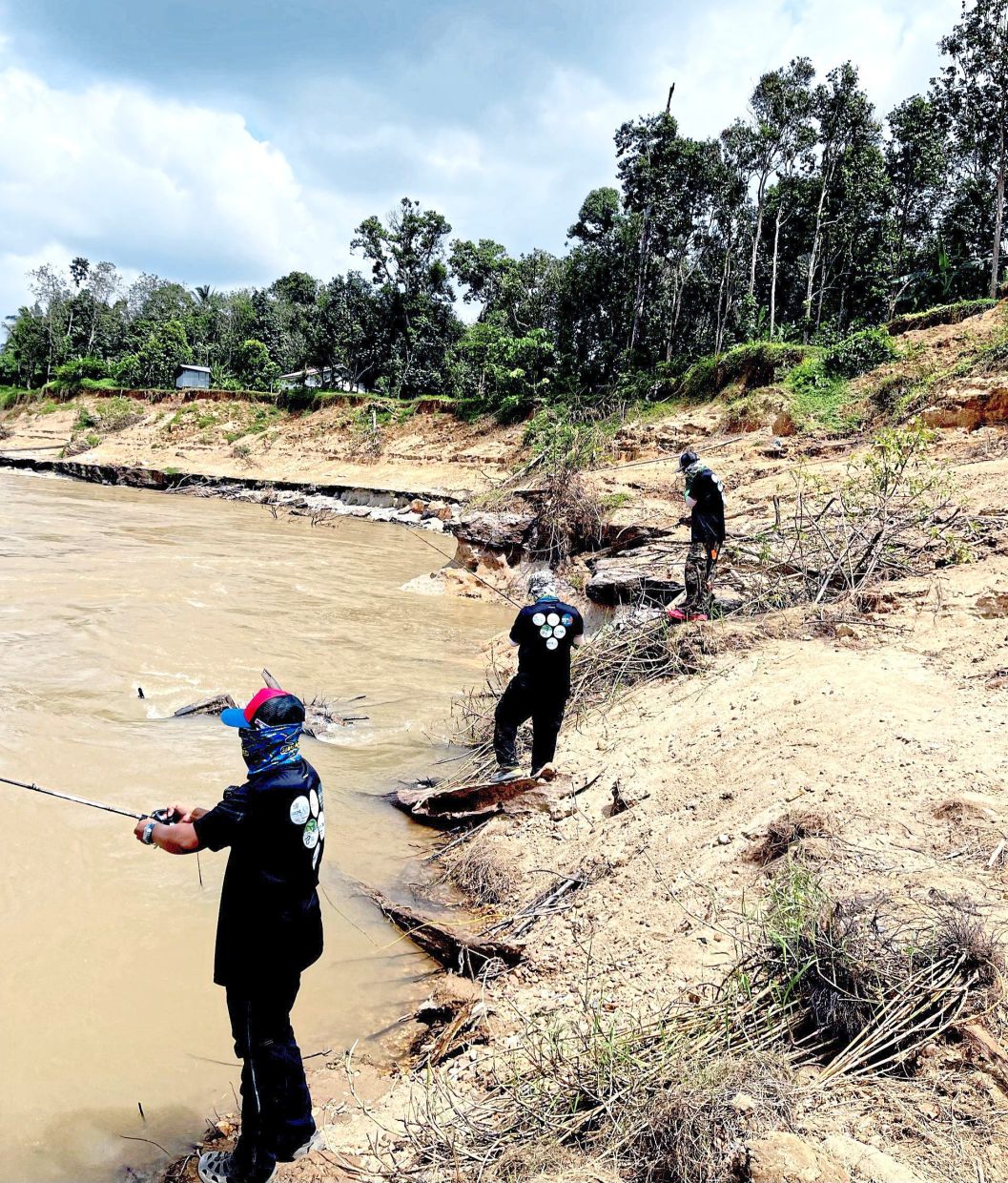
He travels extensively in search of productive fishing spots to put his employer’s fishing tackle to the test, and recently met Kelantanese angler Shamsuri Ismail who took him to a stretch of Sungai Kelantan that was teeming with goonch.
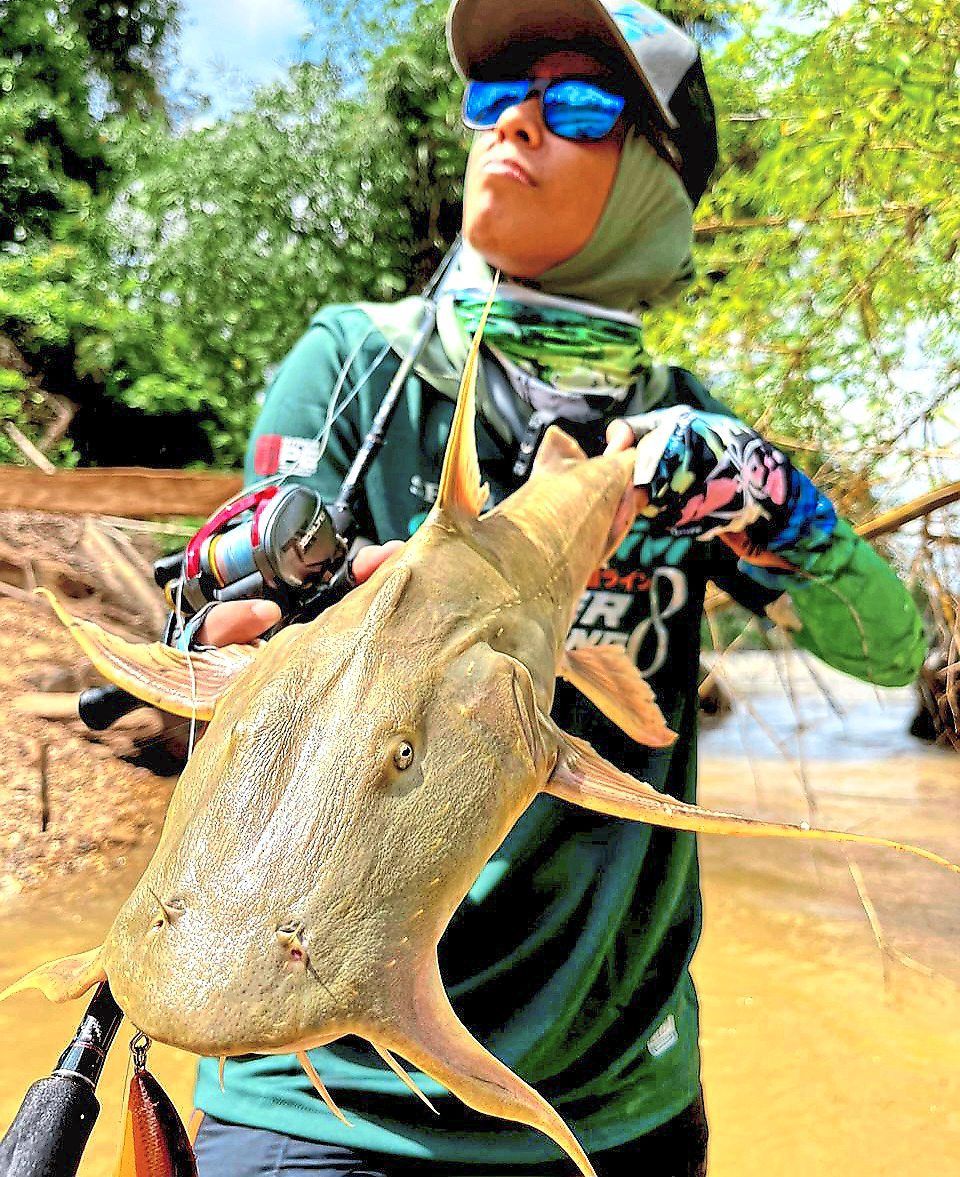
“They like fast-flowing river stretches and plenty of underwater structures – rocks and sunken logs. They hide among the structures and when other fish pass by, they rush out to attack,” says Wei.
Because the river is turbid – exactly the colour of teh tarik – Wei says the goonch do not hunt by sight and instead, rely on their barbels (sometimes called catfish whiskers), which have chemoreceptor cells that enable them to “taste” their surroundings.
“When I land a goonch, it is usually hooked near one of its barbels. This leads me to believe that when the fish senses the lure, it wants to use its barbels to check it out,” Wei opines.
At this goonch hotspot in Sungai Kelantan, most anglers use deep-diving lures that quickly wobble down to the riverbed when retrieved at medium-slow speeds.
Wei learned that goonch season in Sungai Kelantan occurs just a few times a year.
“The river conditions must be just right. When there is too much rain in the mountains, the river is too full and our lures cannot reach the bottom.
“When the season is too dry, the river becomes too shallow and the goonch go off to who knows where.
“The river water is cold, which has to be their preferred temperature to be in the mood for feeding,” he says.
Wei also noticed that when plenty of little baitfish hug the riverbank, he had a better chance of catching a goonch.
“The baitfish tempts them to come out of hiding.
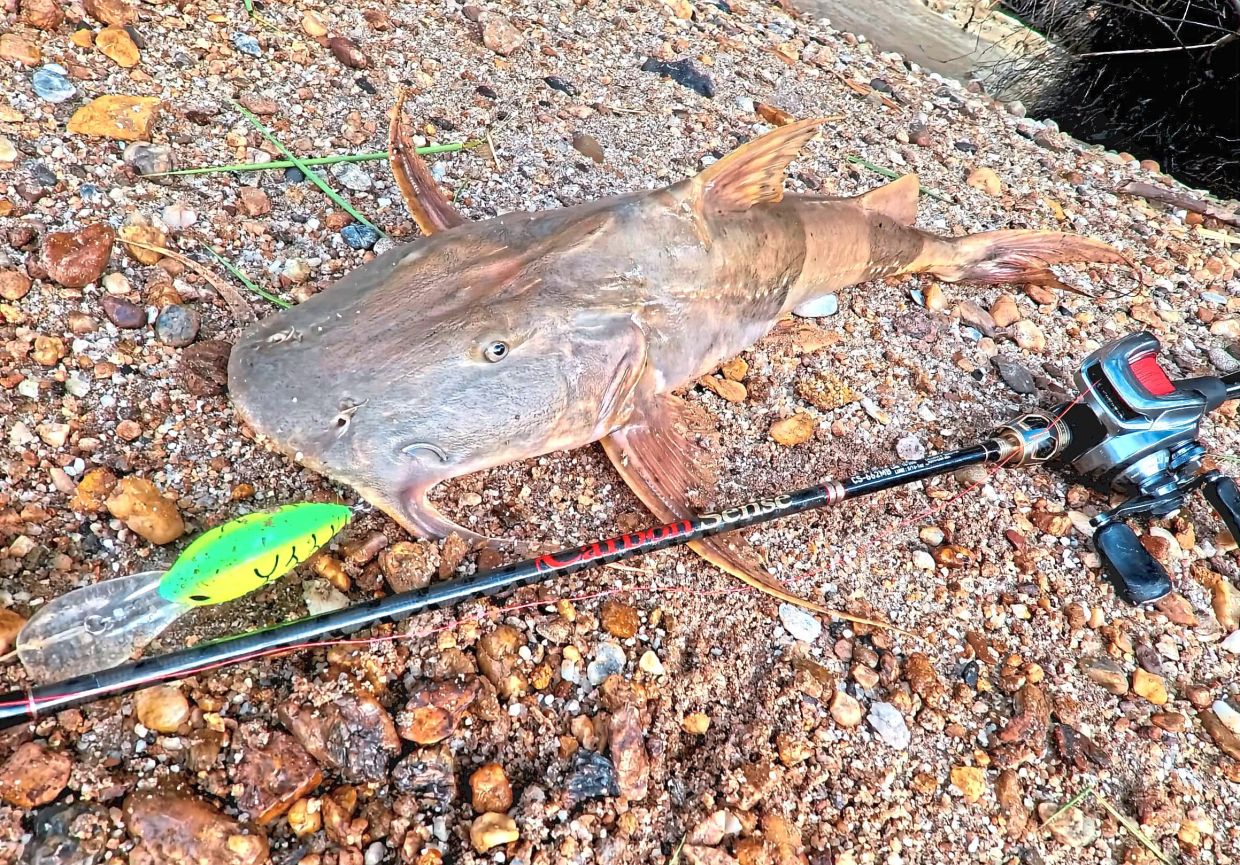
“It is an ambush predator and after you set the hook on it, it loves to dive back into structures so you risk losing it.
“When you see baitfish at the riverbank, cast out around that zone,” he advises.
While Wei would not label the goonch a strong fighter, he feels that you will still have to play the fish patiently and skilfully because of the fast river current, the fact that it tends to be hooked on the barbels only and its penchant for diving into cover when hooked.
“Instead of the usual treble-hooks on deep-diving lures, we put only one single- hook at the lure’s tail and omit the hook at the middle of the lure.
“This reduces the risk of the lure snagging on sunken logs, and a single-hook has a better chance of penetrating deeply into the tough mouth area of the fish,” he adds.
And now for the culinary quality: “It is the most delicious freshwater fish I have ever eaten in Malaysia!” Wei declares.
On gutting the fish, he found that its flesh was uniformly yellowish, meaning that it is loaded with intra-muscular fat and likely rich in Omega-3 fatty acids.
“The meat is so juicy and tender. I simply steamed the fish and it was wondrous,” he says.
Wei points out that the fish has thin skin and no scales, but mind its teeth.
“It has rows of needle-sharp teeth right behind the lips and also at its gills near the throat. I scratched myself badly while gutting it, so be careful,” he warns.