'I bribe Kitchen God for good luck': Penang boy shares his Hokkien heritage


Growing up in a Penang Hokkien household, the writer observes many rituals and traditions associated with Chinese New Year. — Photos: CHESTER CHIN/The Star

Whenever I’m celebrating Chinese New Year with my Hokkien relatives in Penang, there’s always something happening throughout the 15 days of the festive period.

My mother’s side of the family still observes many traditions, rites and rituals that are associated with Chinese New Year. For instance, we would “bribe” the kitchen god with thnee kuih (sweet glutinous rice cakes) so that he only reports good things about the household.

The writer’s family prepares a feast for departed ancestors every year on Chinese New Year eve. — CHESTER CHIN/The Star
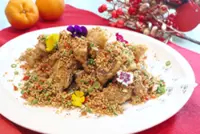
We would also prepare a grand feast for our dearly departed ancestors at the ancestral altar in the daytime on the eve of the new year. My mother and aunts would wake up early in the morning to prepare many sumptuous dishes (including my favourite jiu hu char) for the ancestors.

Once the lunch for ancestors is complete, the women (and some men) in the family would then return into the kitchen to prepare for the night’s reunion dinner for the entire family.

Then there’s the Jade Emperor’s (Thnee Kong) birthday on the ninth day of new year. In Penang, especially (with its huge Hokkien population), Thnee Kong’s birthday is observed with much pomp and pride. Driving through George Town in the daytime, you would see stalks of sugar cane tied to motorcycles or dangling out of a car’s window.

In Penang, Thnee Kong’s birthday is observed with much pomp and pride.
Sugar cane is a symbol of luck in the Hokkien tradition, and is often used as an offering during prayers.

Another celebration involving a deity is the birthday of Cheng Chooi Chor Soo Kong, which falls on the sixth day of the Lunar New Year.

Cheng Chooi Chor Soo Kong is the resident deity at the two-century-old Snake Temple (officially known as Hock Hin Keong). On this day, devotees will hold the Chneah Hoay (flame-watching) ceremony at the temple to predict the state of economy for the year.

My uncle Ang Seng Hin is a member of the Cheng Hoe Seah association, which helps with the flame-watching ceremony. Cheng Hoe Seah is part of the Hokkien Kongsi which manages the Snake Temple.

The writer's aunt Chiah Lan Yook offering prayers to the Kitchen God at the family home in Penang. — ANG SENG HIN
Every year, my uncle and his wife Chiah Lan Yook would dutifully help out at the association to make the Chneah Hoay a success. In 2019, I got the chance to join them for the ceremony.

I followed the procession from the association’s base at Hock Teik Cheng Sin Temple in Armenian Street. We were to deliver a special incense urn which will be used for the flame-watching ritual.

From the Unesco Heritage Zone, we made our way via a chartered bus to Bayan Lepas, where the Snake Temple is located.

The temple grounds was a cacophony of cultural performances, music, dragon dance and even Chinese opera. In recent years, the deity’s birthday has become an important tourism event for the state and attracted a fair share of curious international visitors.

Incense smoke stung my eyes as we made our way up the steps to the main altar. Looking up, I saw hudreds of lanterns illuminating the night sky.

The special incense urn where the deity’s economic prediction is divined.
Closer to midnight, a large crowd began to gather around the temple building as devotees and visitors anticipate the ceremony.

The flame-watching ritual takes place at the main altar. However, during this time, only entourage from the respective associations are allowed inside the temple.

Seeing that I was wearing the bright yellow association T-shirt, the middle-aged gatekeeper let me through.

The special urn was moved to the main altar and the ritual began around 11.30pm.

The writer hopes to pass down his unique Hokkien heritage to the younger family members.
The deity’s divinations on the state of economy is based on the stability, brightness and strength of three bursts of flames of the incense urn. Each flame is said to represent a four-month cycle.

The first flame was neither weak nor strong, signifying an average start to the year. The second flame was very big and strong, signifying good tidings.

Finally, the last flame was weak.

I didn’t get to join the procession last year due to Covid-19 fears. It is unlikely that I (just like many other Malaysians) would get to go back to my hometown for Chinese New Year this year too.

But one thing’s for sure, I will continue to carry the torch of my heritage and culture in all its blazing glory.

Get 20% OFF The Star Digital Access

Monthly Plan

RM 13.90/month

RM 11.12/month

Billed as RM 11.12 for the 1st month, RM 13.90 thereafter.

Best Value

Annual Plan

RM 12.33/month

RM 9.87/month

Billed as RM 118.40 for the 1st year, RM 148 thereafter.

Follow us on our official WhatsApp channel for breaking news alerts and key updates!

Next In Travel

Hello from the other side: Why Penang's Bukit Mertajam is worth a visit
To better understand the American Revolution, go to Barbados
Explore the world with local airlines' holiday campaign, expanded reach
Activists launch new case against luxury lodges in Maasai Mara
Promoting eco-tourism products in Kedah and Penang
Tourists soldier on in Rome despite the blistering heat
Thailand gets serious about chasing high-spending tourists
Floating markets in South-East Asia to check out
This airline has an in-cabin wellness zone for its nearly 20-hour direct flight
Chinese travellers choose South-East Asia destinations this summer

Others Also Read