
Heroic exploits of the gallant Malay Regiment soldiers during World War II come alive through captivating exhibits in Singapore, collectively known as Reflections At Bukit Chandu.
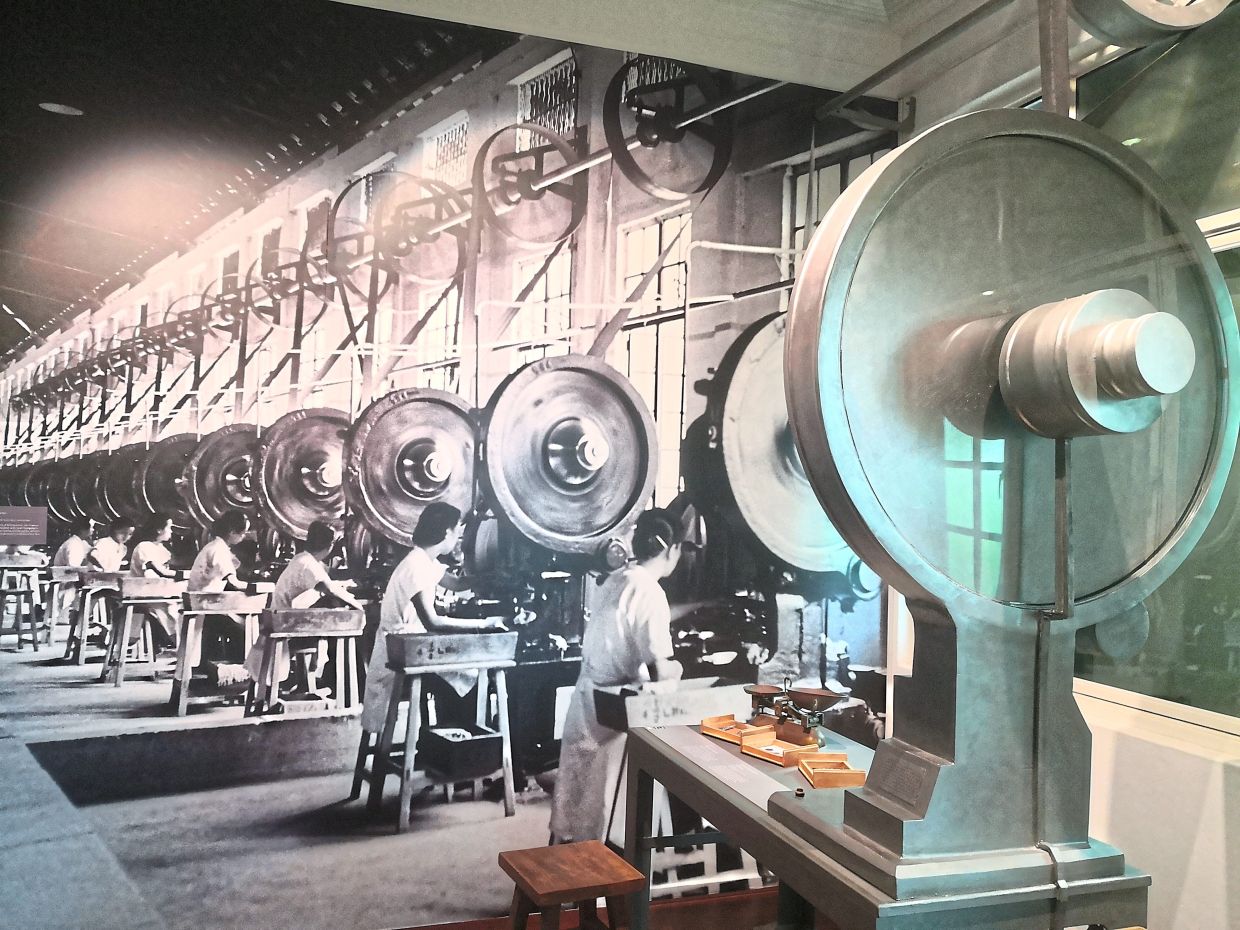
Housed within a double storey bungalow surrounded by lush greenery at the end of Pepys Road, Reflections at Bukit Chandu is also what the museum is called. The displays turn the clock a little further back to explain how the hill got its name after an opium packing plant was established in the vicinity in the 1930s.
Located along the Southern Ridges Trail and part of Kent Ridge Park, Bukit Chandu is popular today among local nature lovers and exercise buffs. Its well-manicured lawn also serves as a popular venue for family picnics during the weekends.
The hill’s strategic location, however, was crucial for entirely different reasons after the war arrived in Malaya some eight decades ago.
Japanese invasion
After overwhelming all of the Malay Peninsular in early February 1942, the Japanese Imperial Army began planning to seize its ultimate prize. Even the symbolic act of desperation by the British in demolishing the causeway linking Malaya to Singapore failed to stem their advance towards what then British Prime Minister Winston Churchill dubbed as the “impregnable fortress of the East”.
As for the Malay Regiment troops – who had already lost contact with loved ones in Malaya – the setback did not mark an end, but the beginning of their finest hour.
Tasked to defend the vulnerable Pasir Panjang Ridge (later renamed Kent Ridge Park), they took up position at Hill 225. This is where Reflections at Bukit Chandu is located today. It must have been a harrowing time for the soldiers as they lie waiting for imminent attack.
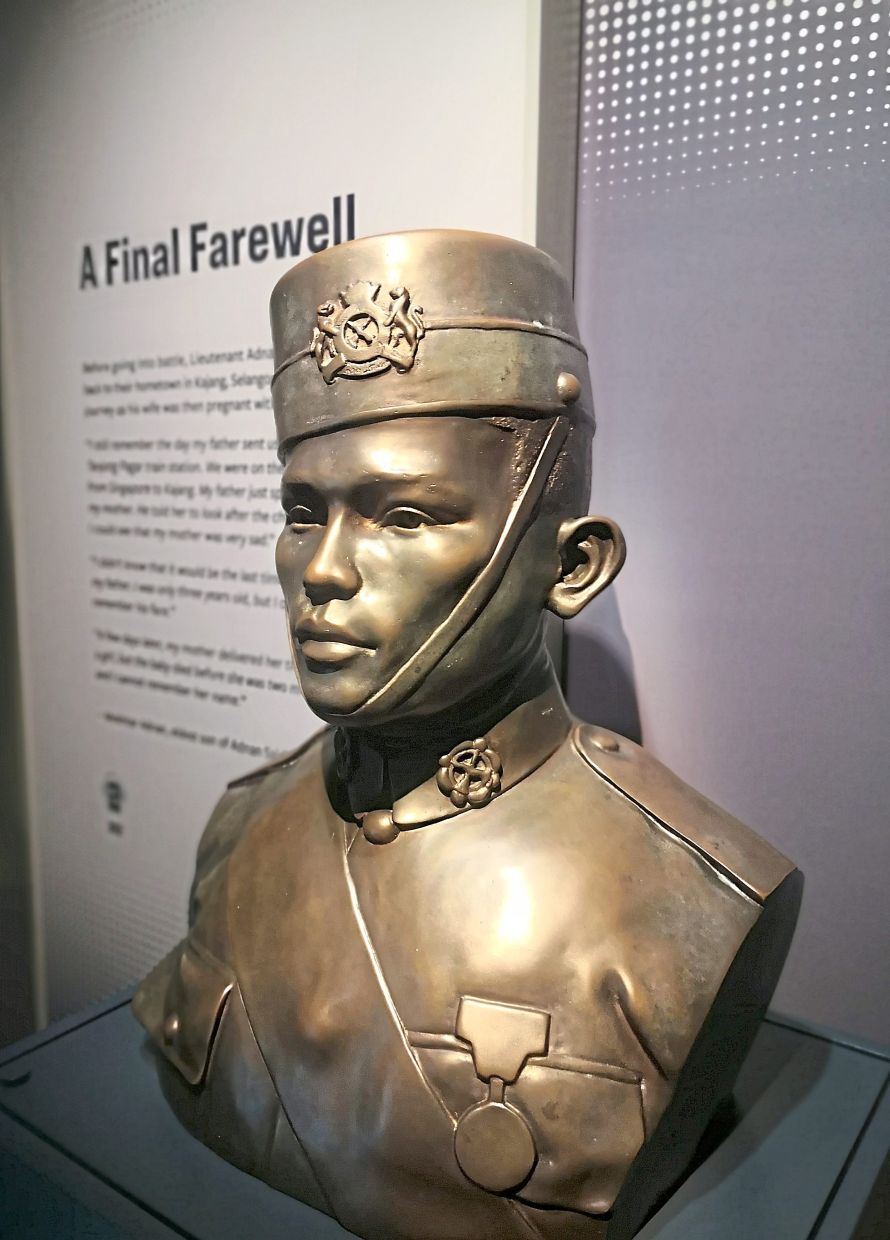
Morale, however, ran high as they prepared to stop the Japanese from advancing towards the city, as well as prevent crucial ammunition and supply depots nearby from falling into enemy hands.
The varied Reflections at Bukit Chandu exhibits paint a vivid picture of the events that unfolded during those closing days of the war before Singapore eventually fell into the hands of the Japanese on Feb 15, 1942, which coincidentally happened to be Chinese New Year.
The battles
Although outnumbered 10 to one, the Malay Regiment dug in and met the enemy head-on. Their fervent mettle and compelling courage left an indelible mark on history.
Living up to the regiment’s Taat Dan Setia (loyal and faithful) motto, Pvt Yaacob Bidin saved his comrades during the battle by crawling through burning undergrowth to neutralise a Japanese mortar crew with his light machine gun.
One of the few survivors from the Malay Regiment’s last stand, Yaacob was awarded the Military Medal after the war.
As the air around Bukit Chandu filled with smoke, Lt Adnan Saidi then assumed command after regiment leader Capt Harry Rix, a Cambridge-educated lawyer-turned-soldier, was cut down by machine gun fire, killed in action just one day before the British surrendered.
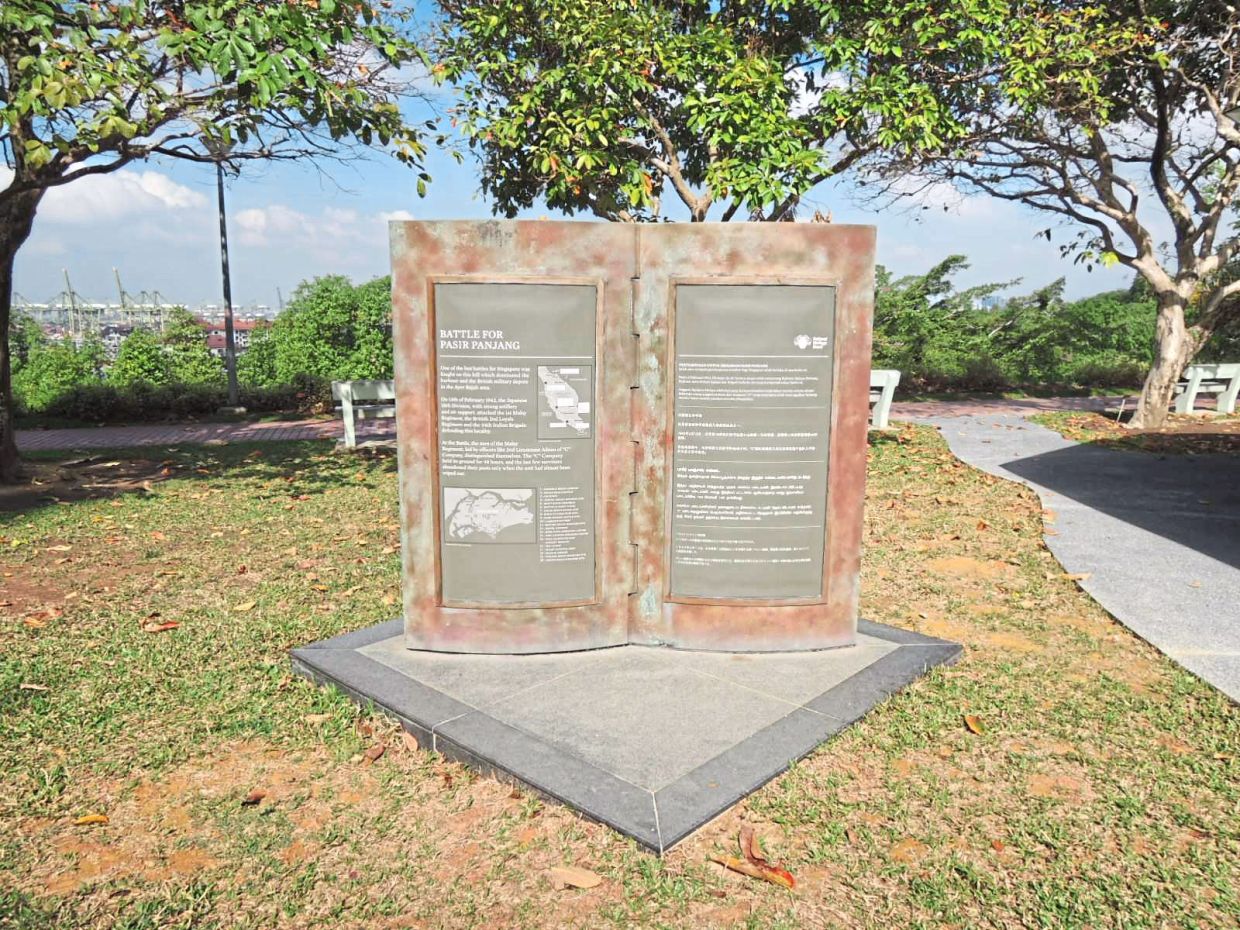
Constantly alert, Adnan kept his eyes peeled for surprise attacks and enemy deceptions. His vigilance paid off when Japanese soldiers, disguised in Punjabi military uniforms, marched up Bukit Chandu in a four abreast formation.
The lieutenant immediately saw through the ruse, knowing that British trained troops always marched three abreast, and opened fire with three belts of ammunition, mowing down many attackers.
Two hours later the enemy launched an even larger assault. The Malay Regiment soldiers stood their ground and fought until their ammunition ran out; when this happened, they resorted to hand-to-hand combat.
When Adnan was eventually captured, he bore the full fury of his aggressors. Needless to say, his death was cruel and barbaric.
Living up to the age-old Malay proverb, “biar putih tulang, jangan putih mata” (interpreted as “death before dishonour”), the Malay Regiment’s gallantry flared brightly against the sinister twilight from nearby burning oil storage depots. In showing preference for a warrior’s death rather than the dishonour of cowardice, they had bought precious time for British, Indian and Australian stragglers to retreat into the city.
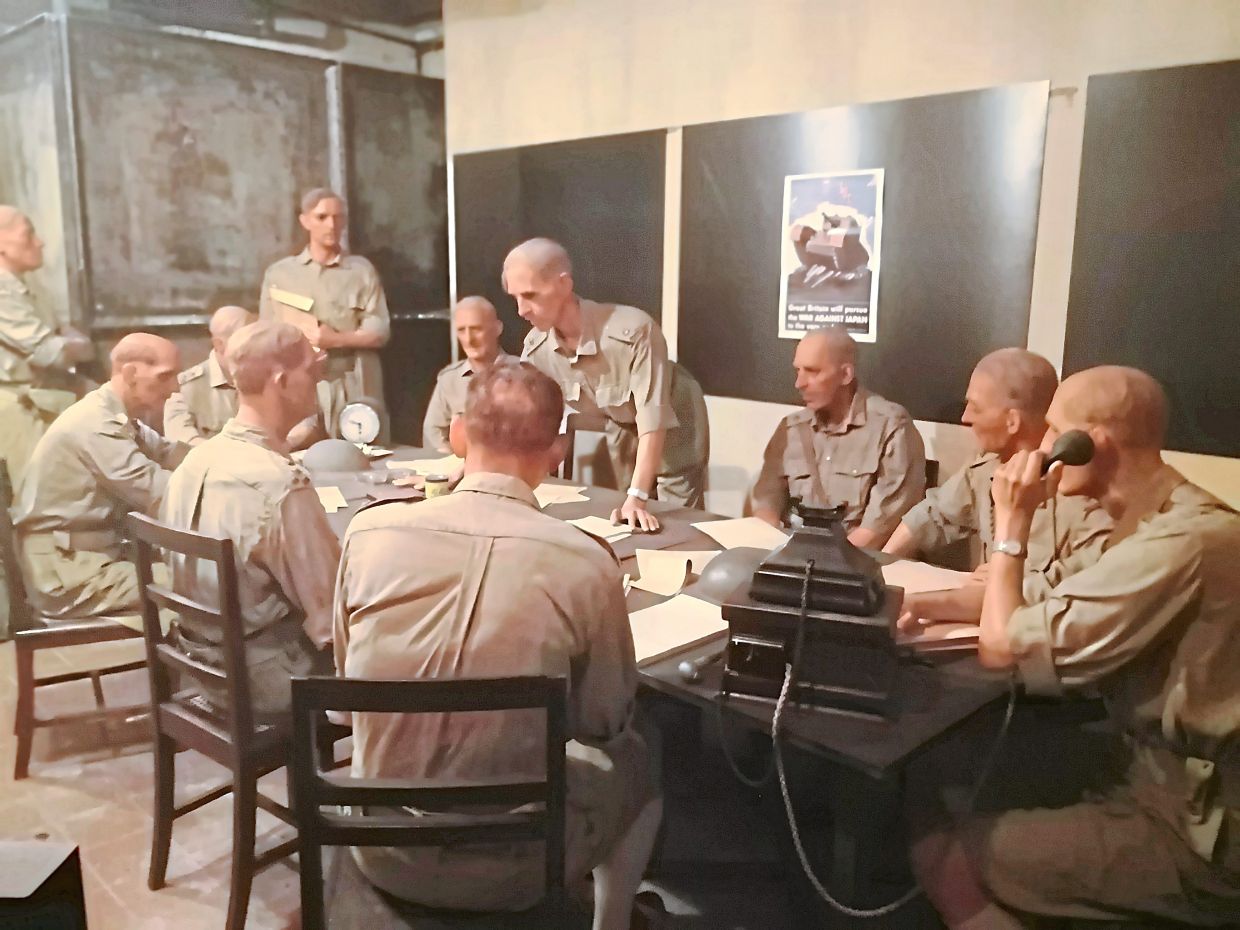
The pull back can be traced from several key sites around Singapore towards the battlebox at Fort Canning, now known as the Battlebox: Historical World War II Bunker. Starting from the north, Allied troops abandoned the Sembawang Naval Base after it came within range of Japanese artillery guns positioned across the narrow Johor Strait.
Marching towards the perceived safety of the fortified subterranean bunker complex while trying to avoid aerial bombardments from enemy aircraft and sniper fire from nearby buildings, the exhausted troops were joined by peers from Dempsey Hill Barracks as well as those from Gillman Barracks. Many of these men were eventually interned as prisoners of war throughout the duration of the Japanese Occupation.
Today, these military installations have been extensively refurbished and given new leases of life. For example, part of the former Sembawang Naval Base has been developed into the Bukit Canberra integrated sports and community hub located next to the Sembawang MRT.
It is now home to modern facilities like the largest ActiveSG gym in Singapore, a polyclinic, a senior care centre and a hawker centre. Roads named after former British colonies and territories have been retained to provide a link to the area’s storied past.
Gillman Barracks meanwhile has been repurposed into a vibrant creative lifestyle enclave with innovative F&B and lifestyle offerings.
The battlebox has been meticulously restored to its former glory, where the rooms in the labyrinthine complex are recreated based on historical records.
Visitors today can see what it could have been like in the underground and heavily fortified Malaya Command Centre during those final fateful days of the war.
Suitable for young families, this tourist attraction allows one to hear everyday accounts of the soldiers who once occupied those hallowed halls. One can also experience the pulse of strategic decisions made by Lt-Gen Arthur Percival and 11 other commanders that eventually led to possibly the greatest defeat of a British army ever in battle.
That was when the Malay Regiment had finally won due respect and admiration. All doubts raised since its inception in 1932 as a British colonial experiment on whether the Malays had sufficient temperament to form an effective modern fighting force had completely evaporated.
The unquestionable answer to the initial uncertainty came not in the form of words, but through blood. With their ultimate sacrifice, Lt Adnan’s platoon of 42 soldiers had proven beyond any doubt regarding the Malay Regiment’s loyalty, prowess, dependability and capability as a globally recognised military unit.