
“Clean” may be one of the most overused terms in beauty today, but in haircare, it is also one of the least understood.
Once used to describe sulphate-free formulas and botanical ingredients, the definition has expanded into something more complex – spanning sustainability, sourcing, performance and even long-term scalp health.
Beyond exclusion
The earliest iterations of clean haircare were defined by omission – removing sulphates, parabens or silicones.
But for brands that have been working in this space for decades, the conversation has moved far past formulations.
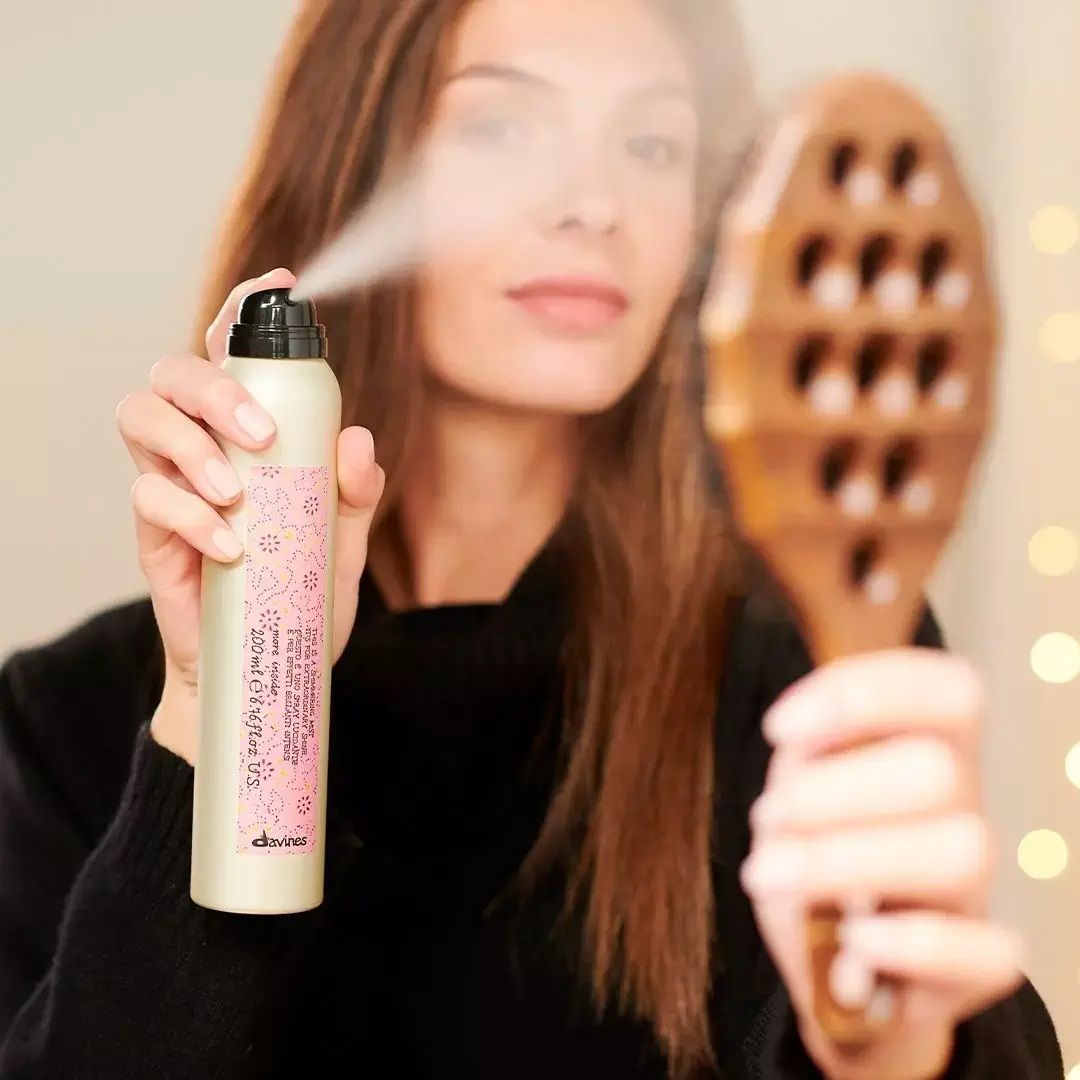
Jane Chow, general manager of EIG Haircare Sdn Bhd, which distributes Italian haircare brand Davines, explains that for the brand, “clean” was never just about what ingredients were removed, but about what is included and how products are created.
That shift from subtraction to intention has since broadened into a more holistic framework.
“In the early years, it was about minimising harsh chemicals and prioritising naturally derived ingredients,” says Chow.
“Today, our definition has evolved into something far more holistic. Clean now encompasses the entire lifecycle of a product: sourcing, formulation, production, packaging and even how it returns to the environment.

This expanded definition also reframes clean haircare as an ongoing responsibility rather than a fixed standard.
Read more: Bobs, braids, buzz cuts: Hair trends spotted on the streets at fashion weeks
Tanamera co-founder Faridah Fahad has always believed that healthy hair begins with the scalp, and that clean beauty is about trust.
“What we use every day should genuinely support our wellbeing over time. At Tanamera, this belief has always guided us, rooted in traditional Malay herbal knowledge and a respect for balance,” says Faridah, whose brand makes a range of haircare solutions which exclude harsh and harmful ingredients.
These ingredients include SLS/SLES, propylene glycol, DEA/TEA/MEA, mineral oil, formaldehyde and petroleum-based preservatives, often listed as “nasties” in the beauty world.
For salons, the clean beauty shift is gradual but evolving.
Cocodry founder Kim May Chee was a consumer before she became a salon owner, having personally struggled to find clean haircare products that worked for her hair and scalp.
Her perspective underscores a key tension in the category – performance versus ingredient integrity.
“A lot of products focus heavily on results but sometimes compromise on ingredient quality, and I’ve always believed that what we put on our scalp and hair matters because scalp is literally our skin!” says Kim, whose blowout bar and treatment salon specialises in natural, sustainable and cruelty-free hair care.
“Through years of working closely with our community, my understanding of ‘clean’ has definitely evolved. I don’t see it as just a marketing label, but more as being intentional about the ingredients we use and avoid, especially ingredients that may be harmful to our health like formaldehyde,” she adds.
All about balance

“We’ve become very used to quick fixes – strong cleansing, heavy conditioning, immediate smoothness – but true hair health doesn’t work that way. It’s something you build over time, starting with restoring balance to the scalp,” says Faridah.
Another common belief is that more foam means better cleansing.
“In reality, the ingredients that create that rich lather are often the ones that can disrupt the scalp’s natural barrier. Gentle formulations may feel different, but they are far more supportive in the long run,” adds Faridah.
Chow notes that another common misconception is that “clean” products don’t perform as well as conventional ones, while another is that “natural” ingredients automatically translate to “better” or “safer”.
“In reality, formulation science has advanced significantly, and performance is no longer a compromise,” she says. “Not all natural ingredients are suitable for every scalp or hair type. What matters is balance, testing and formulation expertise.”
Ultimately, clean haircare is not less effective – it simply asks for more patience, and a shift from quick results to long-term care.
Clean formulations, in particular, can be judged against more traditional, silicone-heavy alternatives, especially when it comes to results that consumers are used to.
“With clean formulations, one challenge can sometimes be achieving that same immediate finish people are used to, especially when they’re comparing it to heavier, more coating-based formulas like silicone-heavy conditioners that provide instant results,” says Kim.
“In a climate like ours, people want instant smoothness and long-lasting frizz control so clean products really need to be formulated well to keep up.”
“Clean formulations can feel different because they often focus more on improving the hair’s actual condition over time such as strengthening the cortex but some products mainly coat the cuticle to create that immediate soft and glossy finish,” says Kim.
Read more: Going grey: Why not ditch the hair dye and challenge beauty standards?
From clean to conscious
As the category matures, “clean” is increasingly seen as a starting point rather than an end goal.
Terms like “conscious” and “regenerative” are beginning to define the next phase of the industry.
“‘Clean’ is the foundation, ensuring safety and minimising harm. ‘Conscious’ goes a step further by considering ethical sourcing, carbon footprint, and social impact,” says Chow.
“‘Regenerative’, however, is where the real transformation lies. It’s not just about reducing damage, but actively restoring ecosystems and communities,” she says, noting that for the brand, this is reflected in work with regenerative organic agriculture.
And increasingly, this is where consumer expectations are heading.
“The future of beauty will be regenerative by necessity. Consumers are becoming more informed, and they expect brands to give back more than they take,” says Chow.
“‘Conscious’ beauty asks us to look at the entire journey – where ingredients come from, how they are processed and the impact on people and the environment,” says Faridah, noting that “regenerative” beauty is about ensuring that what we take from nature can be replenished.
“In many ways, these ideas are not new to us. Traditional Malay and Asian healing practices have always been rooted in balance and respect for nature. The future of beauty lies in returning to these principles – moving from extraction to restoration, and from convenience to care,” she adds.