
Throughout my two-decade career as a cook – working in restaurants and test kitchens, developing recipes and writing cookbooks – I have been aware of limitations. Carrots, for example, must be prepared a certain way to harness their natural sweetness, coaxing out the sugars by roasting them to a robust depth.
So it is with my body, too.
Living with a chronic illness, there have always been limitations to understand, boundaries in which I had to operate. I’m impulsive by nature, eager to act on ideas once I have them, but over time I learned to pace myself, to be more patient, to avoid long hours on my feet. And then, after many years of figuring this out, the boundaries changed again.
I was born with sickle cell disease, an inherited blood disorder. All my life, I’ve had to take exceptional precautions, balancing exertion with adequate periods of rest – I can’t just tough it out.
In December 2023, I went to a hospital in New York City, United States with flu-like symptoms and the onset of a sickle cell crisis, for what I thought would be a routine stay. But I did not receive the care I needed, and the results were catastrophic. My memory of this time exists only in text messages I sent to family and close friends: “I’m still in so much pain.”
On Jan 11, 2024, I woke up from a six-week-long coma, in a different hospital, not knowing how I’d gotten there. This was followed by six more weeks of high fevers and a fog of confusion. A breathing tube had been inserted into my throat. I could only mouth what I felt – a horrendous amount of pain – adding another layer of trauma.
I was able to recognise my mother, who had flown in from Nigeria, where I was raised, to spend nights with me, and my husband and younger brother, who would visit during the mornings and afternoons. My constant and singular thought during that time was this: If they could see me, then I was safe.
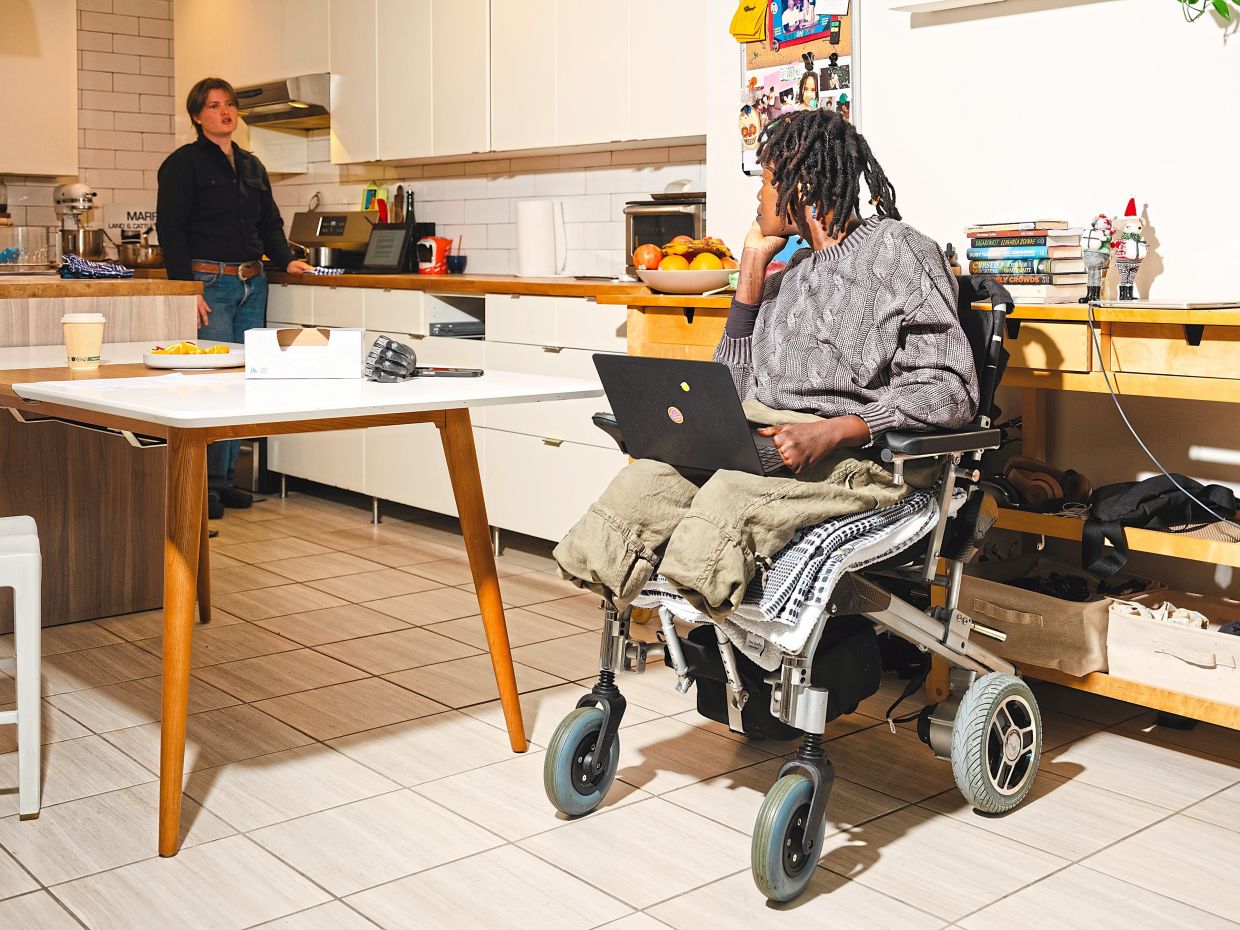
In a meeting with family and medical staff in early March 2024, I learned that both my legs would not survive, and neither would my fingers. Several amputations were scheduled, and, after seven months in the hospital, I would be sent home as a bilateral below-the-knee and digital amputee, navigating the world in an electric wheelchair. I’d later be fitted with prosthetic hands and legs.
In the weeks after my coma, while I was still in the hospital, I was hungry for so many things: the warmth of companionship and friendly conversation, a sense of agency in my care, and as soon as I could sustain it, solid foods.
I craved anything with flavour, especially Nigerian food. I spent my days browsing menus on the iPad my husband, Mark, had affixed to my hospital bed, strategising deliveries to my room. My meals went from lackluster hospital food to carefully curated lunches and dinners with family and friends who visited.
Comfort in food
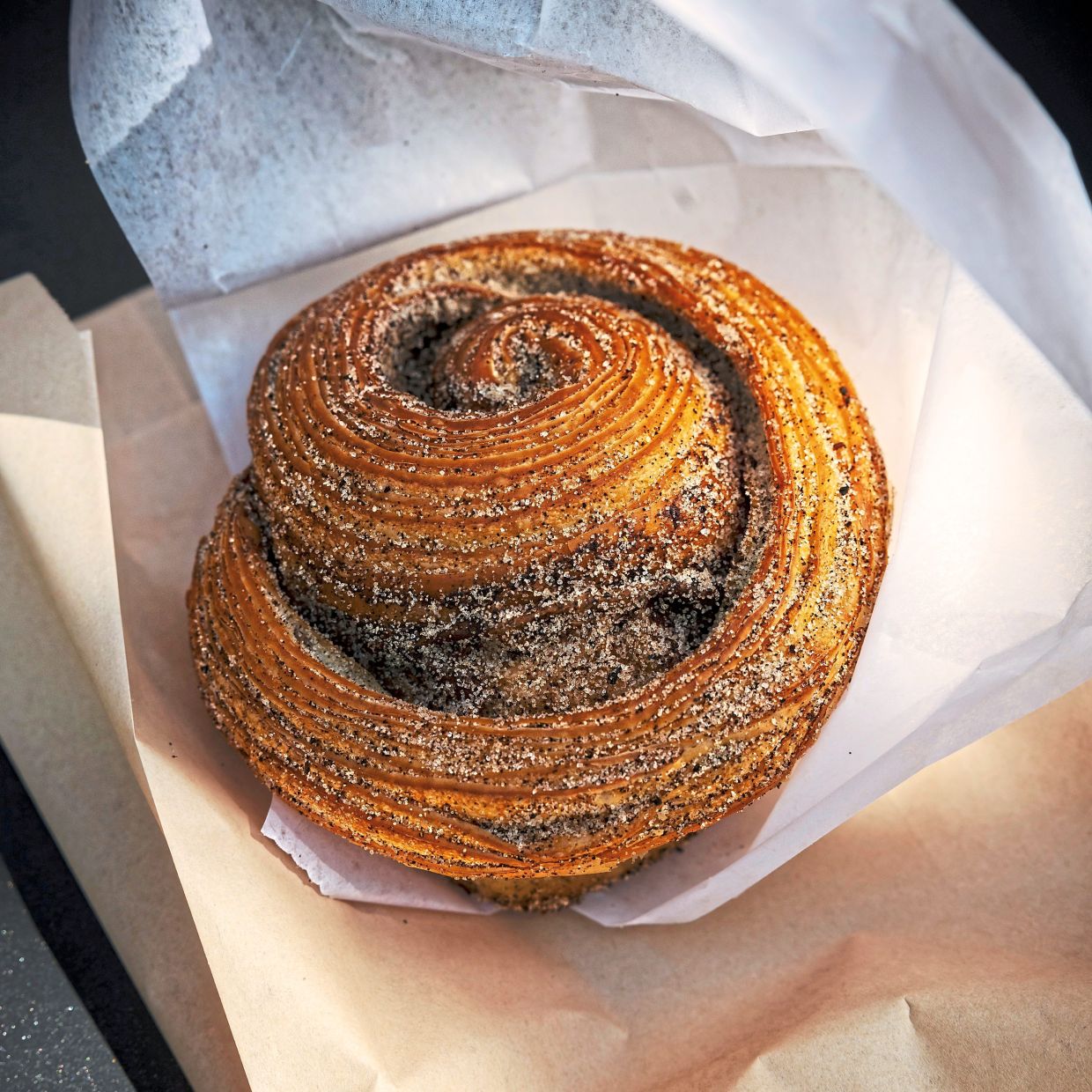
Sundays were my favourite. One of my editors, Nikita Richardson, would stop by with a plethora of baked goods from cafes and pastry shops across the city. We would set up the bounty she’d collected and sample them all, leaving traces of flaky pastry or crumbs of cake flecked across my table. We would catch up on the world outside my four walls.
This time together was more than curative; in those moments, I felt as if I didn’t have to focus on all the ways my life would change after discharge, though I was absolutely certain I would return to the kitchen. I just needed to figure out how.
In the meantime, I could imagine myself perusing pastry shops with my friend, and it was in this dreamy world, somewhere between trance and reality, that I met the brown butter cornmeal cake from Radio Bakery in Brooklyn, New York.
The cake was assertive in its nuttiness, an exquisite balance of sweet and savoury, with a crunchy exterior and a dense, pillowy softness within. It became the perfect pastry to complement the first sips of coffee I could manage. Nikita would bring me two – one for Sunday and another for the next day.
It was exactly the kind of recipe I would have jumped to adapt in my roomy kitchen. I longed for the time when I would be back there, with my two young daughters, creating side by side, baking for them. I missed them so much it hurt my heart.
It turned out that when I did return home, later that summer, life there was no different. What had changed was me. And here I was, tasked instead with rediscovering myself, as a person, a wife, a mother and a cook.
Even after a long hospitalisation, when so much of my physical body had changed, I was grateful for what remained intact: my sense of taste and smell, my culinary knowledge, my ability to eye when a dish is cooked just right.
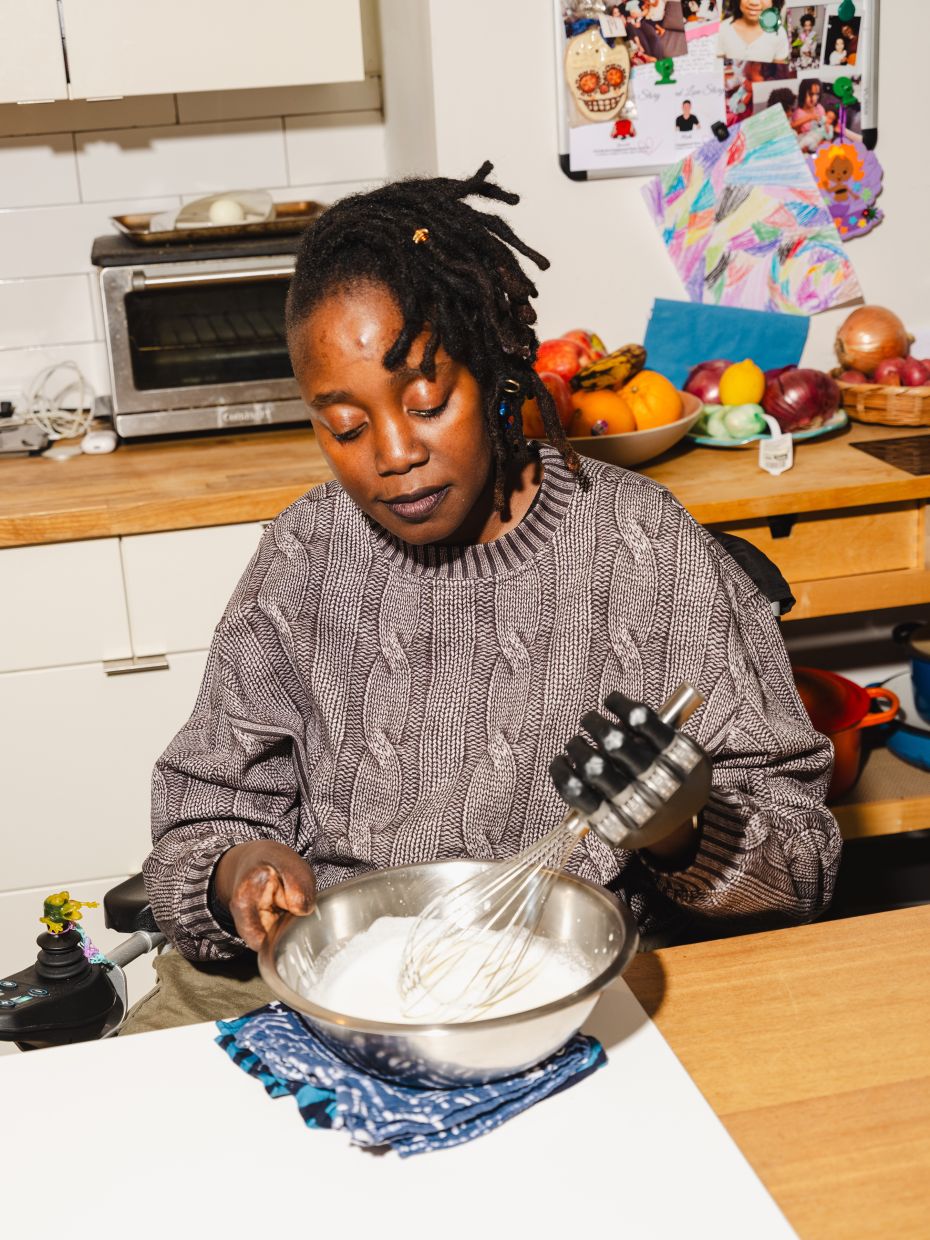
When I returned to work as a columnist and recipe developer last April, I began churning out recipes as I had before, but now with the help of a cooking assistant who would act as my hands.
Back to the kitchen
The kitchen has always been a refuge for me, a place where no matter the circumstances, my world made sense. I knew that I could still harness the best qualities of an ingredient if I just let my skill and spirit guide me.
Each day, my rotating cast of assistants and I begin at my kitchen table, going over a recipe step-by-step. They’re in charge of chopping and slicing ingredients, and cooking the dish from start to finish, navigating the too–tall counters and impossible-to-open cabinets. I stay present, an active participant in the process, watching, touching, listening, tasting and taking in the aromas wafting through the kitchen. I try to lead with kindness, and I don’t mind repeating myself.
I’m not always successful. I sometimes get impatient having to open up a world that I once existed in alone – having other cooks in the kitchen with me is an intimacy I was not used to. And there’s the frustration of needing to ask for help while giving guidance. It feels like leading my personal kitchen brigade but without the ability to show exactly how I’d like a vegetable diced, or the best method for folding butter into dough.
Nearly two years into my recovery, I finally got around to adapting the recipe for the brown butter cornmeal cake, originally developed by chef Kelly Mencin of Radio Bakery. The recipe is inspired by a classic French brown butter financier, substituting coarse ground cornmeal for the traditional almond flour, while turbinado sugar gently sweetens the cake and gives it a crunchy exterior.
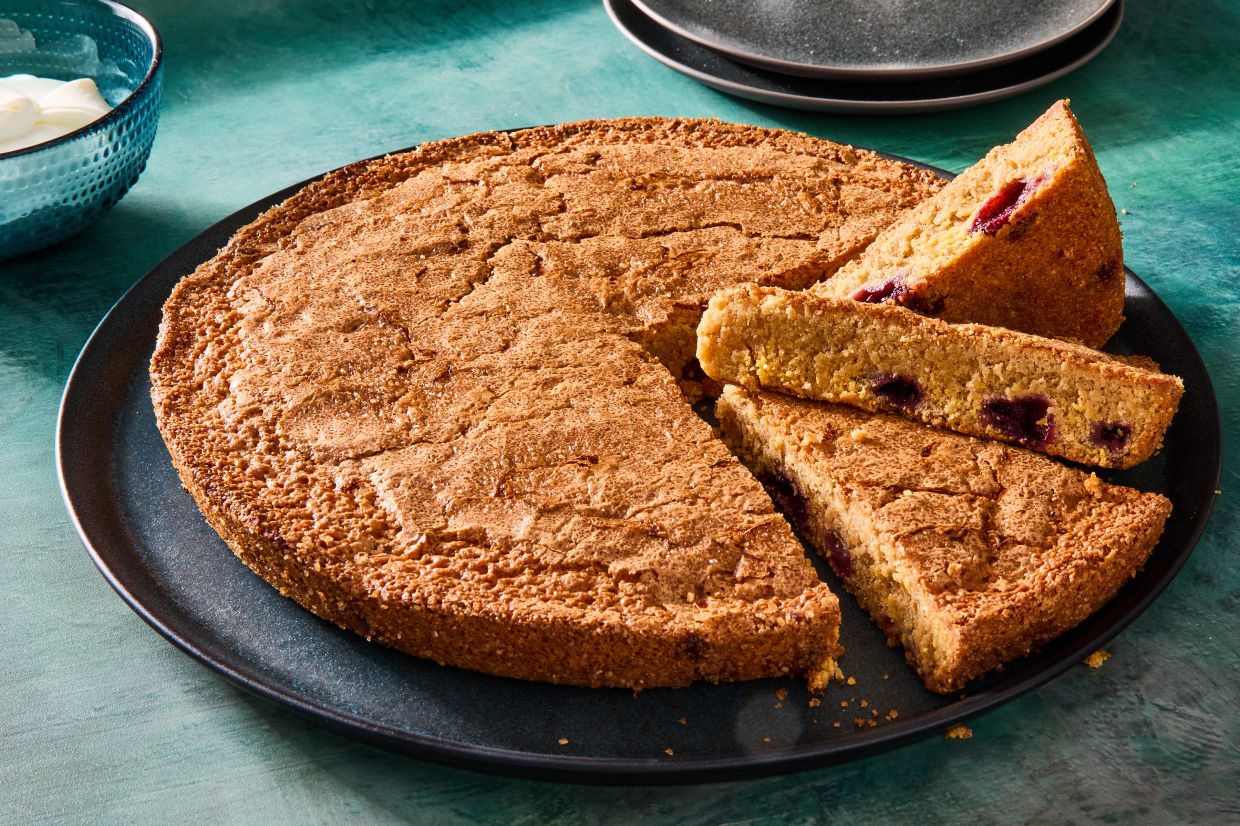
I added my own touch: cherries for their tartness and fleshy texture (fresh or frozen; sour, Bing or dark sweet cherries will work). Otherwise, this homemade version retains the original’s depth of browned butter, crispiness of cornmeal and caramelised, crystallised crunch.
In a life spent traversing long distances, my journey back to the kitchen has been one of the greatest distances I’ve ever traveled. Cooking was once my time to reflect on the past and future as I stood stirring or watching something come together in a pan, planning articles, recipes, cookbooks.
Now so much of my life is spent leaning on others, and making food is no longer the solitary and meditative act it once was. It calls to mind a phrase in Niger-Congo language Yoruba ,
“A jo se po,” meaning, “We do it together” or “We collaborate.”
This has become a refrain that I recite while I’m writing recipes, taking meals with loved ones and performing the once simple tasks of everyday life. – ©2026 The New York Times Company