The Internet is a scary place


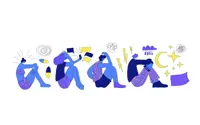
For some reason society as a whole has started to mistrust experts. Which is bad news. Because we need experts. — freepik.com

I had a chat with a friend the other day about the state of the planet’s environment and he said something to the effect that, “I heard that it doesn’t matter because the oceans actually have a way of cleaning themselves”.

This is a prime example of how people pick and choose what they want to believe. Which is understandable. The truth isn’t fun, and the truth is, oceans aren’t cleaning themselves.

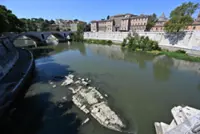
The oceans are huge but they don’t have the ability to handle the amount of stuff we dump in them. Each year 13 million tonnes of plastic ends up in our seas. Which in turns degrades and becomes microplastics that end up in every aspect of sealife, they end up in the water cycle, and the result is we eat microplastics and microplastics rain down on us, and so we also drink microplastics.

Again, not a fun truth. I’d much rather believe something that says the oceans can clean themselves rather than all the research that tells us this bad – alarming – news.

This is also why we don’t like to read climate science news. My X (formerly Twitter) feed is full of terrible climate science news. This includes such gems at “10 Reasons Our Civilisation Will Soon Collapse”. I’m guilty of doing the same thing, just scrolling right past that one because sitting down to read it is probably only going to depress me.

And to be fair someone writing a list of top 10 reasons we’ll go extinct that isn’t satirical isn’t exactly news either. It’s giving voice to some absolute worst-case scenarios and adds to the idea that some things should just be scrolled past.

What is so dangerous about the Internet today is that we will scroll past these kinds of headlines and find a headline that we find more comforting. Which is probably where my friend got the idea that oceans will eventually clean themselves.

And once you click on an idea like that on your social media feed, your favourite social media platform will do nothing but send you similar ideas. Social media is creating our own personal information vacuum. We no longer go out looking for credible news, instead we click the headlines we most like to read which ensures we get more and more of the same news.

This is definitely not a healthy way to build your world view. This also explains why it’s so easy to divide people on issues that should be universally adored or hated.

But how do you find reputable news sources? People who love conspiracies will hate this but you have to look for well-established, reputable news organisations. Like The New York Times, BBC, Reuters, Associated Press, NPR and The Guardian. Yes, these are all mainstream news outlets. Ohhhh! Scary! But these news publishers have strict editorial standards and guidelines. They have established processes for fact-checking and verifying sources and maintaining accuracy.

Yes, these organisations can get things wrong sometimes. But do you really think some fringe “news” outlet run by some Internet troll in his studio apartment really has the truth? Mainstream news is clearly not perfect, but it boggles my mind that people would prefer to read clearly biased articles with dubious claims from people whose only credentials seem to be: they bad mouth mainstream media.

It seems to me that for some reason society as a whole has started to mistrust experts. Which is bad news. Because we need experts.

A recent study showed that modern humans have smaller brains than our ancestors from before the last Ice Age. One theory is that our brains have shrunk because we no longer need to know as many things. Which sounds counterintuitive but, basically, the idea is that living in communities means we have a shared knowledge pool and no longer have to know and do everything for ourselves. In other words, we might have evolved to live with experts. Experts are a short cut to attaining greater knowledge. We don’t all need to study medicine, we can just see a doctor. Or we can follow the World Health Organisation’s guidelines for healthier living.

But what happens when we don’t trust expert opinions anymore?

As the Internet has shown we turn to the opinion of any Joe Schmoe posting from his basement. And if that person writes something up about how the oceans can clean themselves, then... well... that’s how I got here in the first place.


Big Smile, No Teeth columnist Jason Godfrey – a model who once was told to give the camera a ‘big smile, no teeth’ – has worked internationally for two decades in fashion and continues to work in dramas, documentaries, and lifestyle programming. Write to him at lifestyle@thestar.com.my and follow him on Instagram @bigsmilenoteeth and facebook.com/bigsmilenoteeth. The views expressed here are entirely the writer's own.

Get 20% OFF The Star Digital Access

Monthly Plan

RM 13.90/month

RM 11.12/month

Billed as RM 11.12 for the 1st month, RM 13.90 thereafter.

Best Value

Annual Plan

RM 12.33/month

RM 9.87/month

Billed as RM 118.40 for the 1st year, RM 148 thereafter.

Follow us on our official WhatsApp channel for breaking news alerts and key updates!

Next In Living

Dog Talk: The dog who found her bark
The juiciest grilled chicken breast starts with these 4 tips
40yo Malaysian terrace house transforms into tropical home infused with light and nature
Heart And Soul: The devastating loss of a pet
Fish sleep a lot like us, and they even nap
These crunchy, buttery cakes have taken the Internet by storm
Iran war forces farmers to seek fertiliser alternatives from cow dung to compost
Heart And Soul: A beloved neem tree leaves behind fond memories
Back in stork: These returning birds bring joy to a Croatian village
This Malaysian social enterprise builds communities through upcycling projects

Others Also Read