
Decades ago, retirement was associated with a finish line: work for decades, collect your savings and begin a quieter life.
But for Malaysians today, that picture is changing. Longer life expectancy means retirement could last 20, 30 or even 40 years. Careers have become less predictable, families are evolving and the escalating cost of living and healthcare shapes how people think about their later years.
Most importantly, being “ready” doesn’t mean the same thing at every age.
For factory supervisor Mohd Arman A., 30, retirement is still three decades away. Yet with a wife, a five-year-old child, a mortgage and the rising costs of raising a family, he’s already thinking about the future.
At 42, accounts manager Elena Lim is looking at retirement differently. With about 18 years to go until 60, she’s more conscious about building her own financial independence as a single woman.
And for 55-year-old tuition teacher Gayathri N, a widow with two adult children, retirement isn’t a distant concept. Five years away, it’s a question of whether what she has accumulated is enough to support her for decades.
Their concerns reflect a wider shift in the way post-work years are seen.
That longer horizon changes the equation. Retirement planning isn’t simply about accumulating a lump sum, he explains, but about ensuring savings can continue to provide a sustainable lifestyle throughout those years.
Mohd Arman doesn’t see retirement as something very far away. Instead, he feels “now is the time to build financial security for the future”.
“I don’t want to reach 60 and suddenly realise I should have started planning years earlier,” he says.
His strategy is straightforward: save consistently, invest where possible and avoid spending everything he earns. Besides EPF and personal savings, he has also invested in Islamic Unit Trust and Shariah-compliant funds, while also having Takaful coverage.
“I’m not doing anything profound. It’s more about being disciplined and making sure I don’t spend everything I earn,” he says. “Whenever my salary increases, I try to increase my savings rather than immediately upgrade my lifestyle.”
That approach aligns with Tharm’s advice for people in their 30s: consistency matters more than finding one perfect investment or making dramatic financial moves.
“Retirement success is rarely built through one major decision but through regular saving, staying invested, managing debt and increasing contributions as income grows,” he says. “Starting early also gives savings more time to compound.”
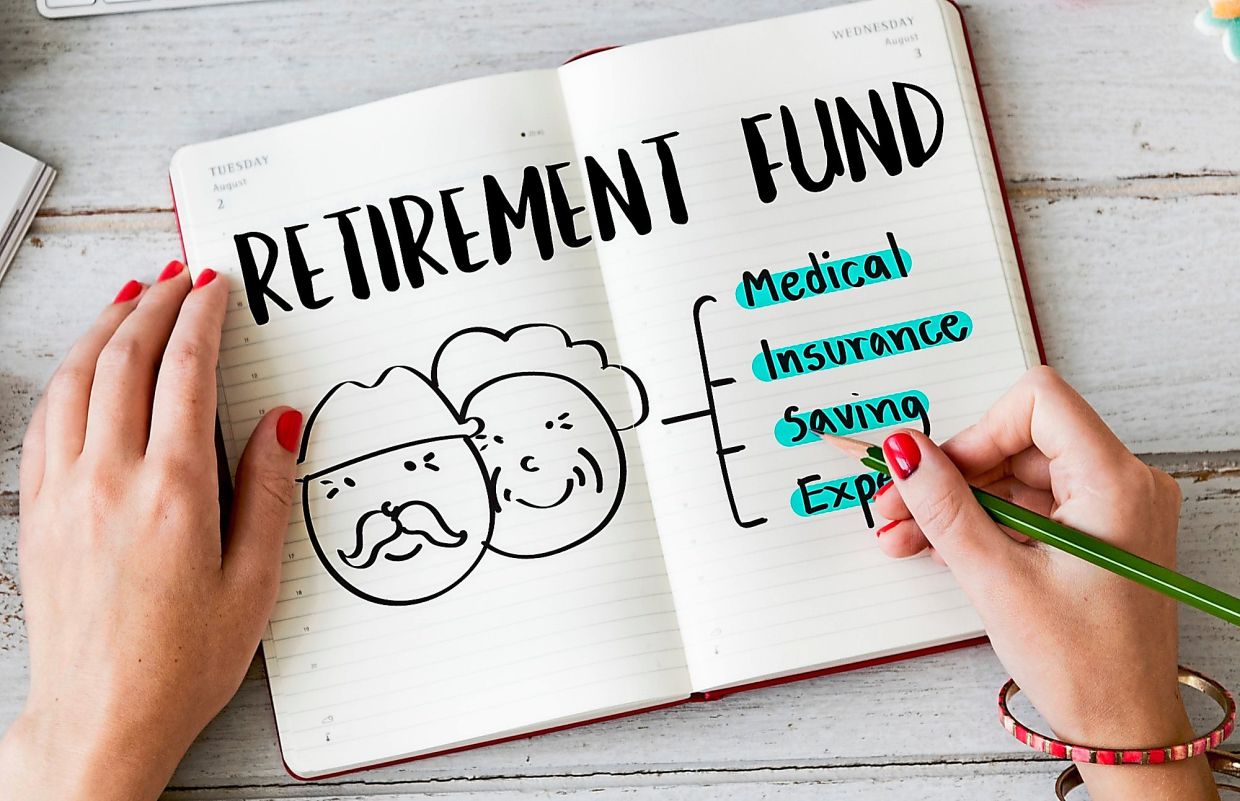
For young families, however, retirement saving can clash with immediate priorities.
Mohd Arman is paying a mortgage while preparing for his child’s education and managing everyday family expenses. His goal is to have his major debts cleared before 60, particularly the family home.
“I don’t want to retire and still worry about monthly mortgage payments,” he says.
He’s also conscious of a common trap: sacrificing his own retirement for his child.
“It’s natural for parents to want to give their children everything, but if I don’t prepare for my own retirement, I could eventually become a financial burden on my child,” he says.
There’s another form of preparation that could be overlooked: preparing to remain employable. Industries change, companies restructure and technology, including AI, may transform jobs.
“I can’t just say, ‘I’ll work until 60 and save later,’” says Mohd Arman. “I need to keep learning and developing my skills because I want to have options if my career doesn’t go as planned.”
For him, retirement freedom is ultimately about choices.
“If I plan to stop working at 60, I want it to be able to because I can afford to – not because I’m forced to.”

Lim, meanwhile, has entered the decade when retirement feels much closer.
“When I was in my 20s, retirement was the last thing on my mind,” she says. “Now that I’m 42, suddenly 60 doesn’t seem that far away.”
As a single woman, her retirement planning also carries a particular concern: there’s no second household income to automatically fall back on.
“I know I’ve to be responsible for my own financial future,” she says.
Her EPF remains an important part of her retirement plan, but she has also built savings and investments outside it because she doesn’t want her future to depend on a single source of income.
Her experience illustrates what Tharm describes as the “sandwich generation” challenge – although the pressures can take different forms for different people.
“In their 40s, people may be supporting children, helping ageing parents and managing demanding careers, all at the same time,” he says. The danger is that retirement planning becomes continually postponed.
For Lim, being single doesn’t mean having fewer responsibilities. She has housing and car costs, insurance and everyday expenses, while also supporting her ageing parents.
Her greatest fear isn’t being alone in later life, but being financially vulnerable.
“A big part of my retirement planning is making sure I have options – where I live, what kind of healthcare I can afford and whether I can get help when I need it,” she says. “I want to age with dignity.”
That focus on healthcare is particularly important. Retirement savings need to cover more than groceries, utilities and leisure, because a significant medical expense can alter an otherwise carefully planned retirement, cautions Tharm.
He advises people in their 40s to use “what if” scenarios to test their plans. What happens if retirement is delayed? What if saving increases? What if healthcare costs are higher than expected?
Understanding these hypothetical scenarios earlier gives people more time to adjust.
For Lim, financial freedom is simple: “Some people want to be rich. But I just want to know that if I decide not to work at 60, I can still survive.”

Gayathri is approaching retirement with a very different perspective.
“Five years sounds like a long time, but I know how quickly it can pass,” she says.
Like Mohd Arman and Lim, she has EPF, personal savings and investments, but the question in her mind is whether they’ll be enough to last.
“If I retire at 60 and live into my 80s, that’s another 20 or 25 years. That’s a long time to stretch your savings.”
As a widow, she doesn’t have a spouse’s income to depend on. At the same time, her adult children are establishing their own lives, while her elderly parents increasingly need care.
“I’m also part of the sandwich generation,” she says. “My children are adults, but they’re still finding their footing. My parents are old and may need more support as they age. And somewhere in the middle is me, trying to make sure everyone is okay.”
The challenge, she says, is remembering herself.
“As women, we sometimes put everyone else’s needs first,” she says.
“You help your children and parents, and tell yourself you’ll worry about yourself later."
“But at 55, there isn’t as much ‘later’ left when talking about retirement.”
If someone reaches their 50s and realises they’re behind, Tharm says the first step isn’t to panic but to find clarity.
“They should assess their expected retirement income, expenses, savings, debt, healthcare needs and possible retirement age. From there, options include saving more, reducing debt, adjusting lifestyle expectations, reviewing investments or delaying retirement where possible.”
Gayathri wishes she had started earlier.
“I would have started saving more seriously much earlier,” she says. “What I would tell my younger self is, don’t wait until your 50s to find out whether you’re financially ready for your 60s.”
Yet retirement planning isn’t about denying oneself a life today.
“I also don’t believe in regretting anything. You’ve to live your life too,” she says.
“Retirement should be viewed as a transition into a new phase of life that requires planning for financial, physical, mental and social well-being, rather than simply the end of one’s working career,” she says.
Longer lives can bring chronic illness, reduced physical function, cognitive decline, social isolation and loss of purpose. But ageing doesn’t automatically mean becoming frail or dependent.
“Many older adults remain healthy, active and independent well into their 80s and 90s,” says Prof Tan. “Healthy ageing is influenced by lifestyle, preventive healthcare and the environments in which people live."
“That means retirement preparation should begin long before the retirement party.”
For younger generations, Prof Tan recommends building lifelong habits around exercise, balanced nutrition, adequate sleep and mental well-being.
As people enter their 40s and 50s, managing conditions such as hypertension, diabetes and high cholesterol become increasingly important.
Other aspects that need to be looked into are maintaining muscle strength, staying socially engaged and keeping up with health screening.
Just as important, Prof Tan says, is having something to live for after work ends.
“Having a sense of purpose is one of the most important yet often overlooked ingredients of healthy ageing,” she says.
Purpose doesn’t have to come from paid employment. It can come from volunteering, mentoring, caring for grandchildren, hobbies, lifelong learning, community service or even starting a small business.
For Mohd Arman, Lim and Gayathri, financial independence means not being a burden to their children or relatives.
Their desire reflects a broader reality of ageing in Malaysia, where families have become smaller and adult children may live or work far from their parents.
Prof Tan says it’s increasingly unrealistic to expect children to be the sole source of financial, physical or emotional support in later life.
“Successful ageing and retirement is about building a supportive network, not necessarily relying on any one individual,” she says.
That means talking about future care before a crisis occurs – including where one would prefer to live, who could provide support, how responsibilities might be shared and what financial resources or insurance may be needed.
For Gayathri, the dream is summed up in something she hopes to tell her children: “Don’t worry about me. I’ve got this.”
And perhaps that’s what retirement readiness ultimately means across different age groups.
In your 30s, it’s about starting early to build options. A decade later, it’s keeping retirement on the agenda while balancing family duties. And as you approach your 50s and retirement is on the horizon, you look at the numbers to reduce uncertainty and start making realistic adjustments.
But across every generation, retirement is also about preparing for the person you hope to be, not simply the amount of money you hope to have.
As Prof Tan puts it, “The greatest measure of success isn’t simply adding years to life, but adding life to those years – remaining active, engaged and living with dignity throughout later life.”