People do still use pens and pencils. Some will still grab a highlighter to mark up sections of a document. Others might even write a letter or relax with a sketchbook.
Most don't.
They read their texts online, they take notes using a phone and haven't posted a handwritten letter in years. At work, the office cupboards that were once stacked with pens, pencils and stationery are now pretty bare.
All this is putting pressure on the classic producers of pens such as Faber-Castell, Parker, Stabilo and Staedtler, all either trimming costs or trying to reinvigorate their sales with new strategies or both.
Feeling the pressure
"Pens will always hold a certain appeal as a counterpoint to a fully connected digital environment," he says.
"Sketching ideas on a blank sheet of paper or drawing your own picture has a calming and relaxing effect in a world that’s getting a little faster every day."
In a time of pointing and tapping on smartphones, the tactile, analogue experience of pen and paper can offer a nostalgic means of escape from the digital world, manufacturers believe.
In response, the company is cutting staff costs worldwide, through part-time and early retirement schemes and other measures.
Rivals Staedtler in Nuremberg and Faber-Castell in nearby Stein are also feeling the pressure.
"We are seeing noticeably tougher international competition and cost pressures for the industry, coupled with increased price sensitivity," says Staedtler.
The company plans to close two of its plants in Bavaria, integrate them into its main site in Nuremberg and invest in setting up a plant in Eastern Europe.
Faber-Castell is also cutting 130 jobs in Germany and moving parts of production to Brazil and Peru.
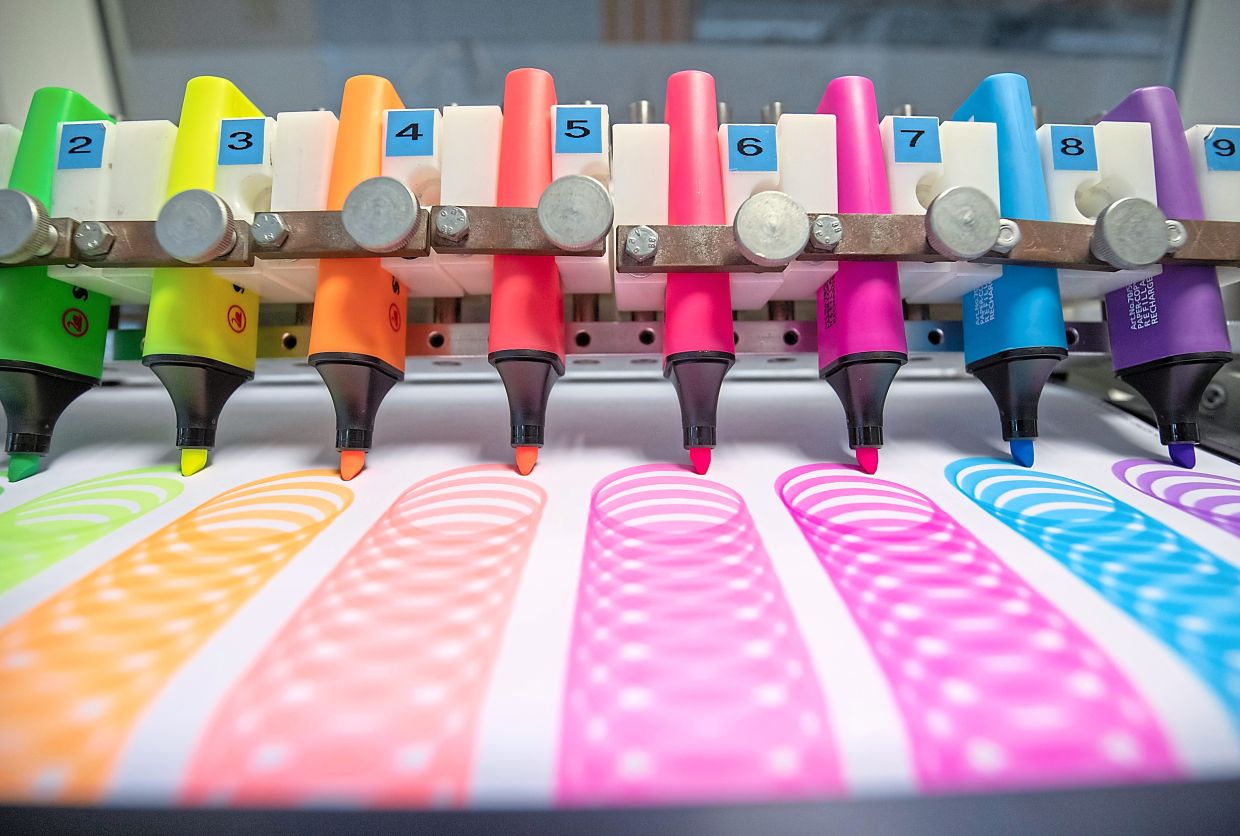
"The market for highlighters is in significant decline and will not recover due to digitalisation," says company boss Stefan Leitz.
Fashion accessories
Faber-Castell, a family-run business, is also facing major problems due to US tariffs, a slump in consumer confidence, rising energy prices, competition from cheaper Asian producers, higher labour costs and the decline of specialist retailers.
"The sum of all these factors has left its mark on profitability," Leitz says.
Like Stabilo boss Brinkmann, he does not think all pens will become obsolete. However, the image of ballpoint pens, fountain pens or gel pens needs to change.
Pens also need to be like fashion accessories that consumers buy not because they absolutely need them, but because they like them.
Both managers look to Italian manufacturer Legami for evidence this can work. The erasable gel pens featuring animal motifs are not just collected by primary school children – there is also demand for limited special editions, which can fetch high prices on the secondary market.
"We need to be bolder and quicker to jump on the bandwagon rather than waiting until it becomes a trend."
At the same time, the company plans to make more pens for nursery school children and teenagers – segments overlooked in the past, Leitz says.
Staedtler, too, says it is focusing on filling gaps in its range. It also wants to expand its digital offerings, such as digital writing and drawing pens, and focus more on licences – a plan Stabilo shares.
He illustrates his point citing limited edition highlighters made by Stabilo in collaboration with luxury brand Dolce & Gabbana.
US penmaker Parker is also focusing on limited editions appealing to the luxury market.
It has a set of four that focus on cities around the world that the company is marketing to young adults taking their first steps into the world of fine writing, as well as pen enthusiasts.
Other models are finely honed with engraved patterns, handcrafted nibs and chiseled finishes, designed to appeal to fine writing connoisseurs.
Hybrid strategies?
Stabilo is also focusing on innovation to bring the digital and analogue worlds together. Currently, this takes the form of a writing pen that provides children with personalised exercises and feedback, says Brinkmann.
"We too have tried things out through collaborations, but two years ago we made a conscious decision not to invest in that," Leitz says. "The business is capital-intensive, you need specialist knowledge and the pace of change is incredibly fast." – dpa