Sitting at the piano last week, I was trying to work out a couple of chords that I wasn’t getting right on a Bob Dylan song.
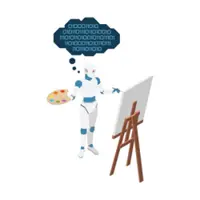
I was playing in the key of “C” and trying to get the chords over the phrase “Make you feel my love”. After a few frustrated attempts, I asked an artificial intelligence (AI) bot: “What you’re looking for is a D9 followed by a G11,” it replied. Ah, right – and how do I play those chords on the piano?
I come from a musical family on my mother’s side, and since young I’ve always tinkered with instruments. I’m unable to read music, but I can play by ear and so I eventually get to where I need to go. Up until I used AI to figure out the Dylan song, I hadn’t realised there’s something meaningful that’s lost when we reach for the quick fix.
It was the same when I first learned to harmonise with my uncles on the Beatles’ song This Boy. Like a two-year-old let loose with a box of crayons, I was initially all over the place, but I soon got the hang of it. For me, that feeling of exploring, getting it wrong, trying again, being frustrated, and figuring it out is what makes something interesting.
Education researcher Manu Kapur describes this as “productive failure” – the idea that struggling with a problem before seeing the solution can help us understand it more fully. By trying different approaches, including ones that don’t work, we start to notice patterns, recognise gaps in our understanding, and see why one solution works better than another.
From a different angle, psychologists Edward Deci and Richard Ryan’s work on self-determination theory suggests that we tend to find activities more satisfying when they give us a sense of autonomy and competence, particularly when we’re figuring something out for ourselves.
Running through these ideas is the value of repeatedly discovering that frustration can be tolerated and worked through, which can build persistence and confidence in our own ability to solve things. And because the solution isn’t immediately given to us, there’s room for curiosity, surprise, and the satisfaction of discovery.
So in asking AI for the chords that I would’ve likely found by myself, I skipped over the part I’d usually have enjoyed most for the sake of hyper-convenience. We might read a lot about how AI is ruining our ability to learn or making us lazy, but I think there’s an equally important concern that, in relying too much on technology, we miss out on the experiences that make life interesting in the first place.
I’m not against using AI – it can be useful in countless ways – but in an age that’s obsessed with efficiency and optimisation, we risk giving away the joy of discovery and creation for the sake of an instant solution.
Of course, convenience can be a lovely thing. I have a dreadful sense of direction, so I appreciate GPS assistance that ensures I don’t end up in Taiping while driving to Melaka. And I’ve had enough experience washing clothes by hand to be grateful for my washing machine.
But perhaps there’s a difference between removing pointless inconvenience and removing the kinds of difficulty through which we learn, become more capable, or simply enjoy ourselves.
GPS helps to get us somewhere efficiently, but it also means we can travel through the same place dozens of times without ever learning alternative routes or discovering somewhere new by chance. Streaming services put almost every song at our fingertips, but they also remove that joyful feeling of searching through stacks of music in a record store, or making a mix tape or CD for a friend.
AI takes this several steps further because it can increasingly do the thinking, composing, and solving for us. Faced with a difficult paragraph or two annoying piano chords, the temptation is simply to ask how it’s done.
In some cases, that’s exactly what we should do. There are only so many hours in a day, and few of us have the desire to turn every tough task into an exercise in character-building. But I wonder whether we’d be better off being a little more deliberate about which difficulties we choose to remove.
There can be something deeply satisfying about sitting with a problem long enough for a solution to occur to you. Especially with creative pursuits, the “mistakes” made by pottering about can lead somewhere wonderful and unexpected.
The Beatles’ Blackbird, for example, grew partly out of Paul McCartney messing around with a Bach piece that he and George Harrison had never properly learned.
Had I spent another 10 minutes at the piano, I would’ve got the missing chords. It would’ve taken longer, sounded awful, and annoyed me for a while. I also suspect I would’ve found it much more enjoyable.
Sandy Clarke has long held an interest in emotions, mental health, mindfulness and meditation. He believes the more we understand ourselves and each other, the better societies we can create. If you have any questions or comments, e-mail lifestyle@thestar.com.my. The views expressed here are entirely the writer’s own.