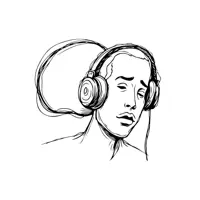
If someone offered you a device with a big red button that could erase anxiety, worry and emotional pain forever, would you press it? Before you answer, there’s an important catch. If someone you loved came to you in grief, you wouldn’t be able to understand what they were going through. Without being able to feel loss yourself, there’d be no bridge between their experience and yours.
Every painful memory you’ve carried would also disappear – as would the love woven through those memories, because grief can’t be felt without connecting to what made the loss painful.
In a recent conversation about Buddhism and mindfulness, someone told me that they admired the idea of being in the present, that our pain and suffering exist only in our memory and imagination.
While we can spend a lot of time living in the past or in imagined futures where our worries never materialise, bringing ourselves back to what’s happening now has several benefits.
On the other hand, none of us exists only in the present moment. Rather, we’re all shaped by our past, and our imagination is what breathes life into our hopes and future responsibilities.
Many years ago, I recall asking a clumsy question of a monk whose mother had recently died. I wondered whether he felt sadness at the loss, thinking in my naivety that the goal of spiritual practice was being able to let go of our thoughts and feelings. I believed in my ignorance that letting go of something meant to be detached and unaffected, but the monk was obviously sad to have lost his mother.
He kindly explained that even the Buddha experienced unpleasant emotions and, having back problems in his old age, was well-acquainted with physical pain: “The goal isn’t freeing ourselves from being human, which is impossible. The work is to allow things to rise and fall as they are. Aversion is as much a cause of suffering as attachment,” he said.
As I understand the Buddhist perspective, there’s no problem in remembering the past or thinking ahead to the future. Nostalgia, regret, worry can all serve useful purposes when they’re not excessive.
For example, if I think about my mum, who died in 2010, all kinds of emotions come to the surface, which reminds me of our relationship and keeps our connection alive after so many years. I might also spend time worrying about the next few years and what’s to come, which helps me plan and prepare.
None of us can be blank slates living in an eternal present. We all bring our histories, commitments, regrets, hopes, and dreams to each moment, and whatever we might feel is part of being human. Where we run up into problems is when we cling to what comes up or try to resist our experience in the here and now. When we become entangled in these ways in our thoughts and feelings, that’s when we suffer.
The difficulty is that thoughts and feelings often show up unannounced. A memory can pull us into the past before we realise what is happening, and a worry can carry us off as if we’re living in the future already.
This is where practising being present becomes useful, not as an escape from the past or future, but as a way of noticing the now. I can remember my mother without needing the memories to fill the whole day, and I can worry about the future without treating every anxious “What if...” as a fact.
This is where some popular ideas about mindfulness veer into pop psychology. The point isn’t to empty ourselves of difficult emotions, or to become so detached that nothing affects us. A life untouched by grief, regret, longing, or fear wouldn’t make for a rich life. In the Buddha’s first noble truth, he highlights suffering as inherent to life. In the second, he points to the causes of suffering through craving, clinging, and aversion: wanting reality to be other than it is.
This is worth remembering when we’re tempted by the idea that maturity means rising above anything unpleasant, or that a good life should be mostly happy, calm and pleasurable.
As Buddhist nun Pema Chodron suggests, the way to overcome suffering is to go through it. When we understand rather than try to resist or deny our experiences, they become “like messengers that show us, with terrifying clarity, exactly where we’re stuck”.
We don’t need to romanticise suffering or pretend it makes us better. But if we treat every difficult thought or feeling as something to rise above, we risk cutting ourselves off from what it might be trying hard to show us.
Sandy Clarke has long held an interest in emotions, mental health, mindfulness and meditation. He believes the more we understand ourselves and each other, the better societies we can create. If you have any questions or comments, e-mail lifestyle@thestar.com.my. The views expressed here are entirely the writer’s own.