Several canes made soft but distinctive clicking noises against the brick walkway in downtown San Juan Capistrano, California, United States recently.
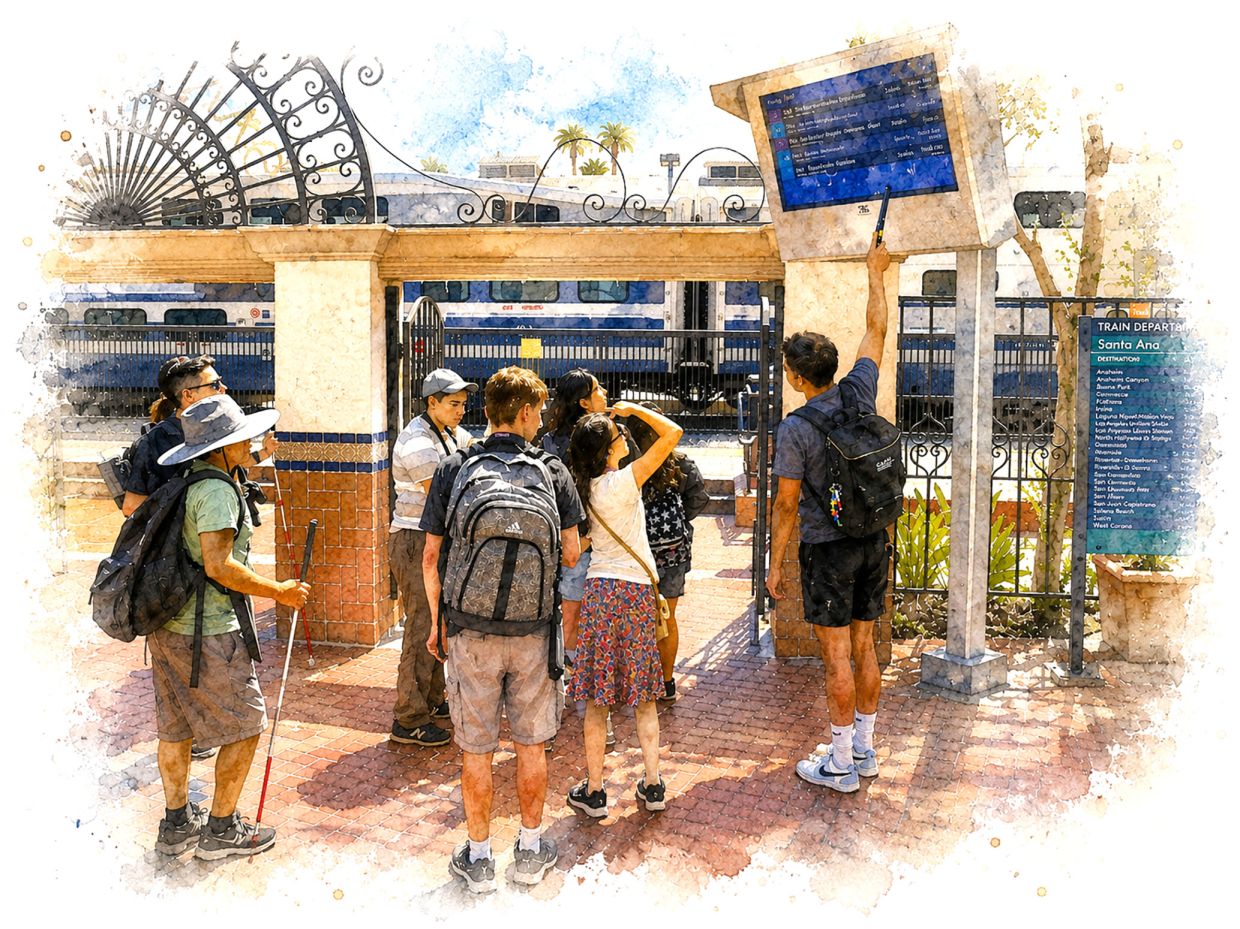
Ten students in the Beyond Blindness Next Steps summer camp, having enjoyed their lunch at an In-N-Out Burger, were headed back to the Amtrak station, the US national passenger railway system, to catch their train back to Santa Ana, California.
The excursion was fairly short but quite an experience for the students, ages 10 to 23, all of whom were either legally blind or visually impaired.
Jasmine Jaber, 14, of Irvine in California was born legally blind. She said she appreciated the trip.
The students learned ways to figure out which track to stand on, listening to the patterns of the trains and feeling the positioning of the sun – all things that people with good eyesight take for granted.
“I think these skills are very, very important,” Jasmine said. “It’s better I know them now at a younger age, so I can use them in the future. I hope I get to attend next year and learn more things.”
The Beyond Blindness Next Steps camp is in its second year. The programming was designed by Jacob Garcia, a teacher of the visually impaired with the Santa Ana-based non-profit organisation.
He noticed that the organisation’s inclusive summer camp was mostly serving younger students.
So last summer, the Next Steps summer camp was piloted for school-age students.
It has doubled in size this year, Garcia said.
“Surprisingly enough, for a lot of these students, this is their first time taking the train ... and of course, they get to make friends, see their peers again, socialise and hang out,” he said.
Once there, they toured the campus and met with a representative from the college’s Office of Disability Support Services.
“Transportation is one of the biggest barriers that individuals with visual impairments and other disabilities face, as they transition into adulthood or (are) just gaining independence,” said Meredith Cagle, chief programme officer at Beyond Blindness.
“Obviously, we know that being able to drive or being able to get around on your own is so important to independence.
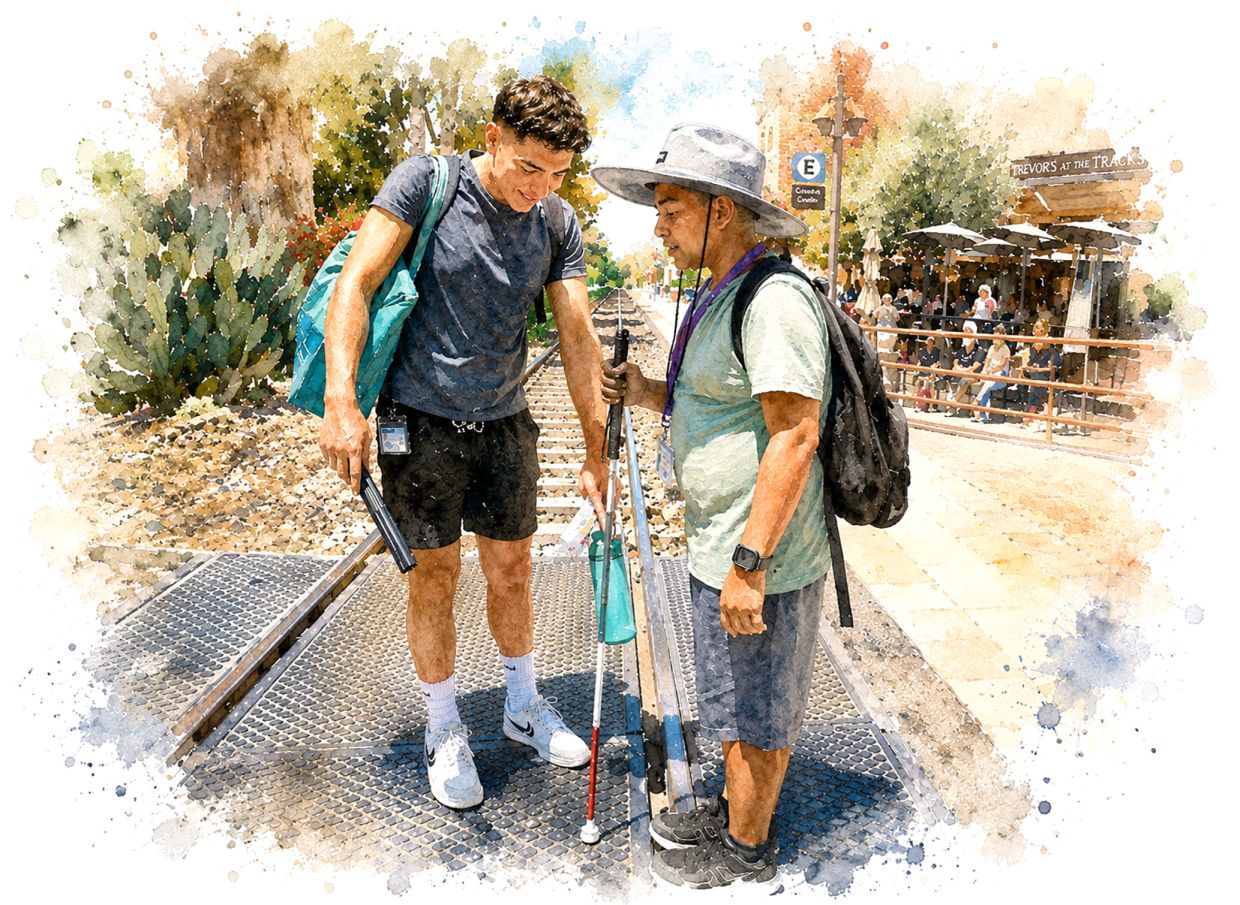
Practical lessons
Implementing these type of activities where they can learn how to safely navigate the community can open doors to education and employment, accessing health care, social opportunities.
The more they practice these skills, the more confident they build to navigate the world independently.”
Part of their excursion was a trip to the Rinks in Anaheim for some ice skating time with a coach. On another day, the campers learned about some of the perils of public transportation – their Amtrak train arrived in Santa Ana about 30 minutes behind schedule, requiring them to go back inside the station to get out of the hot summer sun.
And once they got on the southbound train to San Juan Capistrano, it was crowded and hard to find a seat.
Yet, they persevered and there were plenty of smiles to go around.
Angie Duffy of Lake Forest in California took the trip with her son Tank, 10, who has multiple disabilities, including visual impairment and autism.
Tank also takes advantage of Social Society, a free weekly after-school peer group for children and teens with visual impairment.
“I think it’s priceless, to be honest,” Angie Duffy said of the camp.
“A lot of our friends, their kids go to Wild Rivers or lifeguarding or sailing camp or fishing. Due to his medical stuff, we can’t join them on those things ... The accommodations aren’t quite there, whereas here, they’re able to accommodate and help out.”
Navigating the world
Indeed, there are plenty of staff available if situations do arise – five teachers of the visually impaired took the train trip, along with two orientation and mobility specialists.
Although each of the Next Steps campers have reached double digits in age, Beyond Blindness stresses that early intervention is key.
According to figures provided by the organisation, about 80% of learning is visual, yet only 14% of children under age six, have received a comprehensive eye exam.
Garcia said the campers also were each given a cash allowance for the week, so they could practice budgeting.
A volunteer from a local high school came to Beyond Blindness to teach the campers about financial literacy and investing.
“Hey, you have US$5 (RM20) left from summer camp,” Garcia said. “Now, what can you do with the money?”
Camper Miguel Guerra of Tustin, 16, said he enjoyed the Amtrak rides, both before and after he ate his lunchtime hamburger with copious amounts of ketchup.
“A weird quirk about me is that I eat ketchup out of the packet,” he said.
“I mean, it’s tomato sauce.” – Daily Pilot/Tribune News Service