Perched in a quiet corner of Kuala Lumpur’s swanky The Gardens Mall is Cha:Coal Korean BBQ.
The eatery is sleek and sophisticated with dim, atmospheric lighting and tables set so far apart from each other, that you probably wouldn’t even know if a friend was dining at the same restaurant.
Just outside the eatery is an off-shoot offering called Cha:Coal Brews which has become a popular spot for its modern Korean drinks offerings.
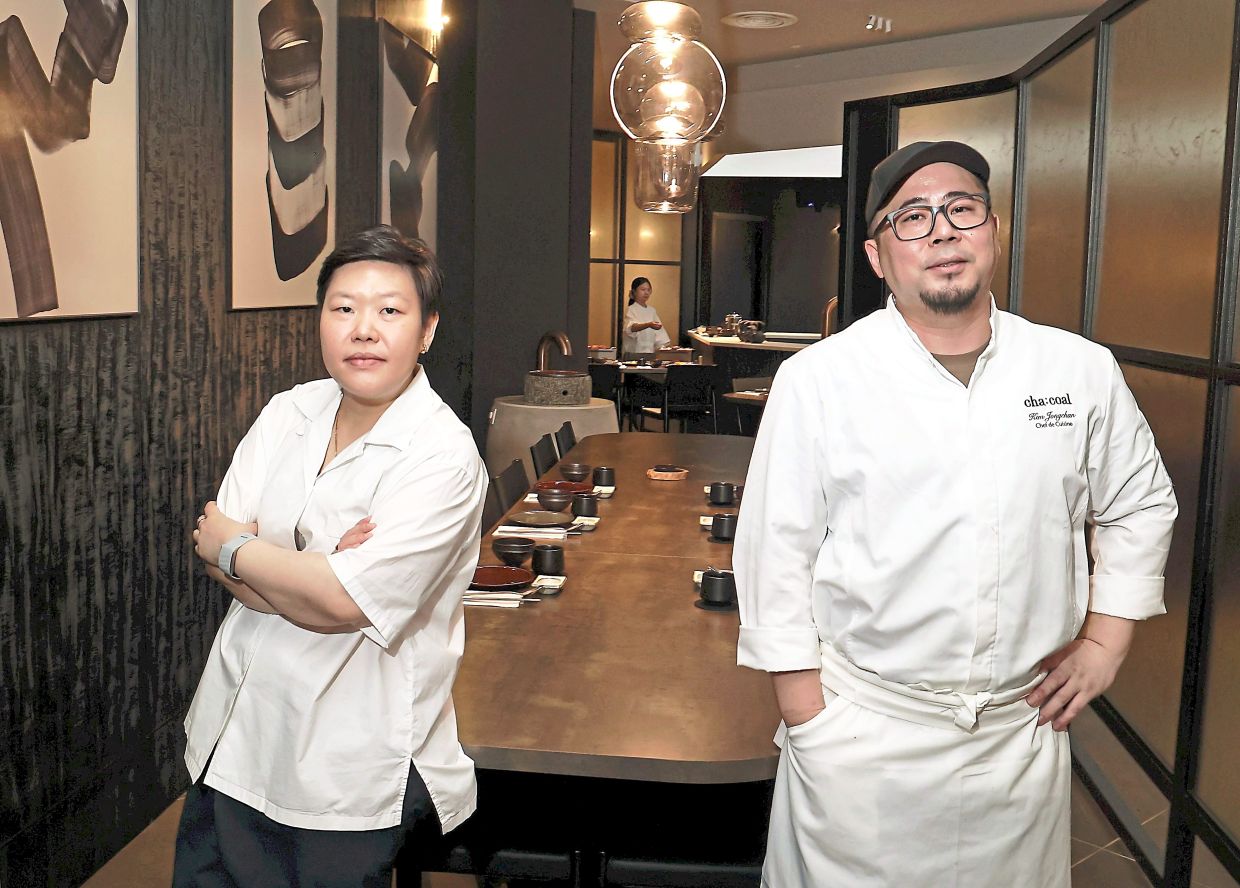
The eatery is the brainchild of Huen Su San, a serial F&B entrepreneur who has opened no fewer than 11 Korean restaurants over the past decade or so.
Huen already had a Korean restaurant operating in the same spot as Cha:Coal but when the time came to renew her lease, she decided to gut the entire space and open a completely new upscale Korean restaurant in its place.
“When we renovated, we wanted to come up with something that is very new to the Malaysian market and different from what is available currently. I really believe that Korean food in the last few years – especially in Malaysia – has really exploded and grown.
“Now everybody is well-versed with all the street food but authentic Korean flavours have a lot of depth. We wanted to do a Korean barbecue restaurant that could showcase the depth of flavours in Korean cooking,” says Huen.
Huen was further emboldened by the fact that she had seen these upscale Korean restaurants in other Asian places like Hong Kong, Singapore and Indonesia but not really in KL, which is how she realised there was a gap in the Malaysian market that she could potentially fill.
To help turn her idea into a full-blown concept, Huen roped in seasoned Korean chef Kim Jongchan. At Cha:Coal, Huen and Kim have worked hand-in-hand to craft a menu that focuses on high-quality ingredients, lesser-known dishes, hand-made banchan (Korean side dishes) and the heart of this engine: a barbecue driven by charcoal fire and a Josper grill (a high-performance charcoal grill and oven).
Unlike many traditional Korean restaurants, guests do not barbecue the meat themselves. Instead, Kim is in full control of the process, ensuring that diners are able to fully indulge in the meals and leave everything in his capable hands.
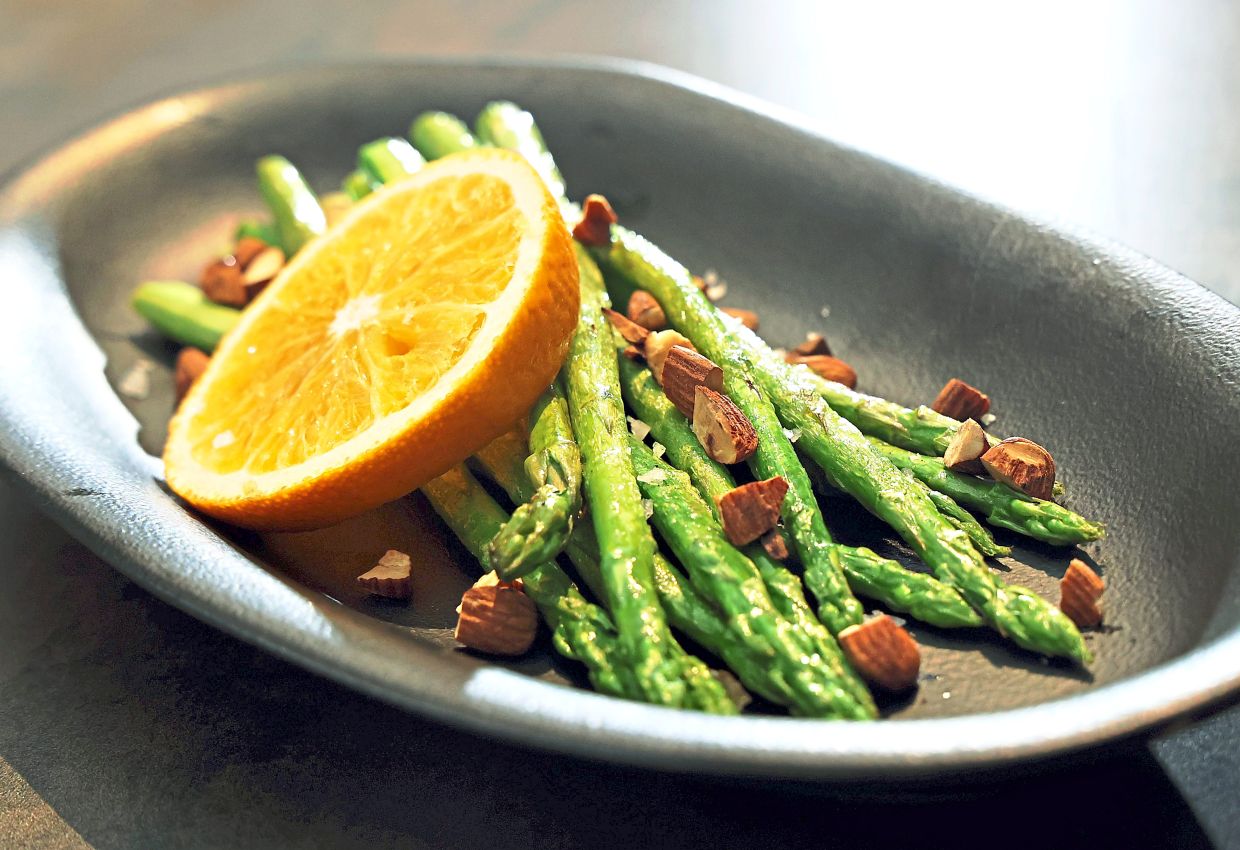
You could opt to start your meal here with a starter in the form of the Charred Asparagus (RM32), a modern dish that features Josper-grilled asparagus, almond and citrus.
The dish showcases the Josper’s magic to fullest effect, imparting a charred bloom to the surface of the vegetables without attempting to desecrate its internal structure or configuration.
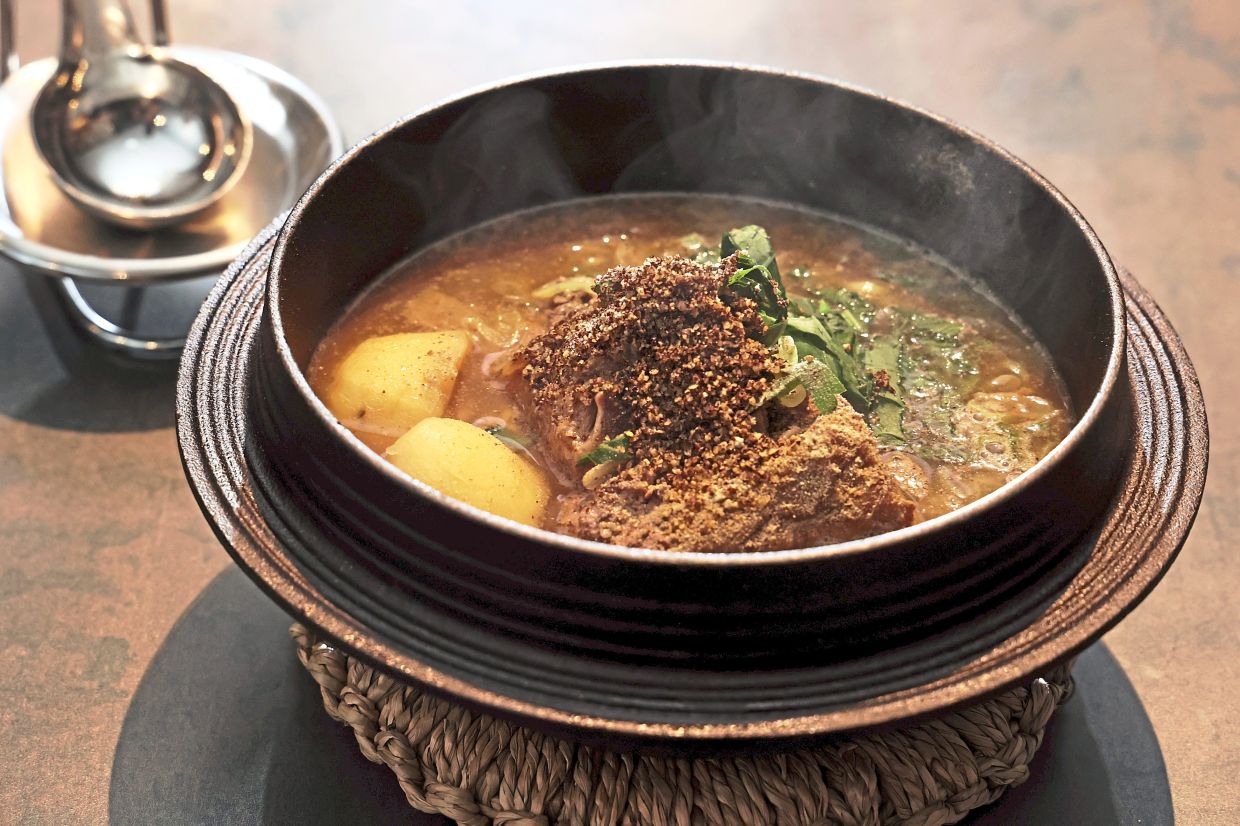
From the soup options, definitely try the White Gamjatang (RM58).
This Korean broth features pork bones, potatoes, vegetables, perilla seeds and a Malaysian twist – courtesy of the Sarawak black pepper in the amalgamation.
This is a very savoury soup with deep, hearty porcine undulations and a slightly salty streak that is countenanced by the white pepper – clearly the naughty firecracker hired to bring pep and liveliness to this narrative – a job it takes seriously and does very well.
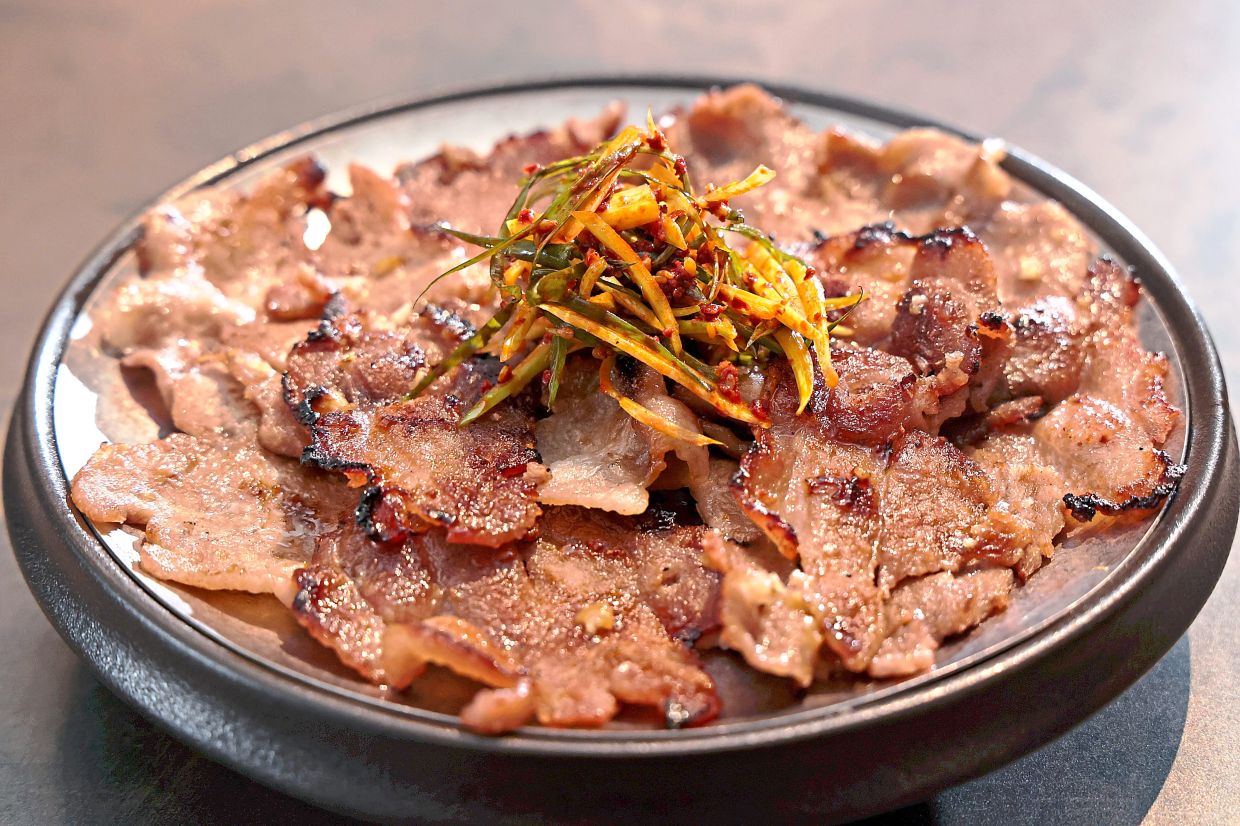
Some of the rarer dishes on the menu include the Maekjeok (RM40) an ancient Korean dish consisting of pork marinated in doenjang (fermented soybean paste) that traces its roots two thousand years ago to the Goguryeo era in Korea. Maekjeok is widely considered to be the earliest form of Korean barbecue.
In the restaurant’s iteration, the thinly sliced pork is delightful – grilled over the Josper so that it is blistered around the edges, tender and limber at its core and packed with the earthy notes of the fermented soy bean paste, which gives it a rusticity befitting its age-old history.
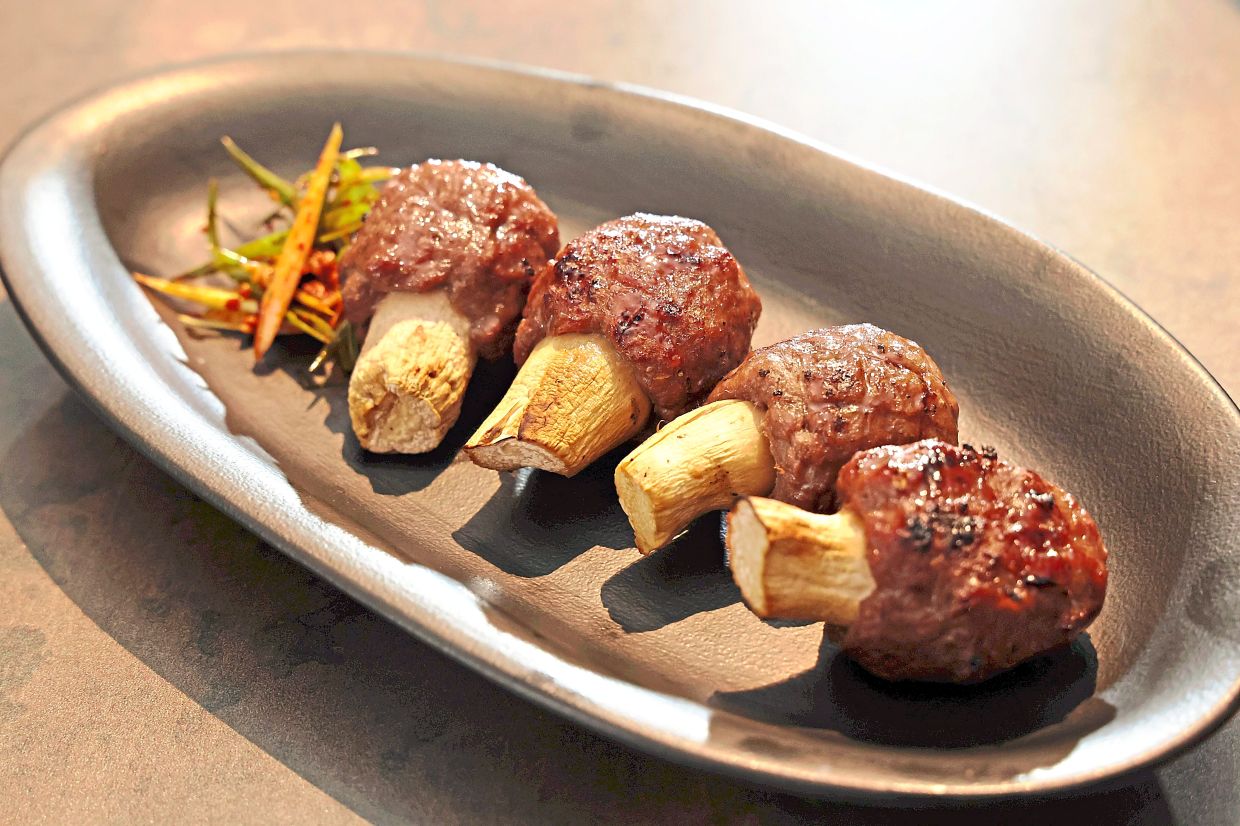
Tteokgalbi (RM45) is another heritage, heirloom Korean barbecue dish on the menu that features hand-shaped beef short rib with king oyster.
The dish has its origins in the royal court during the Joseon era (1392 to 1897) where it was designed simply to avoid having kings gnaw away in an unseemly fashion at meat on bones.
Instead, palace cooks minced the meat and moulded it into more palatable patties for the tender teeth of royals.
Here, the meat is a tad under-seasoned but otherwise incredibly tender and malleable on the palate – making it a teeth-friendly carnivorous option for the elderly, the young or people who simply want an easy eat.
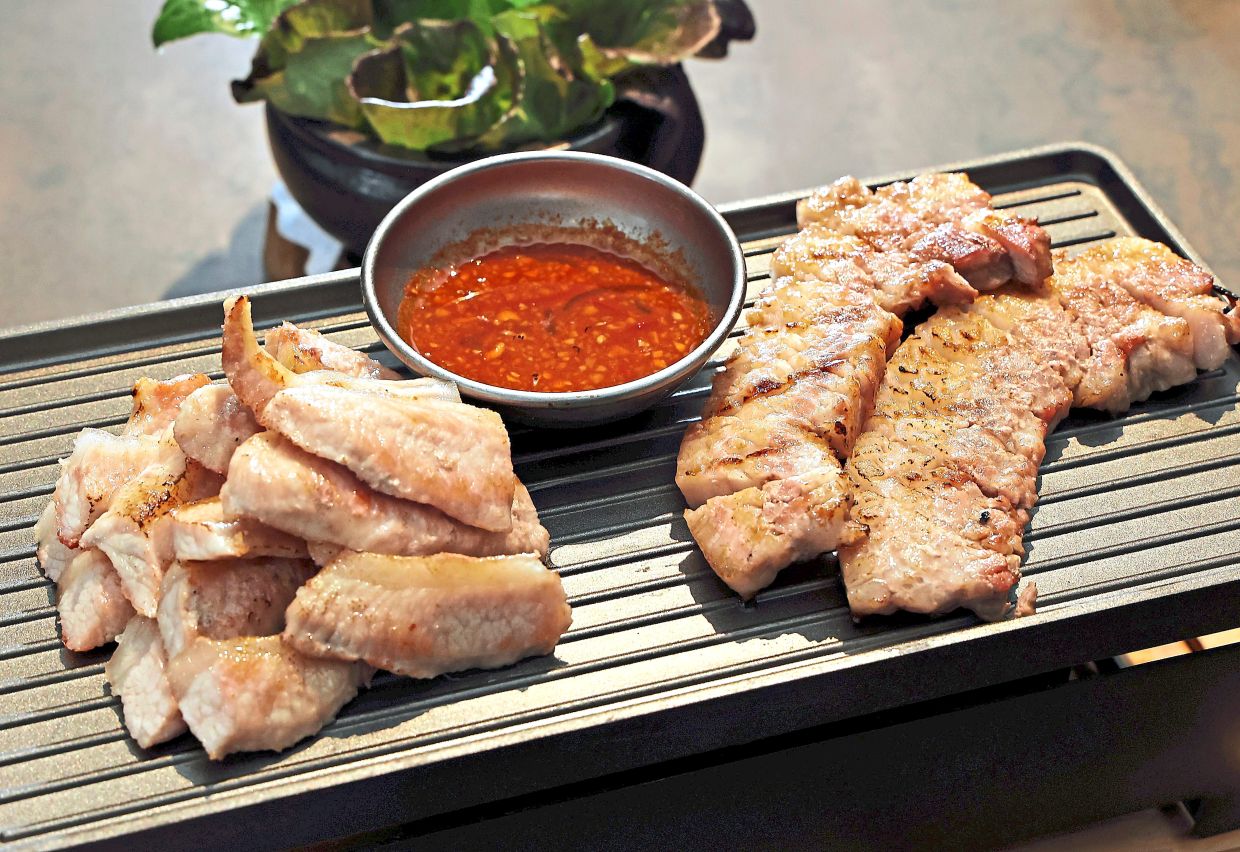
For something more substantial, look at indulging in the eatery’s Korean barbecue cuts, which are grilled over charcoal and accompanied by nine house-made banchan and fresh leaves from the ssam cart.
Of what’s on offer, the Signature Suwon Galbi (RM290 for 400g) is a stand-out.
The dish features Angus bone-in short rib prepared in a signature soy-free pear marinade and is particularly special to Kim as he originates from Suwon in the Gyeonggi province in Korea.
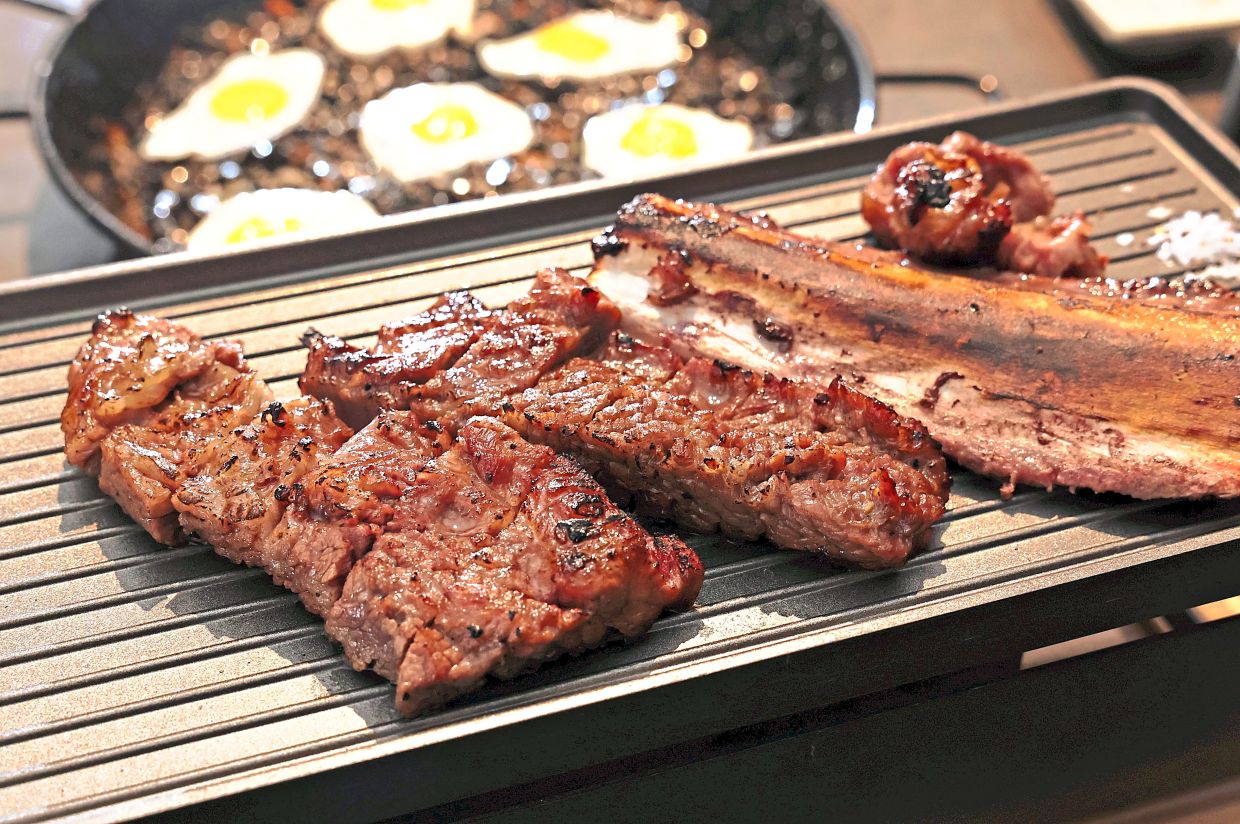
Suwon galbi was designated a city specialty in 1985 and is known for straying away from typical soy-based preparations in favour of a cleaner marinade with a focus on lighter seasonings.
Here, the galbi is extraordinarily good – packed with flavour but with a clear focus on the beef itself, which is allowed to shine and show off to fullest effect and be the best version of itself.
From the pork options, try the Signature Samgyeopsal (RM62 for 200g). Here, the pork belly has been diamond-cut (a special way of cutting meat in Korea that helps tenderise it) and finished with hay smoke.
As a result, the meat has a hearth-like warmth and smokiness that resonates throughout while the flesh itself is lightly charred and incredibly pliable and juicy.
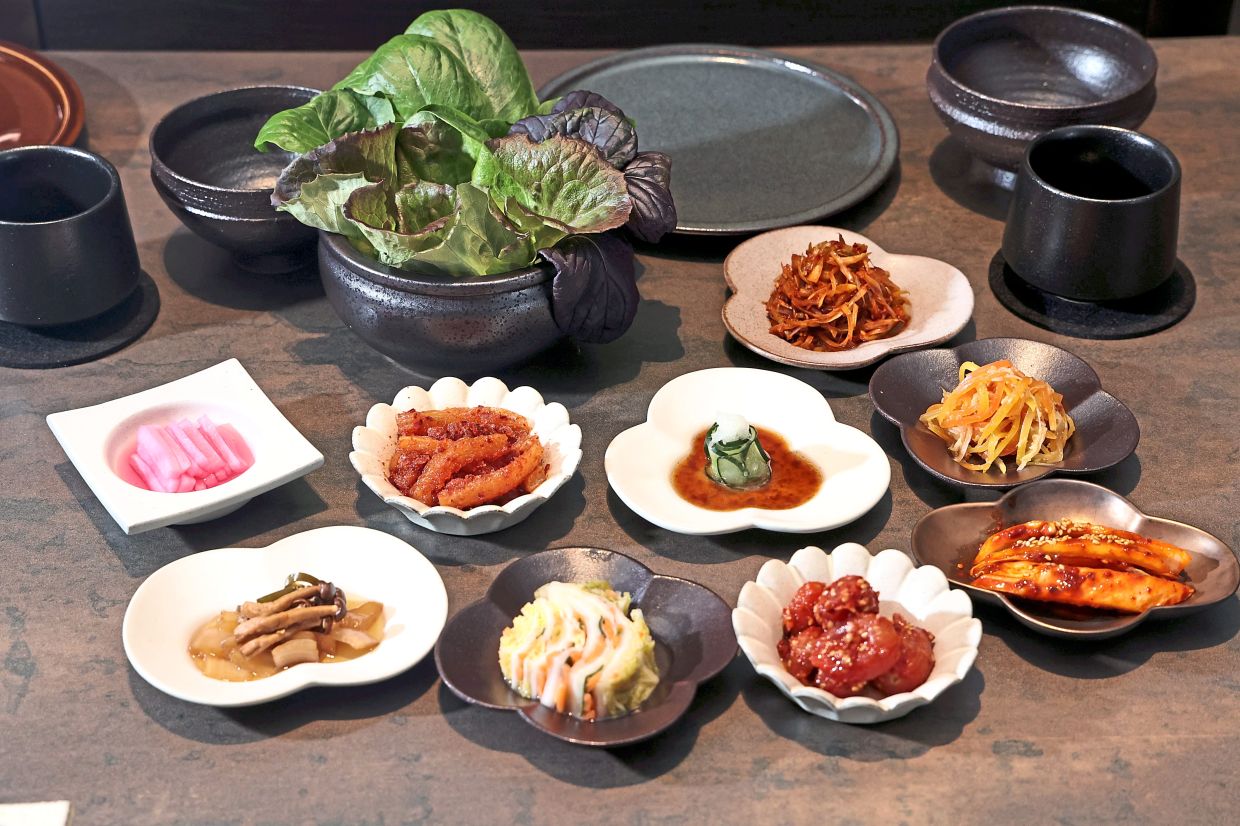
Pair this with the house-made banchan, whose highlights include an incredible cherry tomato kimchi which is fresh and astringent with a tangy twist; a geotjeori kimchi (unfermented Napa cabbage kimchi) which is enhanced by the crunch of the cabbage; and pickled dishes like beetroot and radish, which offer crisp vegetal freshness and acerbity in equal measure.
Finish off your meal with the Plum Bibim Guksu (RM32) which features chilled noodles tossed in a plum dressing with kimchi and crisp Korean pears.
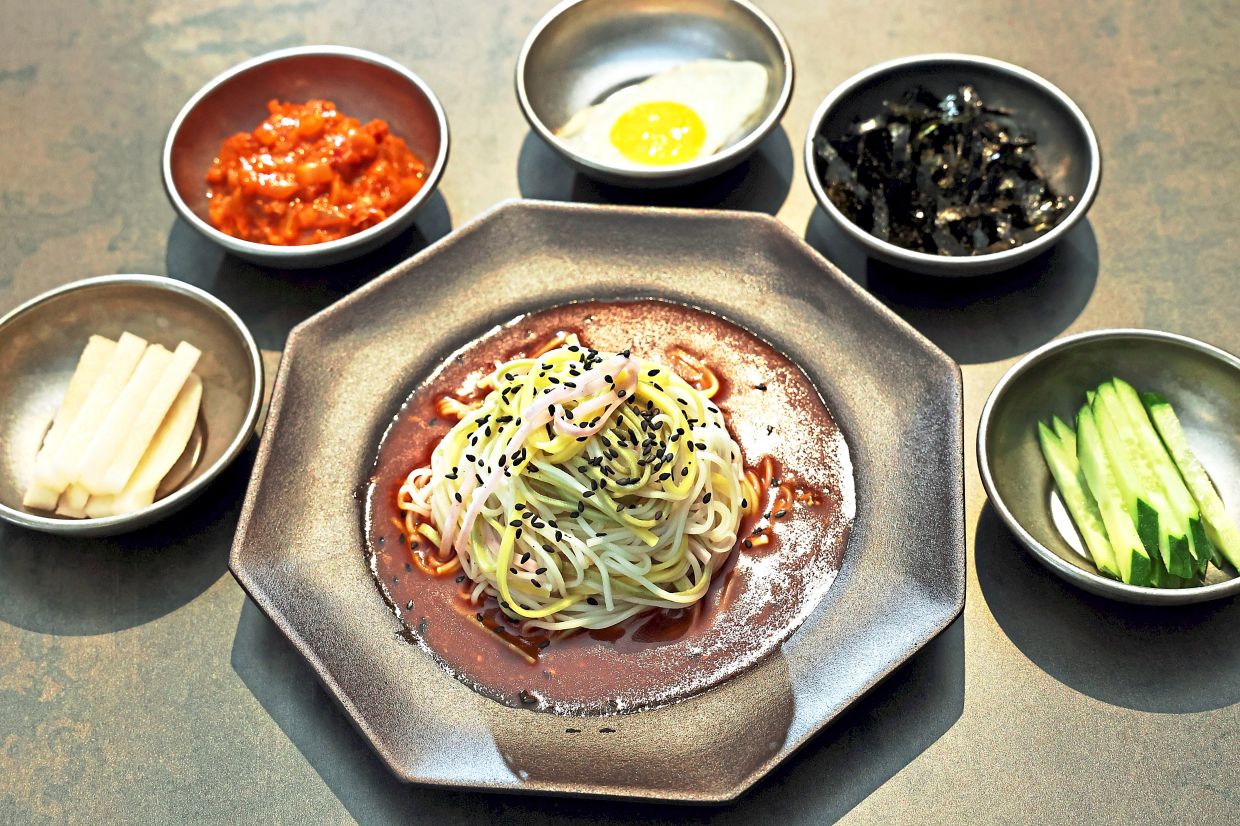
This riotously fun cold wonder highlights stretchy, slurp-worthy somyeon noodles alongside accoutrements like cucumbers and a quail’s egg brought together by a bright, effervescent plum dressing that really elevates the meal and gives it a euphoric, sunshine-laden sheen that will leave you feeling nothing but pure joy.
Ultimately, a meal at Cha:Coal offers a deeper understanding of Korean barbecue and the traditions that form its foundational force while still allowing room for interpretation and innovation, providing Kim and Huen with the opportunity to flex their creative muscles.