
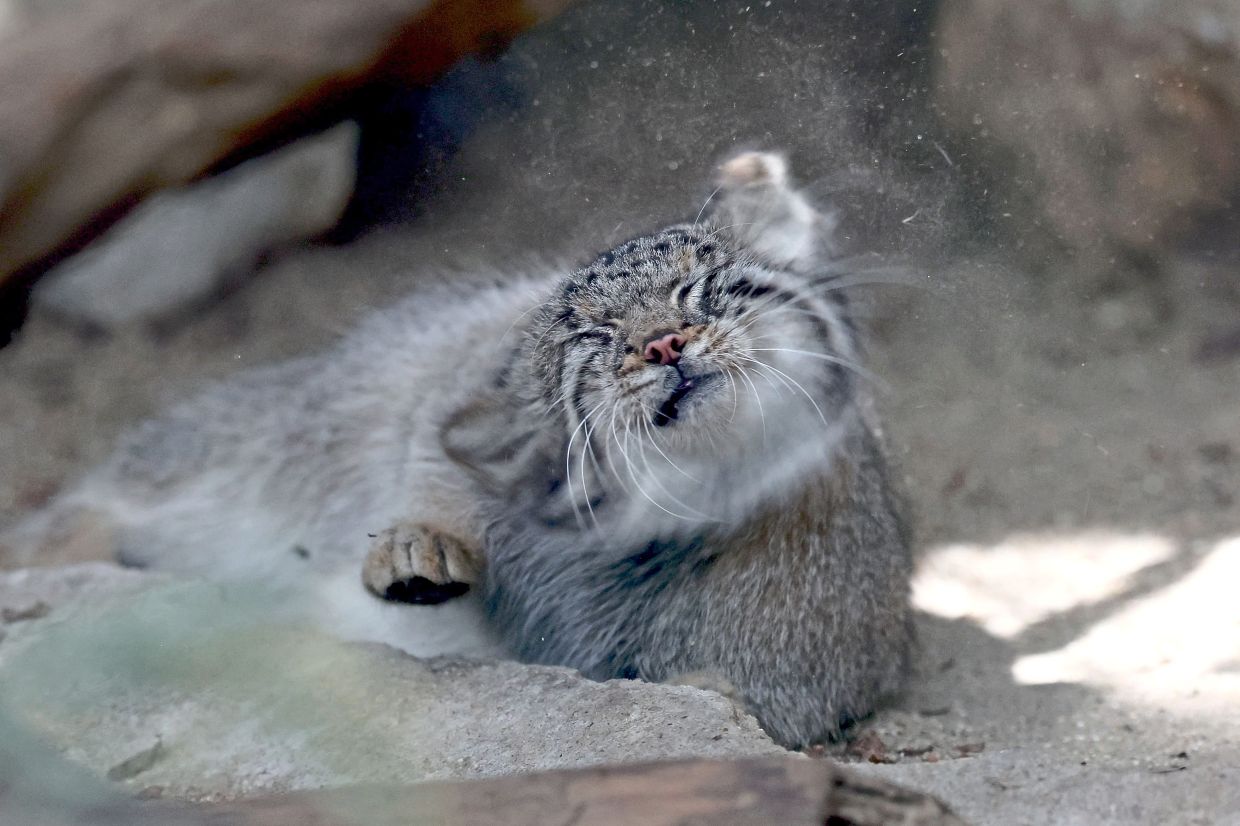
Five young Pallas’s cats, dubbed the world’s “grumpiest” feline for their sullen facial expressions, went on display at a zoo in Japan recently.
Kobe Animal Kingdom put the four males and one female, all born in May at the facility, on public viewing about a week ago.
The animals are believed to be one of the oldest living cat species and are native to the dry, rocky areas of Central Asia.
They are not commonly displayed at zoos as they are relatively more sensitive to infections, the Kobe zoo said in a statement.
The Kobe kittens weighed around 150g when they were born but now weigh more than 1kg and are starting to eat solid food like chicken and horse meat, the zoo said.
“We hope people would come and see how healthy they are, playing wholeheartedly and sleeping soundly like kids,” the zoo said.
In danger
Meanwhile, the United Nations has fast-tracked a vast antelope migration path in South Sudan onto its list of World Heritage in Danger, in the young nation’s first such listing.
The United Nations Educational, Scientific and Cultural Organisation (Unesco) added the so-called Boma-Badingilo migratory landscape to its list recently.
The grassland and woodland savannahs that cover some 37,500sq km – an area larger than Belgium – are viewed as under threat from war, as well as from climate change.
One million animals – including antelopes and gazelles – migrate through the vast wilderness located between the White Nile and the Ethiopian border every year, leaving scars on the grasslands that are visible from the sky.
South Sudan has been the scene of a series of deadly conflicts since gaining its independence in 2011.
“The Boma-Badingilo migratory landscape is home to one of the greatest wildlife migrations on Earth and stands as a powerful symbol of our country’s resilience, beauty and potential,” said Tourism Minister Denay Jock Chagor.
Its listing “as South Sudan’s first Unesco World Heritage Site is a proud and historic moment for our nation”, he added.
Paulino Warnyang, a representative of communities living in the area, said it honoured “not only the animals and the land, but also the people whose lives, traditions and cultures have always been connected to them”.
Making the Unesco heritage list often sparks a lucrative tourism drive and can unlock funding for the preservation of sites that can face threats including pollution, war and negligence. – AFP