THE healthcare industry is undergoing a structural shift towards precision medicine, with the global precision medicine market projected to grow from approximately US$135bil (RM552bil) in 2026 to over US$405bil (RM1.66 trillion) by 2033, according to industry estimates.
As healthcare systems move toward this model, demand is rising for both clinical expertise and professionals with interdisciplinary training who can interpret complex biological and computational data.
As an international branch campus of Newcastle University in the United Kingdom, Newcastle University Medicine Malaysia (NUMed) adopts a holistic and forward-looking curriculum that aligns with the rigorous standards of its parent institution, while addressing regional and global demands.
This is achieved by embedding advanced, industry-aligned training directly into the academic journey, equipping students with the theoretical depth and practical expertise needed to excel globally.
At NUMed, early clinical and research exposure is highlighted alongside foundational scientific training, with increasing attention to evidence-based and data-informed decision-making.
This immersive approach ensures that graduates transition fluidly from the lecture hall into high-stakes professional roles worldwide.
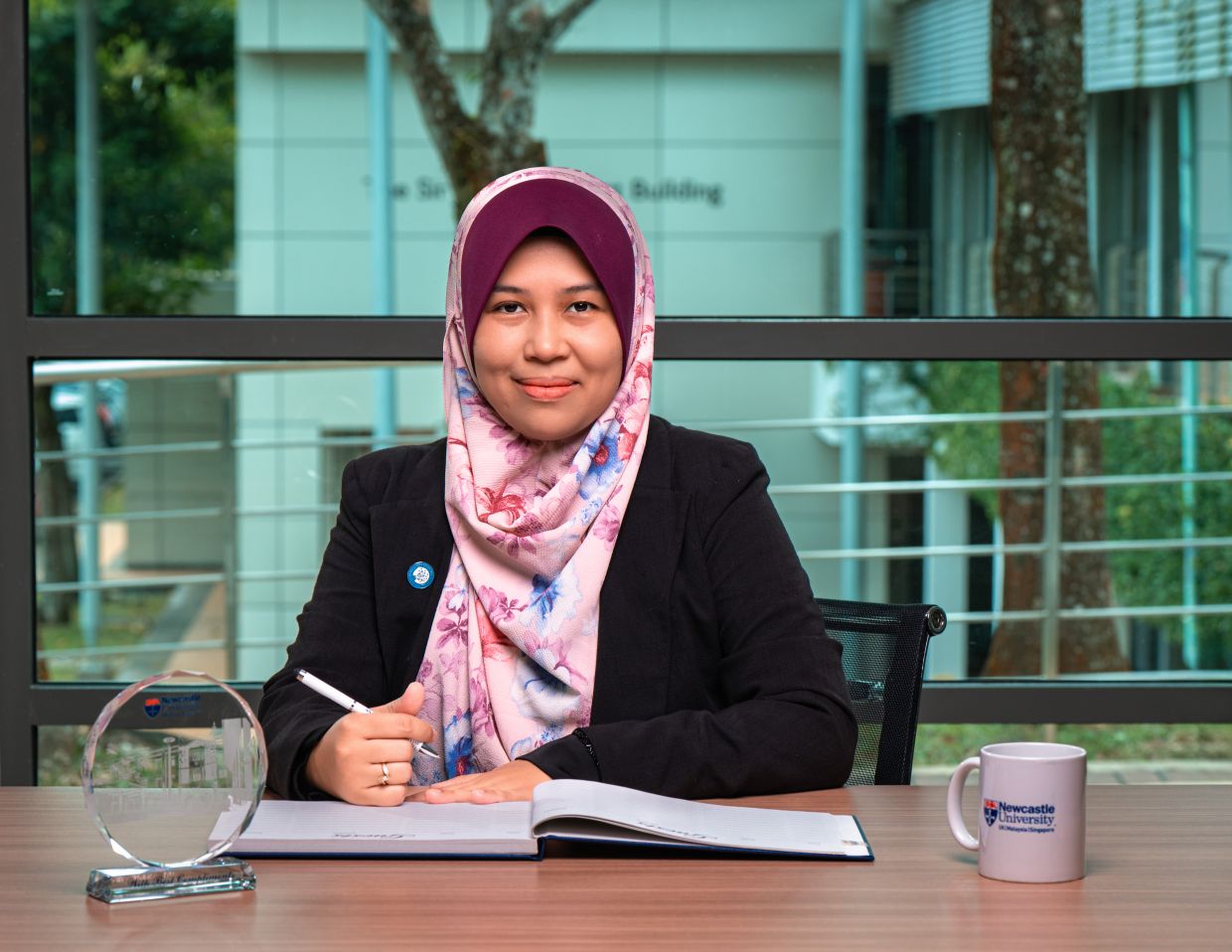
“By prioritising early involvement in laboratory and clinical research through structured practicums and targeted industrial placements, students gain critical hands-on experience in active environments before graduation,” said NUMed School of Biomedical, Nutritional and Sport Sciences head and Biomedical Sciences dean Assoc Prof Dr Madihah Rushaidhi.
“This enables them to directly apply precision-driven workflows from day one.”
Achieving this seamless transition requires a broader institutional shift, as precision medicine no longer exists in silos – it requires a convergence of technology, research and collaborative strategy.
To bridge the gap between classroom theory and global healthcare evolution, universities must redefine their organisational philosophy.
“Academic institutions will play a pivotal role as innovation hubs that connect fundamental research with clinical and societal impact. Universities must move beyond traditional disciplinary boundaries and foster interdisciplinary collaboration.
“At Newcastle University and NUMed, we emphasise research-led teaching, global collaboration and industry engagement. Our role is not only to generate new knowledge but also to translate discoveries into practical healthcare solutions,” said Madihah.
As the precision medicine sector continues its rapid expansion, supported by advances in artificial intelligence (AI), genomics and molecular diagnostics, the need for interdisciplinary training is expected to grow in parallel.
Educational institutions that successfully merge clinical training with data sciences are positioning graduates to thrive in this complex environment.
To meet these demands, NUMed emphasises a holistic approach to modern medical education.
“We are committed to inclusive research, diverse population studies and capacity building in the region,” noted Madihah, adding that the university also prioritises sustainability, global engagement and digital transformation in education.
“Our vision is to develop future leaders who are globally competent, locally responsive, ethically grounded and capable of shaping the future of healthcare for the benefit of society.”
Join NUMed’s Open Day on Aug 15 to discover how you can lead the advancement of precision medicine as a future healthcare leader. Register your interest at: https://www.ncl.ac.uk/numed/study-with-us/get-to-know-us/open-days/.
Alternatively, for more information about the university and its programmes, visit www.newcastle.edu.my, email: admissions@newcastle.edu.my, call 07-555 3800 or WhatsApp 011-1231 5411 or 012-784 9456.