Dough and dough nots: Pasta rules for pasta lovers


Asaro says that people should just eat one pasta dish instead of sampling various dishes at restaurants, as this can alter the flavour of the dish. — NERFEE MIRANDILLA/Unsplash

In modern times, the classic Italian staple of pasta is ubiquitous around the world, with 17 million tonnes produced annually.

While Italians eat about 27kg of pasta per person per year – the most amount of pasta of any nation across the globe (pasta consumption exceeds wheat production there) – the rest of the world is no less rabid about this carbohydrate-dense ingredient.

And just as pasta has evolved into a global culinary darling, so too has its formation. In its earliest incarnation, rudimentary forms of boiled dough were thought to exist in ancient Italy from as far back as the 4th century BCE.

And while pasta has long been thought to have ties with Chinese noodles, it was actually Arab traders who introduced the idea and concept of dried durum wheat noodles to Italy in the ninth century.

The idea caught on like wildfire, as the climate was ideal for drying dough. In those primitive years, pasta was eaten using nothing more than hands as implements and large dough sheets were simply boiled in water and eaten with basic toppings like sugar or cheese.

The earliest recipe for pasta dates back to the 12th century and is now considered one of the oldest recipes for the progenitor of lasagne.

Pasta only requires a few key ingredients like semolina flour, eggs, olive oil and salt.

In the 16th century, as a result of the Colombian exchange, tomatoes were introduced to Italy and while these red globes were first viewed with suspicion, as they were thought to be poisonous, by the 17th century, cooks eventually started turning them into sauces to go with pasta, which is how pasta and tomatoes came to be so inextricably intertwined.

Mass migration of Italians to America, Canada and beyond meant pasta was introduced on a global scale from the 18th century onwards. In fact, in 1789, Thomas Jefferson even brought the first macaroni maker to America and the Italian-American cultural exchange continued with the creation of new Americanised Italian dishes like spaghetti and meatballs.

Today, pasta is a worldwide favourite, with production increasing globally by over 56% in the past 15 years alone.

Making pasta

Pasta is made using only a few key ingredients – Tipo 00 flour (ultra-finely milled Italian wheat flour) for more delicate pasta like ravioli; or semolina flour (made from durum wheat) for firmer pasta. To round out the flour, olive oil, eggs and salt make up the final components.

Of these ingredients, the flour is one of the most important parts of pasta-making, as the gluten content is what gives pasta its distinctive “al dente” texture.

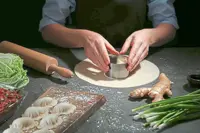
To make pasta, first flour is arranged on a clean countertop. A well is made in the middle and eggs are cracked into the well. The flour and dough must be mixed together until it forms a cohesive, stretchable dough ball. After this, the dough is wrapped in cling film and left to rest for anywhere from 30 minutes to a few hours.

Fresh pasta doesn’t have to be dried and is instead dusted with flour to keep its shape intact and prevent it from clumping.

After this, the dough is rolled out into thin sheets (either by hand or with the aid of a pasta machine) and then either hand-cut into shapes like spaghetti and fettucine or pushed out with the help of an extrusion machine or a traditional bronze plate.

In the case of dried pasta, the pasta is either slow-dried or quick-dried. Fresh pasta, on the other hand, is sprinkled with flour and either chilled or cooked immediately.

Today, there are hundreds of varieties of pasta in the world, with some estimates indicating over 600 kinds in existence.

They range from long pasta like spaghetti, fettucine and linguine; short pasta in the form of penne and macaroni; stuffed pasta like ravioli and tortellini; and soup-based pasta like orzo.

Pasta machines help stretch the dough out into thin sheets.

In Italian families, making fresh pasta has long been a family staple led by matriarchs. Frederico Asaro – the founder of Samadhi Retreats which owns and operates restaurants like the famed Tamarind Springs and Spanish eatery Barra – recently opened Warung Putih, an Italian restaurant in Kuala Lumpur’s Bangsar area devoted to his family recipes.

Asaro says part of the reason he wanted to open Warung Putih was to preserve both the memories he had as a child as well as the art of making pasta the traditional way. The pasta dishes at the restaurant are freshly made in-house and represent some of his favourite dishes, like spaghetti alle vongole with bottarga (spaghetti with clams, white wines and garlic) as well as traditional spaghetti carbonara and ravioli di mare, or ravioli filled with seafood.

“I grew up in Kuala Lumpur in the 1970s in a very Italian home. If you stepped into my house, you stepped into Italy. My mum only spoke Italian and she only cooked Italian food even though she lived here for 20 years.

Asaro opened his Italian restaurant Warung Putih because he wanted to preserve the art of making fresh pasta as well as pay tribute to his favourite Italian dishes.

“At the time, it was very hard to find Italian ingredients and my uncles were all captains on ships, so they would drop off Italian supplies when they stopped at Port Klang. So my mother turned one of the rooms in our house into her Italian storeroom. It was filled with tomato sauce, flours and cheeses,” recalls Asaro.

Growing up, Asaro recalls a childhood filled with food – including pasta that his mother made from scratch.

“In Italian homes, the kitchen is the heart of everything. You sit and eat and talk and your mother is in the middle of everything. So I, my brother, my mum, and sometimes my dad – if he was around – would just sit there and cook.

“We would mash tomatoes and make tomato sauce to bottle and store in the fridge – those are very fond memories for me,” he says.

Pasta culture

While many Malaysians simply use whatever pasta they have on hand to pair with homemade or bottled sauces – in Italian cuisine, different pastas serve different purposes.

Different kinds of pasta pair well with different sauces. — KATERINA HOLMES/Pexels

“Each pasta is made for a certain purpose. It’s not just to create a design. Like creamy sauces typically pair better with shell pastas because the cream sits inside the shell. So that’s the idea behind it.

“And fusilli – the curly pasta – goes well with some sort of meat sauce that goes into all the twirls, right? While spaghetti is more for oily sauces or tomato-based sauces. And while everybody does spaghetti bolognaise, the sauce actually goes better with a type of short, twisted pasta called trofie,” says Asaro.

As a general rule, long pasta pairs well with light sauces while tube pastas work better with meat sauces or hearty vegetable sauces. Flat, wide pastas like pappardelle typically go best with rich sauces like Alfredo, meat sauces or hearty mushroom-based sauces.

There are hundreds of different kinds of pasta in existence now.

Some traditions are also what make Italian pasta dishes so distinctive. Asaro says spaghetti carbonara, for instance, does not require the use of cream, which is considered sacrilegious to Italians because it deviates from heritage practices.

“Carbonara is only a few ingredients – good eggs, parmesan cheese and Pecorino Romano. You mix the eggs with the cheeses, and the hot pasta is tossed with the egg mix and it cooks the eggs so the creaminess is from the egg; it’s not from cream. Cream in carbonara is not tolerated in Italy at all,” explains Asaro.

Another pasta mainstay is that the pasta has to be cooked until it is “al dente”, which means “firm to the bite”. This allows the sauce to cling and coat the noodles well.

Pasta should also be enjoyed with only a few choice beverages – namely, suitable wines – white for lighter sauces and red for heartier variants. Other appropriate drink pairings include still water or sparkling water, while carbonated drinks are severely frowned upon.

When eating pasta at a restaurant, Asaro also says that although Asian culture often involves people sharing dishes and trying each other’s pastas, he wouldn’t recommend it, as it alters the taste of individual dishes and pasta is meant to be enjoyed as a complete dish without interference from other elements.

When choosing dried pasta, Asaro says it is best to pick slow-dried pasta as opposed to more commercial variants. — HEATHER GILL/Unsplash

“You shouldn’t mix them, because they’ve got their own flavours. The right way of eating it is not to mix. People can share the same dish – that’s okay. But ordering a few pastas and having a little bit here and there and going back and forth shouldn’t be done.

“What you can do is order a salad to go with your pasta – maybe some zucchini or spinach in a butter sauce,” says Asaro.

Asaro also says that although making fresh pasta at home is best, people pressed for time should keep an eye out for the best variant of dried pasta, as this will ensure a better final dish.

“In supermarkets, you only find dried pasta. But I think one of the things to look at is the quality of the pasta. If it’s whiter or a lighter yellow with rougher edges, that is slow-dried pasta. That sort of pasta has been cut with a brass mould as opposed to a Teflon cutter, so when it runs over the pasta dough, it gives it a rough finish.

“The idea of the rough finish is so that the sauce sticks to the pasta. If you do a test and put a simple tomato sauce on a commercial pasta v. a slow-dried one, you’ll find that with the commercially produced pasta, the sauce just slides off while the sauce clings to the slow-dried pasta exactly the way it should,” he says.

SPAGHETTI CARBONARA

120g fresh spaghetti

olive oil, for sauteing

130g smoked duck breast, cut into small pieces

25ml pasta water

1 egg yolk

1 whole egg

20g parmesan or Pecorino Romano

2 pinches black pepper

30g grated parmesan


To make

Cook pasta according to packet instructions. Set aside.

Heat up a large pan, add olive oil and saute duck breast with the fat until it becomes golden and crispy.

Add the pasta and pasta water. Stir the pasta with the duck until fully incorporated.

Remove the pan from the heat and add the eggs, parmesan and black pepper. Stir together using the heat from the hot pasta until you get a creamy texture.

Add grated parmesan and a bit of extra virgin olive oil and eat immediately.


Follow us on our official WhatsApp channel for breaking news alerts and key updates!

Next In Living

Stuck in traffic on the highway and need to pee? Here's what to know
Sunny Side Up: Sometimes, we just need to listen
When your therapist is an alpaca: How helpful are animals in therapy?
Michelin-starred Akar Dining shines spotlight on Malaysian produce and meals
Men in shorts are shaking up Japan’s buttoned-down offices
Contradictheory: A legend for each generation
'We don't have time': Montenegro's bird haven is fading
Crimea loses fuel, water and power, but not Russian tourists
Heart And Soul: A teacher's influence cultivates a love for writing
Bone appetit! Hong Kong welcomes dogs into restaurants, to pet owners' delight

Others Also Read