
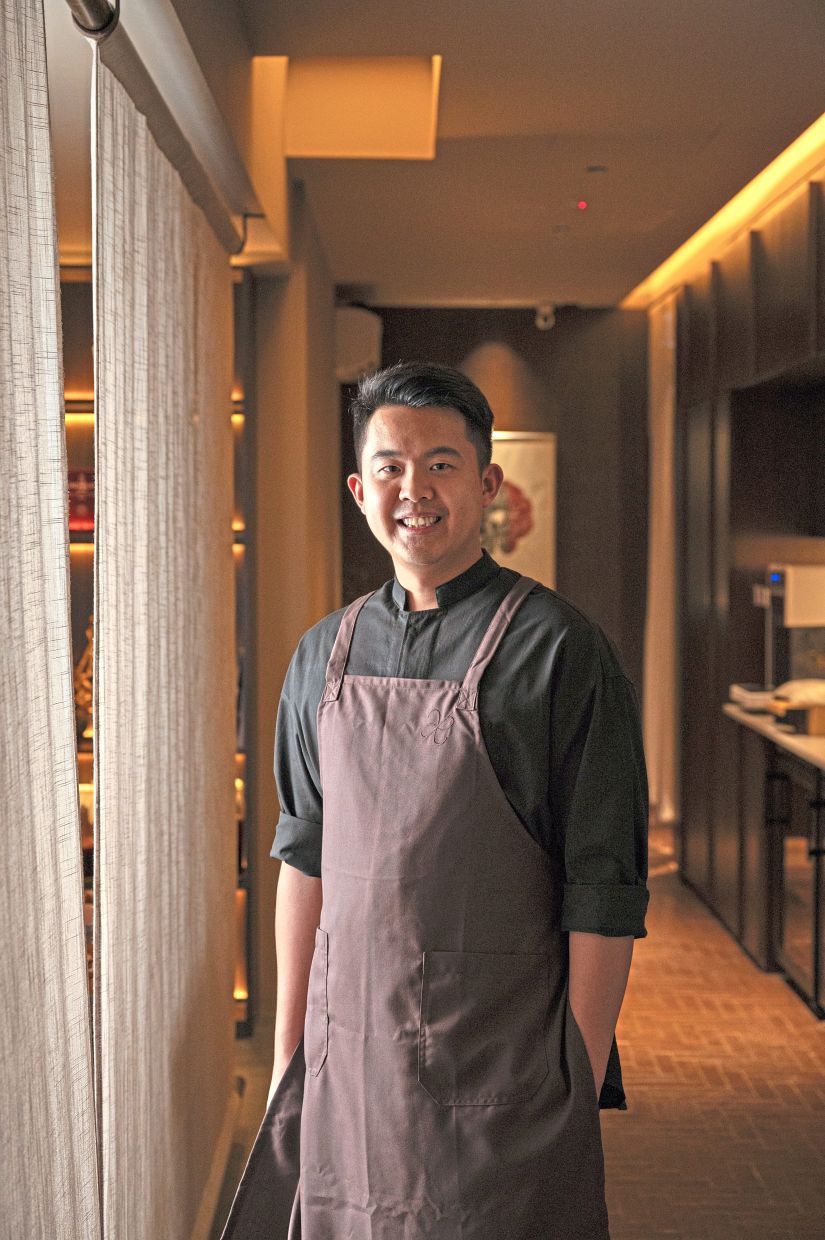
Last year, Kuala Lumpur’s celebrated Akar Dining helmed by talented young chef Aidan Low, received a Michelin star.
The accolade has changed Low’s life but thankfully, it hasn’t changed him. He remains one of the most personable, affable chefs in the KL dining landscape – one who has thrived through sheer hard work and resilience.
Akar opened in 2020 at the height of the Covid-19 pandemic and initially, Low leaned heavily on the modern Malaysian narrative, forgoing his Japanese culinary tutelage and knowledge in pursuit of all things homegrown. But at some point in 2024, he realised he was feeling increasingly stifled.
After some reflection – and a renovation – to mirror this introspection, Akar re-emerged with a clearer view of the modern Malaysian tale Low was keen on telling but this time, with its pulse wound around his Japanese culinary pedagogy.
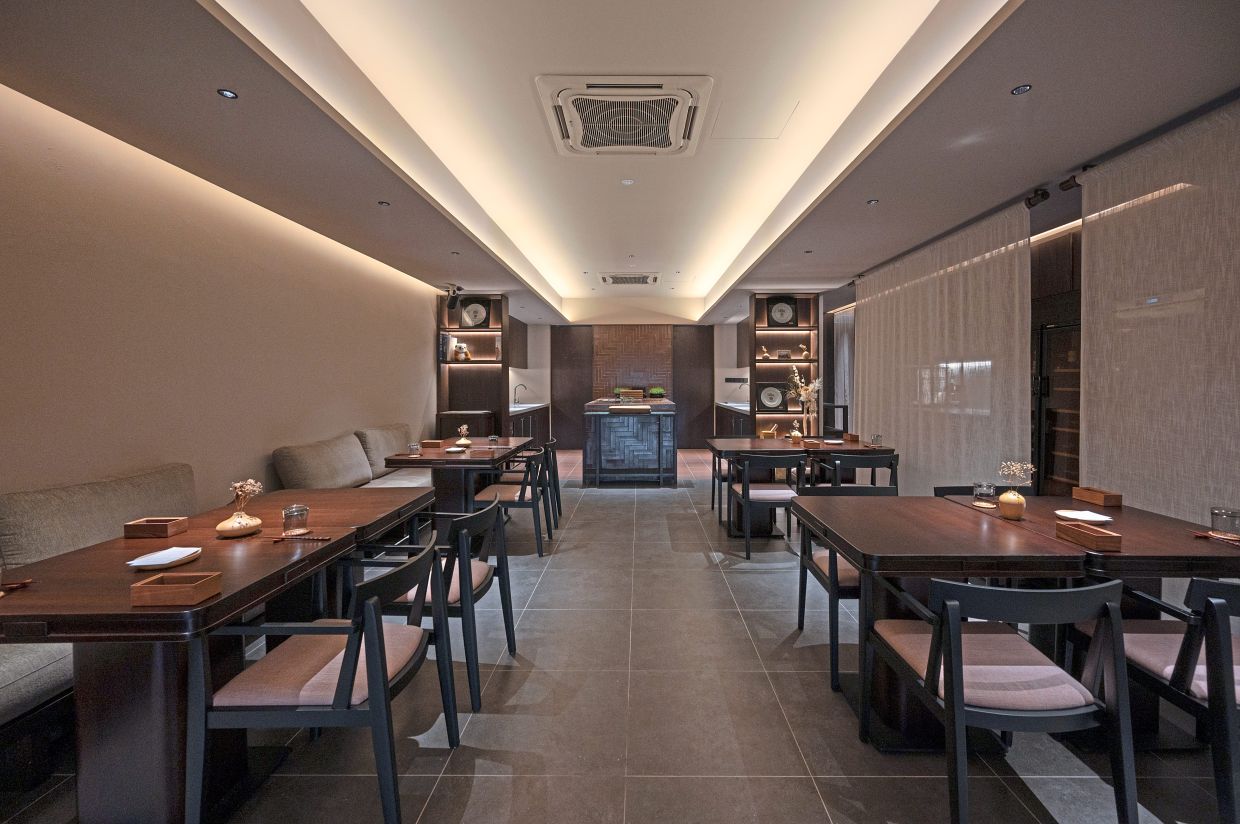
That instinctive change worked and these days, Low has clearly found his rhythm. Akar remains his love letter to Malaysia but as a story, it has become weightier, meatier, more substantial, in the same way Low himself has evolved and grown as a chef.
From a culinary perspective, while Low’s core ethos and style of cooking at Akar hasn’t changed, what has undergone a more dramatic transformation since the Michelin nod is how he crafts new menus.
“The Michelin star has given us some validation, but it also kind of puts me under more pressure. I need to keep myself in check a little bit in what I do. So now we go through more tedious processes in making sure a dish can make it onto the menu.
“We also no longer change the whole menu at one go, because there is so much fine-tuning that goes into each dish. And if someone has flown 20 hours from the United States to come here, I don’t want them to have an inconsistent meal just because it’s the first day of a new menu,” he says.
Low now allows creativity to happen in stages, only changing two or three dishes every three months.
A meal at Akar begins with an introduction to the rich bounty of local ingredients used throughout the menu. The current list counts homegrown produce like tepus (wild ginger); soon hock (marble goby fish); finger limes from Perlis; candy melon from Terengganu; and titi melon from the southern state of Negri Sembilan.
The dinner degustation menu called “Mekar”, is priced at RM588++ per person and shines a spotlight on Malaysia’s culinary ecosystem, traditions and culture.
Highlights include the Giant Bamboo Prickly Ash, a snack that shows off giant bamboo shoots from Janda Baik, Pahang and is served with local tiger prawns and caviar.
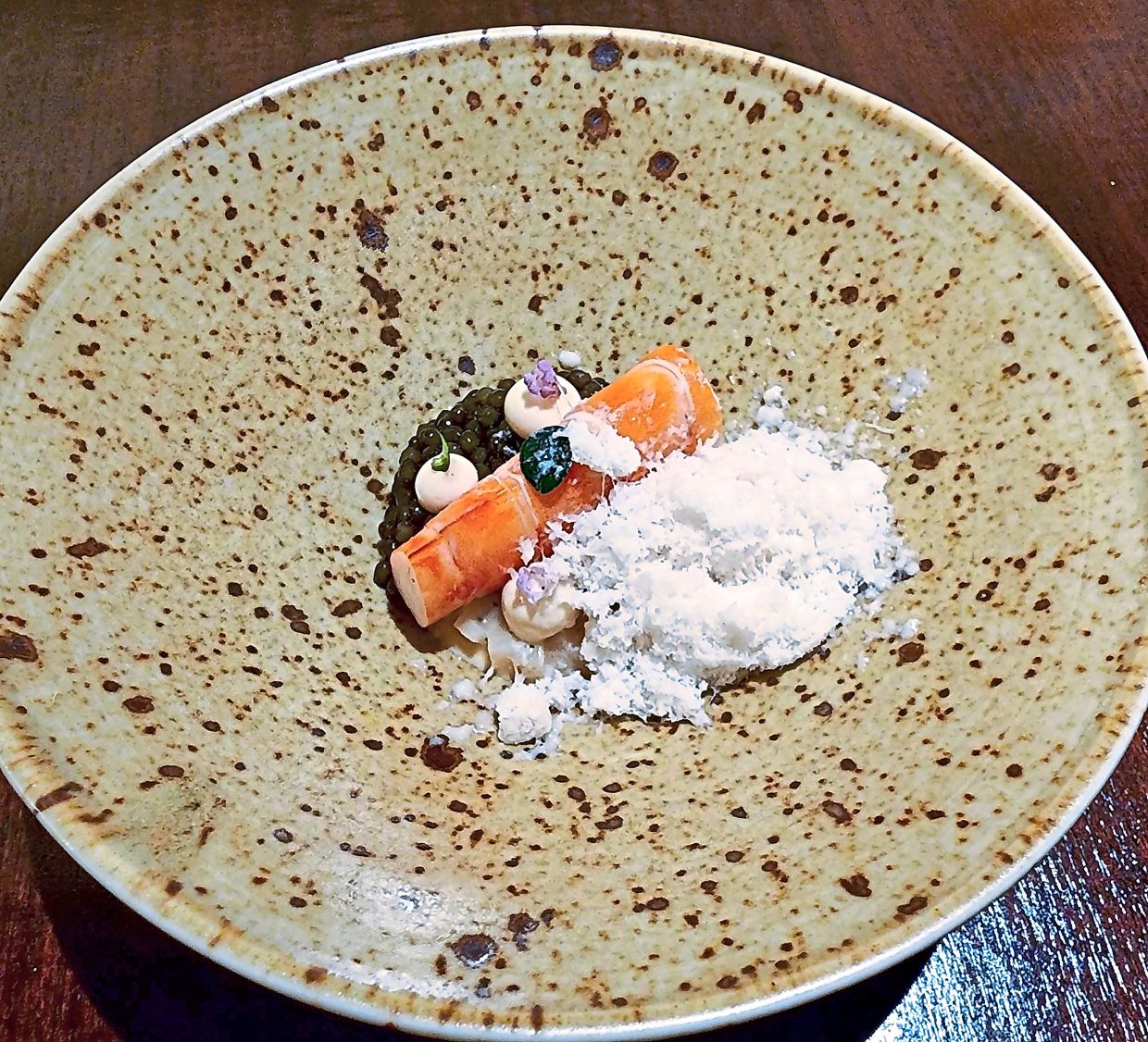
The bamboo shoot is the heart of this dish. Its natural sweetness and rustic nuances tether the dish to the fertile soil of the land, told through the channels of a cold bamboo shoot curd and tartare.
This is accentuated by the fat, fluffy prawn served alongside, which adds quietly regal, aquatic notes to the meal.
The Cuttlefish course meanwhile sees the main ingredient carefully grilled and wrapped with charred ensabi leaves, a bitter green from Sarawak. This is paired with a burnt allium jus, featuring onions and leeks cooked till caramelised to a point that it tastes almost like Marmite (a sticky spread made from yeast extract).
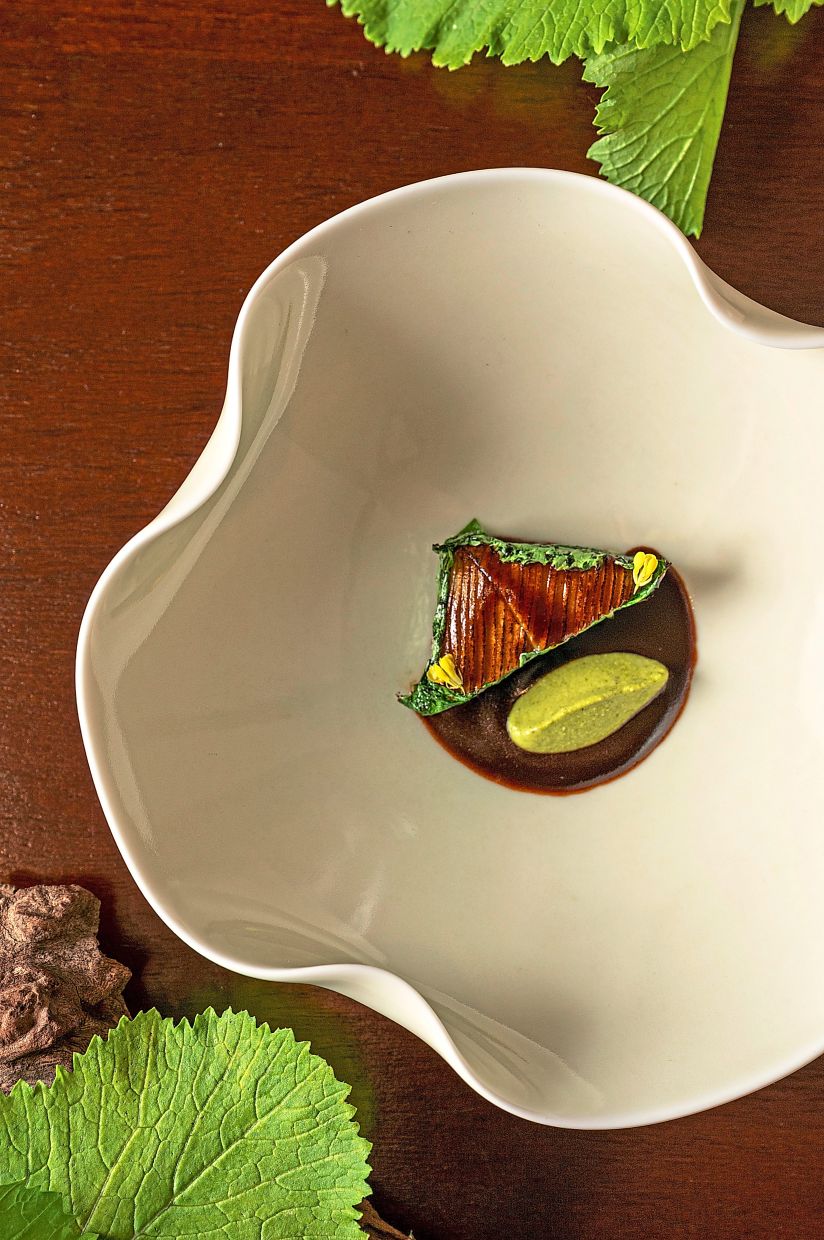
There is also the option to wrap the cuttlefish in raw ensabi leaves.
The cuttlefish pieces are small but pack a plump, buoyant spirit. The allium jus is thick, almost syrupy and intensely umami-laden. Perhaps the most surprising addition to this cast of characters is the ensabi, which has a distinct wasabi-like potency.
Something so strong also has the potential to overshadow everything else. Which is why when the squid is wrapped in the raw ensabi leaf, the leaf takes a domineering role, its bossiness overwhelming all else. But when grilled with the squid and paired with the allium jus, it is intrinsically pleasant, its sharpness less predatory, its features more delicate.
Perhaps one of the most triumphant offerings is Low’s Cassava Noodles, a labour of love that features hand-cut cassava that is frozen and cooked to order to retain its shape and texture.
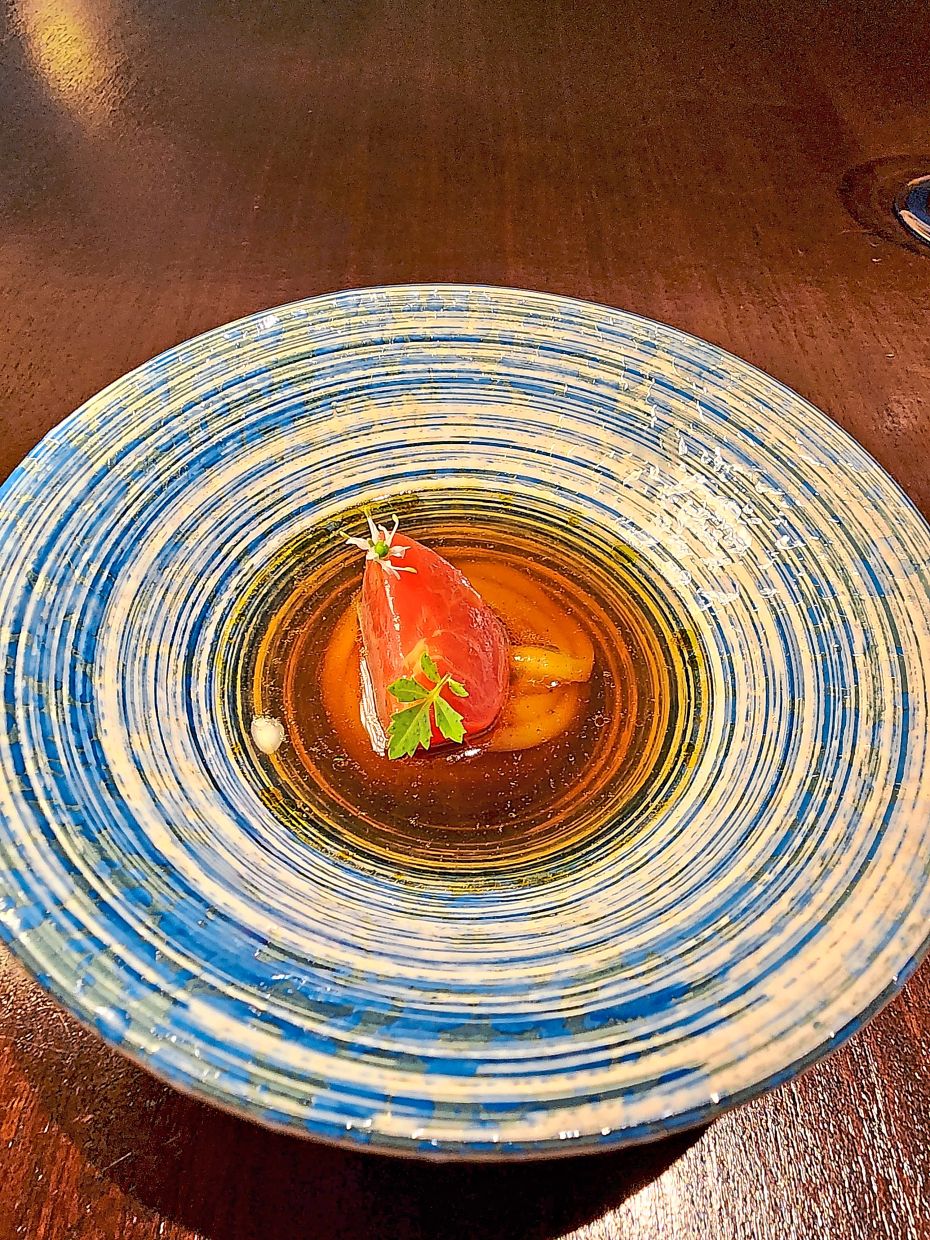
Low has paired the noodles with various partners in the past – like a Rolodex of blind dates – each one with different characteristics and quirks.
His current iteration sees the noodles matched with a tomato rasam enriched with three incarnations of tomatoes (including a plump, sweet fruit tomato) as well as sawtooth coriander.
The supernova in this constellation is the noodles – chewy, bouncy with incredible tensile strength and yield. These are dream noodles, the sort that inspire poetry and sonnets.
The tomato broth meanwhile is a lightly acidic, covert operator that provides still, soothing waters for the noodles to rest and bathe yet also hosts a touch of spice and acerbity to keep things interesting.
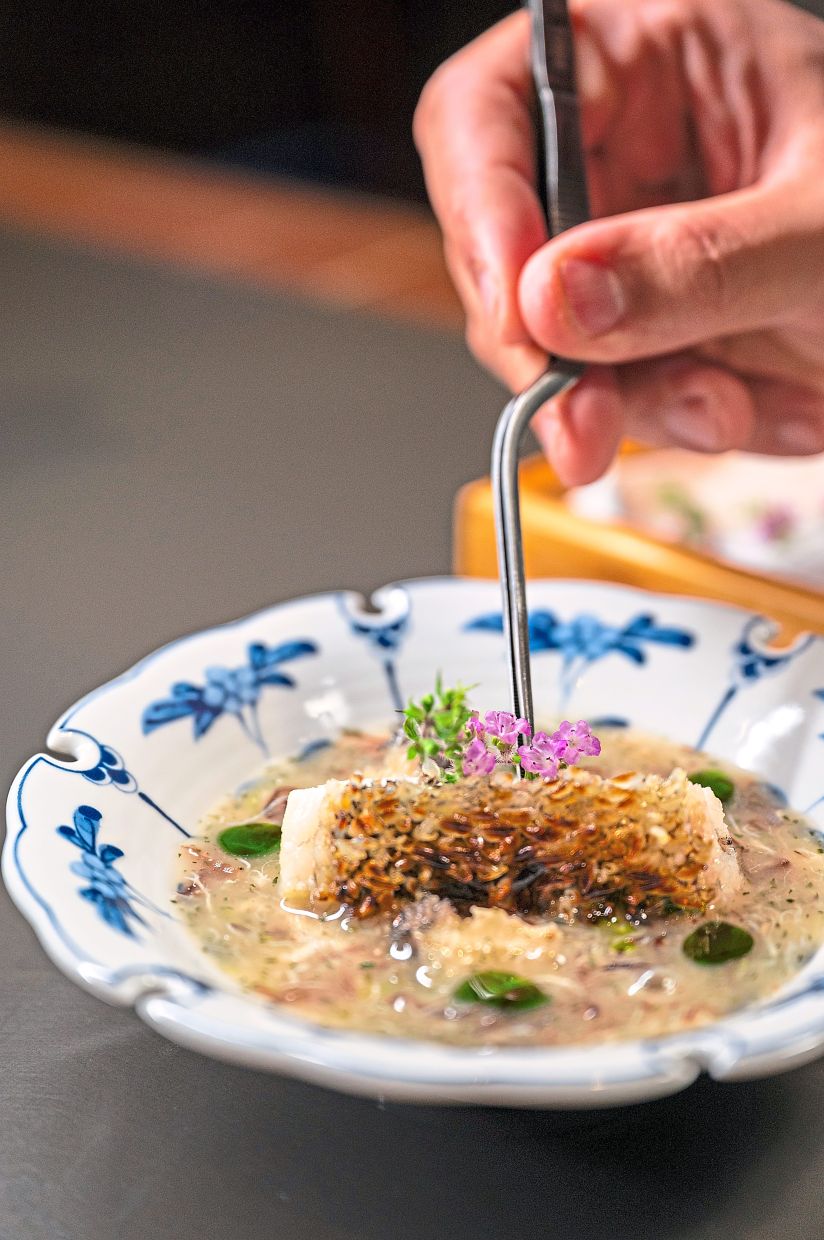
The Marble Goby highlights the fish’s supple and firm texture while still retaining crisp scales. At the bottom of the bowl is a hearty fishermen’s broth imbued with tomato jelly, finger limes and razor clams. The dish is topped with homemade tepus chilli oil, which diners can drizzle over the meal with a pipette.
It’s a rustic ode to aquatic treasures that highlights the unvarnished purity of the fish alongside a stew that has rich sea-faring notes dotted through its internal structure. The finger limes, tomato jelly and tepus chilli oil meanwhile collude to provide a citric, herbaceous layer of contrast.
The savoury part of the meal ends with Trader’s Rice – rice drizzled with kulim oil for a distinctly tropical truffle-esque edge. The rice is paired with glazed abalone and lauk-pauk in the form of rendang fish butter, fiddlehead ferns, pickled green mango and a burnt eggplant puree.
The rice is seriously good – nutty with a funghi undertone that melds well with the abalone which has incredible body and solidity yet still has a spring in its step.
The dishes offer bits and pieces of the gustatory explosiveness that typically symbolises a loaded-up plate of rice and accompaniments – without the actual loading – so you’ll feel like you’re getting the essence and soul of the meal without also simultaneously wanting to pass out afterwards.
Wash this down with the soothing clam-infused wild herb broth served after for a clean, nurturing finish to the savoury portion of your meal.
To end, there is Terengganu Melon – a sweet candy melon with curry leaf and jasmine rice foam – that offers soft, sweet fruity notes that sit side-by-side with curry leaf’s intensely Indian nuances in what proves to be a light-hearted epilogue to the meal.
In the year since Akar has attained its Michelin star, it is clear that the restaurant has grown, thanks to Low. Portions were once a little larger but are now more carefully calibrated in a clear attempt to create an impact without also producing painfully distended bellies.
Producers and growers now contact Low directly and clamour to work with him so he has a wider range of homegrown ingredients to use as part of his colourful local canvas.
As a result, each dish has a careful attention to detail and a simultaneous sharp, clear focus on Malaysia.
In so many ways, despite all the accolades, Low clearly remains deeply in love with his homeland and the result of this love affair is reflected in every plate.