The sea off Australia’s Gold Coast is remarkably calm on a winter morning.
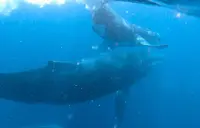
Two humpback whales move through the shallow waters near Palm Beach Reef, but one repeatedly returns to the same spot on the seabed.
The young female dives down again and again, touching the calf with her head and pectoral fin. At one point, she lies beside it, eye to eye. She remains close for almost two hours as another adult whale swims nearby. Vocalisations can also be heard.
Marine biologist Olaf Meynecke of Griffith University says this is the first detailed documented case of such behaviour in the species. Meynecke analysed the observation together with whale rescuer Andrew Mulville and wrote a study on it.
“For me, her search for physical contact and her attempt at eye contact with the dead calf were surprising, but so was the duration of the behaviour – over hours and presumably days,” Meynecke says.
He and Mulville reported that the female did not try to bring the dead calf to the surface. Normally, mothers help their newborn calves take their first breath this way.
“We have two theories,” Meynecke says. “It may be that the mother was unable to bring the calf to the surface, but that seems unlikely because we could not document any attempt to do so. Or maybe she was aware that it was no longer alive.”
Tahlequah’s journey of grief
The behaviour is reminiscent of that seen in other mammals, with orcas offering one of the most striking examples.
In 2018, the female Tahlequah carried her dead calf on her snout and forehead for 17 days off the coast of North America, covering more than 1,500km.
Again and again, she lifted the body out of the water when it threatened to sink.
Scientists spoke of a “tour of grief” – a journey of mourning. Pilot whales and dolphins have also been observed carrying dead young for long periods. Evidence of similar behaviour in humpback whales, however, remains much more limited.
“From personal experience, I am very certain that other species, and mammals in general, perceive the loss of a fellow member of their species, and this leads to behaviours that can be described as grief or depression,” Meynecke says.
He says the feelings were presumably different from those of humans, but the effects were often similar, such as refusing food.
Chimpanzee Flint died of a broken heart
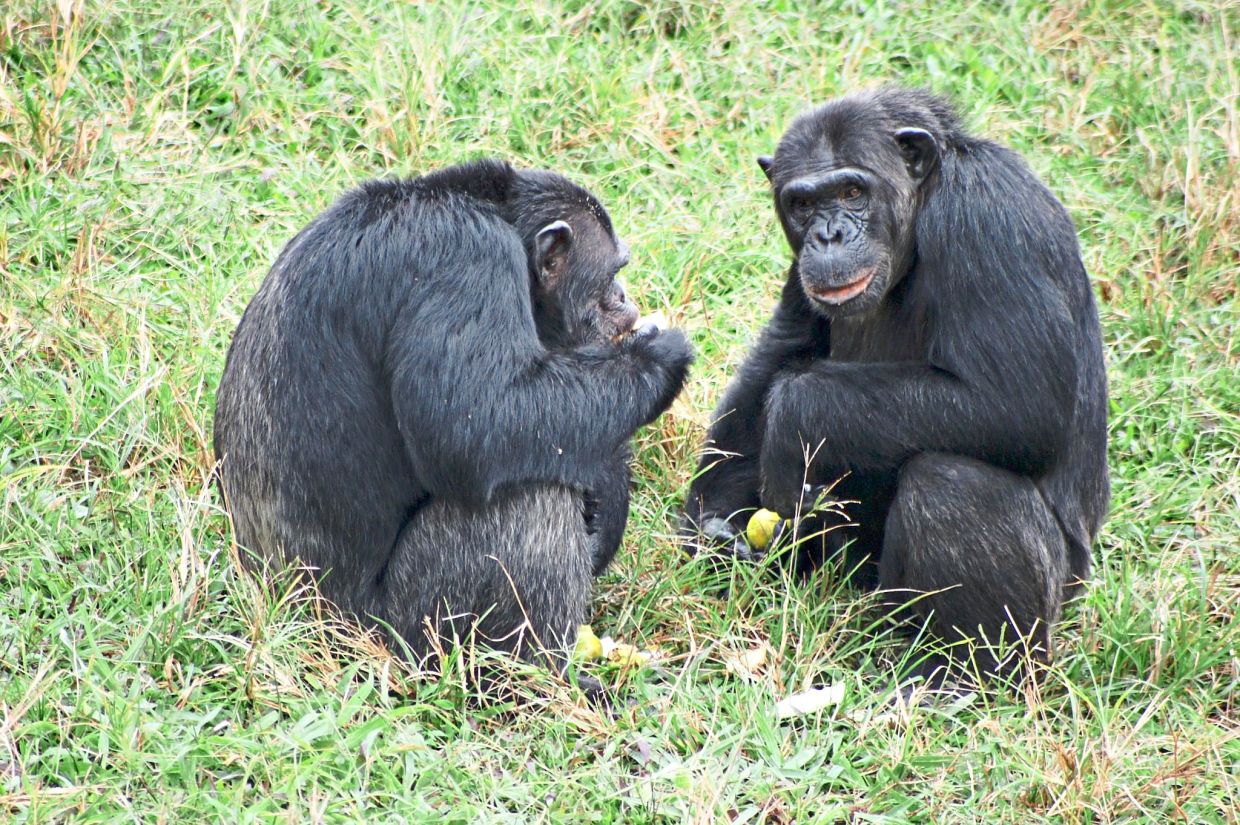
The story of young chimpanzee Flint is particularly dramatic. When his mother Flo died in Tanzania’s Gombe National Park, the then eight-year-old son increasingly isolated himself.
The world-famous primatologist Jane Goodall watched Flint repeatedly go to his dead mother. Then he stopped eating, and a few weeks later he was dead himself. Goodall later said Flint had died of a broken heart.
Chimpanzee mothers, conversely, also seem to find it hard to part from their dead young. Some carry the lifeless bodies for days, sometimes weeks or months.
What about pets? In a study from Australia and New Zealand involving 159 dogs and 152 cats, owners reported, among other things, changes in eating behaviour when a companion died.
Among dogs, 35% ate less and 31% ate more slowly. Cats also showed changes, with many meowing more often and more loudly. Both species sought out the favourite places of the dead companion.
Elephants ‘bury’ their dead
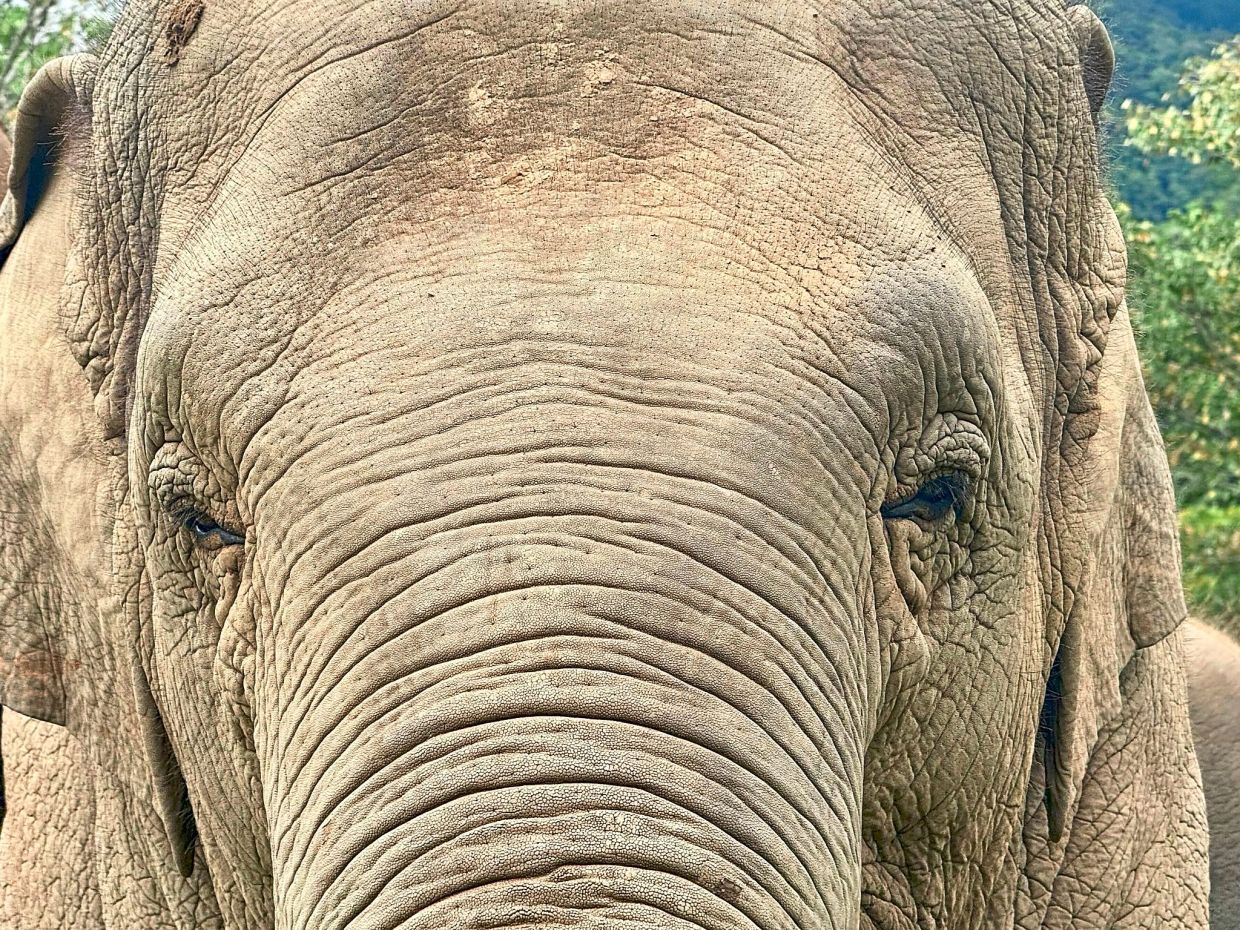
Elephants gather around carcasses, touch, sniff and guard them, and repeatedly return to the dead. They have also been observed trying to support dying animals or carry dead calves away.
Sometimes they cover deceased companions with soil or plants. Whether this truly corresponds to the human idea of burial, however, no one knows for certain.
A striking case occurred in Kenya in 2013. When the 55-year-old elephant cow Victoria died, her family did not leave the matriarch’s side. Victoria’s 10-year-old daughter Noor stayed with her for a long time, and her 13-year-old son Malasso nudged the mother with his tusks, probably in an attempt to get her back on her feet.
Weeks later, researcher Shifra Goldenberg observed an even more surprising scene: elephants from other families were still visiting Victoria’s remains.
What drives such behaviour? For now, science has no clear answer. Perhaps it is not a farewell in the way humans understand it.
Yet if grief means being unable to simply let go of a companion who has died, then many animals may come surprisingly close to what we call mourning. – dpa