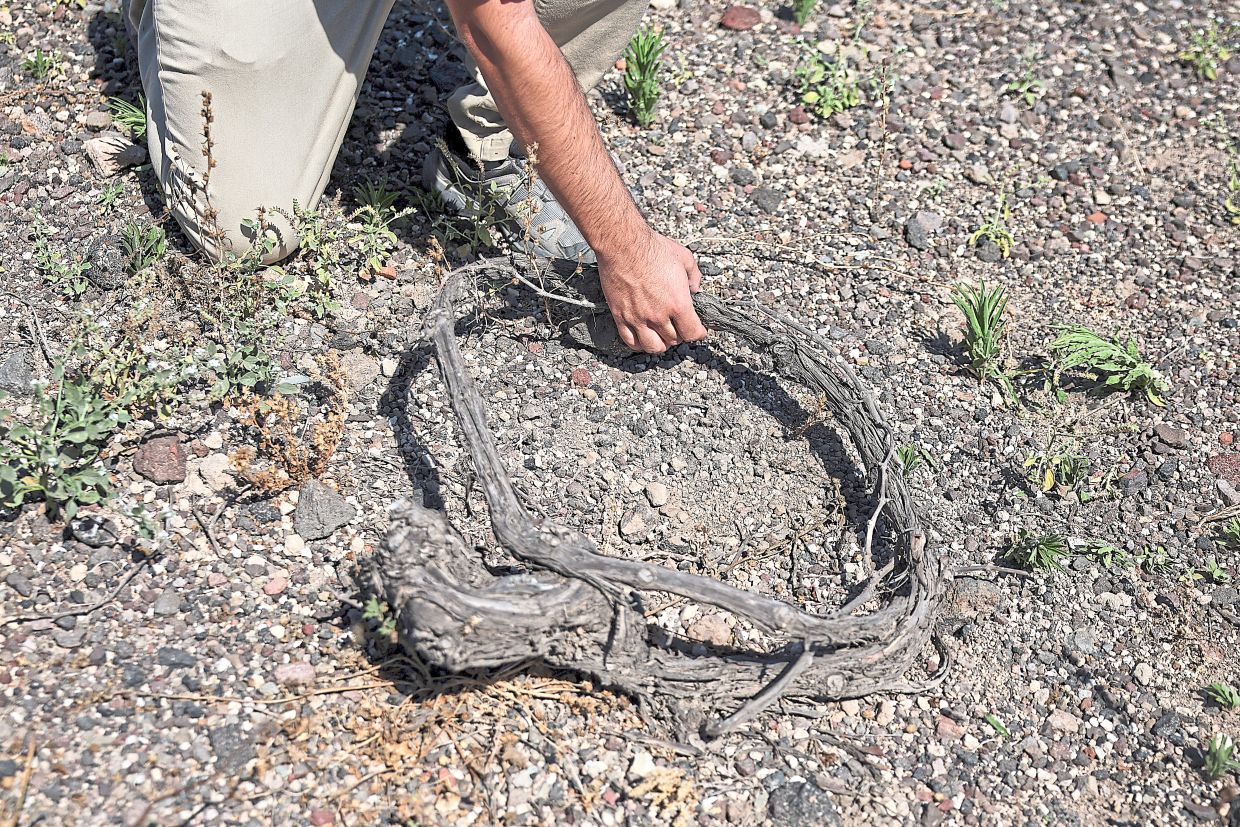
In a vineyard on the Greek island of Santorini, winemaker Yiannis Boutaris gestures to a dried-up "kouloura" vine trained into the shape of a basket to protect the grapes from the gruelling summer sun.
The plant endured for 90 years but was finally killed by heat and drought. Its fate highlights a growing problem on Santorini, where low rainfall and searing temperatures from 2023-2025 have increased the price of grapes, slashed wine production and intensified concerns over water supply – an issue blighting much of Greece as climate change makes summers hotter and rainfall more erratic."
The lack of rain, in combination with the lack of cultivation, in the last couple of years has led to these old vineyards really dying," said Boutaris, whose winery has its own vineyards and also buys grapes – including from the vineyard with the dying vines.
"The main thing for our winery is we are not abandoning tradition... we are adapting the vineyard to the new circumstances."
Boutaris, a sixth-generation winemaker who runs the Domaine Sigalas winery, now part of the Kir-Yianni family of wineries, is testing a pilot project with local authorities and scientists to take wastewater from homes and hotels to irrigate the vines.
They say the practice, also used in California,could be more sustainable and energy-efficient than taking water from expensive desalination plants.
Boutaris is testing planting vines in rows rather than scattered in the traditional way, too, to make irrigation more efficient, and atmospheric water harvesting. This captures moisture from the air in hydrogels, then extracts it as water with heat generated by solar panels.
Wine growers are at the centre of a wider contest for land and water in Greece.
In the warmer months, when millions of tourists descend on islands like Santorini, farmers, hotel owners and swimming pool operators often compete for a share of the dwindling water supply.
In northern Greece, which is less hot, a kilogram goes for just €0.80 (RM3.70).
"Santorini reached a limit of dramatic conditions in 2023 and 2024,” said Stefanos Koundouras, a professor of viticulture at Aristotle University in Thessaloniki.
He said the temperatures were the hottest in 60 years. Koundouras said the wine sector could become less sustainable all over Europe, particularly around the Mediterranean, if it keeps getting hotter and drier.
"We are already seeing problems in the quality and special character of the wines." Winemaker Yiannis Papaeconomou is also planning to tap into the wastewater project for his six-year-old vines.
He has been trying other techniques such as a system that irrigates the vines underneath the soil rather than from above, to reduce evaporation, as well as trellising them so they can be watered more efficiently.
"So we must adapt and proceed in a new way of thinking and, you know, find a way out,” he said. – Reuters