
Music teacher and social worker Wong Siew Ngan, 54, has earned an entry into the Malaysia Book of Records (MBR) for developing a simplified Braille-based system that makes music reading easier and more accessible for visually impaired musicians.
The system, known as the Joyful Braille Music Notation (JBMN), builds on traditional Braille music notation but introduces additional tactile cues such as lines and symbols around the Braille cell, allowing blind musicians to read notes faster and with greater ease.
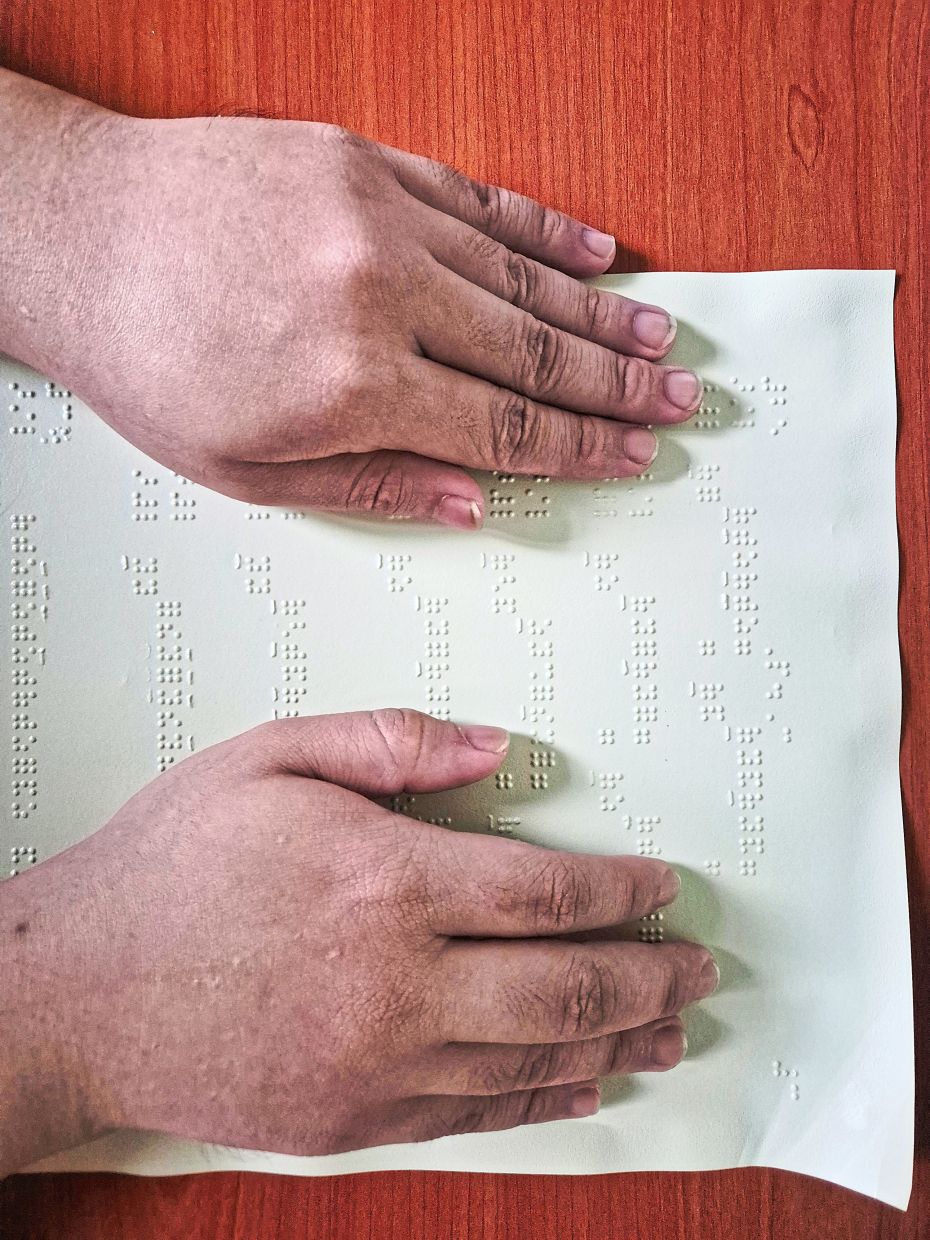
These include lines and symbolic cues that provide faster visual-equivalent structure through touch. The aim is not to replace Braille music, but to simplify and enhance it.
The system reduces the number of Braille music notation cells required for writing and reading music by at least 40%.
"I am deeply honoured by this recognition, but what matters most is seeing blind musicians gain confidence and independence through music," says Wong, after the presentation ceremony at the Malaysian Association for the Blind (MAB) in Brickfields, Kuala Lumpur on April 15.
The innovation is designed to reduce the complexity of Braille music reading, which requires notes to be read in a strict step-by-step sequence rather than being quickly scanned like printed sheet music.
A helping hand
Wong, from Petaling Jaya, Selangor, was inspired to develop the system in 2024, when she began training the Joyful Choir of the Blind, a Kuala Lumpur-based choir for visually impaired singers. It was during these sessions that she began to notice the limitations of traditional Braille music notation.
"While many musicians and impaired singers can read Braille music, the process is often slow because the notation is read line by line," explains Wong, who runs a music school in Puchong, Selangor.
Unlike sighted musicians who can visually scan multiple staves of music at once, Braille users must read sequentially through raised dot patterns, making it harder to grasp musical structure quickly. For ensemble singing, where timing and coordination are crucial, this limitation can become even more challenging.
"When we started teaching them, we realised how talented they are. Many of them memorise a lot, and they learn very quickly through sound and repetition," shares Wong, who completed a degree in music from University of North Texas, the United States and a Master of Education from Australia's Deakin University. She is currently pursuing her PhD in music at Universiti Malaysia Sabah.
She was inspired to develop the system when a choir member expressed a simple but powerful wish – to be able to read music in a way closer to sighted musicians.
"That moment really stayed with me and motivated us to rethink how Braille music could be improved," says Wong, who has over three decades of experience in social work and conducted numerous charity music education programmes for underserved communities across Malaysia.
That reflection eventually led to the development of JBMN, co-created with music producer and composer Frederick Chaw, 40. The process took about a year of experimentation, refinement and collaboration with visually impaired learners.
"We didn't expect the system to be read so easily at the beginning. When we first tested it with our students using handwritten materials resembling Braille notes, they were able to read it. That gave us the confidence to keep refining it," says Wong, who learned Braille (Grade One) to help develop the programme.
"We wanted to create something more visually impaired-friendly that allows them to read music more efficiently – closer to how sighted musicians read notation – rather than relying only on traditional Braille cells (the basic building blocks of the Braille writing system used by visually impaired people)," Wong explains.
Last year, her research paper on JBMN, "Bridging Tradition and Innovation: Developing Contemporary Braille Piano Notations for Inclusive Piano Tuning Course" was published in the Journal of Electrical and Electronics Engineering Research and Reviews.
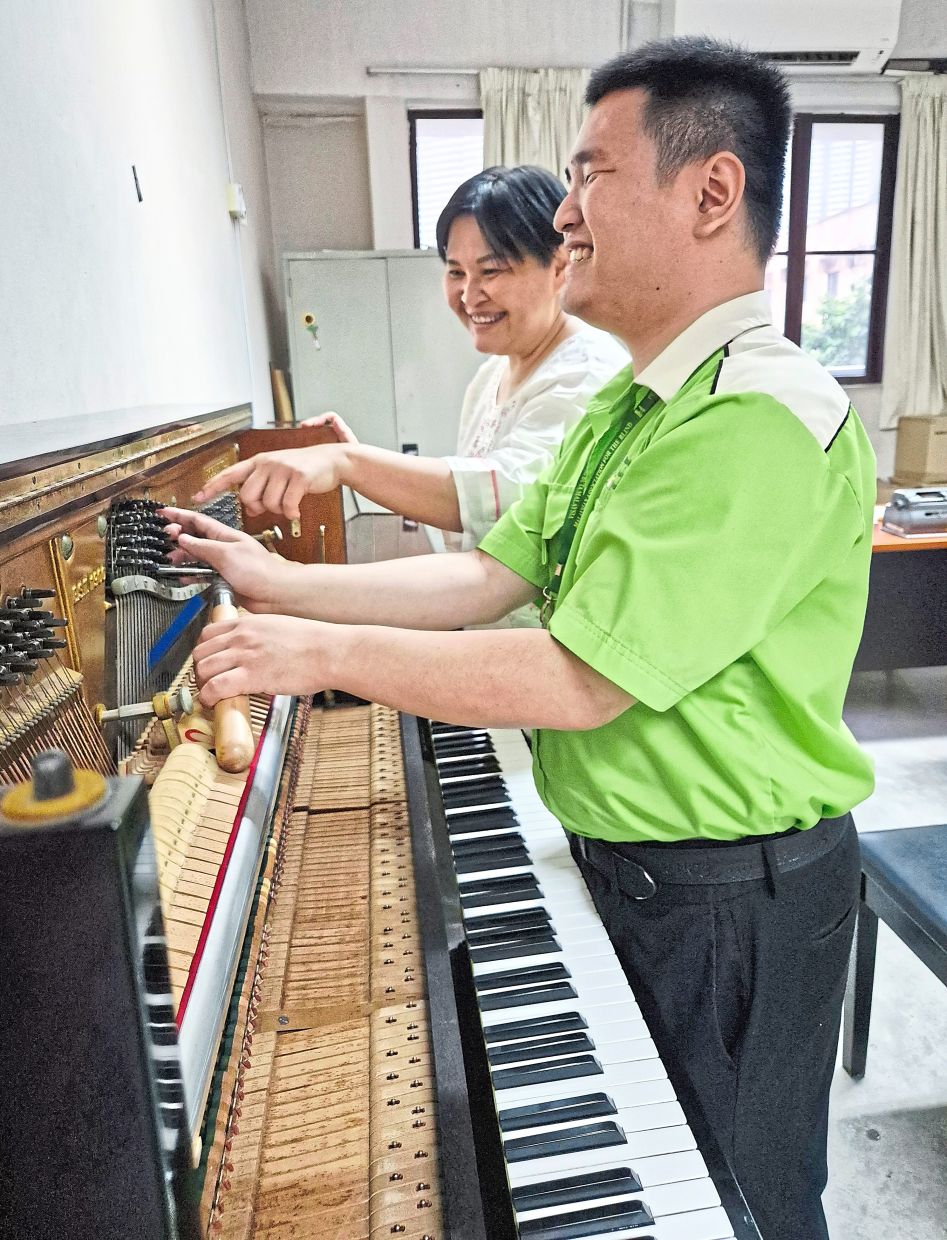
The system has since been implemented in training programmes at MAB, including its piano tuning vocational course.
A brighter future
Through collaboration with the MAB Braille Publishing Unit, specialised embossed tactile materials have been developed to translate JBMN into practical learning tools for trainees.
"This initiative has enabled our trainees to engage effectively with sound, tuning systems and technical skill development, strengthening their pathway towards meaningful employment in the field of music," she says.
The application of JBMN in vocational training highlights a broader ambition: expanding opportunities for visually impaired individuals beyond performance into sustainable careers in music-related fields.
Despite these advancements, Wong notes that systemic gaps remain in accessible music education.
"There are still very limited music resources for the blind, even at national libraries. We hope to see more structured support, including proper music examination pathways that are accessible to the visually impaired.
"With inclusive training and the right tools, visually impaired musicians can learn and perform just as effectively. This system helps reduce complexity and makes music reading more accessible," says Wong, who also founded H.E.A.R.T. Foundation in 2007 in Siem Reap, Cambodia to help marginalised children.
She hopes JBMN will continue to evolve and extend beyond choral music into broader musical education and performance contexts.
"Our hope is simple: to let blind musicians experience music as a language they can read, perform and truly own."
A new way to read music
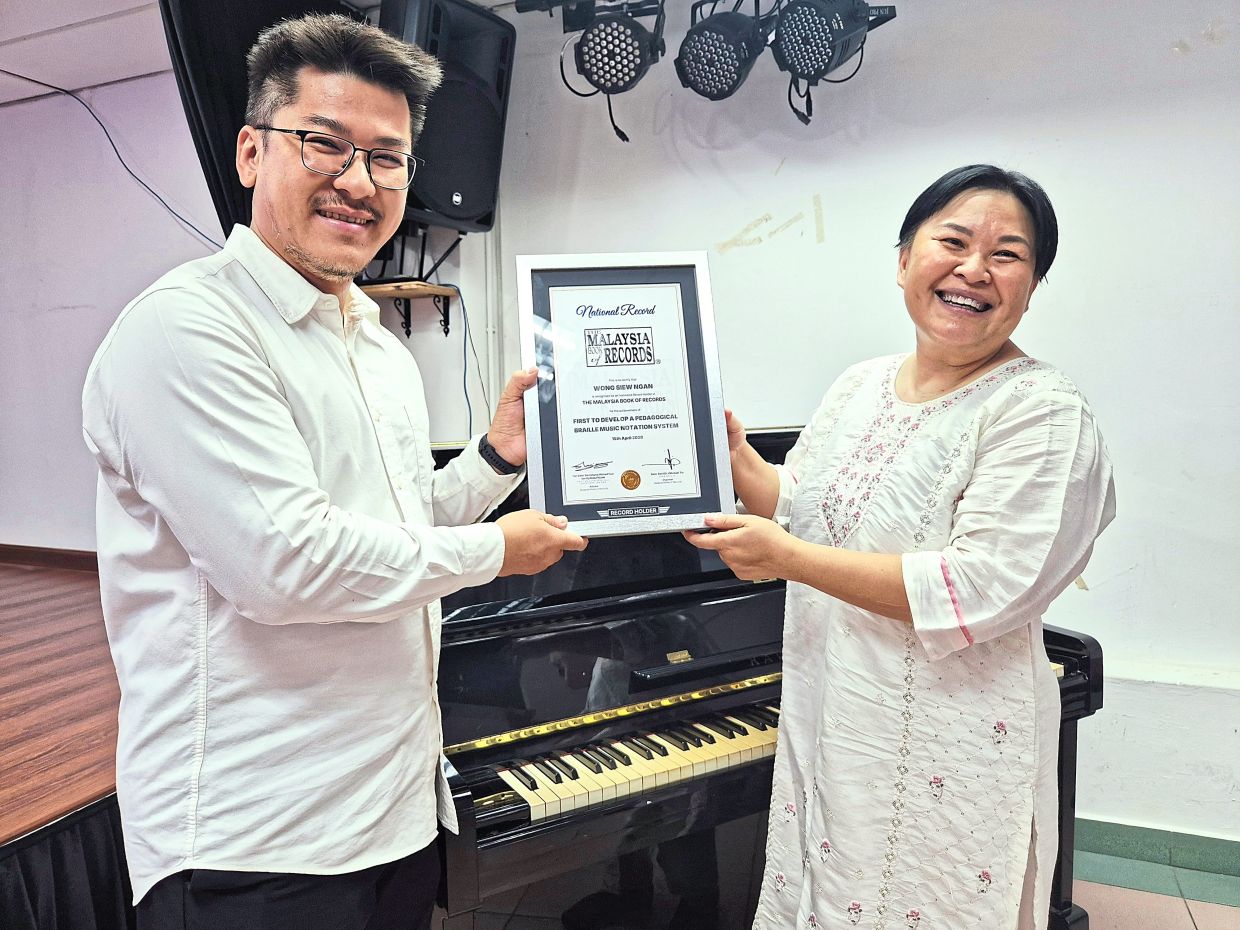
Wong (right) and Chaw co-created a Braille music notation system to make reading music easier for the visually impaired. Photos: The Star/Sheela Chandran
Joyful Braille Music Notation (JBMN) builds on traditional Braille music notation.
Photo: The Star/Sheela Chandran
Visually impaired trainee Thew Ming Soon, 27, (right) undergoes piano tuning training with support from Wong.
Photo: The Star/Sheela Chandran
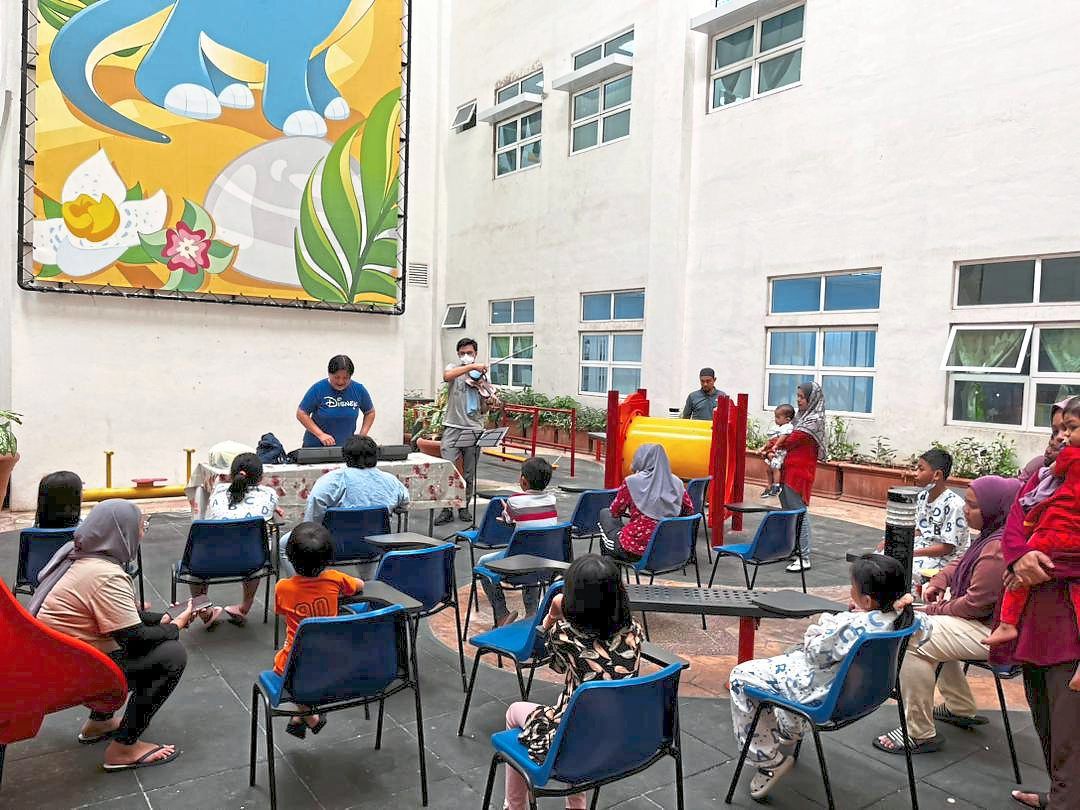
Wong (in blue) connects with young paediatric palliative care patients through music therapy at Hospital Tuanku Jaafar in Seremban. Photo: Dr Noor Suraya Muhamad