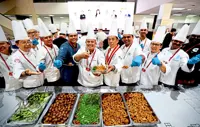
At the recent Asia’s 50 Best Restaurants 2026 awards in Hong Kong, a recurring topic of conversation among the continent’s top chefs was the revelations that had come out of Noma.
Noma is a Scandinavian restaurant helmed by Rene Redzepi, a Danish chef who has long been regarded as a culinary god of sorts. Redzepi drove Noma to great heights – it was named the world’s best restaurant multiple times and earned three Michelin stars. To many people, Noma represented the pinnacle of industry success.
However, approximately a month ago, an article in the New York Times revealed Noma’s and Redzepi’s legacy, exposing toxic kitchen culture and even physical abuse inflicted by Redzepi on previous staff. Redzepi was put under the spotlight – for very different reasons than he was accustomed to – and seemingly buckling under the pressure, he apologised and stepped back from Noma.
But for many chefs, the reality at Noma is no different to the reality at many other restaurant kitchens around the world. “Unfortunately in this era, there are still a lot of chefs that have gone through tough training in restaurant kitchens and they carry that trauma into their own kitchens, and those are the majority of kitchens that I know of,” says Chong Yu Cheng, better known as YC, the chef behind KL’s Michelin-starred Terra Dining.
Kitchen horror stories
Working in restaurant kitchens is not for the faint of heart. Chefs can be on their feet for up to 18 hours a day in hot kitchens, handling heavy – sometimes dangerous – equipment. Add stressed teammates and bosses into the mix, and it’s easy to see how tensions can boil over.
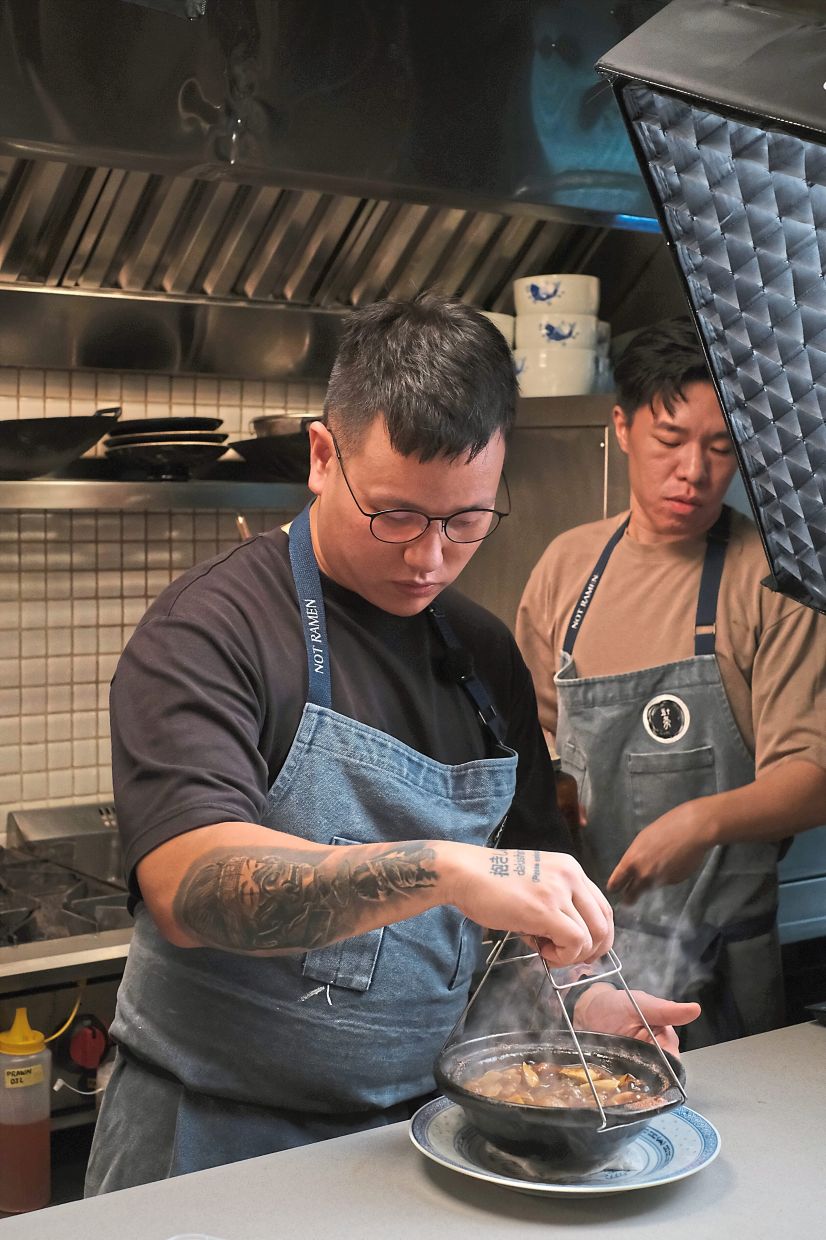
Some chefs in Malaysia describe kitchen environments that can be hostile, intensely stressful, and, at times, verbally – and even physically – abusive.
Many chefs go through a trial by fire in their attempts to climb the career ladder in the industry.
Aaron Khor, the chef-owner of Petaling Jaya progressive noodle eatery Fifty Tales, recalls how he fell into a deep depression after some terrible experiences in restaurant kitchens.
“I started working in kitchens part-time when I was 13 and over the years, I went through the school of hard knocks where you hit a wall and figure it out later. I have been screamed at, had things thrown at my face and once even had a steel pan intentionally heated up when I wasn’t looking so that when I went to touch it, it immediately burnt my hand.
“That instilled in me this idea that I had to work in fear. And it broke me to the point that I left the industry for over a year,” says Khor.
Khor’s experience is not an isolated one either. Jack Weldie, a Sabahan chef who now co-owns successful Japanese-influenced Klang Valley restaurants like Chipta11a and Tobon Izakaya, came to KL at the tender age of 17 and worked in many Japanese restaurant kitchens.
“For a lot of Japanese chefs, their way of teaching is the only way. So some of my experiences included being shouted at a lot, having crockery thrown at me and I was even hit on the head once.
“Some environments were so toxic that other people were happy seeing me punished. It felt like no one cared how I felt,” says Weldie.
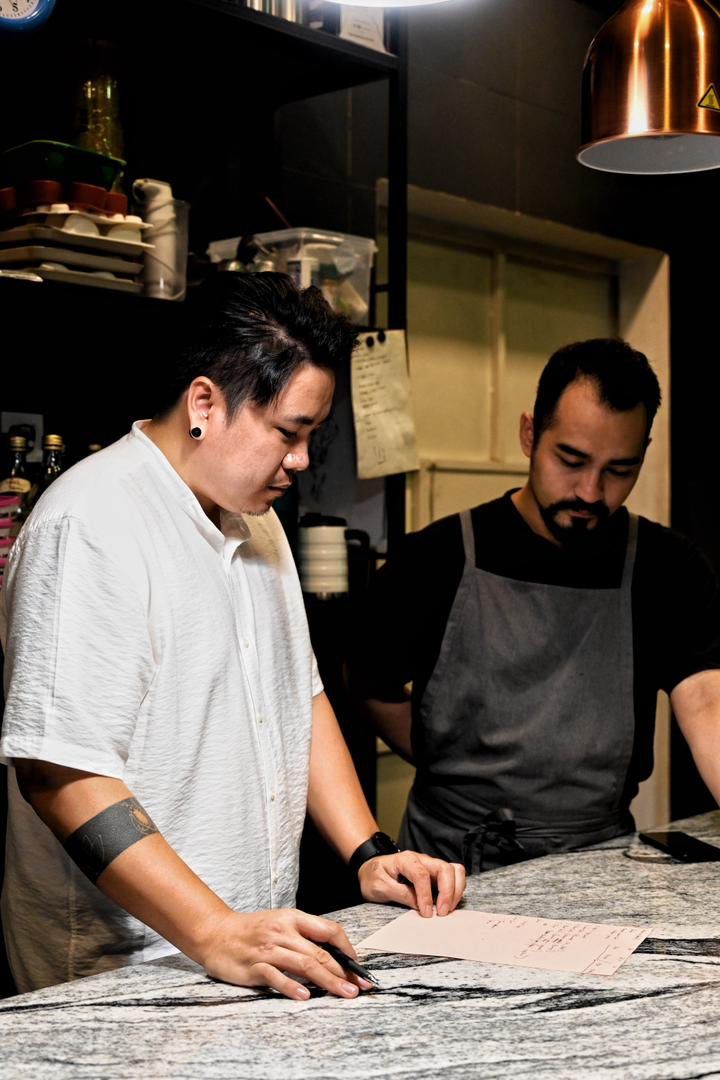
Weldie says he has heard worse stories from colleagues – including claims of chopping boards, and even knives, being thrown in some kitchens.
Aidan Low of Michelin-starred modern Malaysian restaurant Akar Dining says he has been luckier than most because he was only at the receiving end of verbal abuse when he worked at other kitchens, including sometimes being the target of racially motivated verbal statements.
“I did get a lot of hard pushing and harassment that felt a bit personalised to my ethnicity and where I came from. Sometimes it would start out as a joke and turn into something sinister.
“But for me, it was about taking a stand – I didn’t take it quietly. When things got out of line, I called people out. I would say ‘Hey, it’s not nice to make these remarks.’ So then, I found that I gained some respect. But it was never okay to have that as a starting point,” says Low.
Charge for change
Having gone through such turbulent kitchen experiences in the past, many younger Malaysian chefs are now trying to do things differently in their own restaurant kitchens. Part of this involves deep self-reflection and an innate desire not to have the people under their wing feel the same way they did when they started out.
Khor, for example, says having been so depressed as a result of his own early experiences in restaurant kitchens, he has consciously tried to break conventional patterns and establish a kitchen that resembles a safe space for his staff.
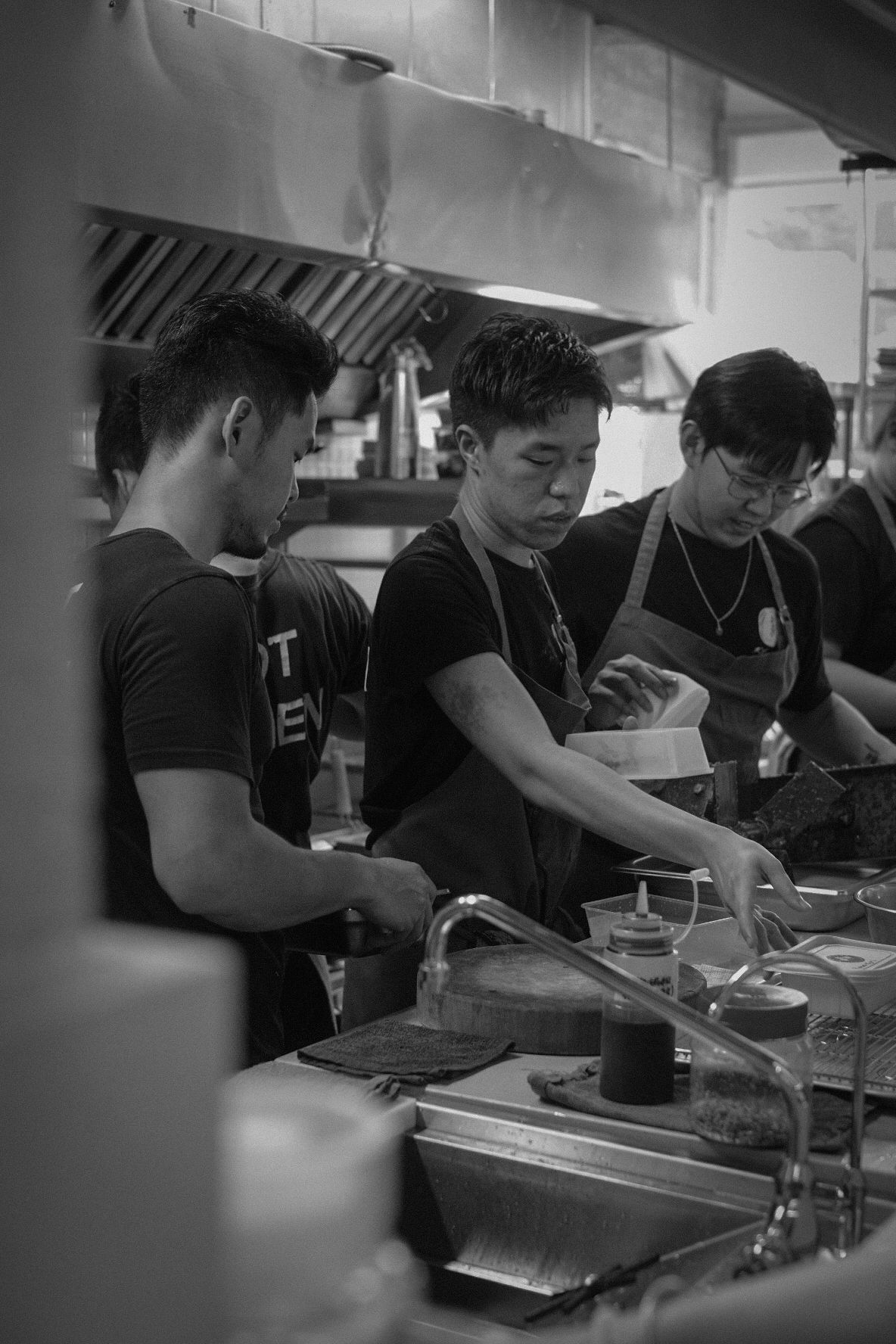
This wasn’t by any means easy and Khor admits that when he first opened Fifty Tales, he played to type and was easily angered.
“For the first three years of running Fifty Tales, it was a difficult process. I was very shouty and hot-tempered. I know for a fact that I didn’t hurt anybody physically, although I hurt myself physically by hitting myself against a wall when I was venting out a lot of frustration.
“Eventually I figured out that I am in a unique position where I was taught by the school of hard knocks, but I am a young person leading a team with young partners.
“So I understand why it was like back then, and I understand why the younger generation wants a better environment.
“So in my head I was like, ‘How do I teach the values I was taught but not in the actual way I was taught?’ So I went to therapy two years ago and learnt how to talk about issues and problems in a very professional way and be vulnerable with the team so that they could be vulnerable with me,” says Khor.
Weldie, meanwhile, says that after his own traumatic career experiences, he hit a turning point where he simply didn’t want to replicate that experience for any young person in his kitchen.
As a result, he says he is very laidback in the kitchen and doesn’t allow his team to use profanity.
“Honestly, we are trying to build a better environment. It’s very stressful in the kitchen, but I don’t use vulgar language. It’s nasty, it doesn’t feel good and it doesn’t make you better than anyone. So I’ve told the team ‘No bad language in the kitchen!’ but some of them don’t remember when they’re angry,” he says, laughing.
Low, meanwhile, admits the stress got to him when he first opened Akar. These days, though, he tries to get his team to understand that his ultimate goal is to chase perfection and that should also be the goal of everyone on his team. To this end, he keeps the chain of communication open and doesn’t allow bad blood to build and fester.
“Akar was my first venture, so at the beginning, the stress was there and I sometimes said things that I regretted a little bit. It was just venting in a bad manner, so I have come through that and worked on myself and worked on my team as a whole in terms of getting everybody to understand the same vision.
“Now I look at how the bigger picture comes into play and how my leadership can reflect on my team. It’s very important, because the training and experience that I give them now can impact the kind of chef they are in 10 years’ time,” he says.
YC, meanwhile, is nearly entirely self-taught with the exception of a short stint at three-Michelin-starred restaurant Frantzen in Stockholm, Sweden, which practises a zero-tolerance policy in terms of bullying and harassment, lending itself to a more amiable work environment.
As a result, when he opened Terra Dining after finishing up at Frantzen, YC very naturally segued into a chilled-out mentor role.
“My whole idea of running a kitchen is I don’t want everyone to be working at 100% all the time – that’s not sustainable. You don’t need to be stressed out every single day.
“People can spend time with their families or loved ones – it’s a good thing for them to do. If we’re cooking at this level, there needs to be this almost Zen kind of feeling, and that means having lives outside the kitchen,” he says.
Time for a shake-up?
Although Khor, Weldie, Low and YC have actively put measures in place to change their operational culture and run more humane, happier kitchens, these sorts of kitchens might actually gradually be the norm in the future.
Because what happened at Noma has caused a seismic shift in the restaurant industry globally. Chefs all over the world – especially the ones that have been applying old-school French brigade practices (introduced by Auguste Escoffier in the 19th century to increase efficiency in restaurant kitchens) – have been forced to effect change pretty much immediately.
After all, if one of the top chefs in the whole world can be pushed off a pedestal based on deeply entrenched kitchen behaviour, it won’t take much to dismantle other culinary figures in positions of authority.
Which is why one way or another, this will cause a trickle-down effect among chefs in the industry, many of whom won’t want to have their reputations ruined by revelations such as this. Change might be forced out of fear or out of a genuine need to break vicious cycles – but one way or another, change is afoot.
“This culture didn’t come from one person; it is a collective consciousness about the industry – everybody keeps saying the industry is tough and abusive, so that consciousness becomes a reality. People talking about it and repeating this inflates this idea and makes it the norm in restaurant kitchens.
“So now I feel that there definitely is going to be more and more restaurants looking at this case study of Noma and I hope that more restaurants become self-aware.
“But I also don’t want restaurants to change the way they run their kitchens simply to avoid the issue. There is a difference between teaching somebody to avoid the mistake out of fear and teaching people that the bigger mission is to make people love the job, not to avoid lawsuits or allegations,” says Khor.
Khor and many other young chefs also believe that Generation Z (those born between 1996 and 2012) is the generation that is likely to break this cycle, simply because unlike all the generations that came before them, they are unwilling to put up with abuse.
“Gen Z won’t put up with the same things – they have a lot more options than chefs 30 years ago. Now they are on Instagram and YouTube looking at what top restaurants are doing, so they are seeing a lot before they even step into restaurants.
“So the fact that Gen Z are this way is forcing a lot of restaurants to rethink their business model. But I think that’s evolution – you either adapt or die,” says YC.