It’s a weekday morning, and many people would be surprised to know where Zafira Ismail is.
“By right I’m supposed to be at work,” the 42-year-old says with a laugh, her eyes fixed on the almost-finished piece of clothing in her hands.
However, due to her flexible working hours, she gets to spend time in the morning attending a sewing class before starting work in the afternoon.
Around her on the big cutting table, pieces of fabric, loose threads and boxes of pins lay scattered.
Just weeks ago, Zafira completed her first baju kurung. Now she’s working on her second pair – a baju kebaya she plans to wear on Hari Raya Aidilfitri.
“Initially, I was into crocheting, which was something self-taught. When I was attempting to crochet a laptop sleeve, I realised I needed a lining for that. That was what got me more interested in sewing,” she explains.
She spent months eyeing classes at SSFS Studio – a sewing studio offering beginner-friendly lessons. Earlier this year, she finally took the leap and enrolled herself in one.
The studio reflects a diverse cross-section of individuals drawn to the craft. Some are youths starting new hobbies while others are adult professionals honing their sewing skills.
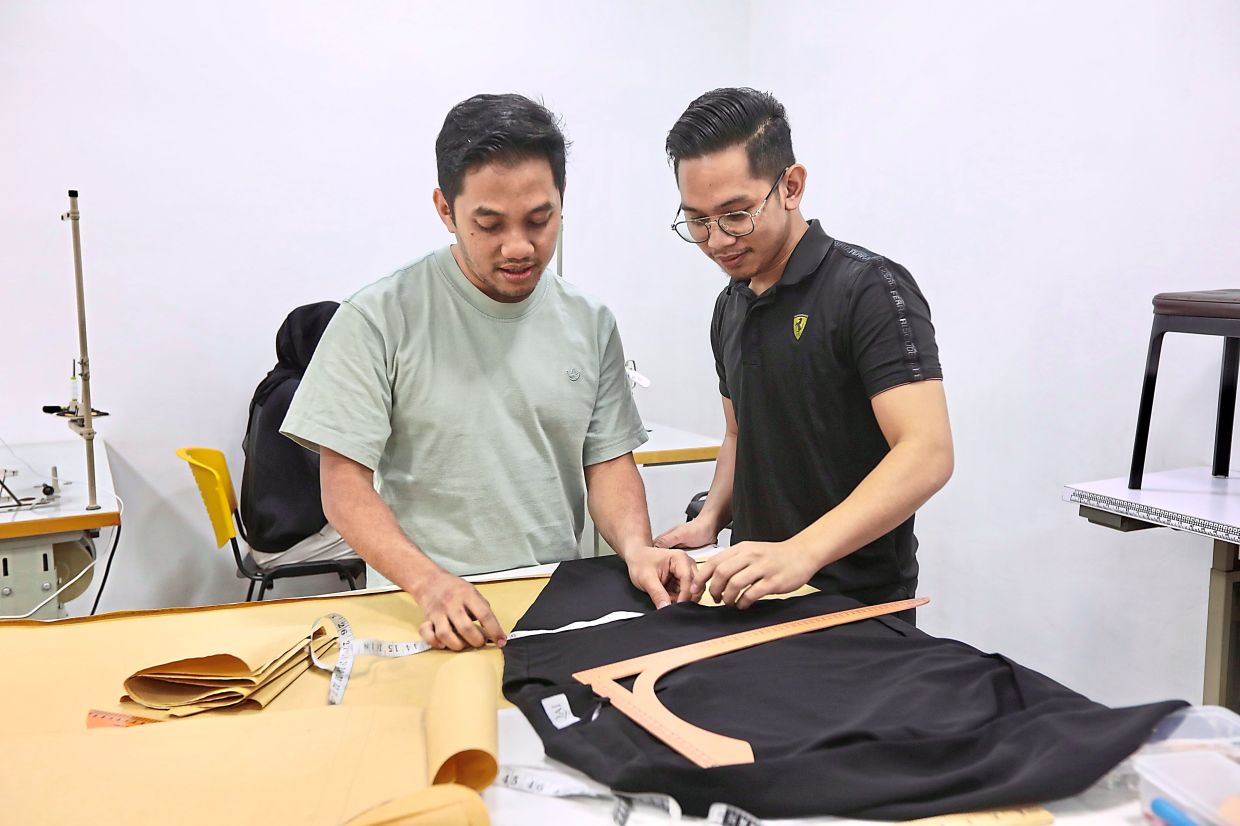
At the next table, two male students pore over clothing patterns – essentially paper templates used as blueprints to cut fabric accurately for garments – for a baju Melayu.
“I wanted to learn how to sew since I have my own garment business, so it’s good to equip myself with the technical knowledge,” says Zikri Zulkifli, 34.
“I started from zero. I had no idea what went into producing a piece of clothing,” he says.
What once looked straightforward from the outside turned out to be far more intricate.
“When I started classes, that’s when I knew how big sewing is – there’s so much to learn as there is more than one way to complete a garment.”
Across the table, his friend Hanif Asyraf, 26, admits he originally had no interest at all in sewing.
“I joined solely because I was influenced by Zikri. But once I started learning, it turned out to be fun. We even invested in a sewing machine so both of us can sew at home,” Hanif says.
Now, fashion and sewing have slowly taken over much of their daily lives, even becoming the main topic of their conversations outside of classes.
They also find themselves drawn to sewing for another unexpected reason.
“When we’re focused on doing this, all of our problems seem to fade away for a while,” says Zikri, Hanif nodding beside him. “It’s a form of escapism for us.”
Rising costs
For Zafira, the decision to sew her own Hari Raya outfit this year began with a frustration that many Malaysians understand all too well.
“I would usually get my Raya attire tailored or buy a ready-made one. But the prices are getting more and more expensive now!
“Let’s say I buy one in retail for about RM500, but I can sew my own for about RM100. The best part is, my outfit will definitely not be the same as anyone else’s,” she explains.
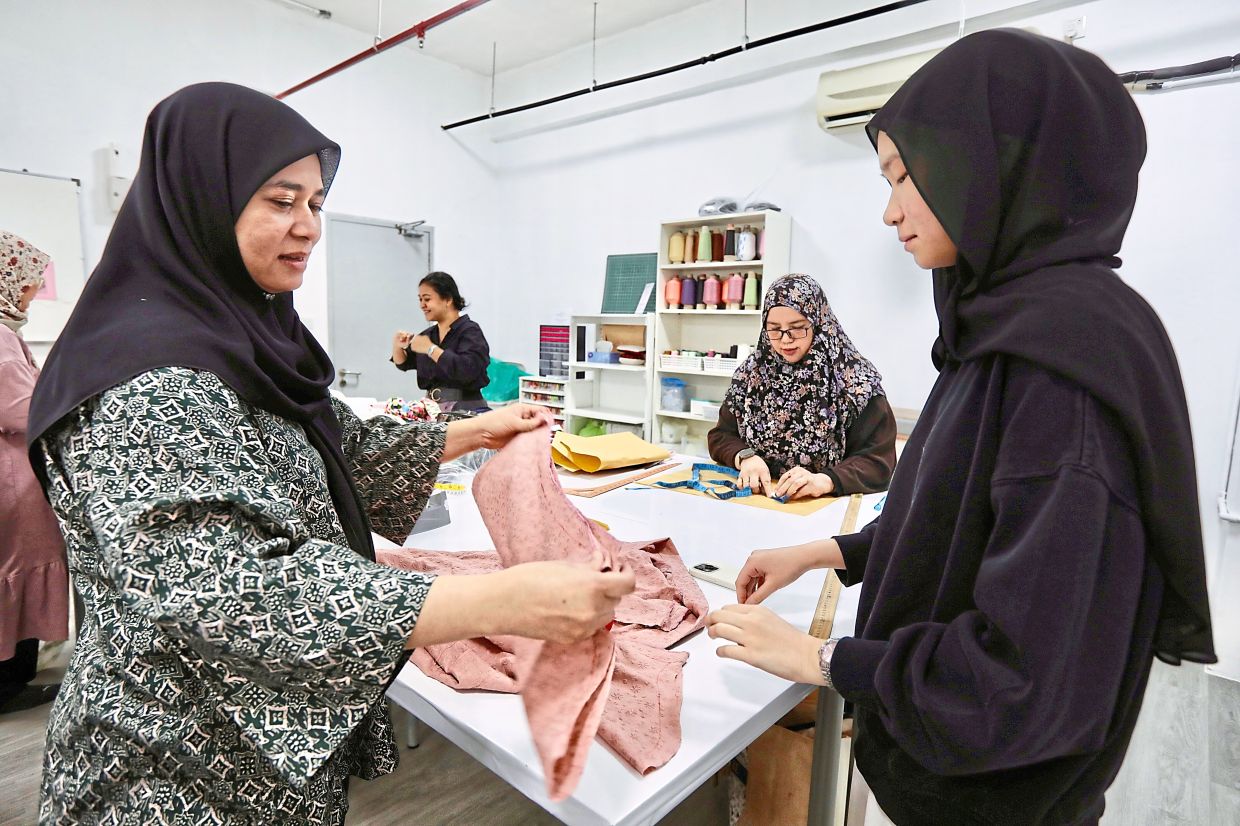
Sewing schools are also seeing similar motivations among their students, particularly those who come in to learn just in time for the festive season.
At SSFS Studio, teacher Wan Nur Hayati Wan Ali, 47, says many people are beginning to look at sewing as a long-term investment.
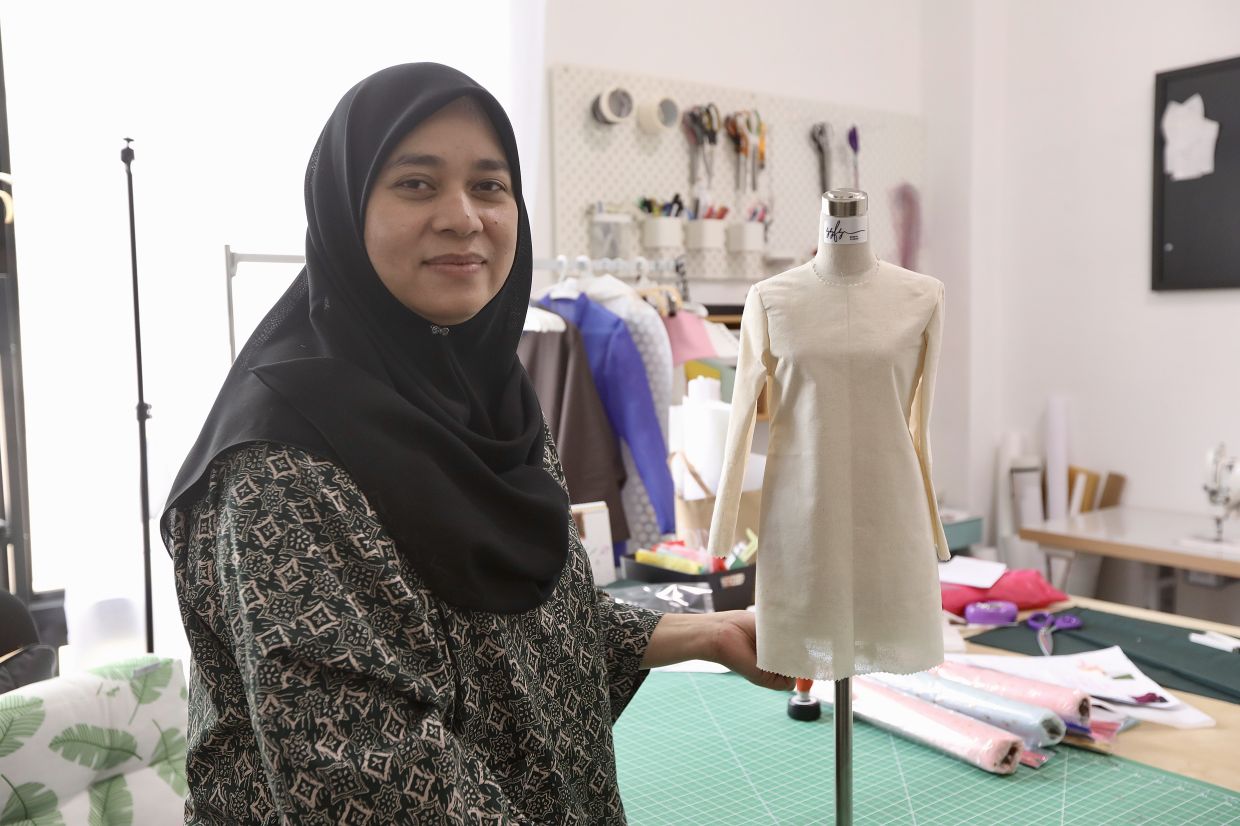
“You may not be able to see the advantage cost-wise in the short term, but once you learn how to sew, you can use this skill your whole life. You can continue to sew your own baju kurung or baju Melayu for the coming years and save money,” she explains.
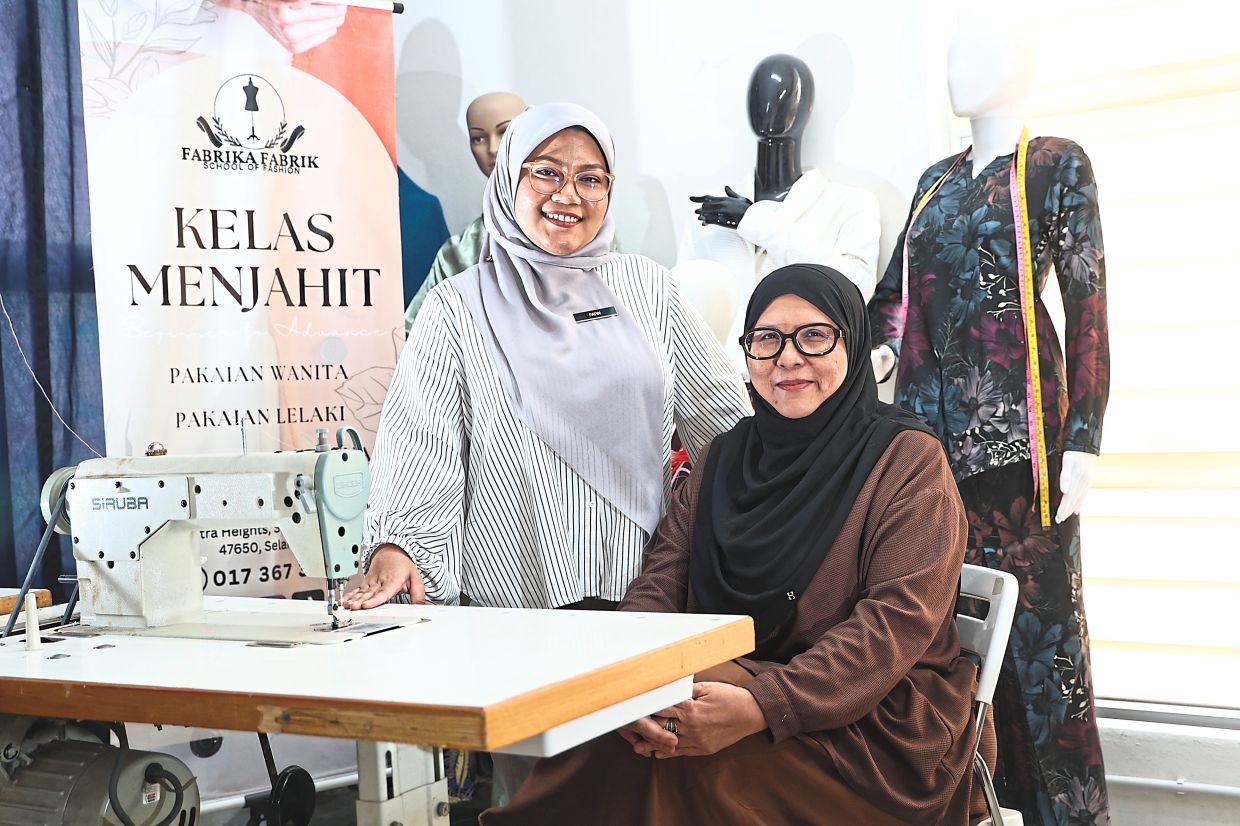
Over at Fabrika Fabrik – another sewing studio offering various classes for different garment styles and skill levels – teacher NurFatin Abdul Mutalib, 31, says the months leading up to the festive season often bring a spike in students hoping to create their own outfits.
“A lot of students (who come) right before the festive season are more interested in creating their own baju kurung or baju Melayu,” she says.
“Ready-made ones in the market are getting pricier, and there’s also the added cost of getting them altered to fit properly.”
For big families buying multiple outfits every year, the expenses can quickly add up – making the idea of sewing increasingly appealing.
“If they sew for the whole family, that can already lower the cost. And once they already know the skill, they can continue using it every year,” she explains.
Starting from zero
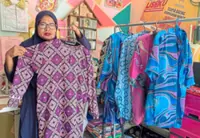
In SSFS Studio, Zafira lifts the first baju kurung she completed and compares the stitchwork along the neckline with the second pair she’s working on.
“When I did my first pair, I was a bit sceptical about my skills. You can tell from these mistakes that I wasn’t confident since it’s my first time.
“I started my second pair about a week and a half ago and I’m almost done. I also feel more confident and my stitching looks better now.”
The transformation from a hesitant beginner to a self-assured amateur is something Wan Nur Hayati sees regularly in her classrooms.
“Most of them who join already have an interest in this craft, they just don’t have the skills to do it,” she notes. “Most of them start from scratch and they have never even touched a sewing machine before.”
Among them is 22-year-old Alya Ifuan, who took part in the class while waiting to begin her master’s studies.
What started as a way to fill her time quickly turned into a steady stream of projects.
“So far, I’ve sewn a blouse, shirt, traditional and modern baju kurungs, trousers and a corset,” she lists.
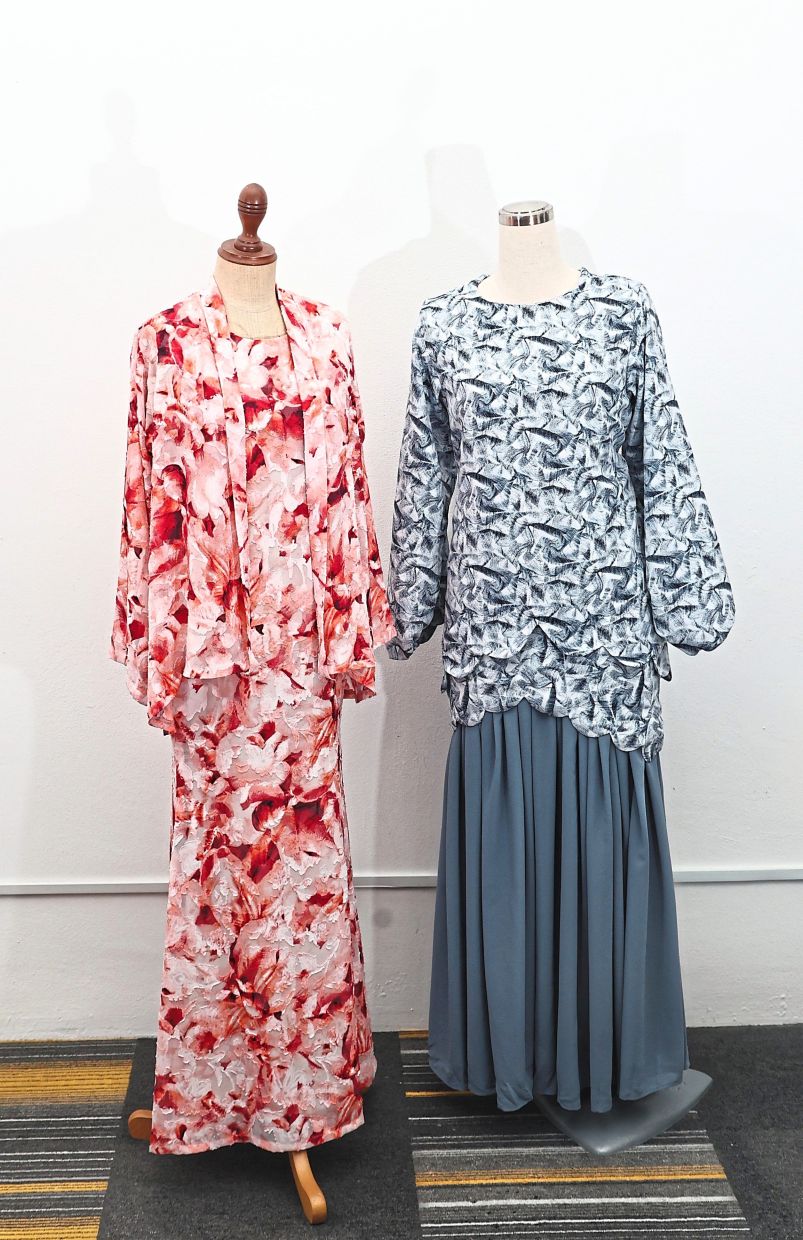
Similar to Zafira, she is now working on a baju kebaya for the upcoming festive celebrations.
Usually, she says, she can finish one piece within four sessions of classes. The process may take time, but the end result is rewarding.
“On top of getting to save at least a few hundred ringgit, sewing it yourself is more meaningful because it’s your creation – you know the effort that went into making it.”
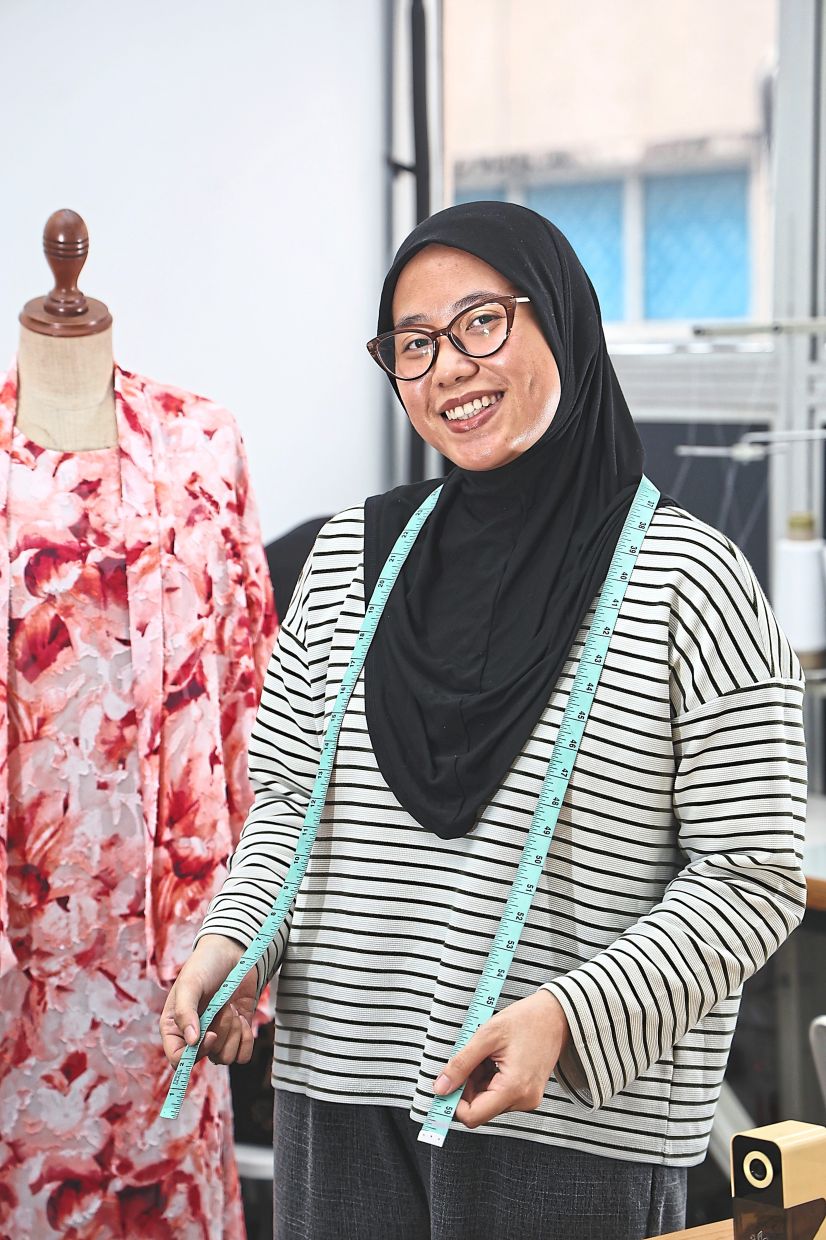
The satisfaction of making outfits from scratch outweighing the convenience of buying one also resonates with Shahira Marjuni, a student at Fabrika Fabrik.
“I would always buy ready-made baju kurung in previous years. But when you sew your own, it is tailored to fit so you feel happier.”
The 27-year-old travels all the way from Johor to attend classes. For her, sewing also represents a long-term skill.
“It’s a good investment because every skill you learn will benefit you in the long run. You can also embrace your creativity through this as you can create your own designs and bring your artistry into it.”
A new celebration
Founder of Fabrika Fabrik Wan Nor Zalinda Wan Yaacob sees the studio as part of a larger effort to strengthen the local industry by ensuring everyone gets a chance to learn sewing.
“For me, the main motivation behind having this studio is to lead the change and get everyone, especially young people, to embrace this skill again,” says the 57-year-old.
More than just an act of skill sharing, teaching sewing is also about preservation and shifting mindsets.
“It’s time for us to change our mentality and stop viewing practical skills like sewing as something associated with the lower- income group.”
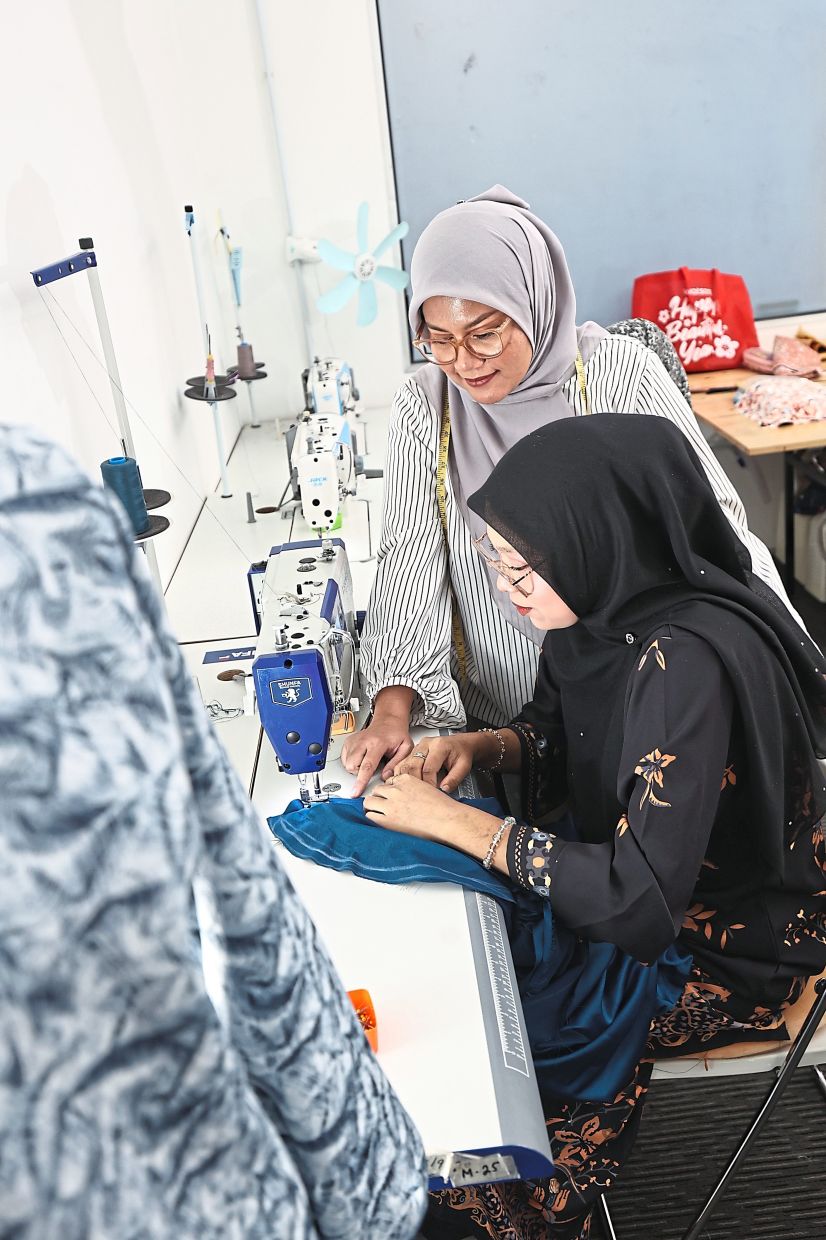
On the bright side, she has observed a steady growth in those interested to learn the craft since the studio opened its doors in 2022.
“We’ve definitely seen a boom in this industry; the awareness is returning. We want to make sure this skill is not buried when the next generation comes along.
“It is our responsibility to teach these people because I believe that if one knows how to sew, they can go anywhere in life.”
Teaching sewing, Wan Nor Zalinda believes, also lays out a new pathway for students.
“Once they know how to sew, that’s when their entrepreneurial interest begins to blossom. They realise they can use the skill to empower themselves economically.”
NurFatin adds that accessibility also plays a crucial role in breathing life back into this craft.
“A lot of young people might not know classes like these exist. Most of them think they have to join a fashion school or even face limitations if they join independent classes. This will make them think twice about pursuing it,” she explains.
Shahira agrees with this concern, stating that when she told her friends she’s joining this class, they were surprised that such short sewing courses existed.
“I believe most people have an interest to learn, but they haven’t found a suitable course for them as they would want something flexible,” she notes.
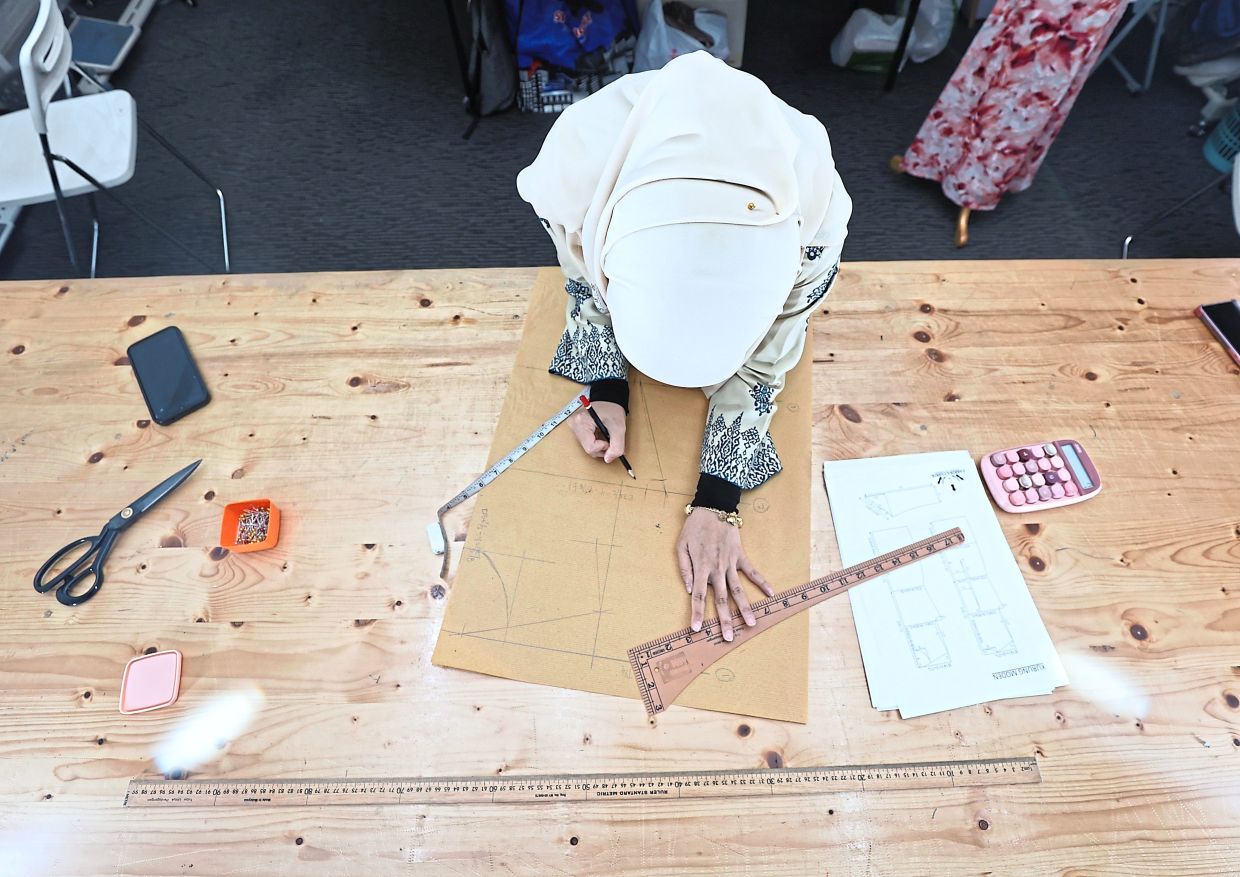
Back in SSFS Studio, students huddle around the tables and sewing machines as they progress through their garments.
Wan Nur Hayati winds between them like a beacon of light, each student grabbing the opportunity to ask her questions as she passes by, and she responds and guides them gently.
When Zafira is asked whether she will continue to sew her own attire next year, she pauses before breaking into a smile and saying: “Why wait till next year?”
She’s already looking forward to her next project, similar to Shahira who would like to learn beadwork next and sew a trendy piece of clothing blending two cultures – a Malay-style cheongsam.
This Hari Raya Aidilfitri, when they all step out in their festive outfits, they will not just be another piece bought off the rack.
Instead, each carries hours of patience and persistence in every line of the threading.
For now, in these classrooms, a new kind of celebration is being pieced together, one stitch at a time.
Pushing back against consumerism
Not everyone who ends up sewing their own festive attire learns to do so in a classroom.
For 30-year-old Heidi Abbyana Idris, the journey started with a simple challenge she made to herself.
“I started learning how to sew in January last year as part of my New Year’s resolution to learn a new skill,” she says.
Unlike many beginners, Heidi Abbyana never enrolled herself in formal sewing lessons.
Instead, she relied on the Internet.
“I am completely self-taught and as a complete beginner, it’s difficult to even know where to start. But it seemed so fun to be able to make your own clothes, so I started by watching online video tutorials at home.”
Within months, she began experimenting with different patterns and designs, eventually stepping into festive wear.
“I decided to start making my own Hari Raya outfit as a pushback against consumerism,” she states.
“It’s so normalised in our society to buy more than one set every year, and the prices keep increasing. We don’t wear them often enough throughout the year to justify the price.”
Because of this, she creates the outfits with versatility in mind.
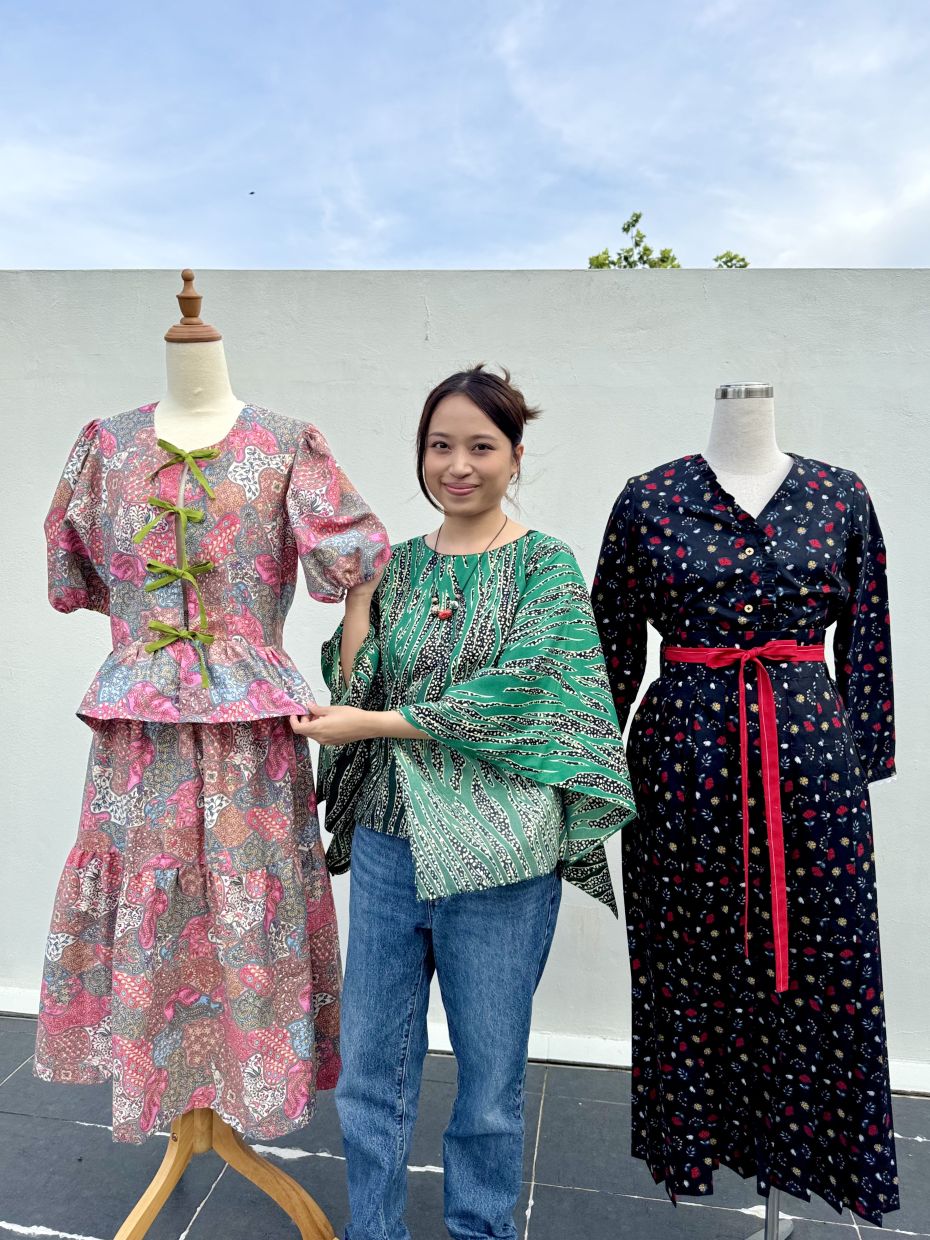
“I usually design them with a mix-and-match approach.
“Throughout the year, the top can be worn with jeans or trousers, while the skirt can be paired with other tops,” she explains.
She admits that being a beginner comes with challenges, but she finds joy in the process of figuring it all out.
“You do get that sense of satisfaction when you look at the finished results. You also have to appreciate the steps you took to get there and not rush through the process or else you would get burnt out, especially when you make mistakes.”
While learning to sew is about acquiring a technical skill, it also teaches one to be patient and present.
“You also learn to be resilient because mistakes will happen and it does get frustrating when you have to unpick seams or start over,” she shares.
“I do believe these traits are translated into daily life, where you learn to be more patient and appreciate each item you buy and own.”
For those looking to start learning how to sew on their own, Heidi Abbyana lists down a few must-haves: “All you truly need is a reliable sewing machine, good fabric scissors, some thread, pen and paper, some fabric and a willingness to learn.
“There is a certain sense of accomplishment when you get complimented on your outfit and being able to say ‘Thank you, I made it myself!’”