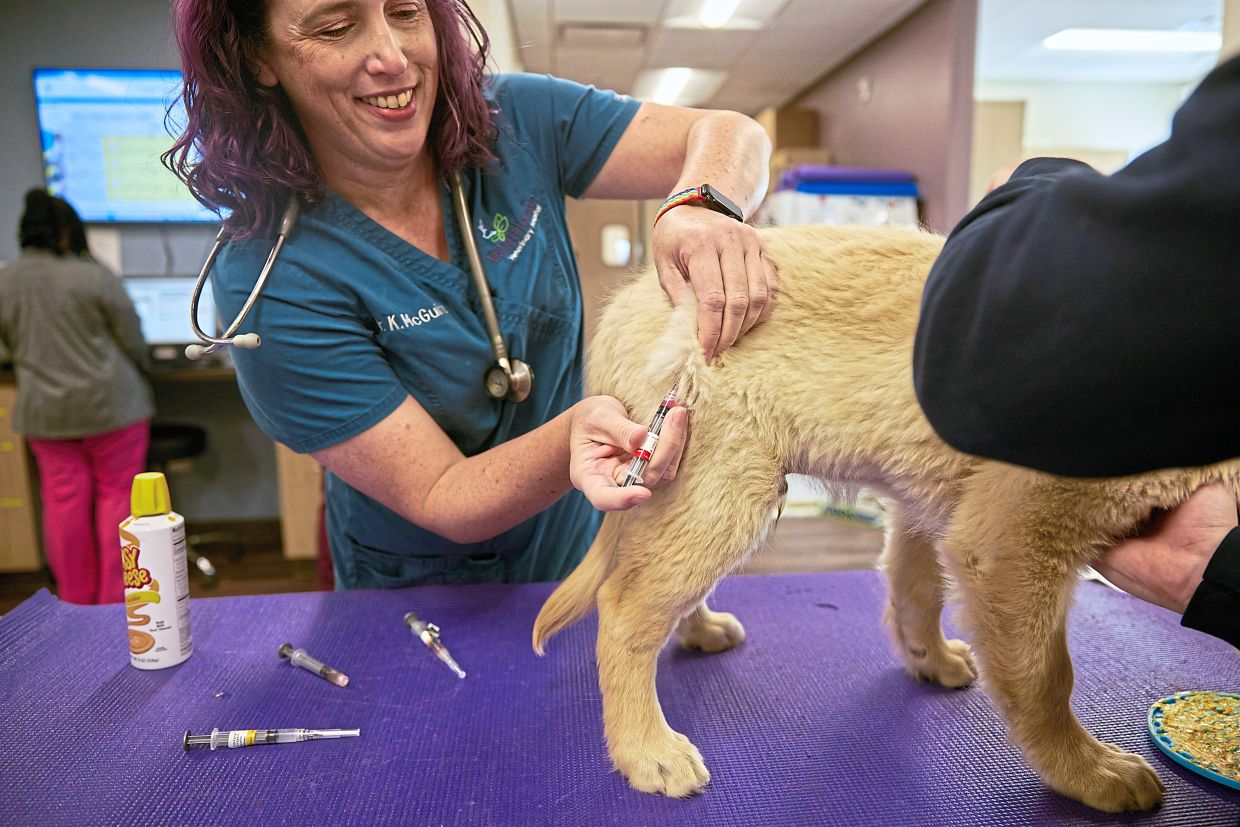
In the four years since she opened her own veterinary practice, Dr Kelly McGuire has seen her fair share of heartbreaking cases.
There was the dog whose kidneys shut down after it contracted leptospirosis, a bacterial disease often carried by rodents.
Several of her canine patients had come down with such severe cases of parvovirus that they died after “sloughing their guts to the point of dehydration and malnutrition,” said McGuire, who owns Wildflower Veterinary Hospital in Brighton, Colorado. And, after she was unable to rule out rabies, she had been forced to euthanise a 20-week-old puppy that was having seizures.
The deaths were wrenching, especially because they were preventable: Those pets would likely have survived had they received all their recommended vaccines.
For most of her career, vaccination was a routine, unremarkable part of McGuire’s work as a small animal veterinarian.
But after the Covid-19 pandemic hit, she found herself having long, sometimes adversarial discussions with pet owners about the safety and necessity of vaccines.
Clients accused her of pushing the vaccines to line her own pockets. And, increasingly, pet owners insisted on spacing out shots or refused vaccines altogether, including for deadly and incurable viruses like rabies.
“I actually had someone scream and yell at us and storm out because we required rabies vaccines for her cats,” McGuire said, adding that the owner had accused her of trying to “kill her cats with vaccines.”

Over the last several years, the anti-vaccine movement has gained ground in the United States, fuelled, in part, by the politicisation of Covid-19 vaccines and the increasing power of vaccine critics including Health Secretary Robert F. Kennedy Jr.
Childhood vaccination rates have fallen. Once vanquished diseases, like measles, have come storming back. And vaccine mandates are under fire: In September, Florida announced plans to end all vaccine mandates, including for schoolchildren.
But antipathy toward vaccines is also spilling over into veterinary medicine, making some people hesitant to vaccinate their pets.
“I talk to thousands of veterinarians every year across the country, and the majority are seeing this kind of issue,” said Dr Richard Ford, an emeritus professor at the North Carolina State University College of Veterinary Medicine who helped write the national vaccine guidelines for cats and dogs.
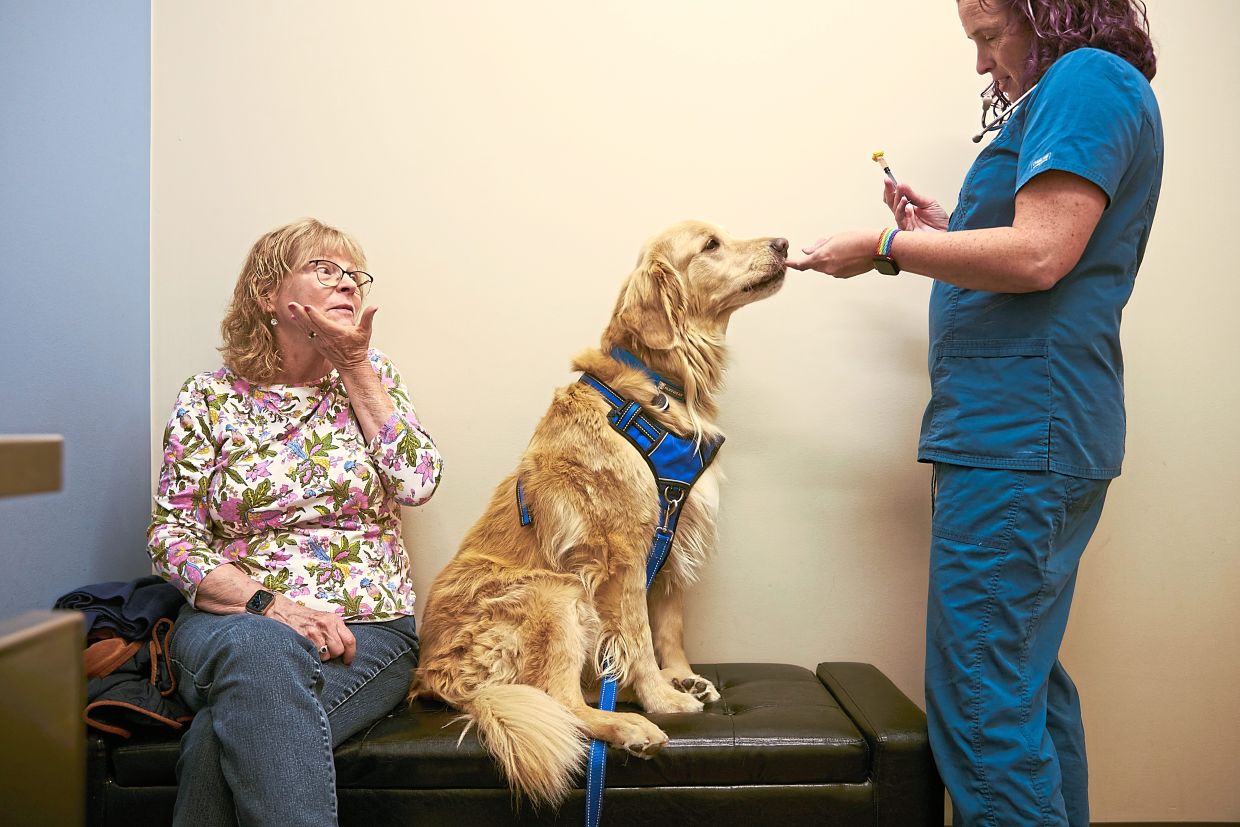
Rising reluctance
The phenomenon has clear parallels to the anti-vaccine movement in human medicine and could, experts fear, lead the nation down a familiar path, resulting in a loosening of animal vaccination laws, a decline in pet vaccination rates and a resurgence of infectious diseases that pose a risk to both pets and people.
There is little solid data on vaccination rates in American pets, but several recent studies suggest that a significant share of owners has concerns about vaccination.
In a 2023 survey, 52% of pet owners expressed some uncertainty about the safety, efficacy or importance of pet vaccination. Another survey, published the following year, estimated that 22% of dog owners and 26% of cat owners could be classified as vaccine hesitant.
Veterinary vaccine hesitancy, like its human counterpart, existed before the Covid-19 pandemic and has been driven by a variety of factors, including an increasing distrust of institutions and authority and the rise of social media.
But the pandemic supercharged anti-vaccine sentiment, experts agreed, further eroding trust in science and making vaccination a more political and salient issue.
“The way that people feel about the Covid-19 vaccine has changed the way they feel about all vaccines, including vaccines for their pets,” said Matt Motta, a health policy expert at Boston University who has studied public attitudes toward both human and animal vaccines.
Researchers have documented clear associations between the two; one study, in Brazil, reported that pet owners who had not been fully vaccinated against Covid-19 themselves were more likely to have unvaccinated pets.
Pet parallels
Indeed, vaccine-hesitant pet owners express some of the same concerns that have become hallmarks of the human anti-vax movement.
Some worry that pets receive too many vaccinations, believe that it’s better for pets to get immunity from the disease itself than from a vaccine, and express concern that vaccines could lead to cognitive and behavioral changes in their pets, including conditions like autism.
“It is out there – the concept of ‘pawtism,’” said Dr. Brennen McKenzie, a California-based veterinarian who runs SkeptVet, a blog about evidence-based veterinary medicine.
The concept has no scientific basis: The idea that vaccines cause autism in people has been repeatedly debunked, and autism is a diagnosis that does not exist in other species.
Concerns about vaccine safety and frequency are not entirely unfounded. Early formulations of the leptospirosis vaccine were associated with a higher risk of serious allergic reactions than other vaccines were, especially in small dogs. And in cats, shots can lead to injection-site sarcomas, a rare form of cancer.
But such serious side effects were never common, and the risks have fallen further in recent years, as vaccines were reformulated and vaccination protocols refined, experts said.
Vaccination guidelines, which once called for annual boosters of many vaccines, have also evolved as it became clear that some shots provided longer-lasting immunity. Today, many boosters are given every three years.
“There’s been a lot of change in vaccine practices in the last 20 years, which I think demonstrates that we’re always trying to come up with better, safer, more effective practices,” McKenzie said.
Overall, experts said, vaccine-hesitant owners tend to overestimate the risks of the vaccines and underestimate the risks of infectious disease.
Part of the challenge for veterinarians mirrors a problem faced by pediatricians: Vaccination has been so effective that many pet owners don’t think of diseases like rabies and parvovirus as serious threats.
Disease risks
Declining pet vaccination rates would not be a threat to animal health alone; several vaccine-preventable illnesses, including leptospirosis and rabies, can spread from pets to people. “Dogs are sharing our beds with us now,” said Dr Steve Weinrauch, chief veterinary officer at Trupanion, a pet insurance company. “They’re kissing our children’s faces.”
Indeed, before health agencies launched mass-vaccination campaigns for pets in the mid-20th century, bites from rabid dogs caused most human rabies cases in the US.
Most states require dogs to get rabies vaccines, but not all states do, and some mandates are stricter than others. With vaccine antipathy on the rise, Motta worries that officials may see a political advantage in rolling back these requirements.
“As we’ve seen very much over the past couple of months, health policy is dynamic,” Motta said. “It is subject to political motivations and orientations. It is a reflection of public opinion.” –© 2025 the New York Times Company