How Buenos Aires intends to achieve carbon neutrality by 2050


By Agency
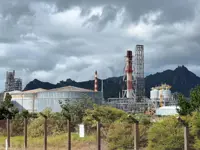
Part of Bueno Aires' plan to becoming carbon neutral by 2050 is by planting 100,000 additional trees and ensuring that no inhabitant lives more than 400m from a green space by 2025. Photo: AFP

The city of Buenos Aires recently presented its climate action plan, with the objective of becoming CO2 neutral by 2050. Numerous measures concerning the renovation of housing, the development of pedestrian zones and the implementation of additional bicycle paths are set to be part of the city's future.

Currently, in Buenos Aires, 55% of greenhouse gas emissions come from energy production (in residential, public and industrial buildings), 30% from transportation (mainly cars) and 15% from waste treatment. In order to reduce emissions therefore, a plan must encompass steps in each of these areas to reduce these emissions. This is the goal of this long-term, 30-year plan.

The municipality of the Argentinean capital is committed to becoming nearly climate neutral by reducing its greenhouse gas emissions by 53% by 2030 and by 84% by 2050. To achieve this, the plan lists no fewer than 24 areas of action.

This includes planting 100,000 additional trees and ensuring that no inhabitant lives more than 400m from a green space by 2025. Meanwhile efforts will be taken to ensure that there are no more flood-prone areas and that no one will be affected by evacuations due to extreme weather conditions by 2050.

Also on the agenda is the creation of 15 new pedestrian zones across the city, to be in place by 2030, so that there will be at least one pedestrian street and one vegetable garden in each of the city's 48 neighbourhoods.

Authorities are also counting on more bike lanes and one million daily bike trips being made by 2023. In the area of public transport, 100% of buses will run without any CO2 emissions by 2050. In the meantime, two very low emission zones, where only non-polluting vehicles can circulate, will be created by 2030.

But the biggest project will be the renovation and upgrading of 80% of residential buildings over the next 30 years. In the same vein, 40% of new buildings constructed in the city will have to use solar thermal energy. Finally, 80% of green waste will be composted by 2030 and by 2050,100% of paper and cardboard will have to be recycled. – AFP Relaxnews

Get 20% OFF The Star Digital Access

Monthly Plan

RM 13.90/month

RM 11.12/month

Billed as RM 11.12 for the 1st month, RM 13.90 thereafter.

Best Value

Annual Plan

RM 12.33/month

RM 9.87/month

Billed as RM 118.40 for the 1st year, RM 148 thereafter.

Follow us on our official WhatsApp channel for breaking news alerts and key updates!

Next In Living

Sunny Side Up: None of us can be blank slates
De-extinction company hatches live chicks from an artificial eggshell
Food vendors across Asia struggle over rising costs of plastic
Solar-powered charging station in central Cuba brings life to a darkened island
'Wiped out': Ukraine's bird lovers long for peaceful skies
Are rapeseed oils safe? Scientists and nutritionists say they are
Large-scale restoration effort of California's giant sequoias launched
Contradictheory: When science goes to the cats and dogs
Sucker fish are hiding in manta rays' rear ends, new study reveals
Those World Cup tourists loving American food? They’re not all what they seem

Others Also Read