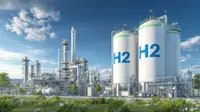
Why green hydrogen is making waves and raking in huge investments


By AGENCY
France has shown growing enthusiasm for this sustainable energy. — AFP

The planet is now on a war footing to roll out green hydrogen, which has become a key objective in the drive to achieve sustainable mobility. With massive investment pledged by virtually all of the world’s leading economies, a lot is at stake for this new form of energy, which has yet to overcome significant challenges.

Why is everyone talking about this new fuel source?

The goal of green hydrogen enjoys almost universal support, and the figures being cited are nothing short of astronomical. In his recovery plan, Joe Biden has earmarked around US$500bil (RM2tril) to fund research and innovation in a clean energy economy. Europe is also launching projects that are expected to attract a total of US$480bil (RM1.9tril) in investment by 2050.

In the United Arab Emirates, the designers of the future city of Masdar have planned to make extensive use of hydrogen. In China, a country that is well ahead in the adoption of the new energy source, notably thanks to its status as the world’s leading manufacturer of electrolysis apparatus, hydrogen is set to play a key role in plans to develop a carbon neutral economy. And that’s even before mentioning huge numbers of private investors, who are keen to take up a position in this fast growing market.

How does it work?

The goal of green hydrogen is to facilitate the storage of renewable energy and its use in carbon-neutral transport and industry. In strict terms, hydrogen is not an energy source but an energy vector, which has to be produced and processed before being utilised.

Hydrogen can be created with wind, solar and hydraulic power, which allows it to aspire to the status of a clean fuel. And hydrogen is already produced in large quantities, only this hydrogen cannot be used for environmental goals, because its production, which depends on fossil fuels, is highly polluting.

Thus the challenge is to clean up hydrogen production. To this end, large-scale electrolysis equipment has to be deployed in tandem with renewable energy infrastructure to make hydrogen production sustainable.

Easy to store and to distribute, hydrogen can be made available from service stations like diesel or gasoline, and hydrogen-powered vehicles benefit from a greater range than those solely reliant on battery power.

What are the current objectives?

Hydrogen is expected to play a key role in the transition to clean mobility. New hydrogen-powered trains are already being tested in France’s Grand Est region, and American aerospace manufacturers are planning to build hydrogen-powered aircraft. Thereafter, hydrogen could be adopted by industry to achieve the carbon neutrality that will finally pave the way for a reduction in global warming.

Challenge of green hydrogen

Grey hydrogen, which currently accounts for 96% of global hydrogen production, is made from methane, which is a greenhouse gas. Every year, some 75 million tonnes of this inexpensive but highly polluting hydrogen are consumed around the globe.

In contrast, the main objective of green hydrogen is to contribute to a better environment. As it stands, it is an ambition that does not come cheap, with prices ranging from €5-6 euro a kilo, which is around four times more expensive than grey hydrogen. The Hydrogen Council now hopes to rapidly cut this cost by around 50%, which will require the construction of large numbers of electrolysis plants while continuing to innovate and reduce the cost of renewable energy.

What about natural hydrogen?

Wells of natural hydrogen, also known also known as white hydrogen, have been discovered in Mali and in other countries around the world (notably France).

Rarely cited in investment plans, this form of hydrogen may have the potential to overtake all of the others. Subterranean extraction of hydrogen is possible but little is known about what to expect from such an initiative.

As it stands, we can still only speculate about the quantity of hydrogen that is naturally produced by the Earth and the size and scale of the planet’s natural reserves. Further investigation is sorely needed.

Ongoing development in France

France is a big believer in the future of hydrogen. The country’s Economy and Finance Minister, Bruno Le Maire, recently travelled to Belfort to show his support for plans to build a hydrogen plant there. The town in northeastern France could soon become a pilot territory for the development of hydrogen, thanks to the local presence of McPhy Energy, a company that builds electrolysis plants and hydrogen service stations.

Another French company, Genvia, has unveiled plans for a new-generation high-performance solid oxide electrolyser technology, which could drastically reduce the cost of green hydrogen. The company hopes to reduce the current green-hydrogen price to as little as €2 euro a kilo.

Green hydrogen has the potential to add significant momentum to the transition to a clean-energy economy, but many challenges with regard to its cost and developments remain yet to be resolved. – AFP Relaxnews

Get 20% OFF The Star Digital Access

Monthly Plan

RM 13.90/month

RM 11.12/month

Billed as RM 11.12 for the 1st month, RM 13.90 thereafter.

Best Value

Annual Plan

RM 12.33/month

RM 9.87/month

Billed as RM 118.40 for the 1st year, RM 148 thereafter.

Follow us on our official WhatsApp channel for breaking news alerts and key updates!
Green hydrogen , renewable energy

Next In Living

Security education should start early, especially for girls, say experts
Sunny Side Up: None of us can be blank slates
De-extinction company hatches live chicks from an artificial eggshell
Food vendors across Asia struggle over rising costs of plastic
Solar-powered charging station in central Cuba brings life to a darkened island
'Wiped out': Ukraine's bird lovers long for peaceful skies
Are rapeseed oils safe? Scientists and nutritionists say they are
Large-scale restoration effort of California's giant sequoias launched
Contradictheory: When science goes to the cats and dogs
Sucker fish are hiding in manta rays' rear ends, new study reveals

Others Also Read