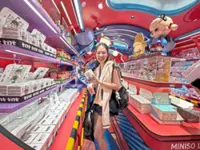
Blind boxes might just seem like another cute trend of collectibles. But according to Monash University marketing lecturer Dr Racheal Louis Vincent, the craze reveals something deeper.
She sees it as a powerful mix of psychology, culture, identity and what she calls “genuinely smart marketing”.
“What’s actually driving this phenomenon is the ‘aspirational lifestyle’ factor,” she says.
“Carrying a Labubu becomes a status symbol. It’s a way of saying ‘I’m part of this world, too’.”
It’s similar to fashion, she explains. When celebrities start doing the same, the effect snowballs and becomes a cultural movement.
Nevertheless, the behaviour of buying blind boxes over and over again is rooted in the brain’s reward system.
“The unpredictability of blind boxes taps directly into our brain’s need for uncertainty and novelty. When you experience that element of surprise, it triggers the brain’s reward system and releases dopamine.
“It’s the same mechanism that makes slot machines so addictive, except you’re getting cute collectibles instead of money.”
It also explains why the primary audience for blind boxes isn’t children, but adults aged between 20 and 40 years old.
“Adults are financially independent and they’re nostalgic,” she observes. “A kid might think Labubus are cute, but an adult feels something deeper.”

She recalls a moment that made her have this revelation.
At her daughter’s birthday party, her one-year-old toddler kept reaching for the Labubu on her friend’s handbag.
When the husband suggested giving it to the child, the friend – who is in her 40s – immediately said, “No, it’s my Labubu!” while petting it protectively.
“That moment was so revealing. It wasn’t about the monetary value of it. It was about connection and identity. That Labubu meant something to her.”
Moreover, Racheal believes Pop Mart’s products did not skyrocket by accident – they were engineered to thrive in the age of social media.
“Everything is colourful, tactile and satisfying to open on camera. Some releases even have TikTok callouts on the box!” she notes. “They’ve essentially built virality into the physical product itself.”
Still, the success of blind boxes raises bigger concerns.
“Are companies monetising emotional vulnerabilities while simultaneously creating environmental damage?”
The “healing narrative” – where buyers treat blind boxes as a form of stress relief – can disguise overconsumption as something therapeutic. But she knows not to judge collectors.
“They’re not irrational consumers – they’re rational actors in an irrational system. When life feels hopeless, but you can afford to buy a box that gives you control, surprise, escape and community – can we really blame them?”
Racheal believes the blind box trend itself might fade, but the system behind it is permanent.
“The ‘mystery box’ mechanics has already seeped into many areas: video games, subscription services, retail and e-commerce marketing,” she says.
“The format changes, but the hunger – for surprise, belonging, control and meaning – it feeds, that’s human. And it’s not going anywhere.”