On a scorching afternoon in the Milwaukee suburbs in the United States, the squirrels were splooting in the shade.
They looked as flat as pancakes, said Rachelle Manke of Whitefish Bay, Wisconsin, who spotted the fluffy-tailed rodents lying under a vehicle in her driveway with their bellies down and their legs splayed.
A glance into her neighbour’s yard revealed another squirrel plopped flatly on a tree branch.
“I know splooting is a behaviour squirrels do to cool themselves off,” Manke said.
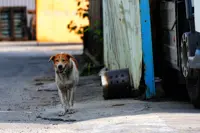
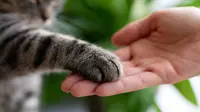
Splooting – the sillier term for what scientists also refer to as “heat dumping” or “pancaking” – is a summertime strategy employed by squirrels, cats, dogs and other animals that don’t perspire like humans.
It helps them transfer heat away from their bodies by exposing more of their surface area to a cool surface.
Mammals have to keep their body temperatures fairly consistent, said Jennifer Smith, an animal ecologist and professor at the University of Wisconsin, Eau Claire.
“When it’s hot outside, it can impose a cost,” she added, “and so they have this behavioural adaptation, which is adorable to notice in nature and also really helpful for keeping their bodies at a constant temperature.”
The tactic is especially useful when the heat index exceeds 100 (38°C), as it did in Manke’s backyard.
Determined to help the splooting squirrels, she left a bowl of ice water outside. A while later, she saw “Whitey,” a grey squirrel with a white tail, slurping up the refreshment.
“My honest reaction was pure joy,” Manke said. “There is so much negativity in the world right now. Knowing that I made a positive impact, even for just one squirrel, made my whole day.”
Managing heat
The squirrels were not the only animals to endure the heat wave with help from humans.
In Cincinnati, which was under an excessive heat warning recently, workers at the city zoo were pulling out all the stops to keep everyone cool.
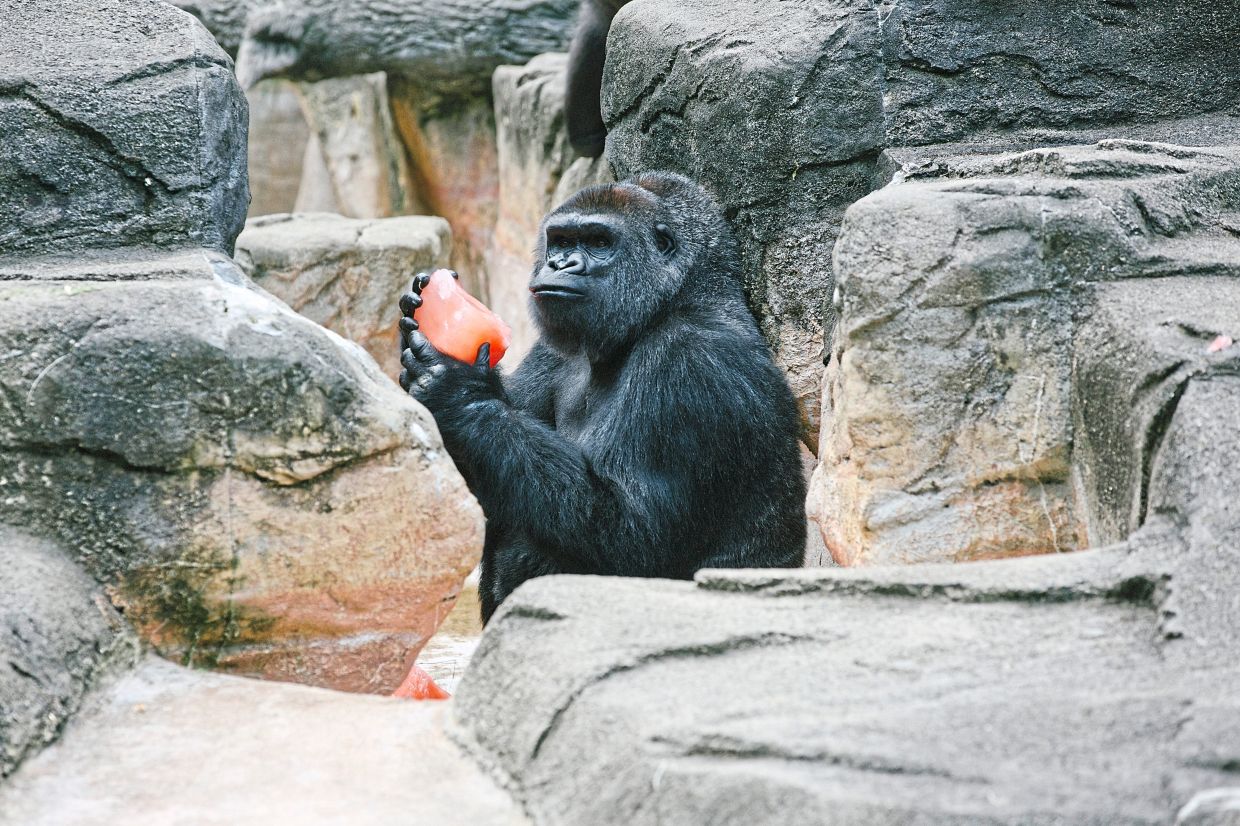
The three troops of gorillas at the Cincinnati Zoo were given chilly treats – frozen blocks of sugar-free fruit punch – which they cradled, chomped or smashed into shareable pieces. Two orphaned bear cubs, recently rescued from Montana, rolled around in several gallons of ice. Eight elephants spent the afternoon swimming and splashing in a newly built 200,000-gallon pond, prompting laughs and squeals from visiting children.
“We designed these habitats with the animals’ needs in mind,” David Jenike, the zoo’s director, said as he watched the elephants play.

Creatures that were built for equatorial heat, like hippos and giraffes, seemed to feel right at home in Cincinnati during the heat wave.
“Animals from places like Asia and Africa are used to these temperatures, but the key is to provide water, shade and indoor access,” said Michelle Curley, a spokesperson for the zoo.
While the zoo also aims to keep human visitors comfortable, the crowds were somewhat sparse. People who braved the heat carried fans, frequented misting stations or kept to the indoor exhibits. Most agreed that the soaring temperatures didn’t feel like Cincinnati.
“I’m from south Georgia, and right now, it feels no different than 20 miles (32km) from the Florida line,” said Keith Debose, 65. “I want to jump into the water with the penguins, but they won’t let me.” – ©2026 The New York Times Company.