What if that old pair of jeans you were about to throw away could be given a new lease of life – as a sheet of paper?
With some pounding, pulping and mixing with paper fibres, old denim can be transformed into handmade paper. Yes, you read that right.
And denim is just one of the many materials that graphic designers Soo Wai Ee and Lee Li En, both 34, have experimented with since starting their arts and crafts studio in 2017.
Over the years, the pair has transformed recycled paper and a mix of natural materials - from lemongrass leaves to onion skin - into handmade paper.
The duo source paper offcuts and misprints from local print shops, while plant fibres come from their parents' and neighbours' gardens. Other materials are collected from local businesses.
"We simply work with anyone who has materials they're happy to give away. You could think of us as collectors of unwanted paper and plant fibres - we're always on the lookout for interesting materials to experiment with," says Soo during an interview in Puchong, Selangor recently.
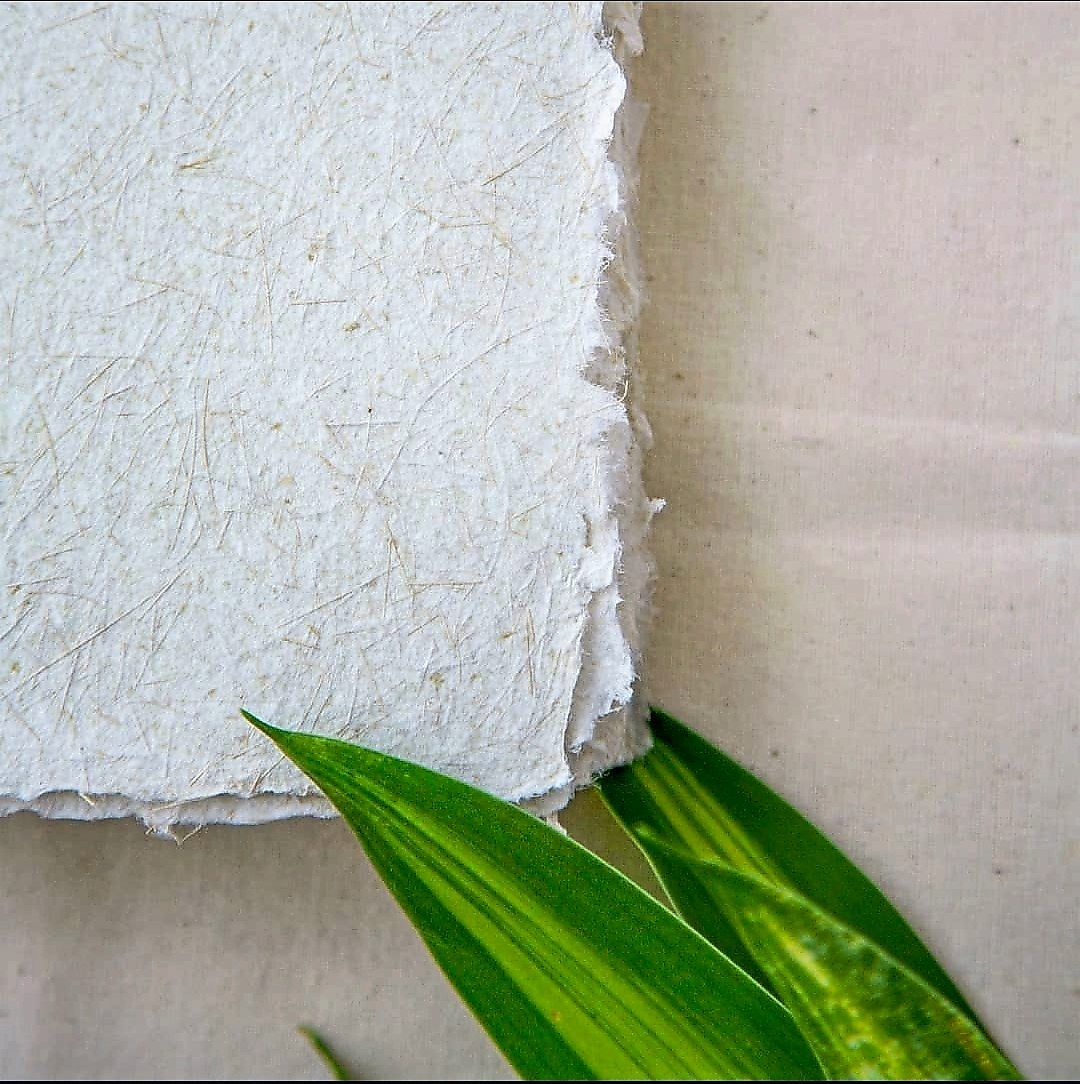
"We've experimented with a wide range of plant fibres over the years. One of the most common materials we use is corn husk, but we've also made paper from screwpine leaves, pineapple leaves, lemongrass stalks, onion skin, garlic skin and mulberry bark," says Lee.
"Each plant fibre has its own characteristics, giving the paper a unique texture, colour and personality," she adds.
But perhaps the most interesting part of their work is that they never quite know what they will get until they try.
"Mixing them together often creates unexpected patterns and textures, and we never know exactly how each sheet will turn out. This is one of the things we enjoy most about handmade papermaking," says Soo.
From prints to paper
Interestingly, making handmade paper was never part of the original plan.
The two graphic design graduates from Northumbria University in Newcastle, Britain had initially wanted to create and sell prints. But their search for the right paper led them somewhere unexpected.
"As we explored different papers, we realised the options available didn't quite match what we were looking for in terms of texture, character and quality," she adds.
Rather than settle for commercially available paper, they decided to experiment with making their own.
"What began as a way to create the perfect surface for our prints gradually became something much bigger. We fell in love with the process, the craftsmanship and the endless possibilities of handmade paper," Lee shares.
Adds Soo, "We're glad that recyclables happen to be our main material. We love being innovative and creative with what we already have or can gather, and finding ways to turn them into something new and useful."
Beyond wood
The idea of finding alternatives to conventional paper is not new, with a growing body of research exploring the potential of sustainable materials.
In France, Releaf Paper produces paper materials using fallen leaves collected from urban parks and streets.
Developed by Ukrainian entrepreneur Valentyn Frechka, the process transforms seasonal leaf waste into cellulose fibres that can be used to make paper bags, boxes and other packaging.
On the home front, Malaysia's agricultural waste is also offering an alternative source of fibre for paper production. Materials such as sugarcane bagasse – the fibrous residue left after sugarcane is crushed for its juice – as well as pineapple leaves and bamboo have been explored as alternative fibre resources for pulp and papermaking.
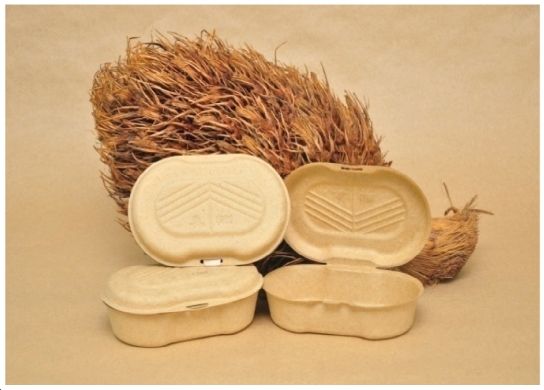
A 2020 study, titled "Pulp and paper production from oil palm empty fruit bunches: A current direction in Malaysia", identified empty fruit bunches (EFB) as a suitable material for pulp sheets, which are used to make palm-based paper and containers.
The study, published in the Journal Of Food And Agricultural Engineering, notes that using EFB as an alternative fibre could reduce reliance on wood materials while helping address environmental concerns such as deforestation and global warming.
These examples show that the materials for papermaking extend well beyond trees, with everything from fallen leaves and agricultural waste to discarded clothing being potential alternative sources.
Where the magic happens
As graphic designers, the women have thoughtfully transformed their home into a functional studio with a working area.
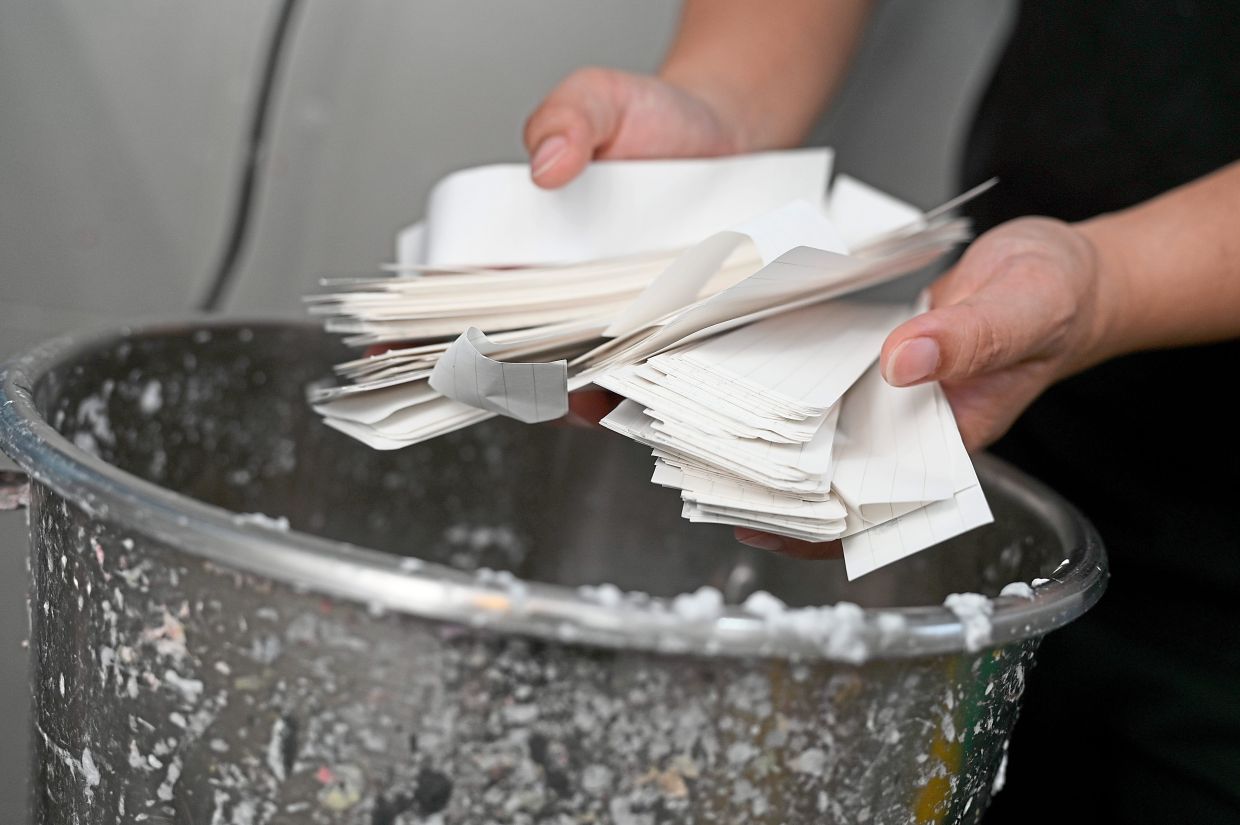
There, discarded paper and plant materials are soaked, pulped, blended and eventually dried into new sheets.
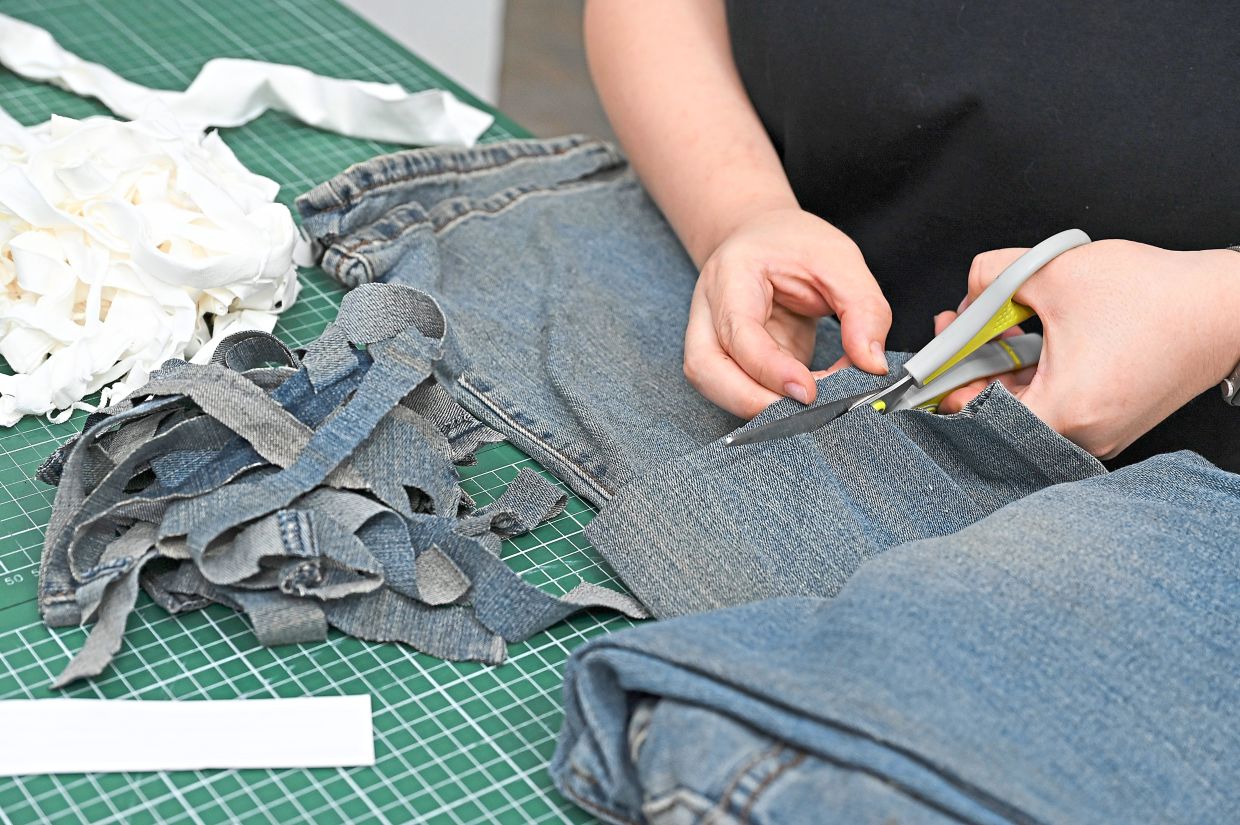
The same process is used to turn old jeans into paper. The denim is first cut into small pieces before being blended with water and paper fibres to create the pulp, which is then formed into sheets and dried.
Lee shares that different fibres affect the paper in different ways.
"For strength, longer fibres generally produce stronger paper. Recycled paper fibres are already quite short, so they're naturally less strong. Texture depends largely on how finely the pulp is processed. A finer pulp produces a smoother sheet, while a coarser pulp creates a more textured surface.
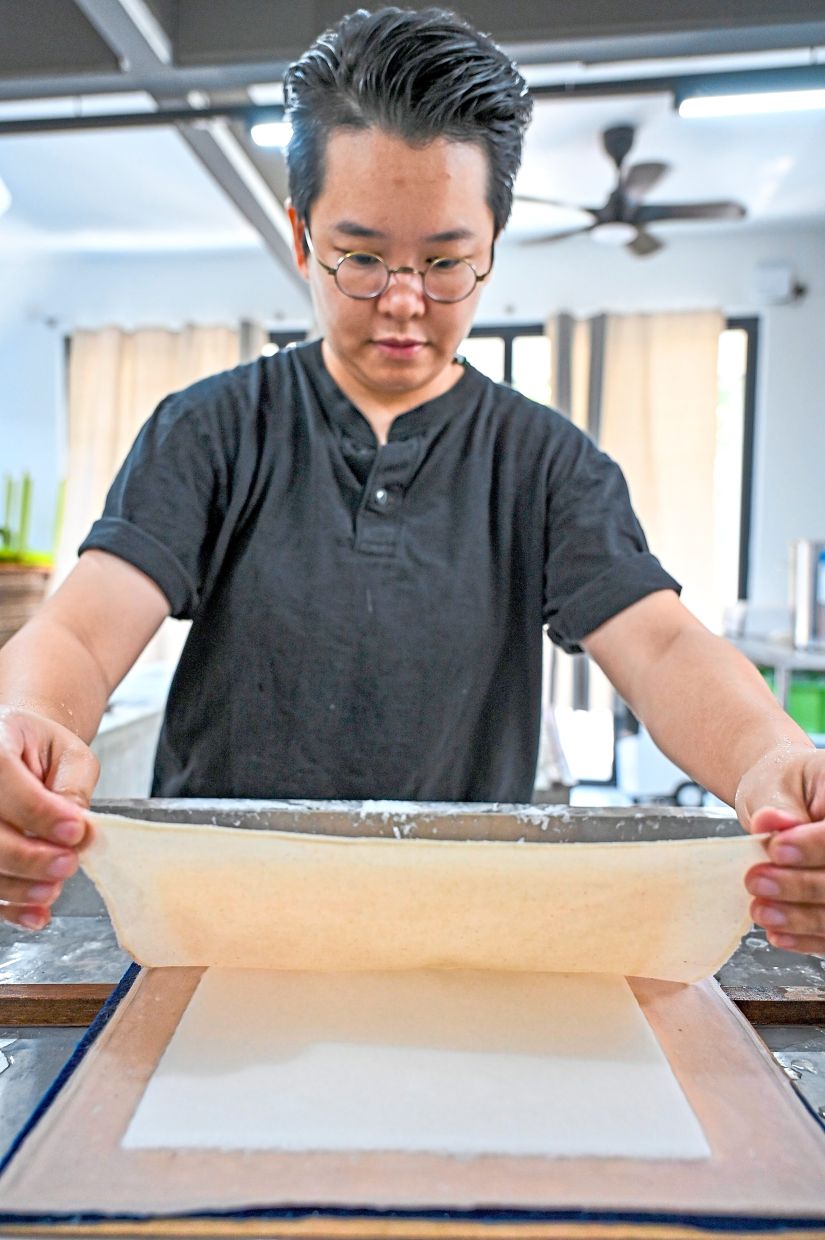
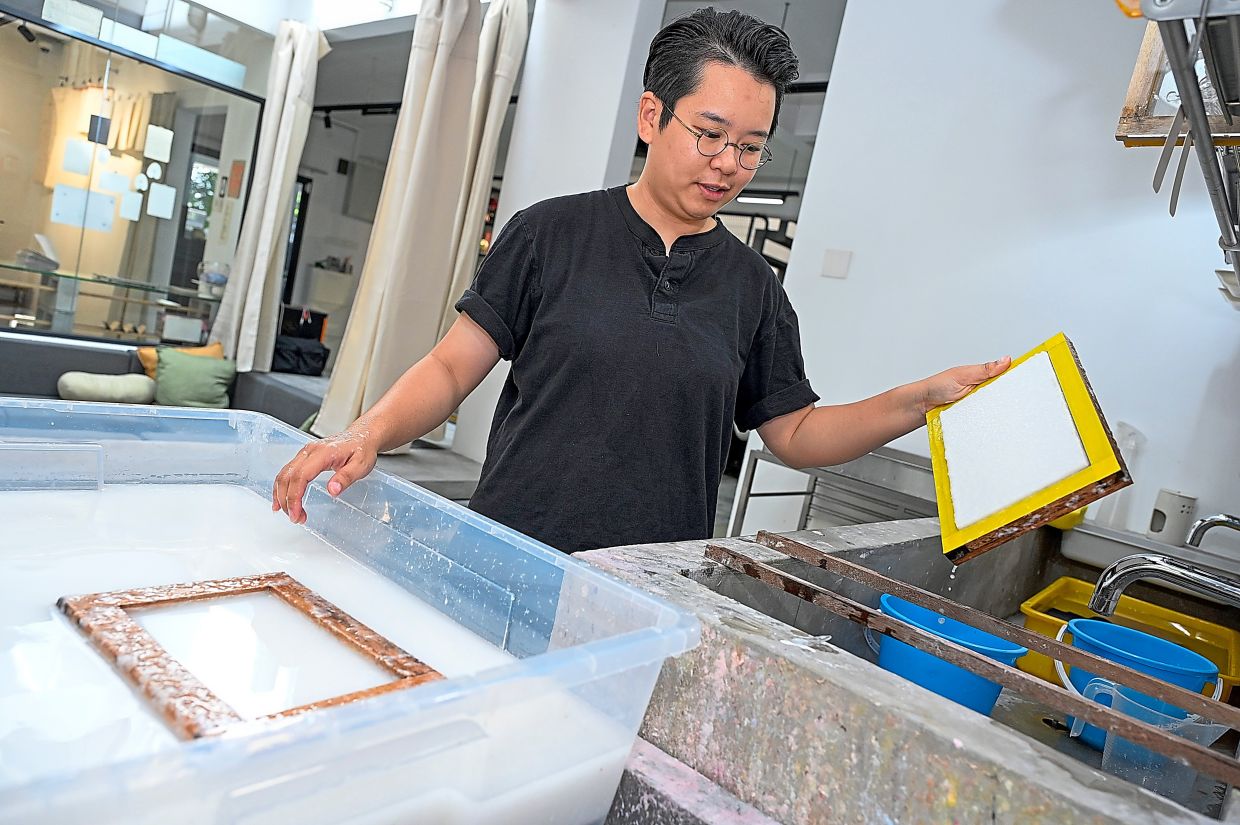
The pulp is then formed into sheets using a mould and deckle, pressed and dried.
"A typical batch takes about two days from start to finish, depending on the materials and quantity involved," says Soo, adding that she can produce about 80 sheets of 12g A4-sized paper from 1kg of recycled paper.
It is this unpredictability that keeps the pair experimenting. They were particularly surprised by how well onion skins worked, while mixing coloured pulp has produced unexpected patterns and textures.
However, there are also plenty of failures along the way.
"Plant fibres usually require much more research and experimentation before we understand how they behave. With recycled paper, the bigger challenges are achieving the right colour when dyeing the pulp and getting the thickness of each sheet just right."
A true love
In the current digital era, the two designers remain fond of physical paper.
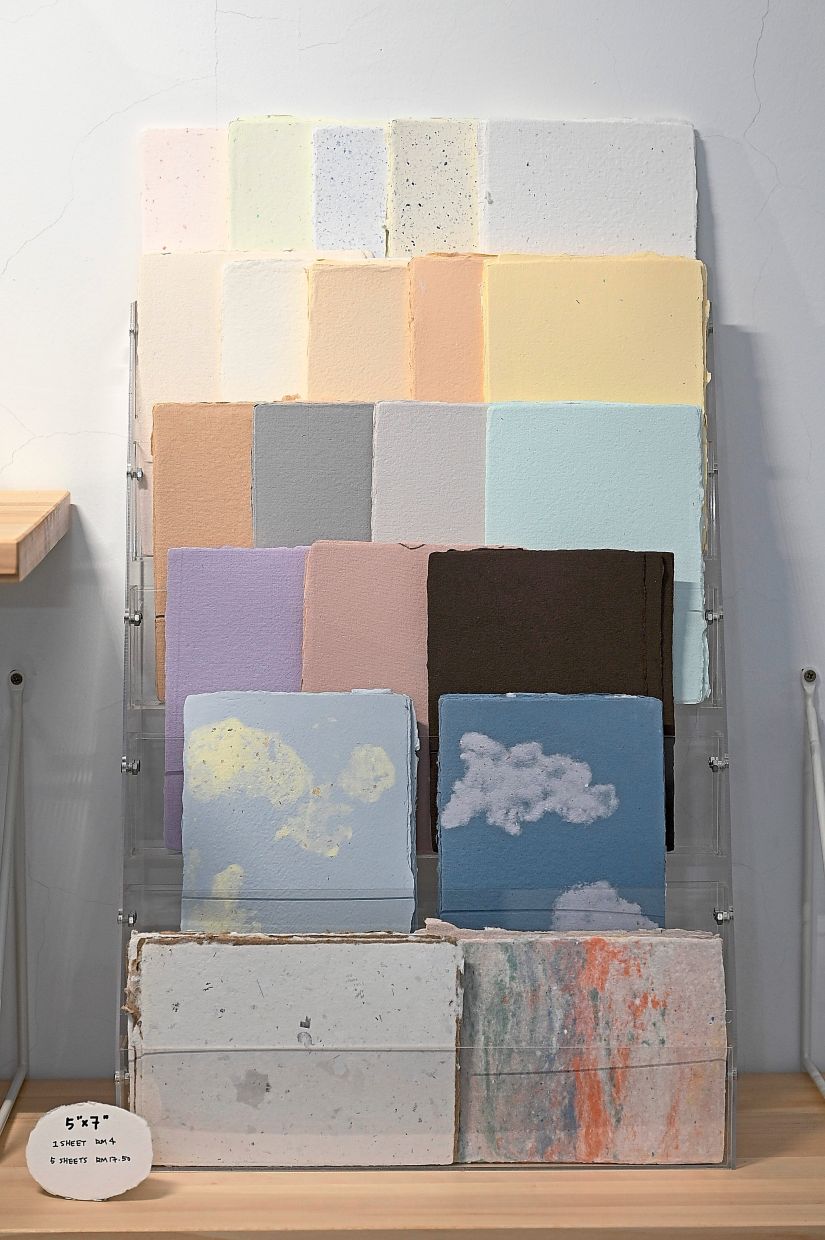
"While so much of our communication has moved online, paper continues to have a place in the things we choose to keep: a handwritten note, a favourite book or a meaningful card," Lee shares.
She adds that the items they produce are popular among journalling enthusiasts and couples looking to have their wedding cards specially made using paper blended with natural ingredients or upcycled paper.
And they have no shortage of ideas for what could become paper next.
"We're simply curious by nature," says Lee. "If we come across a plant fibre that sparks an idea, we're happy to spend the time - and get our hands dirty - to explore its potential."
Sheets of sustainability


Crafters Soo Wai Ee (left) and Lee Li En experiment with discarded materials and natural fibres to create handmade paper with unique textures and character. Photos: The Star/Izzrafiq Alias
Old jeans being cut into smaller pieces before getting a new life as paper.
Photo: The Star/Izzrafiq Alias
Handmade paper made from a blend of screwpine leaves and recycled paper.
Photo: Instagram/Slumberbugs
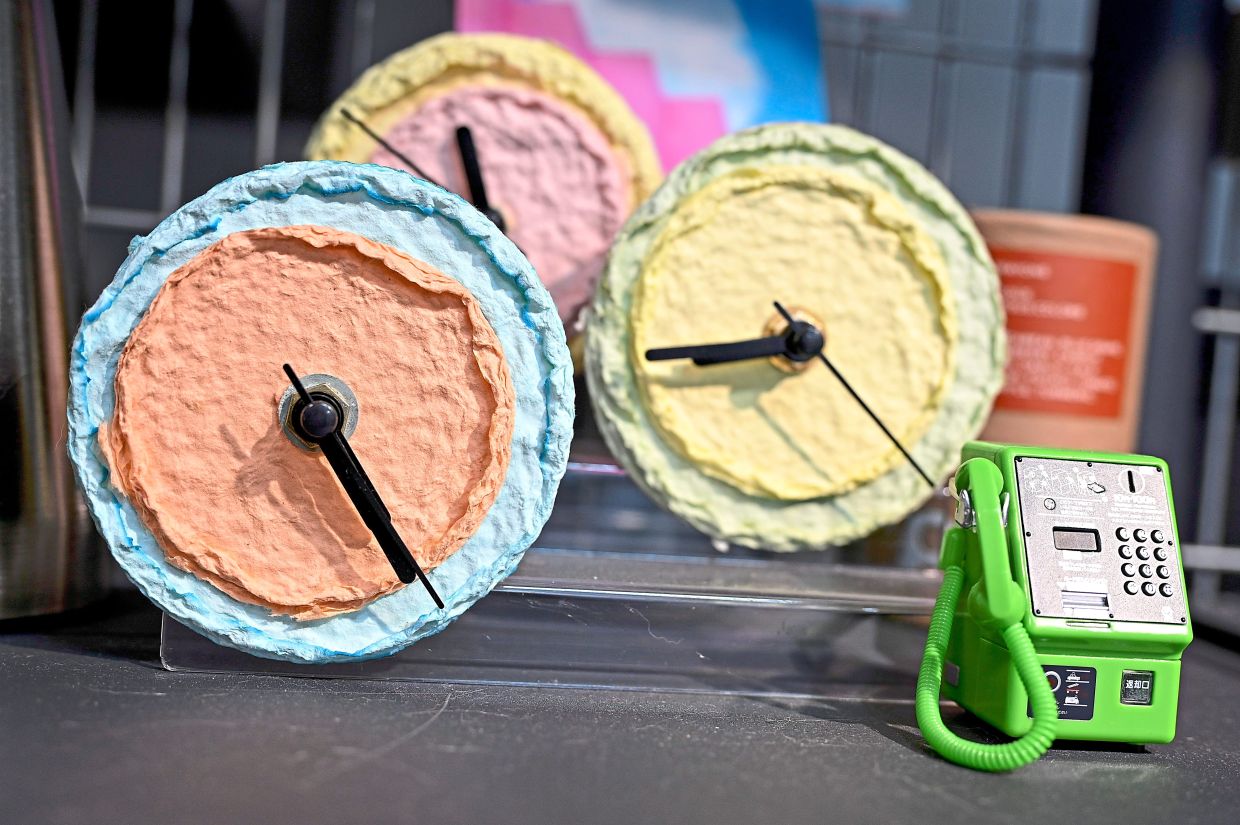
Funky clocks made from upcycled paper.
Photo: The Star/Izzrafiq Alias
Palm-based containers made from palm tree empty fruit bunches. Photo: Filepic
Used paper is blended with water to create the pulp used to make handmade sheets.
Photo: The Star/Izzrafiq Alias
Recycled paper is blended with water to create the pulp used to make handmade sheets.
Photo: The Star/Izzrafiq Alias
Soo uses a mould and deckle to form the paper sheets.
Photo: The Star/Izzrafiq Alias
Soo places a piece of cloth over the deckle before lifting the handmade paper.
Photo: The Star/Izzrafiq Alias
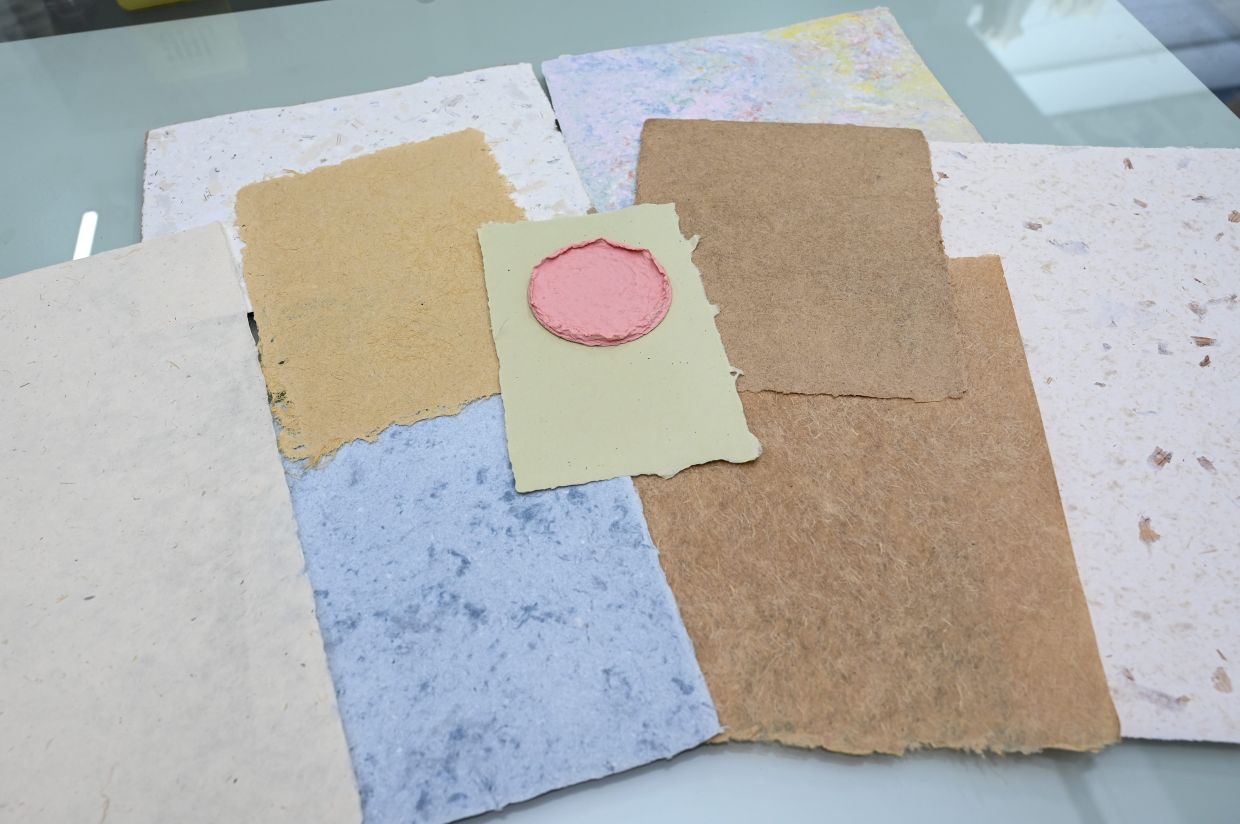
Sustainable handmade paper made using natural fibers like sugar cane waste, corn husks, jeans cloth, screwpine leaves and onion skin.
Photo: The Star/Izzrafiq Alias
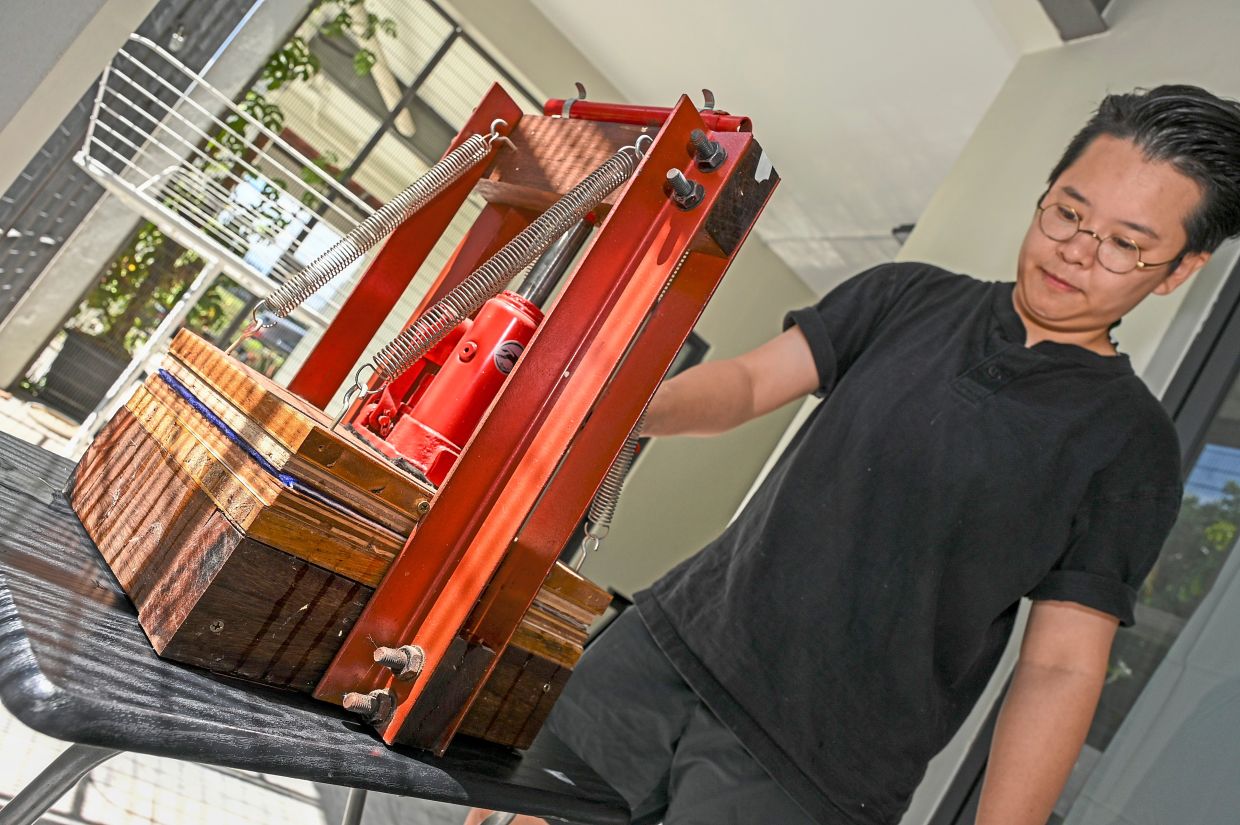
Soo uses a hydraulic press to squeeze out the excess water and compress the paper sheets.
Photo: The Star/Izzrafiq Alias
Some of the paper items handmade by Soo and Lee using discarded materials.
Photo: The Star/Izzrafiq Alias