



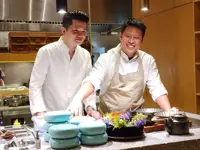
At his two Michelin-starred flagship restaurant Jiang by Chef Fei in Guangzhou, China, Huang Jinghui or the eponymous chef Fei as he is unequivocally known in his country and abroad – is in his element.
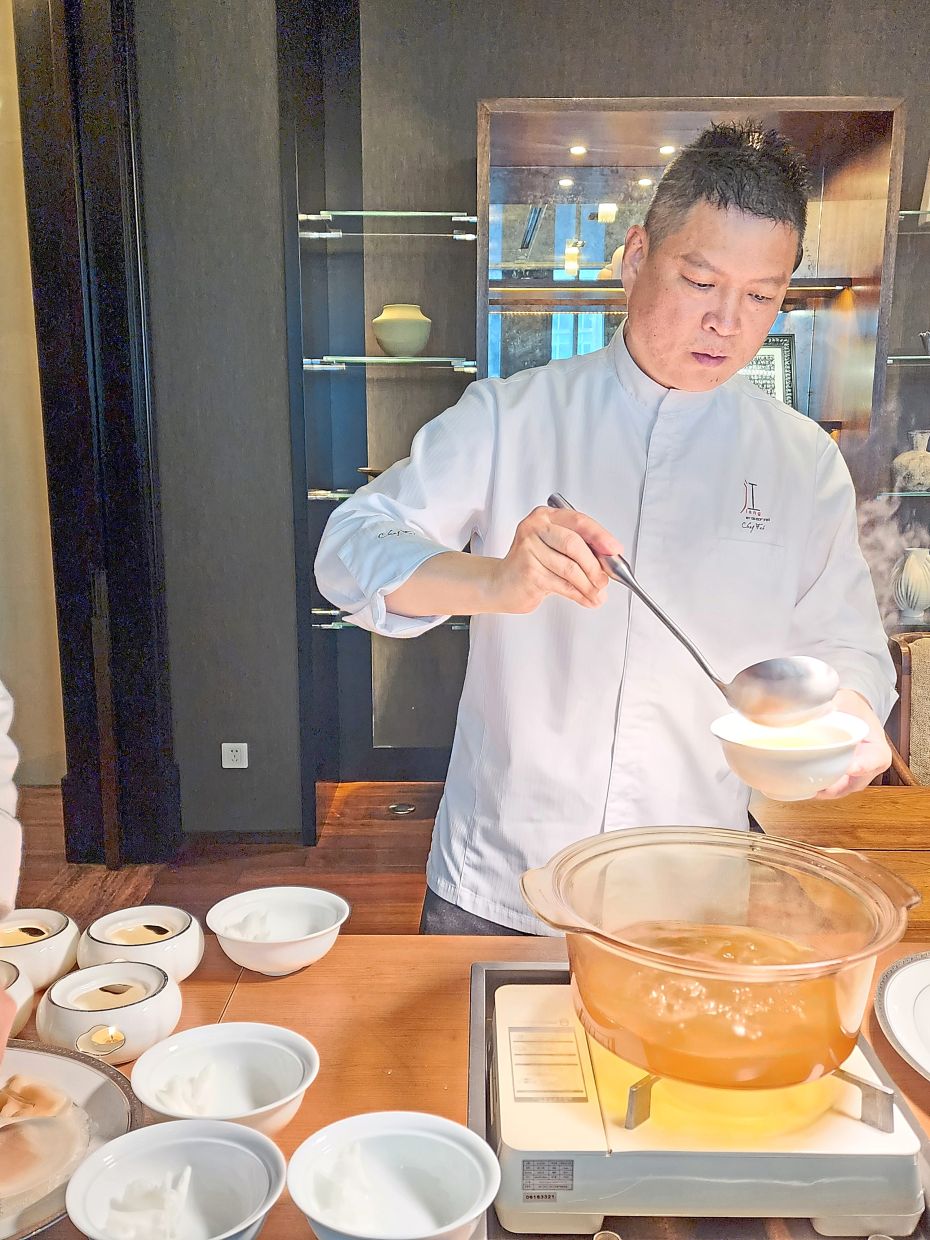
Standing over a trolley packed with ingredients, he tosses them in one by one into a sizzling wok in careful, calibrated motions. His movements are thoughtful yet lightning-fast. In a matter of seconds, Fei’s face breaks out into a smile and he ladles delicate portions onto individual plates.
Then he whips out his phone and photographs his creations from every possible angle, eventually showing off food images that could well be on the cover of a magazine. These are photographs that make the food sing and soar, like Mariah Carey in her prime.
And yet it’s nothing less than you would expect from a man so talented that his culinary skills are sought after by celebrities like Tony Leung, Jackson Wang and even the French president, Emmanuel Macron.
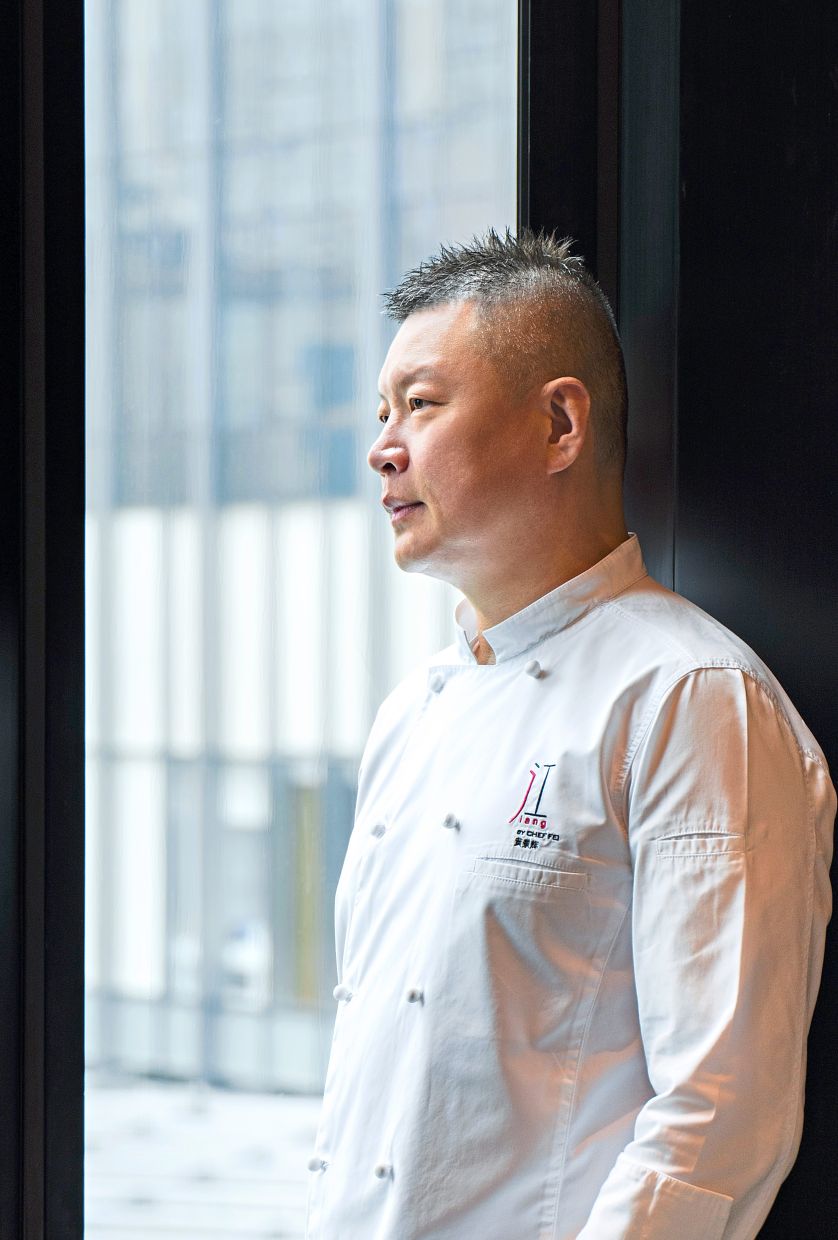
Fei grew up in Chaoshan, the heartland of Teochew cuisine in Guangdong. He was a high school dropout whose heart was always attuned to the language of food – especially the Teochew cuisine that formed the culinary canvas of his childhood.
As a result, he started working in restaurants at 16, becoming an executive chef at the tender age of 20 and eventually working his way up to owning and investing in his own restaurants.
Before being appointed the culinary director of the Mandarin Oriental Group across Asia, he helmed a restaurant in southern China that was so successful that it made over RM320,000 every day!
“I didn’t go to high school or university – but I think if you get a diploma, it’s just a piece of paper. As long as you continue to learn and focus on your craft, you will gain knowledge even if you are not in school.
“When I started to work, I really dedicated myself to learning – not just cooking, but learning how to manage restaurants, invest and manage money,” he says pragmatically.
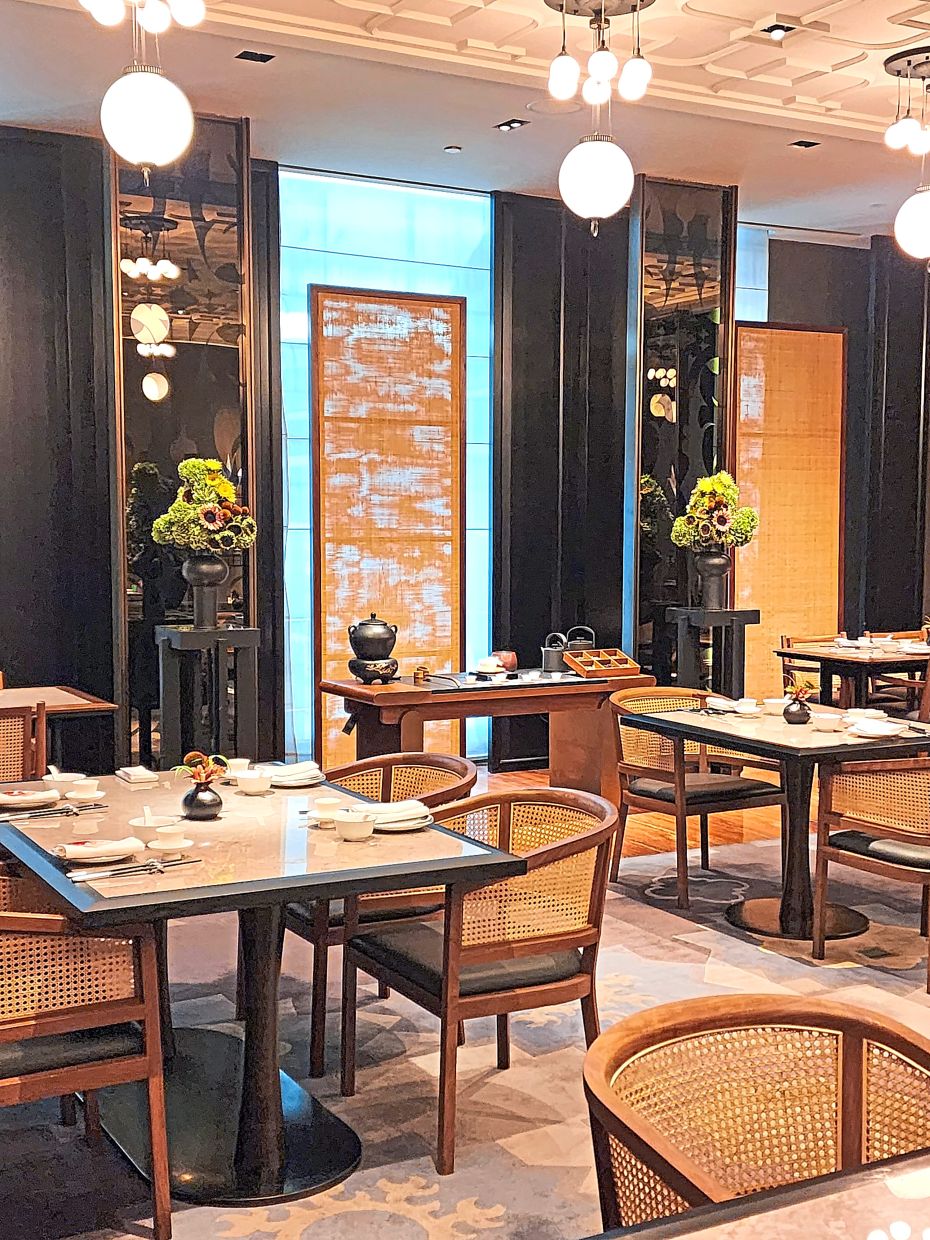
His success and continued commitment to learning is what drove Mandarin Oriental Guangzhou to approach him, which resulted in the opening of Jiang by Chef Fei in 2013.
When the Michelin Guide launched in Guangzhou in 2018, the restaurant earned one Michelin star. The following year, it raked in two stars, becoming the first restaurant in the province to earn this distinction, something it has since retained for eight consecutive years.
The restaurant has also earned an elusive Black Pearl 1 diamond award (China’s highly-regarded equivalent of the Michelin Guide) and this year, Fei also earned Michelin’s Mentor Chef Award.
Since those fledgling days, Fei’s empire has spread – he has numerous restaurants in partnership with the hotel group and is also an investor in over 15 restaurants. His restaurants now span across locations like Shenzhen, Beijing and Shanghai, as well as Bangkok in Thailand and Singapore, to name a few.
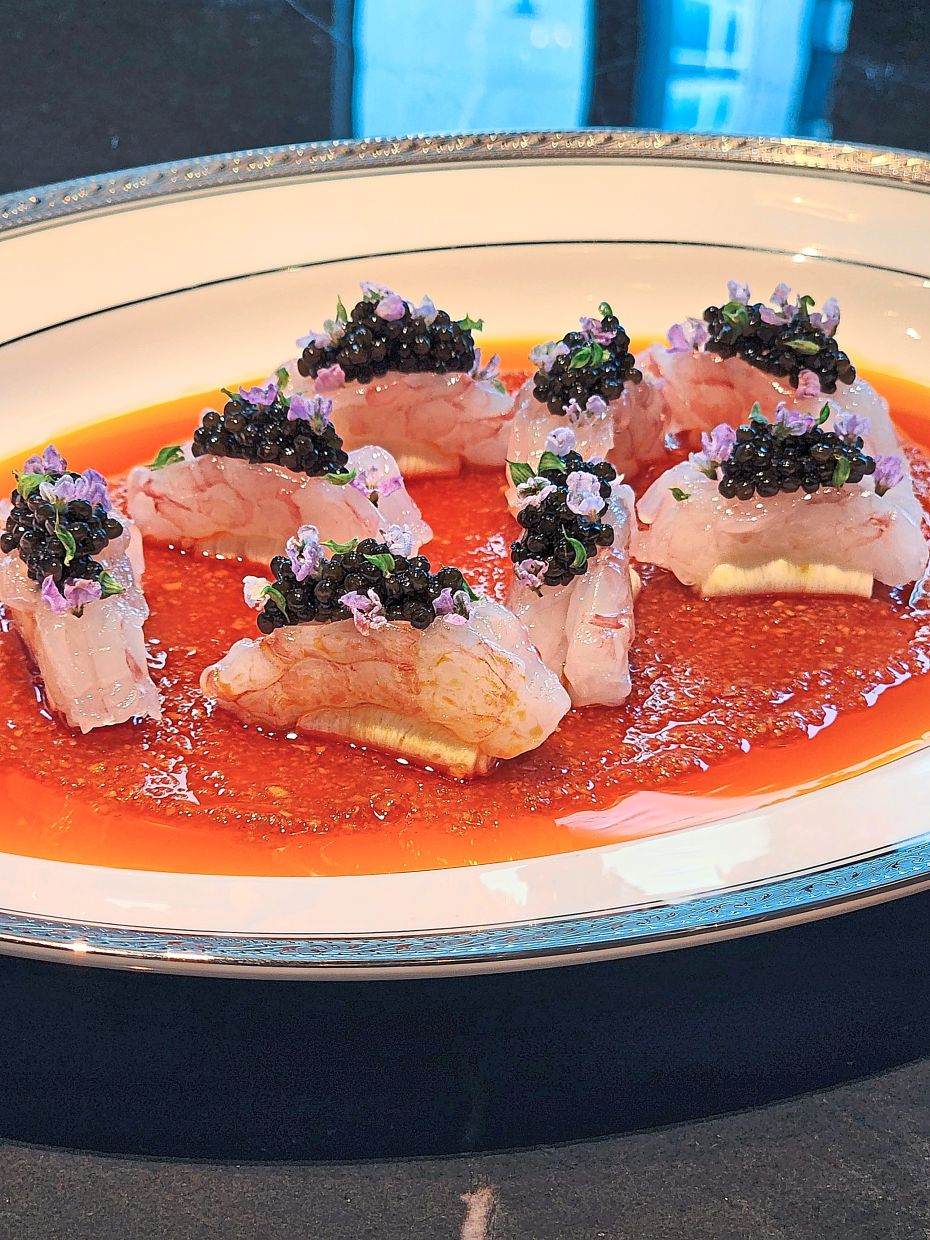
Collectively, the restaurants have accumulated five Michelin stars, with more expected to come by the end of 2026.
The heart of his culinary engine is his flagship restaurant where every single chef who works at any of his international restaurants must go for training.
“I send them for military-style bootcamp, you know? That’s part of their training,” says Fei very seriously.
Fei also runs a tight ship at his kitchens – not a drop of water is allowed on the floors, and rulers, measuring tapes and standardised moulds are part of the arsenal at all his restaurants. Consistency is king and Fei is the master navigator structuring this path.
Naturally, he also devises all the dishes on the menu and spends half his month at all his other restaurants; with the other half devoted to the flagship.
Throughout his restaurant empire, Fei is widely lauded for his spectacular Cantonese cuisine with a Teochew pulse. His focus is on classic cuisine enhanced by aesthetic appeal.
The Chaoshan region has direct access to the South China Sea, which is why seafood is a core feature of the cuisine – something that is omnipresent at Jiang as well.
A meal here highlights Fei’s love of his ancestral homeland and his pure, unabashed talent. Some of his signature dishes include Braised Goose Web in Chaozhou Style – a classic Teochew dish that delivers flavour and tensile strength that stretches through each mouthful.
The Peony Prawn with Water Bamboo Garlic Puree and Chilli Oil is another stand-out dish that highlights fresh, joyously sticky prawns buoyed by a chilli oil with hearty, garlicky nuances and spicy underpinnings.
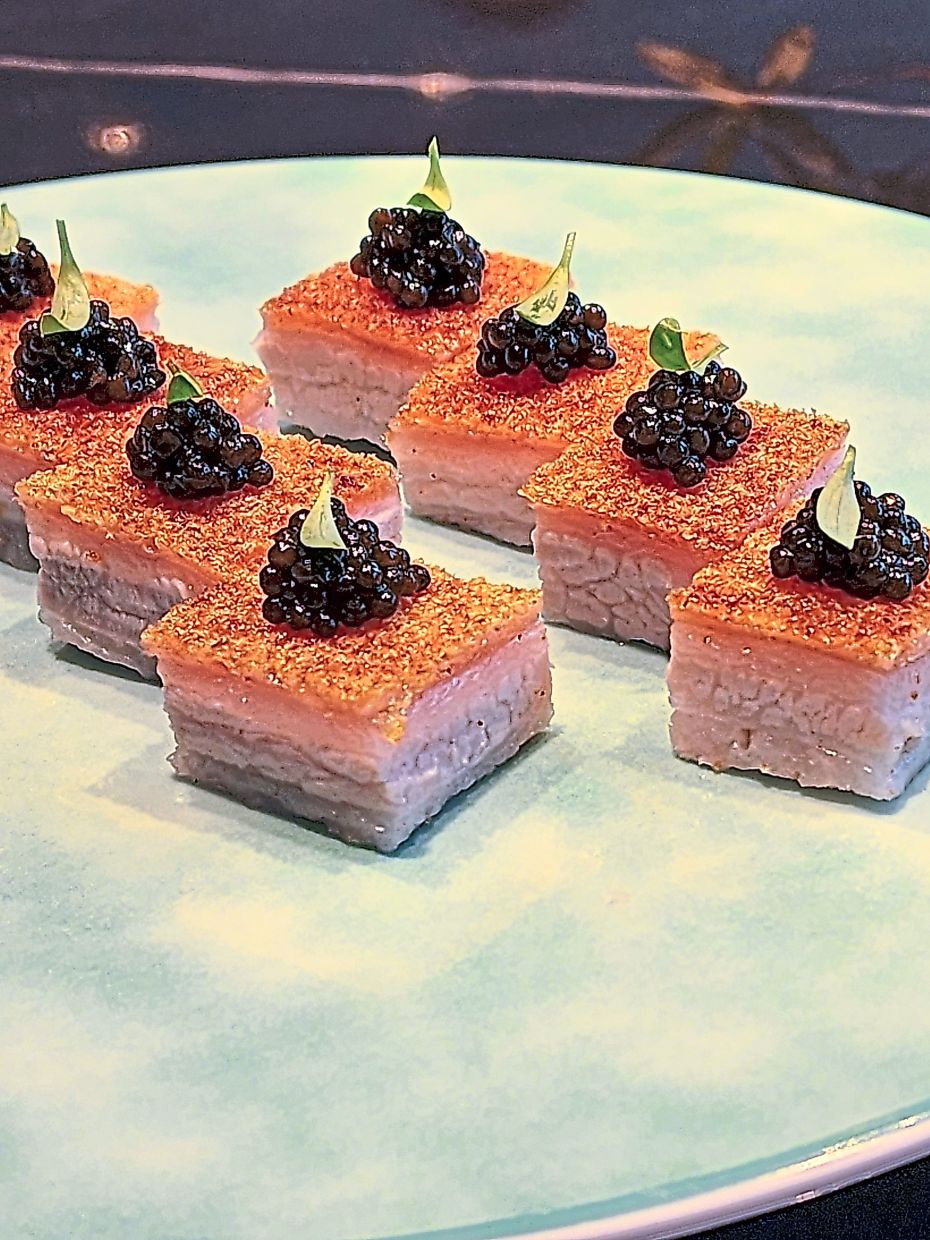
Another winner is Fei’s Crispy Roasted Pork with Caviar, which takes a traditional Cantonese staple and turns it into a culinary masterpiece. Here, the pork is fantastic – ridged with fat and edged by skin so crisp, it crackles with electricity upon contact.
The caviar on top laces the dish with a palatial, opulent edge that gives it a dash of razzmatazz.
One of the most expensive, big-ticket items on the menu is Fei’s fabulous Poached Kuixiang Chicken, which features chicken fed with only sunflower seeds so its skin is yellow. A single plate of the chicken clocks in at over RM600!
And yet, it’s also the sort of meal where the value proposition matches the price tag. Here, you’ll discover an avian offering that is so supple and tender, it feels almost silken on the palate.
The Teochew Style Boiled Goby Fish with Preserved Mustard Greens and Plum Sauce is a show-stopper that highlights fish that is fresh and fleshy against a tangy sauce and the acerbic qualities of the mustard greens.
It’s a classic Teochew dish that Fei has refined, perfected and transformed into an upscale meal.
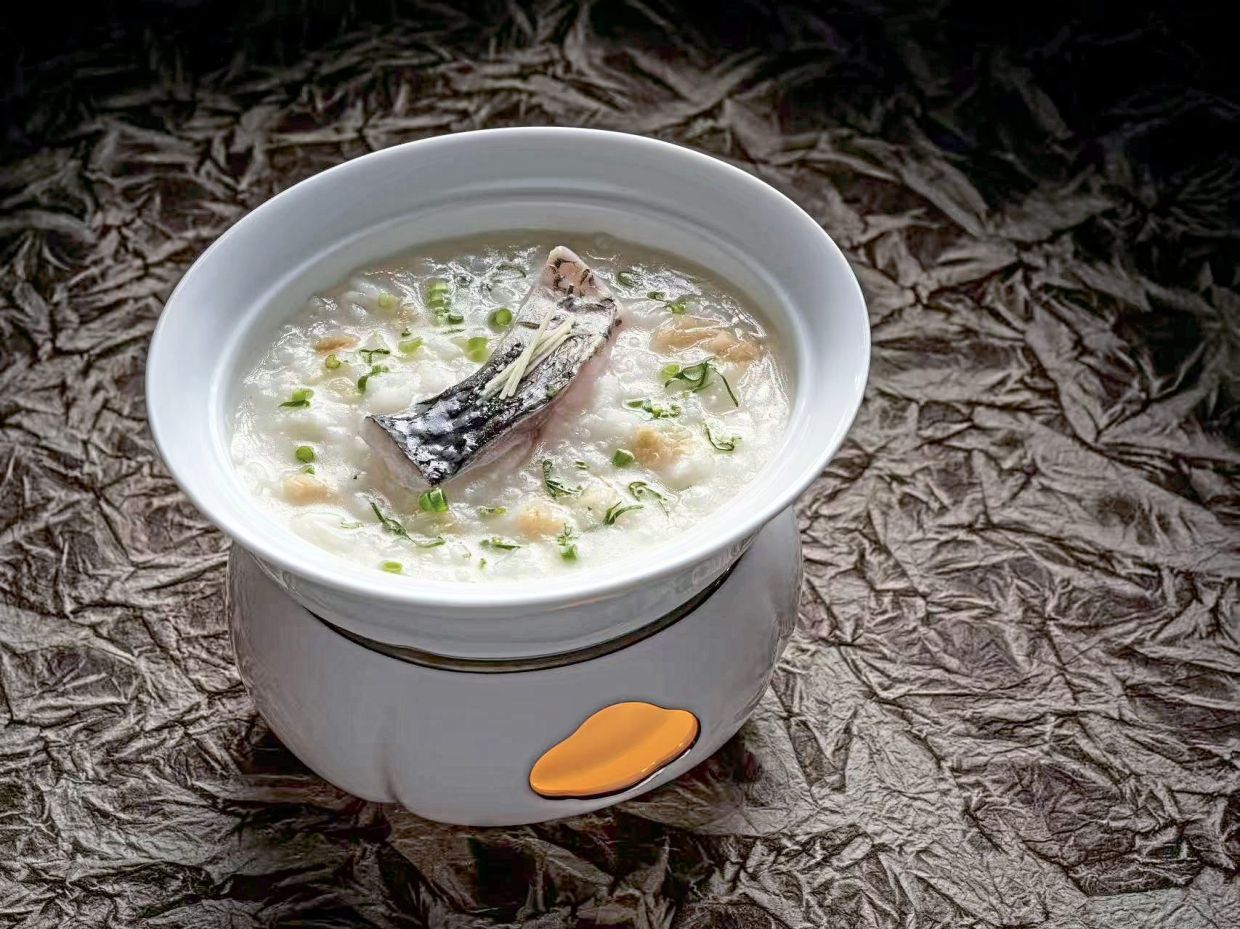
The Boneless Crucian Carp Congee meanwhile is a Teochew dish that makes use of crucian carp. The fish is notoriously difficult to debone (it has more than 80 tiny intramuscular bones) which take hours to extract. The fish is typically cooked quickly in a base of congee broth in order to retain its texture.
Fei’s rendition is utterly, thoroughly magical. The texture is neither clumpy nor runny, instead finding that sweet spot where the rice grains remain intact. The carp gives the porridge an incredible amount of flavour, which is buoyed by the copious amounts of chives in the mixture. Without a doubt – this is likely to be hands down, the best congee you’ll ever eat in your lifetime.
Although Fei has an irrepressible personality, he remains humble and down-to-earth. Yet his steely determination and sheer ambition shine through. His next goal? To earn yet more Michelin stars and perhaps open a restaurant (in collaboration with the hotel group) in Switzerland and England.
“I am doing a pop-up in Switzerland first to test the waters. And there is the possibility of opening in London too, but that is something I have to plan carefully because I don’t think we can bring something that is working in the local market and just 100% move it to London.
“But my immediate goal right now is to gain stars for my Chinese restaurants in Bangkok and Beijing. I believe you have to set your mind on something and put maximum effort into it. Because if you’re not putting 100% effort in it and you fail, you will 100% regret it.
“But if you put 100% – no matter the consequences, you’re not going to regret it,” he says.



