
Malaysian terrace houses transformed into homes that embrace nature


A leopard tree grows in the air-well at the Sleepers House, located in Taman Sri Hartamas, KL. Photos: Lin Ho

For those resigned to the fact that terrace houses have to bear with poor ventilation and daylight penetration, a new architecture book released recently will certainly change your mind.

Terrace Transformations In The Tropics by Atelier International, written by former professor of architecture Robert Powell, delves into 26 terrace houses in Peninsular Malaysia and how they have been reimagined to blend with nature and tap into its resources.

Due to movement restrictions during the Covid-19 pandemic, the houses featured are located only in Penang, Kuala Lumpur and Selangor, said Prof Powell, who began working on the book in May last year.

“Terrace houses in the tropics have in-built problems. Having only a front and rear façade and constrained by flanking walls, they are often badly ventilated, have poor natural daylight and have little connection with nature.

At the NJ House in Putra Heights, Subang Jaya, two courtyards have been created and the principal rooms in the house look into these spaces.

“They are generally uneconomical in the use of energy and do not respond to the looming problem of climate change. It was this dilemma that prompted me to look into the fairly recent phenomenon of ‘terrace transformations’, ” said Prof Powell, who has written 15 books on houses in South-East Asia.

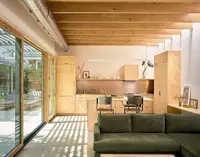
Working on the book, he found that reconfiguring a terrace house can improve cross ventilation and daylighting with the introduction of courtyards and light wells.

“The connection to nature and hence, wellbeing, is enhanced. Materials such as bricks, tiles, timber, doors and window frames can be readily recycled.

“There are also opportunities to introduce solar chimneys, rainwater harvesting, passive cooling and mechanical ventilation, ” he added.

The houses in the book also demonstrate how energy consumption can be reduced with less use of air-conditioning.

Anecdotal evidence, said Prof Powell, also showed that there is improved social interaction with neighbours at ground level, with walking and cycling encouraged.

‘There is a wonderful interplay of light and shade, of openness and closure in the planning’ of the two-storey Sea Park House in Petaling Jaya, says Prof Powell.

“Transformed terrace houses are a viable alternative to the relative isolation of high-rise living. Terraces foster a sense of community. The internal spatial qualities of a transformed terrace house are also invariably more pleasing than the original, ” he commented, adding that 17 of the houses were also designed to accommodate working from home.

Writing the book has been a labour of love for the author.

“I have been privileged to visit the work of many inventive architects and designers.

“Working on the book also confirmed that most terrace houses can have a second life and can grow and change with the family or a new owner, ” he said.

He hopes that the houses in the book will generate interest from professionals in the design and construction industry.

“Very few new ideas have been forthcoming in the Malaysian housing market in recent years, as developers and government agencies tend to offer cookie-cutter solutions.

“In the process of writing the book, I learned that a terrace house (and its context) is an evolving entity. It will have many lives and many stories, shared by its successive owners.

“In addition, transformed terrace houses are arguably a positive response to climate change and can foster environmental and social resilience, ” concluded Prof Powell.

Apply Shopee Voucher Code to save more on your furniture purchases

Get 20% OFF The Star Digital Access

Monthly Plan

RM 13.90/month

RM 11.12/month

Billed as RM 11.12 for the 1st month, RM 13.90 thereafter.

Best Value

Annual Plan

RM 12.33/month

RM 9.87/month

Billed as RM 118.40 for the 1st year, RM 148 thereafter.


Follow us on our official WhatsApp channel for breaking news alerts and key updates!
Next In Living

Lonely end for race track: 132-year-old Aqueduct runs its last race
How this Malaysian couple helps clean up hoarder homes
Why hoarding disorder deserves more understanding in Malaysia
This mental trick may help you get more exercise
China's bull wrestlers fight to keep the centuries-old tradition alive
How to spot hidden price increases or 'shrinkflation'
Feeling drowsy at your desk? A 5 minute stroll will perk you up
What’s in your dog’s food? How to make sure your pet is getting quality meals
'Dutch sashimi': Getting the young to swallow herring
Winemakers on the Greek island of Santorini try to adapt to heat and drought

Others Also Read